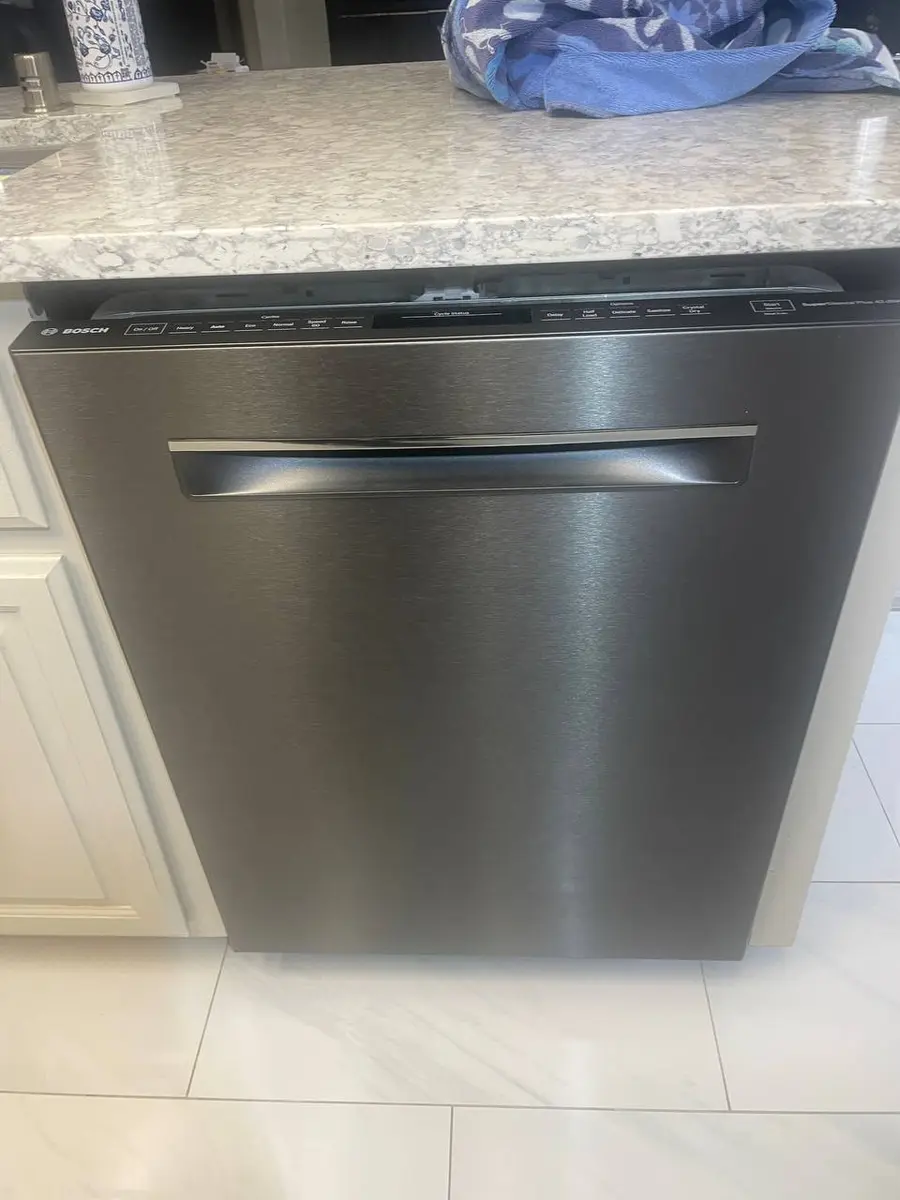
How to Fix a Maytag Dishwasher Not Draining
Standing water in the bottom of your Maytag dishwasher after a cycle completes is a drainage problem that typically has a mechanical cause you can diagnose and fix at home. Maytag dishwashers use a dedicated drain pump (part WPW10348269, shared across all Whirlpool Corporation brands) to evacuate water through the drain hose. The stainless steel chopper blade in Maytag models pre-grinds food waste before it reaches the drain pump, which means the pump itself clogs less frequently than in filter-only dishwashers. However, objects that bypass the chopper (glass shards, broken dish fragments, fruit pit pieces) can jam the drain pump impeller.
This guide covers diagnosis and repair of drain failures specific to Maytag MDB-series dishwashers. If your control panel displays the F9E1 error code, that confirms the dishwasher detected a drain failure and you can proceed directly to the pump inspection steps.
Before You Start
- Tools needed: Torx T20 driver, 1/4-inch hex driver, Phillips #2 screwdriver, pliers, towels, shallow pan or baking sheet
- Parts needed: Drain pump WPW10348269 ($35-$65 if replacement needed), drain hose ($15-$25 if damaged)
- Time required: 30-50 minutes
- Difficulty: Intermediate
- Safety warning: Disconnect power at the circuit breaker. Place towels under the dishwasher. There will be residual water when you access the pump.
Do You Have the Right Tools?
Water pressure gauge ($60), spray arm tester, float switch multimeter ($85), and drain inspection camera. Our technician arrives with $15K+ in professional tools — your diagnostic is free.
Licensed & Insured · 90-Day Warranty · Same-Day Service
Step-by-Step Instructions
Step 1: Remove standing water from the tub
Before working on drain components, remove as much standing water from the tub as possible. Scoop water with a large cup into a bucket, then use towels to absorb the remainder. Remove the lower dish rack and the filter assembly (quarter-turn counter-clockwise on the cylindrical filter, then lift the flat mesh filter). With filters removed, you can see into the sump area. Remove any visible debris around the chopper blade. Sometimes a piece of broken glass or a bone fragment wedged against the chopper is the sole cause of the drainage failure.
Step 2: Check the drain hose routing under the sink
Before pulling the dishwasher out, check under the kitchen sink where the drain hose connects. The hose must have a high loop (attached to the underside of the countertop with a hose clamp) or connect through an air gap device. Without a high loop, dirty water siphons back into the tub. Verify the hose is not kinked at the garbage disposal connection or where it passes through the cabinet wall. Disconnect the hose from the disposal or tailpiece and blow through it to check for blockages. If the dishwasher connects to a garbage disposal, verify the knockout plug was removed during disposal installation. An intact knockout completely blocks drainage.
Step 3: Access the drain pump underneath the dishwasher
Disconnect power at the breaker. Turn off the water supply valve under the sink. Remove the lower access panel from the front of the dishwasher (two 1/4-inch hex screws along the bottom edge, or two Phillips screws on some older models). Slide a shallow pan or baking sheet under the dishwasher to catch water. The drain pump is located at the bottom left of the unit, mounted to the sump housing. It is a compact motor with a rubber boot connecting it to the sump and a ribbed drain hose connected to its outlet.
Step 4: Inspect and clear the drain pump
Disconnect the wire harness from the drain pump (press the locking tab and pull straight out). Remove the drain hose from the pump outlet by squeezing the spring clamp with pliers and sliding it back, then pulling the hose off. Have a towel ready because residual water will spill. Twist the pump body a quarter turn counter-clockwise to release it from the sump housing. Pull the pump free. Look into the pump inlet for debris. Spin the impeller by hand. It should rotate freely in one direction (the drain direction) with some resistance in the other (the check valve). If the impeller is jammed, remove the obstruction. Common culprits: broken glass, cherry pits, pieces of plastic, and toothpicks that passed through the chopper.
Step 5: Test the drain pump motor electrically
If the impeller spins freely but the pump did not run during the cycle, test the motor. Set your multimeter to resistance (ohms) and measure across the two pump motor terminals. A healthy drain pump motor on Maytag dishwashers reads between 5 and 40 ohms. An open circuit (infinite resistance) means the motor winding is burned out and the pump requires replacement. If resistance is within range, the issue may be the control board not sending power to the pump, which requires further diagnosis of the board and wiring harness.
Step 6: Check the drain check valve
The check valve prevents backflow from the drain hose into the pump and tub. On Maytag dishwashers it is located in the drain hose connection at the pump outlet or integrated into the pump housing depending on the model. Remove the valve and inspect for debris. The flapper should move freely in the drain direction and seat completely in the closed position. A stuck-open check valve allows dirty water to flow back. A stuck-closed valve prevents drainage entirely. Clean the valve surfaces and verify free movement before reinstalling.
Step 7: Reassemble and test
Reinstall the drain pump by inserting it into the sump housing and twisting clockwise until it locks. Reconnect the drain hose with its spring clamp. Reconnect the wire harness until it clicks. Reinstall the lower access panel. Restore water supply and power. Run a drain-only cycle by pressing Cancel/Drain on the control panel. Listen for the drain pump motor engaging (a low hum lasting 2-3 minutes). Verify water exits through the drain hose under the sink. Check for leaks at all connections you disturbed.
Step 8: Clear the error code
If your Maytag displayed the F9E1 code, it may remain stored after the repair. Run the diagnostic mode (press three buttons in sequence 1-2-3, 1-2-3, 1-2-3 within 8 seconds) to verify no active fault codes. If F9E1 persists after a successful drain test, power-cycle the dishwasher at the breaker for 60 seconds to clear the stored code. The code should not return if the drain issue is resolved.
Understanding Maytag Drain System Design
Maytag dishwashers use a separate drain pump rather than reversing the main circulation pump. This means the circulation pump (which powers the spray arms and the PowerBlast cycle) operates independently of drainage. If your dishwasher fills and sprays normally but fails to drain at end of cycle, the circulation pump is healthy and only the drain system needs attention. The stainless steel chopper sits between the tub and the pump intake, grinding food waste to pass through the drain. This design means you rarely get large food particle clogs in the pump itself, but hard objects that the chopper cannot grind pose a serious risk of impeller damage.
Safety First — Know the Risks
Live 120V wiring in a wet environment is one of the most dangerous DIY scenarios. Water + electricity = serious shock risk. Our techs are licensed and insured — let them handle the risk.
Licensed & Insured · 90-Day Warranty · Same-Day Service
Troubleshooting Persistent Drain Failures
If drainage issues return after clearing the pump and hose:
- Check whether the issue occurs only on specific cycles. The PowerBlast cycle uses significantly more water than Normal, and a marginal drain restriction may only manifest during high-water cycles
- Inspect the sump-to-pump rubber boot for cracks or collapse. This accordion-style connector can degrade over time and partially block flow
- Verify the drain hose does not exceed 12 feet total length or rise more than 36 inches above the floor. Excessive length or height creates too much backpressure for the pump
- If the pump runs but water drains slowly, check inside the pump housing for a worn impeller. The impeller blades wear down over years of use and eventually cannot move enough water volume
When to Call a Professional
Contact a technician if:
- The drain pump motor tests open circuit and requires replacement. While the pump swap is straightforward, if you are not comfortable working with electrical connections under the dishwasher, professional installation takes 20 minutes
- You hear the pump running but no water exits the drain hose, suggesting an internal pump failure or blockage you cannot clear
- The F9E1 code returns within one or two cycles after your repair, indicating an intermittent issue the board is detecting
- Water is leaking from the pump housing or sump connection rather than draining out the hose
Same-Day Appliance Repair
Fixed or It's Free
$89 → $0 Service Call & Diagnosis — offer ends May 25
The Real Cost of DIY
Average DIY attempt: $150-400 in tools you may use once, plus the risk of further damage. Our diagnostic visit costs $0 — we find the problem and give you an honest quote.
Licensed & Insured · 90-Day Warranty · Same-Day Service
Cost Comparison: DIY vs Professional
| DIY | Professional | |
|---|---|---|
| Parts | $0-$65 (pump if needed) | $35-$65 |
| Labor | $0 | $120-$250 |
| Time | 30-50 min | 30 min |
| Risk | Low with power disconnected | Warranty on repair |
Need Professional Help?
Don't Void Your Warranty
Opening your appliance yourself may void the manufacturer warranty. Our repair comes with a 90-day guarantee, and we document everything for warranty compliance.
Licensed & Insured · 90-Day Warranty · Same-Day Service
FAQ
Q: Why does my Maytag dishwasher have water in the bottom even when it is working normally? A: A small amount of water (about 1 cup) remaining in the sump area below the filter is normal and by design. This water keeps the pump seal lubricated and prevents the seal from drying out and cracking. If the water level is above the bottom of the tub door seal or visible when you open the door, that indicates a drain failure.
Q: Can the stainless steel chopper cause drainage problems? A: Rarely. The chopper is designed to grind soft food waste into particles small enough to pass through the drain system. However, if the chopper blade is damaged or jammed by a hard object, it can reduce water flow to the drain pump. A jammed chopper typically produces a loud grinding noise during the wash cycle before the drain issue appears.
Q: Is the Maytag drain pump covered under the 10-year warranty? A: No. The 10-year limited warranty covers the stainless steel tub, racks, and chopper blade. The drain pump is covered under the standard 1-year parts and labor warranty. However, the drain pump part (WPW10348269) is relatively inexpensive at $35-$65 and the same part is used across Whirlpool, Maytag, and KitchenAid dishwashers, making it widely available.
Q: My Maytag dishwasher drains into my sink when running. What causes this? A: This is a backflow problem caused by either a missing high loop in the drain hose, a failed check valve in the drain pump, or a blocked air gap device. The drain hose must loop up to the underside of the countertop before descending to the disposal or tailpiece connection. Without this high point, gravity pulls water back through the hose when the pump stops.
Need a certified technician? Book same-day repair →