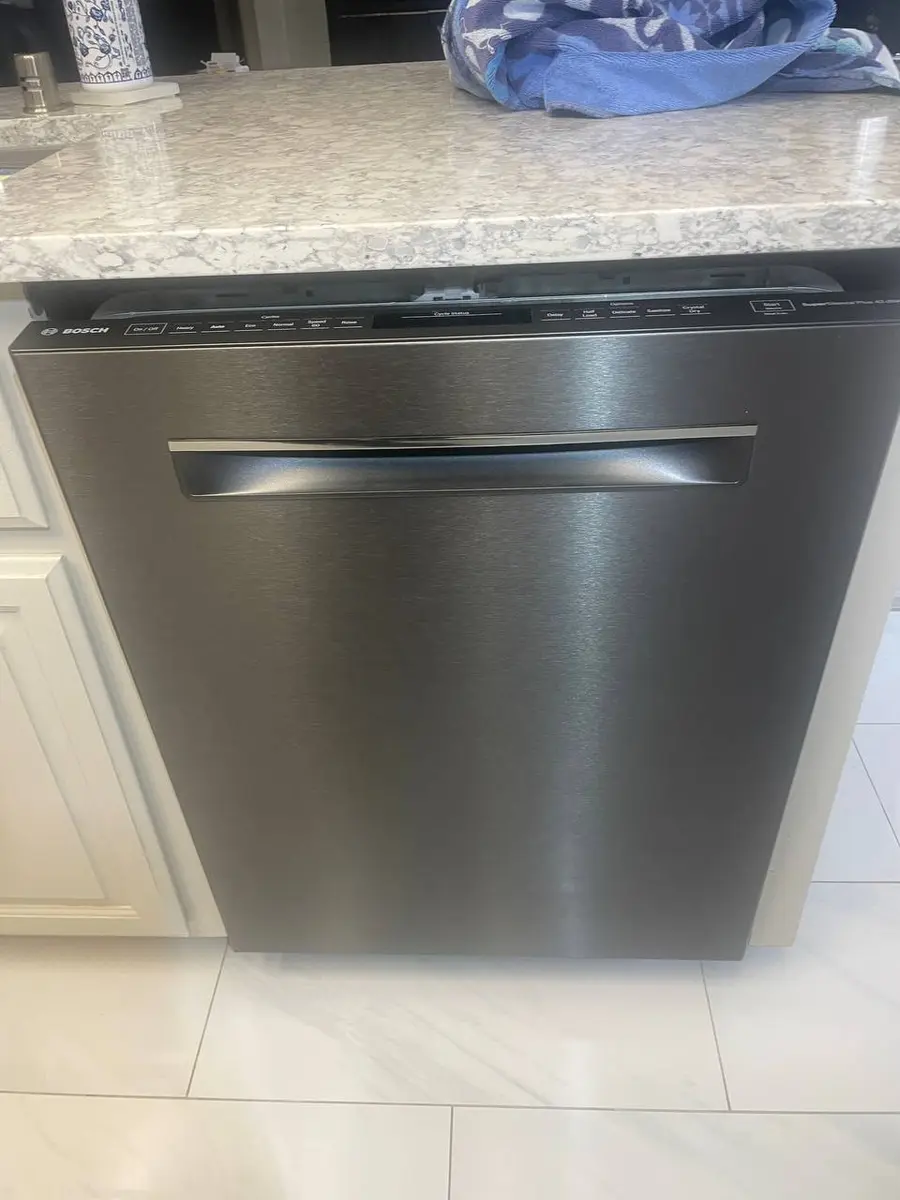
LG Dishwasher Not Starting: How to Diagnose and Fix Door Latch, Control Board, and Power Issues
When your LG dishwasher will not start at all — no lights, no response to buttons, or lights on but cycle will not begin — the problem is usually one of three things: a faulty door latch switch (part 4027ED3002A), a tripped thermal fuse, or a failed control board. This guide covers the systematic diagnosis process specific to LG's Inverter Direct Drive dishwasher platform, helping you identify which component has actually failed before spending money on parts.
Unlike a dishwasher that starts but shows an error code, a unit that will not start at all requires checking the power path from your breaker through to the control board. LG dishwashers have multiple safety interlocks that prevent operation — if any one is open, the unit appears completely dead.
Before You Start
- Tools needed: Multimeter, Phillips #2 screwdriver, Torx T15 driver, non-contact voltage tester, flashlight
- Parts needed: Depends on diagnosis — most common is door latch switch 4027ED3002A (~$15-30)
- Time required: 30-50 minutes for diagnosis, 15-30 minutes for repair
- Difficulty: Intermediate to Advanced
- Safety warning: You will be testing live voltage in Step 3. Use a non-contact voltage tester first. Never touch exposed terminals with power on. If uncomfortable working with live circuits, skip to "When to Call a Professional."
Do You Have the Right Tools?
Water pressure gauge ($60), spray arm tester, float switch multimeter ($85), and drain inspection camera. Our technician arrives with $15K+ in professional tools — your diagnostic is free.
Licensed & Insured · 90-Day Warranty · Same-Day Service
Diagnosing Why Your LG Dishwasher Will Not Start
Work through these checks in order — each eliminates a category of failure:
Step 1: Verify Power Supply to the Unit
First confirm the dishwasher is actually receiving power. Check your electrical panel for a tripped breaker (most LG dishwashers are on a dedicated 15A or 20A circuit). Reset it if tripped. If your LG is plug-connected (not hardwired), check the outlet under the sink with a phone charger or lamp to verify it has power. LG dishwashers manufactured after 2020 typically use a plug connection per updated code requirements, while older models may be hardwired.
If the breaker keeps tripping when you reset it, you have a short circuit — do not keep resetting. This requires professional diagnosis.
Step 2: Check the Door Latch Assembly
LG dishwashers use a mechanical door latch with a built-in electrical switch (part 4027ED3002A). The switch must close for the control board to receive the "door sealed" signal. Without it, the unit appears dead or will show lights but refuse to start a cycle.
Close the door firmly and listen for the latch click. If it does not click, or clicks but feels loose, the latch mechanism may be worn or broken. Open the door and inspect the latch strike (the hook on the door that engages the latch body in the tub frame). Look for cracks, bent metal, or debris preventing full engagement.
To test the switch electrically: disconnect power at the breaker. Remove the inner door panel screws and access the latch assembly. Disconnect the latch switch connector. With your multimeter set to continuity, test across the switch terminals with the latch in the closed position (push the latch hook in by hand). You should get continuity (beep). Open position should be open circuit (OL). If the switch does not change state, it is failed and needs replacement.
Step 3: Test for Voltage at the Control Board
With power restored (careful — live voltage), use a non-contact voltage tester to verify that the wiring harness reaching the control board is energized. Access the control board by removing the outer door panel (close door halfway, lift off hinges, remove 8 Torx T15 screws from the inner door panel frame). The main control board sits in a metal housing at the top of the inner door.
With a multimeter set to AC voltage, carefully test the incoming power connector on the board. You should read 120V AC. If no voltage reaches the board — the thermal fuse, door switch, or wiring between the junction box and board has failed.
Step 4: Check the Thermal Fuse
LG dishwashers have a thermal fuse that blows if the unit overheats. It is located in the wiring path between the junction box (where house wiring connects) and the control board. On most models, it is a small inline device on the red or black wire behind the inner door panel, or near the junction box under the tub.
Disconnect power. Locate the thermal fuse (follow the power wires from the junction box toward the control board). Disconnect one end and test with your multimeter for continuity. Good fuse = continuity (beep). Blown fuse = open circuit (OL). A blown thermal fuse costs $5-15 to replace but you must determine WHY it blew — usually a failing heater element drawing excessive current.
Step 5: Inspect the Control Board for Visible Damage
With the outer door panel removed and power disconnected, examine the main control board. Look for:
- Burnt or blackened components
- Swollen or leaking capacitors (cylindrical components with bulging tops)
- Corroded solder joints or green residue
- Burn marks on the board substrate
- Melted connector pins
Any of these indicate the control board has failed. LG dishwasher control boards cost $100-250 depending on model. On units over 8 years old, compare this cost against a new dishwasher.
Step 6: Replace the Faulty Component
Door latch switch (most common fix): Disconnect power. Remove the inner door panel screws to access the latch assembly. Remove the 2 screws holding the latch housing. Disconnect the wire connector. Install the new latch (4027ED3002A) in reverse order. Test by closing the door — you should hear a firm click and the control panel should illuminate.
Thermal fuse: Disconnect power. Cut the blown fuse out of the wiring (note wire colors). Crimp or solder the new fuse inline using butt connectors. Insulate with heat shrink tubing. Before restoring power, test the heater element resistance to identify why the fuse blew.
Control board: Disconnect power. Photograph all connector positions on the old board. Remove mounting screws. Transfer connectors one-by-one to the new board. Secure and reassemble.
Step 7: Reassemble and Test
Reinstall the inner and outer door panels with all Torx T15 screws. Remount the door on its hinges (align the hinge pins, lower the door onto them). Restore power. Close the door and verify the control panel illuminates. Start a Normal cycle and confirm it begins filling with water within 60 seconds.
Step 8: Post-Repair Monitoring
Monitor the unit through 3 complete cycles over the next 48 hours. If the original problem was a blown thermal fuse, pay attention to whether the heater cycle completes normally — a failing heater element may blow the new fuse again within days. Run Smart Diagnosis via the ThinQ app after the first successful cycle to confirm no stored error codes remain.
Troubleshooting If Unit Still Will Not Start
- Lights on but will not run: The child lock may be engaged. On LG dishwashers, hold the child lock button for 3 seconds to disengage. The lock icon on the display will turn off.
- Buttons beep but cycle immediately stops: The door latch switch is intermittent — making contact when you push the door but losing contact once you release. Replace the latch assembly.
- Breaker trips immediately: A component is short-circuiting to ground. Most commonly the heater element or motor winding has failed short. This requires professional diagnosis with isolation testing.
- Display shows random characters: The control board has suffered memory corruption from a power surge. Try a 5-minute power reset. If characters persist, the board needs replacement.
Safety First — Know the Risks
Live 120V wiring in a wet environment is one of the most dangerous DIY scenarios. Water + electricity = serious shock risk. Our techs are licensed and insured — let them handle the risk.
Licensed & Insured · 90-Day Warranty · Same-Day Service
When to Call a Professional
- Breaker trips immediately when restored — short circuit requires isolation testing
- You measure 120V at the control board connector but the board shows no signs of life — board replacement needed
- Multiple components show damage simultaneously — likely result of a power surge affecting the entire unit
- Wiring insulation is melted or burned — fire hazard that requires professional repair
- You are not comfortable testing live voltage with a multimeter
Same-Day Appliance Repair
Fixed or It's Free
$89 → $0 Service Call & Diagnosis — offer ends May 25
Cost Comparison: DIY vs Professional
| DIY | Professional | |
|---|---|---|
| Parts | $15-$250 (latch to board) | Same + markup |
| Labor | $0 | $120-$280 |
| Time | 30-50 min | 30-60 min |
| Risk | Moderate (live voltage testing) | Warranty included |
The Real Cost of DIY
Average DIY attempt: $150-400 in tools you may use once, plus the risk of further damage. Our diagnostic visit costs $0 — we find the problem and give you an honest quote.
Licensed & Insured · 90-Day Warranty · Same-Day Service
Need Professional Help?
FAQ
Q: My LG dishwasher has power (lights on) but will not start a cycle — what is the most likely cause? A: The door latch switch (4027ED3002A) is the most common cause. The latch must fully engage for the switch to close and signal the control board that the door is sealed. Try pressing the door firmly closed. If cycles still will not start, replace the latch switch ($15-30 part).
Q: How do I access the LG dishwasher control board? A: Close the door halfway, remove the hinge screws, lift the door off. Then remove the 8 Torx T15 screws from the inner door panel frame to expose the outer panel. The control board is housed in a metal enclosure at the top of the inner door structure.
Q: Can a power surge kill my LG dishwasher control board? A: Yes. LG control boards are sensitive to voltage spikes. If your home experienced a power surge (lightning, utility switching) and the dishwasher stopped working afterward, the board likely needs replacement. A whole-home surge protector ($50-100 installed) prevents this.
Q: Is it worth replacing the control board on an older LG dishwasher? A: Control boards cost $100-250. If your LG is under 6 years old, the repair makes financial sense. Over 8 years old with a $200+ board, compare against new unit cost ($500-900). Between 6-8 years, consider whether other components are also aging.
Need a certified technician? Book same-day repair →