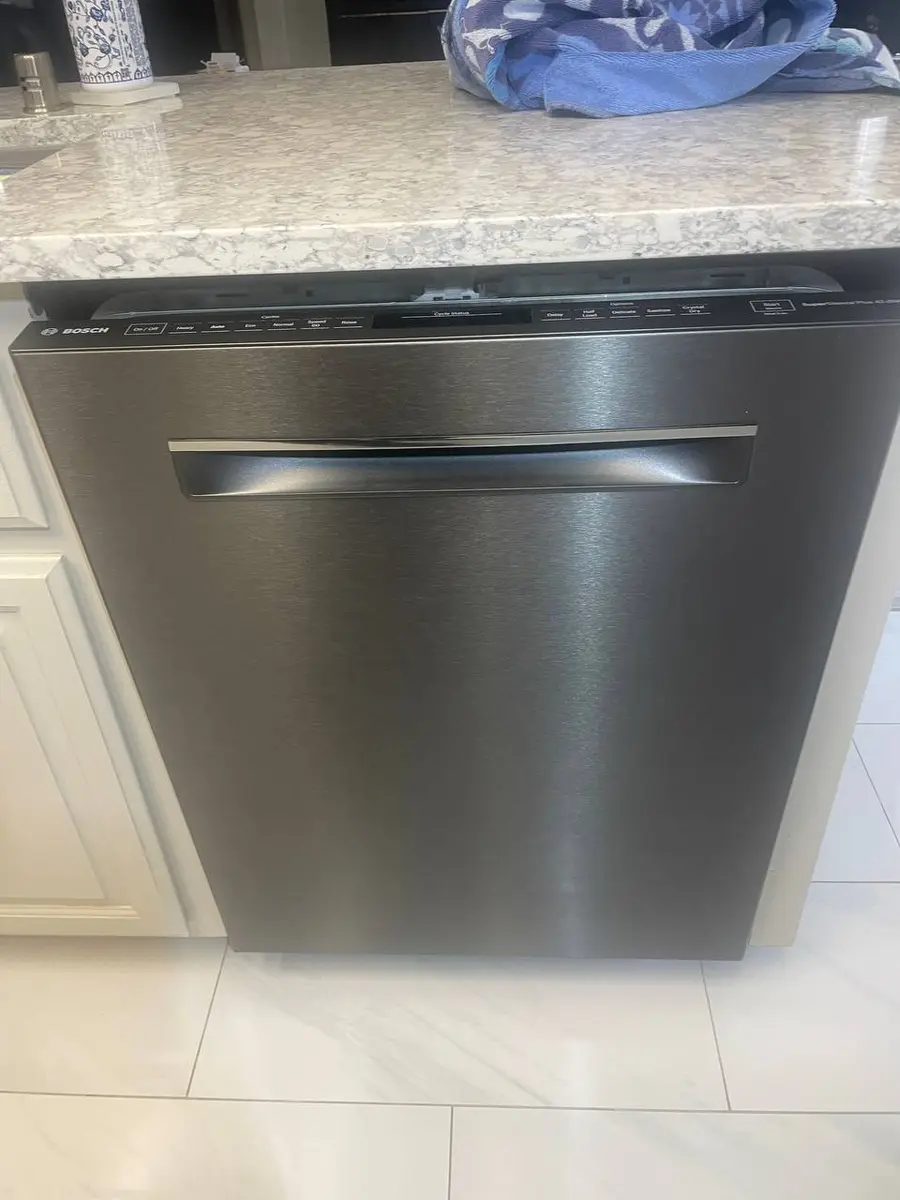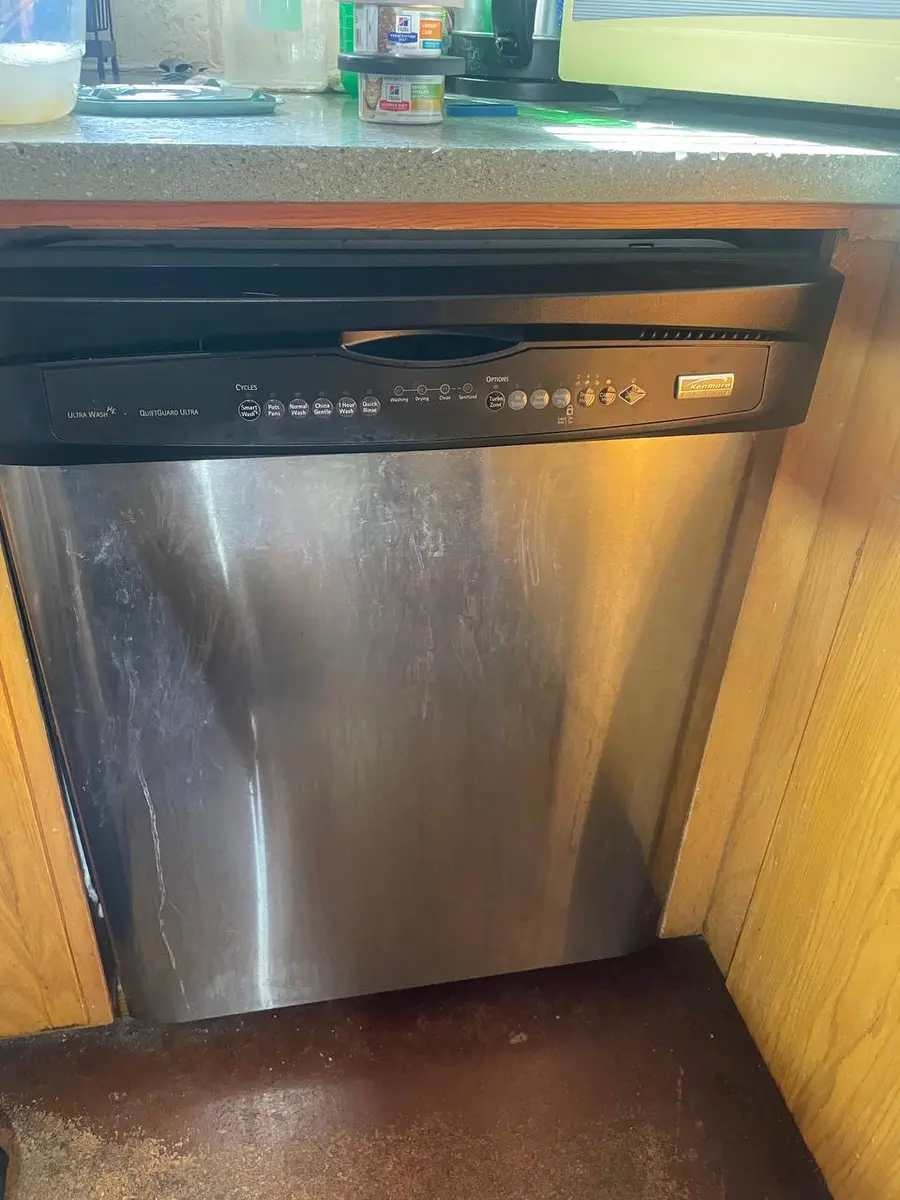
GE Dishwasher Electrical Troubleshooting: Causes
A completely dead GE dishwasher is almost always an electrical-supply problem — a tripped breaker, a loose junction-box connection, a failed door interlock, or a blown thermal fuse — not the control board. Tracing the circuit in order is an advanced diagnosis of roughly 30 to 60 minutes.
GE dishwashers run on a dedicated 120-volt, 15-amp or 20-amp circuit and connect either through a hardwired junction box or a three-prong cord under the sink. Knowing which connection you have is the starting point, because the cure for no power depends entirely on where the break in the chain sits. This guide walks the circuit from the panel inward, clearing each link before condemning any part.
Tools and Parts#
| Item | Purpose |
|---|---|
| Non-contact voltage tester | Confirm power is truly off — critical |
| Multimeter | Continuity and winding resistance |
| Phillips #2 and 1/4-inch hex driver | Kick plate and covers |
| Wire nuts, electrical tape | Remake burnt connections |
Do You Have the Right Tools?
Water pressure gauge ($60), spray arm tester, float switch multimeter ($85), and drain inspection camera. Our technician arrives with $3,000+ in professional tools — your diagnostic is free.
Licensed & Insured · 90-Day Warranty · Same-Day Service
Before You Start#
Safety warning: Electrical work carries shock risk. ALWAYS verify power is off with a non-contact voltage tester before touching any wires. If you are not comfortable working with household wiring, call a licensed electrician.
Step-by-Step#
1. Check the breaker#
The most common cause of a dead dishwasher is a tripped breaker. At the panel, find the dishwasher circuit — a 15-amp or 20-amp single-pole breaker — and if it sits mid-travel, flip it fully off and back on. If it trips again the instant you reset it with the machine idle, there is a short between panel and appliance. If it holds until a cycle begins, a component is pulling too much current: a trip in the heat phase points at the heating element grounding out, while a trip during wash or drain points at a motor winding.
2. Verify power at the connection point#
Switch the breaker off and pull the lower kick plate (two 1/4-inch hex screws). Find the junction box on the right behind the plate, or the cord and receptacle on a plug-in unit. Restore power and touch the non-contact tester to that point. No power here means the fault lives in the house wiring — that is an electrician's job, not the appliance's.
3. Inspect the junction box#
With the breaker off again, open the junction-box cover and study the wire nuts: black to black, white to white, and green or bare to ground. Look for nuts vibrated loose over the years, a hot wire burnt from a poor high-resistance joint, or a corroded ground. Cut any scorched insulation back to clean copper and remake the joint with a fresh wire nut. A loose neutral is the sneaky one — it makes the machine behave erratically without ever tripping the breaker.
4. Test the door interlock#
GE dishwashers cut power to everything when the door opens, so an interlock stuck open makes the machine look dead despite good supply power. The door latch assembly (GE WD13X10052) carries that switch. With power off, unplug the switch connector and read continuity across its terminals: closed when you latch it by hand, open when unlatched. A switch that stays open when latched means the latch assembly is done.
5. Check the thermal fuse#
Some models carry a thermal fuse that blows if the dishwasher overheats, killing the machine outright. Find it per your tech sheet inside the console or behind the kick plate and read continuity; an open fuse reads infinite. Replace it with the identical rating, and just as important, find WHY it blew — usually a failed thermostat or a stuck board relay feeding the heater nonstop.
6. Test the component windings#
If power and the door switch are good but specific functions fail, meter the individual motors and coils. The drain pump (GE WD26X10039) should read about 5–20 ohms; the circulation wash motor about 3–10 ohms; the heating element about 10–20 ohms — and a heater that also shows continuity to the chassis is grounding out and tripping the breaker. The water inlet valve (GE WD15X10003) coil should read about 500–1500 ohms. Infinite means open, near zero means shorted.
7. Inspect the harnesses#
With the kick plate off, scan every wire for melted insulation, rodent-chewed jackets, pinched runs from a past reinstall, and green oxidation on connector pins. Repair damaged insulation with heat-shrink, clean corroded pins with contact cleaner, and properly splice any chewed wire rather than taping it.
8. Clear a power-failure state#
Once the wiring is sound, restore power. A PF on the display just means the machine saw a power interruption; press Start to clear it and run the diagnostic cycle (Start five times within 3 seconds) to confirm every function.
Safety First — Know the Risks
Live 120V wiring in a wet environment is one of the most dangerous DIY scenarios. Water + electricity = serious shock risk. Our techs are licensed and insured — let them handle the risk.
Licensed & Insured · 90-Day Warranty · Same-Day Service
Failure Patterns#
| Symptom | Most likely cause |
|---|---|
| Dead, breaker OK | Door switch, junction box, or thermal fuse |
| Trips breaker instantly | Short in wiring or a heater grounded out |
| Trips during heat | Heating element shorted to ground |
| Trips during wash or drain | Motor winding failure |
| Display flickers | Loose neutral at the junction box |
When to Call a Pro#
Call a licensed electrician or technician if you cannot identify the dishwasher breaker, if there is scorching or melting at the wall connection, if the breaker trips instantly and you cannot find the short, if you smell burning during a run, or if the fault lies behind the wall.
The Real Cost of DIY
Average DIY attempt: $150-400 in tools you may use once, plus the risk of further damage. Our diagnostic visit costs $0 — we find the problem and give you an honest quote.
Licensed & Insured · 90-Day Warranty · Same-Day Service
Appliance Repair Technician · 8 years experience
Experienced technician with 8 years specializing in dishwasher repairs and European appliance brands including Bosch and Thermador.