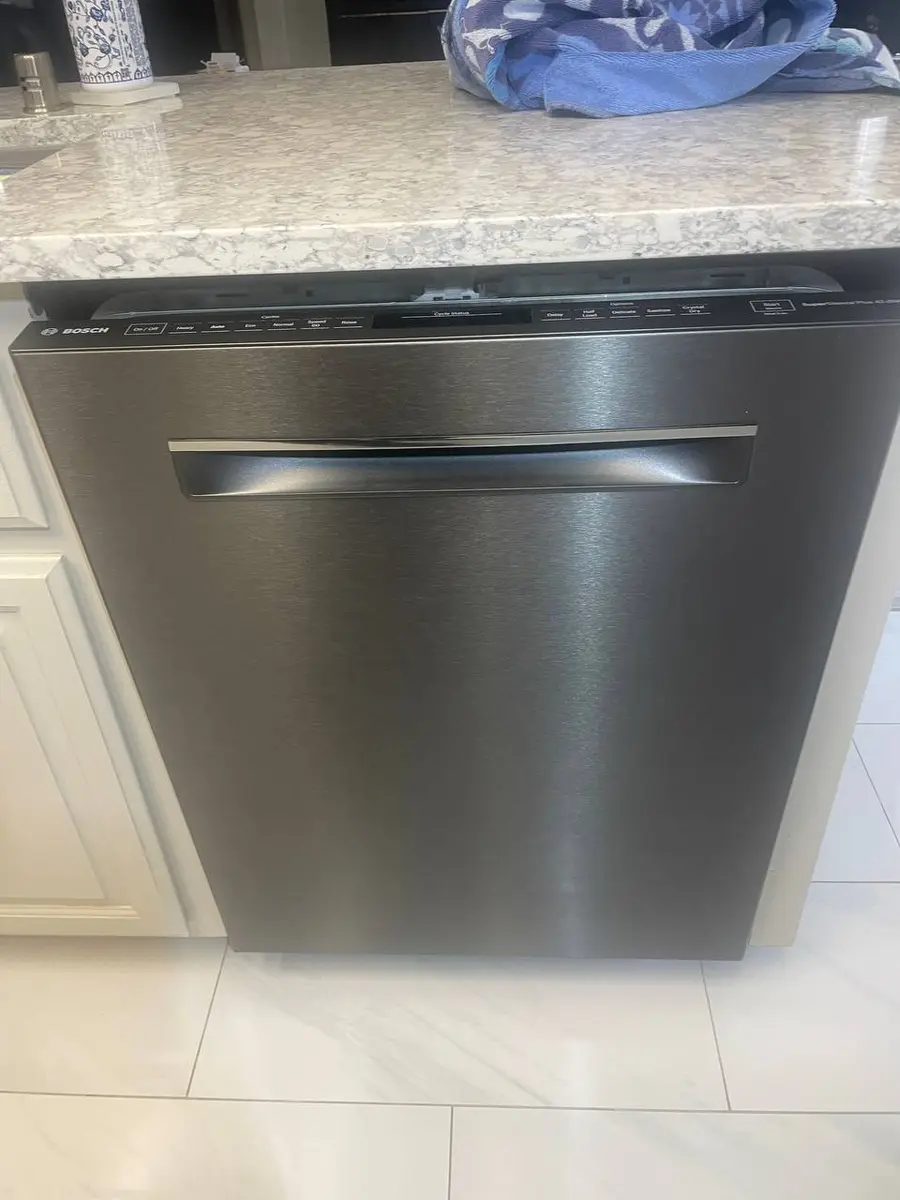
How to Fix a Bosch Dishwasher That Will Not Fill
A Bosch dishwasher that will not fill has usually tripped one of its safety layers, and the single most useful clue is whether the drain pump runs non-stop (AquaStop triggered) or the machine sits silent (a valve or signal problem). Most fixes are cleaning and resetting, not parts.
Listen before you disassemble#
Bosch stacks several protections between the tap and the tub: AquaStop flood protection, a dual-solenoid inlet valve, an inlet screen, and a base-pan float switch. A fault at any one stops the fill. Restore power briefly, press Start, and listen for 60 seconds. A drain pump that runs and never stops means AquaStop has activated. A drain pump that runs 30 to 60 seconds then goes silent means the inlet valve is getting no fill signal. A brief buzz after the drain pump means the valve is trying to open.
Before you start#
| Category | What you need |
|---|---|
| Tools | Torx T20 driver, 10 mm wrench, multimeter, towels, bucket, flashlight |
| Parts | Usually none; keep an inlet screen and a supply washer on hand just in case |
| Time and level | 15 to 45 minutes, Beginner |
Safety warning: Disconnect power at the circuit breaker before working under the dishwasher. The supply line is pressurized — have a bucket and towels in position before disconnecting. If the base pan is flooded, do not tip the unit until you have protection on the floor.
Do You Have the Right Tools?
Water pressure gauge ($60), spray arm tester, float switch multimeter ($85), and drain inspection camera. Our technician arrives with $3,000+ in professional tools — your diagnostic is free.
Licensed & Insured · 90-Day Warranty · Same-Day Service
Step-by-step#
1 - Check the supply. Disconnect power. Under the sink, confirm the hot-water valve is fully open and the AquaStop hose is not kinked from the dishwasher being pushed back. Run the sink faucet to prove there is pressure at the line.
2 - Test the AquaStop hose. The hose has a solenoid at the tap end that only opens when the dishwasher energizes it. Disconnect the hose at the machine end with the 10 mm wrench over a bucket and open the supply valve; free flow means the hose passes water, while no flow means its solenoid has failed closed and the hose assembly needs replacing.
3 - Clean the inlet screen. Look into the valve's inlet port for the small mesh screen that catches sediment. If it is caked white or brown, pry it out gently, rinse it, and refit. This one step clears most slow-fill and no-fill complaints.
4 - Test the valve electrically. With the kick plate off, unplug one solenoid coil connector and measure resistance: roughly 700 to 1500 ohms is a healthy coil, while an open circuit means a burned solenoid and a new valve. If both coils test good with a clean screen and good supply, the control board is not sending the fill signal.
5 - Diagnose a non-stop drain pump. If the pump runs continuously, the base-pan float has risen on a detected leak. Disconnect power, pull the kick plate, and shine a light underneath for water dripping from a hose, the sump, or the pump, and for water pooled in the base pan.
6 - Drain the pan and reset the float. Lay towels down and tip the dishwasher forward about 15 degrees to let the base-pan water out, or vacuum it through the kick-plate opening. The small polystyrene float must settle back to the bottom; once the pan is dry the switch releases and the machine will try to fill again.
7 - Fix the source leak. Before you call it done, cure whatever tripped the float: a loose clamp on the sump-to-pump hose, a cracked pump seal, a worn door gasket splashing into the pan, or spray-arm overshoot. Skip this and the float trips again.
8 - Reassemble and test. Reconnect the supply hand-tight plus a quarter turn, refit the kick plate, restore power, and run a Quick Wash. Confirm the pump runs briefly, the valve buzzes, and water appears in the tub within three to four minutes, watching for leaks through the kick-plate opening.
Quick diagnosis reference#
| Observation | Root cause | Fix |
|---|---|---|
| Drain pump never stops | Water in base pan (AquaStop) | Drain pan, fix the leak |
| No valve buzz after drain | No signal from the board | Board issue (advanced) |
| Valve buzzes, no water | AquaStop closed or screen blocked | Test the hose, clean the screen |
| Fills very slowly | Partially blocked screen | Clean the inlet screen |
| Fills then instantly drains | Drain valve stuck open | Drain pump or solenoid |
Safety First — Know the Risks
Live 120V wiring in a wet environment is one of the most dangerous DIY scenarios. Water + electricity = serious shock risk. Our techs are licensed and insured — let them handle the risk.
Licensed & Insured · 90-Day Warranty · Same-Day Service
Lead Appliance Repair Technician · 12 years experience
Experienced technician with 12 years specializing in washing machine and dryer repairs across all major brands.