How to Fix an LG Dryer
Fixing an LG dryer starts with knowing its type — electric, gas, or heat pump — because each heats differently. From there, most complaints fall into three buckets: no heat, no tumble, and FlowSense or Sensor Dry codes. Expect 20-90 minutes depending on the fault.
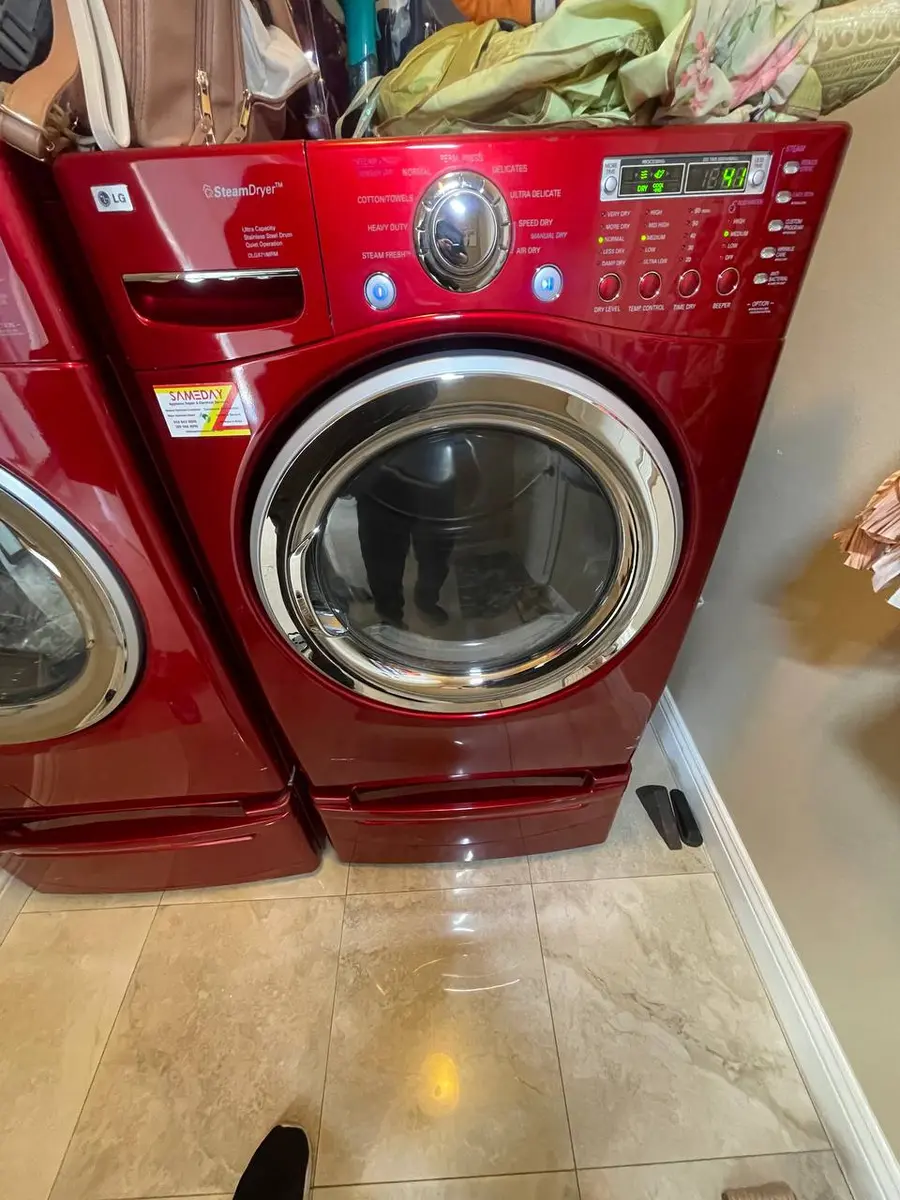
The three LG dryer types diverge at the heat source: electric uses a resistance element, gas uses a burner with an igniter and flame sensor, and the Dual Inverter Heat Pump has no heating element at all. Common to all are the slot lint filter, FlowSense vent monitoring, Sensor Dry moisture bars, and the belt-and-idler drum drive.
Tools and setup#
- Tools: multimeter, Phillips #2 screwdriver, 5/16-inch nut driver, flashlight
- Parts (by fault): heating element, thermal fuse, drive belt, gas igniter
- Time: 20-90 minutes depending on the issue
- Difficulty: Intermediate
- Safety warning: Unplug the dryer. For gas models, close the gas supply valve. Wait 5 minutes for capacitor discharge. Never test gas components with open flame.
Do You Have the Right Tools?
Gas leak detector ($130), thermal fuse tester ($95), belt tension gauge, and vent inspection camera ($180). Our technician arrives with $3,000+ in professional tools — your diagnostic is free.
Licensed & Insured · 90-Day Warranty · Same-Day Service
Step 1 — Identify your dryer type#
The serial plate inside the door tells you: a DLE model is electric (heating element), a DLG is gas (burner assembly), and a DLHX or DLEX marked Heat Pump is the Dual Inverter Heat Pump (no element, no gas). It matters because the heat pump warms air to roughly 140F, while electric models push past 300F and gas past 250F.
Step 2 — No heat, electric#
If the drum turns but the exhaust runs cold: meter the thermal fuse on the blower housing or exhaust duct — it should read continuity, and an open (OL) reading means it blew, usually from a blocked vent, so replace it and clear the vent or the new one blows too. Then meter the heating element across its terminals, where 10-30 ohms is good and OL is a burned-out coil. Finally check the two high-limit thermostats on the element housing and the cycling thermostat on the blower — each should read continuity, and an open one cuts the element.
Safety First — Know the Risks
Gas dryers carry carbon monoxide and explosion risk. Even electric dryers involve 240V circuits that can deliver a fatal shock. Our techs are licensed and insured — let them handle the risk.
Licensed & Insured · 90-Day Warranty · Same-Day Service
Step 3 — No heat, gas#
Gas dryers ignite in a sequence, so work it in order: the two gas-valve solenoids must both energize to open the valve, the igniter glows orange to light the gas, and the flame sensor confirms it caught. An igniter that glows but no gas flows usually means weak solenoids — very common past 5 years, and they act up intermittently first (drying on the second cycle but not the first). An igniter that never glows tests at 50-400 ohms when good, OL when burned out.
Step 4 — No heat, heat pump#
The Dual Inverter Heat Pump has no element or burner, so if the air is not warming, start at the condenser filter — a clog blocks heat exchange and trips the compressor on thermal protection — and confirm the condenser coils behind it are clean. A compressor that stays off with a clean condenser is a sealed-refrigerant repair for a certified technician.
The Real Cost of DIY
Average DIY attempt: $150-400 in tools you may use once, plus the risk of further damage. Our diagnostic visit costs $0 — we find the problem and give you an honest quote.
Licensed & Insured · 90-Day Warranty · Same-Day Service
Step 5 — No tumble#
If the motor hums but the drum will not turn, the multi-rib belt has snapped — it wraps the drum and routes through the idler to the motor pulley, so a break lets the motor spin freely. Confirm by spinning the drum by hand: nearly free means a broken belt, while hard-to-turn means a jam. To replace it, pull the top and front panels, lift the drum out, loop the new belt on ribbed-side to the drum, route it under the idler and around the motor pulley, and reset the drum. If the motor makes no sound at all on start, check its internal thermal fuse, the door switch, and the start switch.
Step 6 — FlowSense codes#
LG's FlowSense reports vent blockage: d80 is about 80% blocked (it still runs, less efficiently), d90 is 90%, and d95 is 95% and may shut the dryer down early. The fix for all three is the same — clean the whole vent run from the dryer to the exterior hood, plus the internal lint duct — after which FlowSense resets on its own once airflow returns on a high-heat cycle.
Don't Void Your Warranty
Opening your appliance yourself may void the manufacturer warranty. Our repair comes with a 90-day guarantee, and we document everything for warranty compliance.
Licensed & Insured · 90-Day Warranty · Same-Day Service
Step 7 — Sensor Dry problems#
If Sensor Dry over- or under-dries, wipe the moisture-sensor bars with rubbing alcohol first, since fabric-softener film is the usual cause, then confirm the vent is not partly blocked (restricted airflow stretches dry times and fools the sensor) and check the sensor-bar wiring behind the drum. If it still misbehaves, the board's moisture circuit may be at fault.
Step 8 — LG Smart Diagnosis#
For codes not covered here, open LG ThinQ, choose your dryer, tap Smart Diagnosis, and follow the prompts — the dryer plays diagnostic tones through its speaker for the app to decode.
Is It Worth Your Time?
A dryer not heating could be the element, thermal fuse, gas valve, igniter, or timer. Average DIY diagnosis: 3-4 hours with no guarantee of finding the issue. Our technician diagnoses the issue in about 30 minutes — same-day appointments available.
Licensed & Insured · 90-Day Warranty · Same-Day Service
When to call a professional#
Get help for any heat-pump compressor or refrigerant issue (certified HVAC only), any gas-valve or gas-line concern, a control-board failure throwing multiple codes, or a motor swap that demands belt-routing and drum-support know-how. EasyBear technicians serving Sacramento and the Bay Area carry LG parts and diagnostic tools on every call.
Past your comfort zone? Book a same-day LG dryer repair.
Appliance Repair Technician · 11 years experience
Experienced technician with 11 years specializing in Frigidaire and Electrolux refrigerator and dryer repair with a focus on safety.