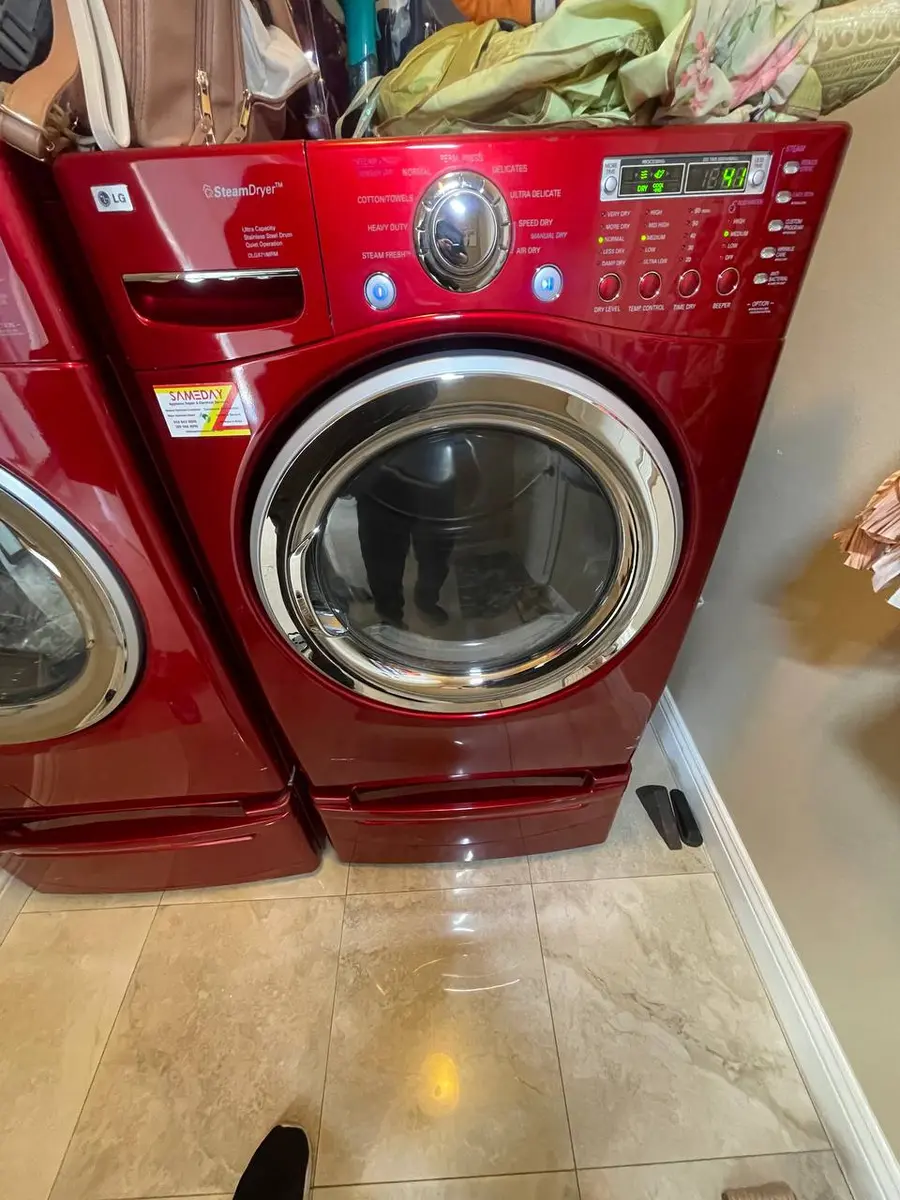
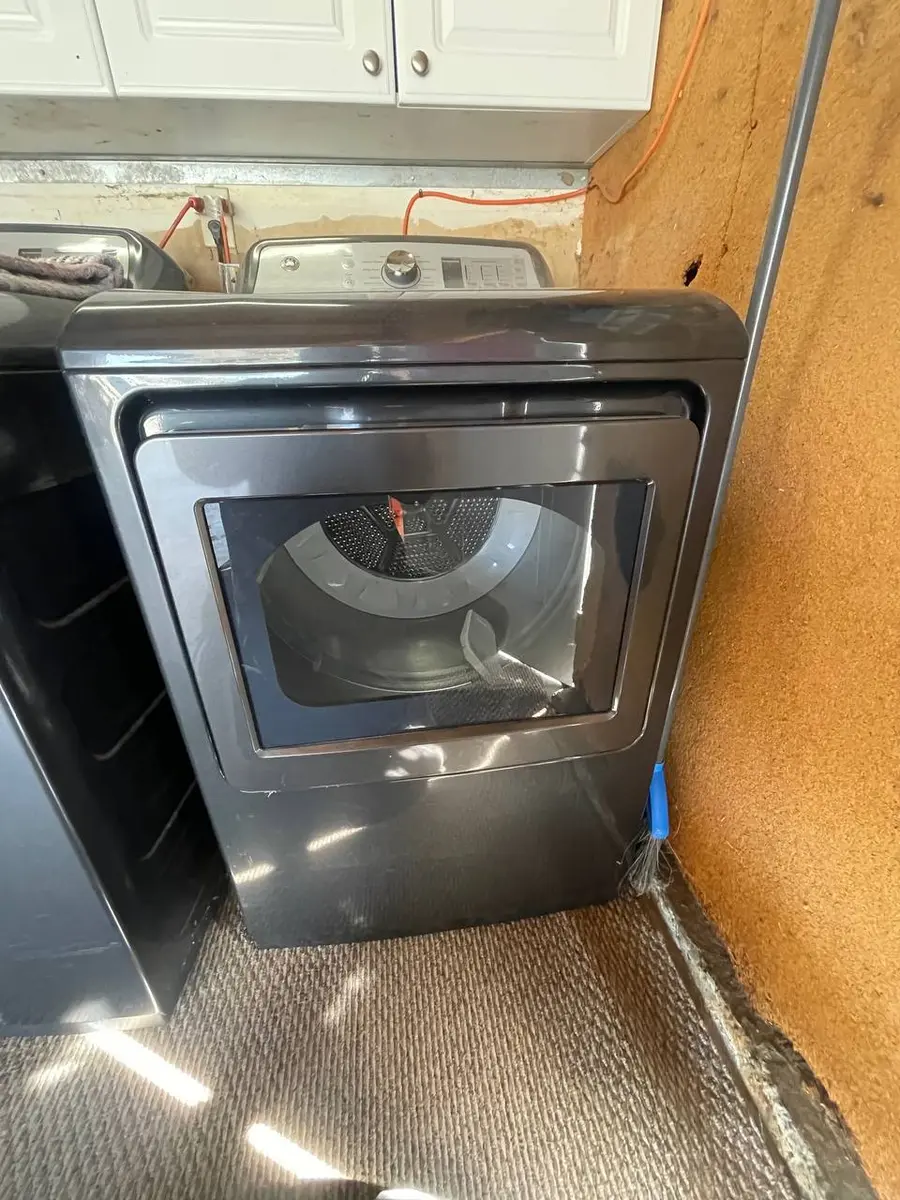
How to Fix a KitchenAid Dryer
Most KitchenAid dryer complaints fall into four buckets — no heat, will not start, takes too long, and noise — and each has a short check-in-order list. Start with the cheapest, most common cause and work down. Difficulty: beginner to intermediate; 30-60 minutes.
The mechanical core is Whirlpool's, so these checks map to that platform, but KitchenAid's premium features (ProDry, Wrinkle Shield Plus) add a few failure modes worth knowing. Work the list for your symptom below.
Tools & parts#
| Item | Detail |
|---|---|
| Phillips #2 / Torx T20 | panels |
| 1/4-inch hex nut driver | rear-panel screws |
| Multimeter | continuity checks |
| Flashlight | inspection |
Do You Have the Right Tools?
Gas leak detector ($130), thermal fuse tester ($95), belt tension gauge, and vent inspection camera ($180). Our technician arrives with $3,000+ in professional tools — your diagnostic is free.
Licensed & Insured · 90-Day Warranty · Same-Day Service
Safety first#
Unplug the dryer. For gas models, shut off the gas supply valve. Allow 10 minutes cooling time after the last cycle.
No heat#
Electric, in order: the thermal fuse on the rear bulkhead (the most common no-heat cause — meter for continuity), the heating element (part 279838, continuity end to end), the high-limit thermostat, and the cycling thermostat (closed when cool). Gas, in order: the gas valve solenoids (the usual intermittent-heat culprit — the burner lights then quits after a few minutes), the igniter (weak if it glows over 90 seconds without lighting), the flame sensor, and the same thermal fuse. On ProDry models, if the main element works but clothes stay damp, the ProDry secondary element behind the rear bulkhead may have failed. Test each of these parts with the multimeter set to continuity: an open (infinite) reading on the fuse, element, or a thermostat means that part has failed and is the fix.
Safety First — Know the Risks
Gas dryers carry carbon monoxide and explosion risk. Even electric dryers involve 240V circuits that can deliver a fatal shock. Our techs are licensed and insured — let them handle the risk.
Licensed & Insured · 90-Day Warranty · Same-Day Service
Will not start#
Check in order: the door switch (listen for a click when closing — no click means misaligned or broken), the push-to-start switch (momentary continuity when pressed), the thermal fuse (a blown fuse kills all operation, not just heat, and is the top cause of a dead dryer), the drive motor (a hum without turning means seized or jammed), and the control board — but confirm incoming power first (240V electric, 120V gas) before condemning it. A completely dead dryer with no lights or sounds is the thermal fuse far more often than the board, so test the cheap fuse before ordering electronics.
Takes too long#
Check in order: clean the lint screen AND wash it (fabric-softener film blocks airflow invisibly), inspect the full exhaust vent run for lint (the most common cause of long dry times), clean the moisture sensors with rubbing alcohol, check the blower wheel for a loose fit on the motor shaft, and confirm the vent run is within 35 feet equivalent (subtract 5 feet per 90-degree elbow), which ProDry needs for adequate flow.
The Real Cost of DIY
Average DIY attempt: $150-400 in tools you may use once, plus the risk of further damage. Our diagnostic visit costs $0 — we find the problem and give you an honest quote.
Licensed & Insured · 90-Day Warranty · Same-Day Service
Makes noise#
Match the noise: a thump is a flat spot on a rear drum roller (replace them as a set), a squeal is a worn front drum glide or dry motor bearings (the glide is most common), a grind is the rear drum bearing (pull the belt and spin the drum by hand to confirm), and a rattle is a loose blower wheel, a loose heat shield, or an object in the drum seam. Also confirm the intermittent tumble is just Wrinkle Shield Plus running after the cycle. Pull the drive belt and turn the drum by hand to localize the sound — a free, quiet spin points at the blower or a loose part rather than the drum bearings.
When to call a pro#
Call a technician for gas valve or gas-line work you are not comfortable with, a heavy motor replacement with belt routing, a dryer that repeatedly blows thermal fuses (a vent restriction or board fault), or a control board that needs programming.
For a repair-versus-replace budget, see our dryer repair cost guide.
Lead Appliance Repair Technician · 12 years experience
Experienced technician with 12 years specializing in washing machine and dryer repairs across all major brands.