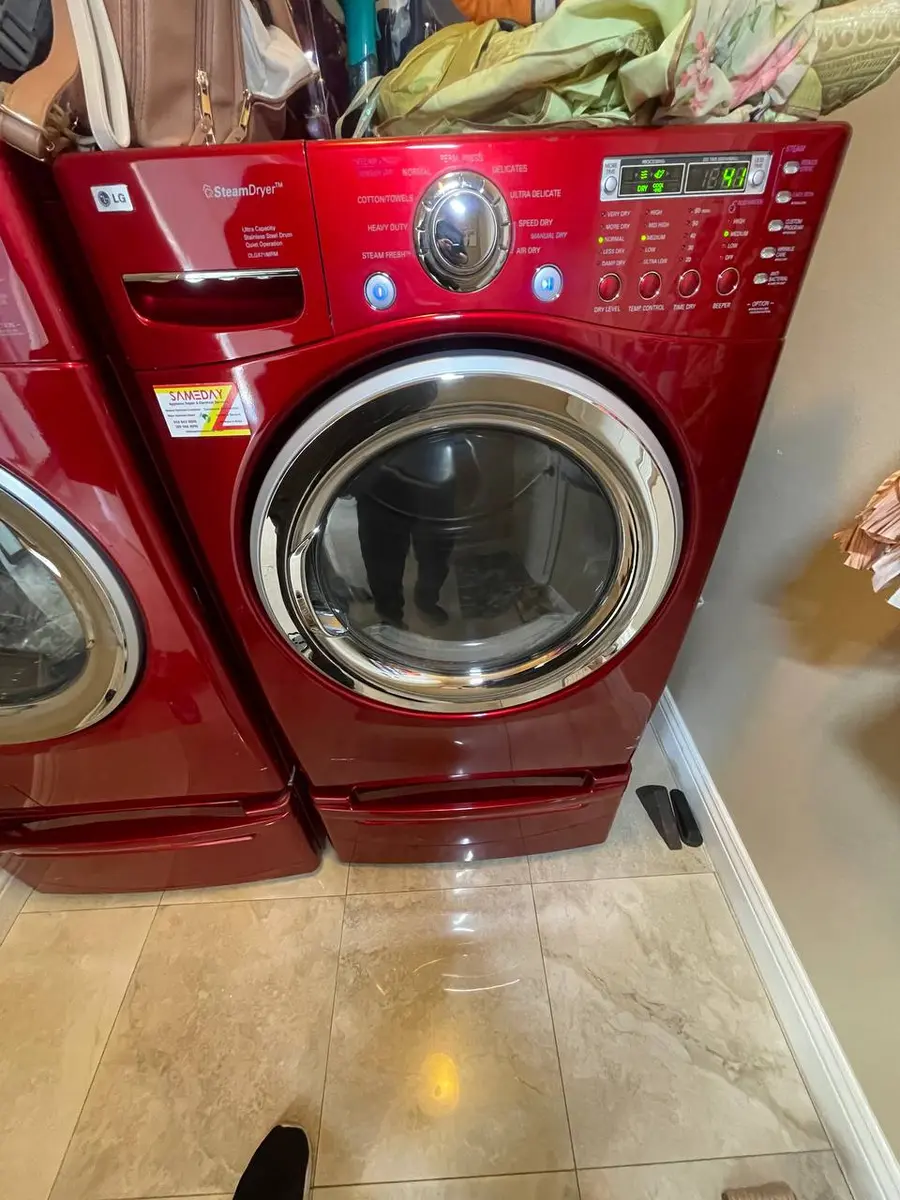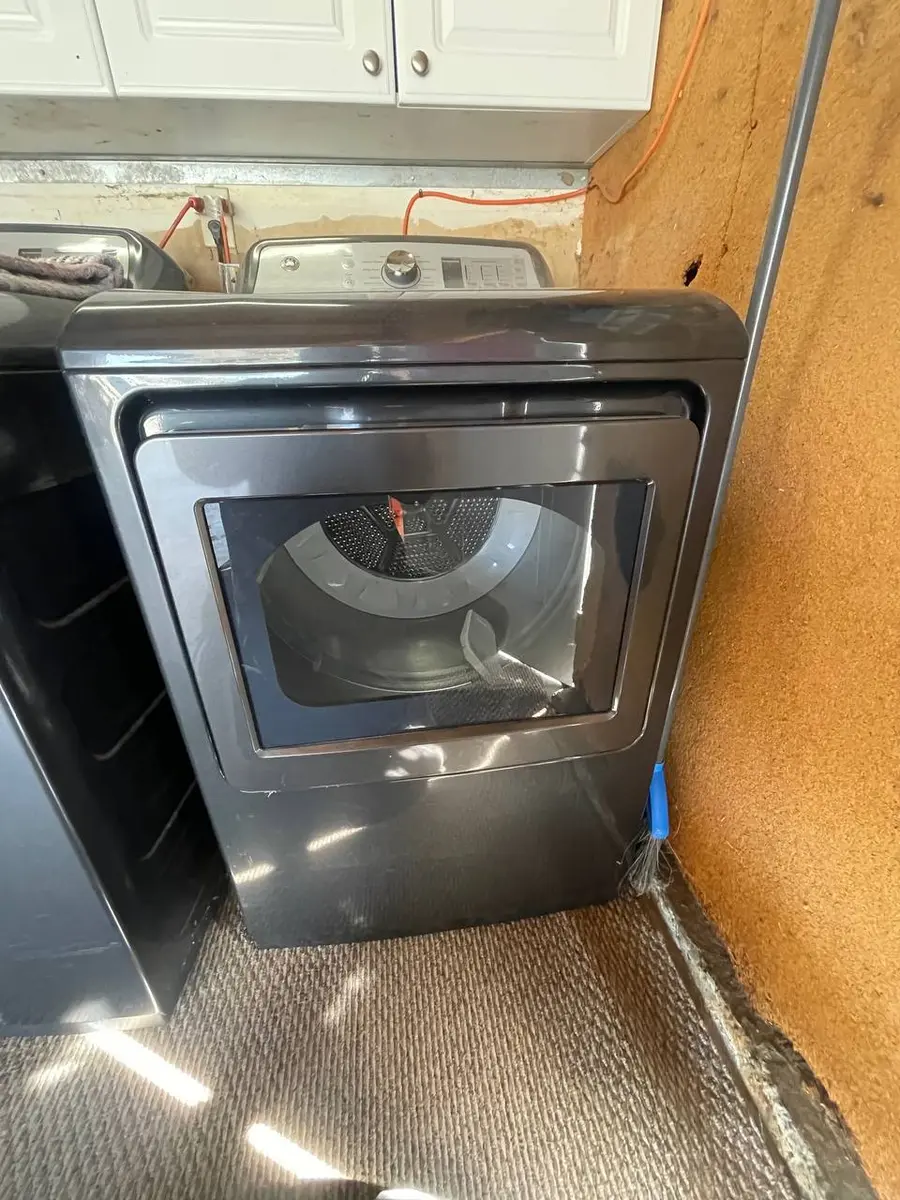
How to Disassemble a Frigidaire Dryer
Disassembling a Frigidaire dryer (electric or gas) is a quick panel-by-panel job: top panel (spring clips or rear screws), front panel, then the drum, which opens access to the element, thermal fuse, motor, belt, and gas valve. Expect an intermediate 15-30 minutes with a #2 Phillips, a 1/4-inch nut driver, and a putty…
Frigidaire's layout is forgiving, but the door switch is a safety interlock, so if it is not fully reseated the dryer will not start after reassembly. Map the rear-panel screw positions as you go, because they are different lengths and a long screw in a short hole punctures internal parts.
Before You Start#
- Tools needed: Phillips #2 screwdriver, 1/4-inch nut driver, putty knife (if spring clips), flat-blade screwdriver
- Parts needed: None (disassembly procedure)
- Time required: 15-30 minutes for full disassembly
- Difficulty: Intermediate
- Safety warning: Unplug the dryer. For gas models, turn off the gas supply valve. Even after unplugging, the heating element terminals can store residual charge — do not touch for 5 minutes.
Do You Have the Right Tools?
Gas leak detector ($130), thermal fuse tester ($95), belt tension gauge, and vent inspection camera ($180). Our technician arrives with $3,000+ in professional tools — your diagnostic is free.
Licensed & Insured · 90-Day Warranty · Same-Day Service
Step-by-Step Instructions#
Step 1: Remove the Top Panel#
Frigidaire dryers use one of two top panel mounting methods:
Rear screw method (most models): Remove 2 Phillips screws at the rear edge of the top panel. Slide the top panel toward the rear 1 inch, then lift straight up.
Spring clip method (some Gallery models): Insert a putty knife between the top panel and front panel approximately 3 inches from each front corner. Push inward to release the spring clip. Once both clips are released, lift the front edge of the top panel and pivot it back on rear tabs.
Step 2: Remove the Front Panel#
With the top panel removed, locate the 2 screws at the top of the front panel (they screw into the cabinet frame from above, visible now that the top panel is off). Remove these screws.
Before lifting the front panel: the door switch wires connect to the front panel. Photograph and disconnect the door switch wiring connector (on the upper-left or upper-right corner of the front panel interior).
The front panel hangs on 2 clips or tabs at the bottom. Lift the front panel straight up to clear these bottom tabs, then pull the panel toward you and set it aside. You now have full access to the drum.
Step 3: Remove the Drum#
The drum sits on two rear support rollers and is held in position by the drive belt wrapped around its outside. The belt routes from the drum, under the idler pulley (tensioner), and around the motor shaft.
To remove the drum: reach underneath the drum to the idler pulley (located at the bottom, usually lower-right). Push the idler pulley toward the motor to release belt tension. With your other hand, slip the belt off the motor shaft. The belt will go slack around the drum.
Now lift the drum slightly and slide it forward, out through the front opening. The drum is light (20-30 pounds) but awkward — tip it sideways to clear the opening if needed.
Step 4: Access the Heating Element (Electric Models)#
With the drum removed, the heating element housing is visible — typically at the rear of the dryer, inside a metal channel or box. On most Frigidaire models, the element is accessed from the rear:
Remove the rear panel or rear element cover (4-6 screws). The element housing slides out after disconnecting 2 wires and removing the mounting bracket screws (1-2 screws or clips).
The element is a coiled resistance wire mounted in a ceramic or mica frame. Inspect for breaks in the coil — a broken coil = no heat.
Step 5: Access the Thermal Fuse#
The thermal fuse is mounted on the blower housing (the duct that carries hot air from the drum to the exhaust). With the drum removed, the blower housing is visible at the rear of the dryer interior.
The thermal fuse is a small oblong device (about 1 inch long) attached with one mounting screw and two wire terminals. It is a one-time safety device — once it blows (overheats), it permanently breaks the circuit. Test with multimeter: should show continuity if good, open if blown.
Step 6: Access the Motor and Belt Path#
The motor is at the lower center/right of the dryer, visible with the drum removed. It has the drive belt around its shaft and connects to the blower fan at one end.
To remove the motor: disconnect its wiring harness, remove mounting bolts (typically 2), and disconnect the blower from the motor shaft. The motor lifts out.
The idler pulley mounts on a bracket near the motor — inspect it for smooth bearing rotation. A squeaky or seized idler bearing causes noise during operation.
Step 7: Access the Gas Valve (Gas Models Only)#
On gas Frigidaire dryers, the gas valve assembly is at the lower rear, behind the front lower panel (or accessed from below). The gas valve contains igniter, flame sensor, and gas valve solenoids. These components are accessible without removing the drum — the lower front panel provides direct access.
Do not disconnect gas lines unless you are qualified. Diagnosis of gas components (igniter glow, flame sensing, valve solenoid testing) can often be done with multimeter testing at the wiring harness without disturbing the gas connections.
Step 8: Access the IQ-Touch Control Board#
On Frigidaire dryers with IQ-Touch electronic controls, the control board is behind the main control panel at the top. With the top panel removed, the control panel is accessible from behind. Remove 2-3 screws and the panel lifts off, revealing the board.
IQ-Touch boards on dryers have the same moisture sensitivity as washer boards — handle with dry hands and store in dry environment.
Reassembly Notes#
Reassemble in reverse order. Key points:
- Belt routing: The belt wraps around the drum (flat side to drum), then routes under the idler pulley, then around the motor shaft (ribbed side on both pulleys). The idler spring provides automatic tension.
- Drum placement: Set the drum rear edge onto the support rollers first, then lower the front edge into position. Re-route the belt before installing the front panel.
- Front panel: Hang on bottom tabs first, then tip upward and replace top screws. Reconnect door switch.
- Door switch: If not reconnected, the dryer will not start (safety interlock). Verify the connector is fully seated.
Safety First — Know the Risks
Gas dryers carry carbon monoxide and explosion risk. Even electric dryers involve 240V circuits that can deliver a fatal shock. Our techs are licensed and insured — let them handle the risk.
Licensed & Insured · 90-Day Warranty · Same-Day Service
Troubleshooting Common Issues#
- Cannot release idler pulley tension: Push firmly toward the motor. The spring is strong but releases with direct pressure. If spring is broken (no tension at all), the belt has been running slack and both belt and idler need replacement.
- Drum will not slide out the front: Tip it slightly sideways to clear the cabinet opening. Check that the belt is fully slack.
- Cannot find the thermal fuse: Look on the blower housing or exhaust duct — not near the heating element (that is the high-limit thermostat, a different component).
- Rear panel screws are different lengths: Map positions during removal to avoid damage during reassembly.
When This Repair Won't Solve It#
- If you cannot release the idler tension, the spring may be broken, meaning the belt has run slack and both belt and idler need replacing.
- Worn drum-support rollers causing a thumping noise need the specific roller part, not just access.
- Heat-damaged wiring inside the cabinet signals overheating whose root cause must be found before reassembly.
The Real Cost of DIY
Average DIY attempt: $150-400 in tools you may use once, plus the risk of further damage. Our diagnostic visit costs $0 — we find the problem and give you an honest quote.
Licensed & Insured · 90-Day Warranty · Same-Day Service
When Should You Call a Professional?#
EasyBear technicians serving Sacramento and the Bay Area carry Frigidaire-specific diagnostic tools and replacement parts on every service call.
- Gas line disconnection or reconnection — requires licensed plumber
- If the drum support rollers are worn (flat spots causing thumping) — requires specific roller replacement
- If wiring is damaged by heat inside the cabinet — indicates overheating that needs root cause investigation
Don't Void Your Warranty
Opening your appliance yourself may void the manufacturer warranty. Our repair comes with a 90-day guarantee, and we document everything for warranty compliance.
Licensed & Insured · 90-Day Warranty · Same-Day Service
FAQ#
Q: How do I remove the top panel? A: Either 2 rear Phillips screws (slide back, lift) or spring clips under the front lip (putty knife release, lift from front).
Q: How do I remove the drum? A: Remove top and front panels. Push idler pulley to release belt, slip belt off motor shaft. Lift drum out the front.
Q: Where is the heating element? A: Rear access panel, in a metal housing. Slides out after disconnecting 2 wires and mounting screws.
Q: Where is the thermal fuse? A: On the blower housing behind the drum. Small oblong device with 1 screw and 2 wires. One-time device — blows permanently.
Our repair teams handle this type of maintenance regularly — here is what consistently works.
If this repair feels beyond your comfort zone, we get it. Schedule a same-day visit — no charge for the diagnostic.
Appliance Repair Technician · 11 years experience
Experienced technician with 11 years specializing in Frigidaire and Electrolux refrigerator and dryer repair with a focus on safety.