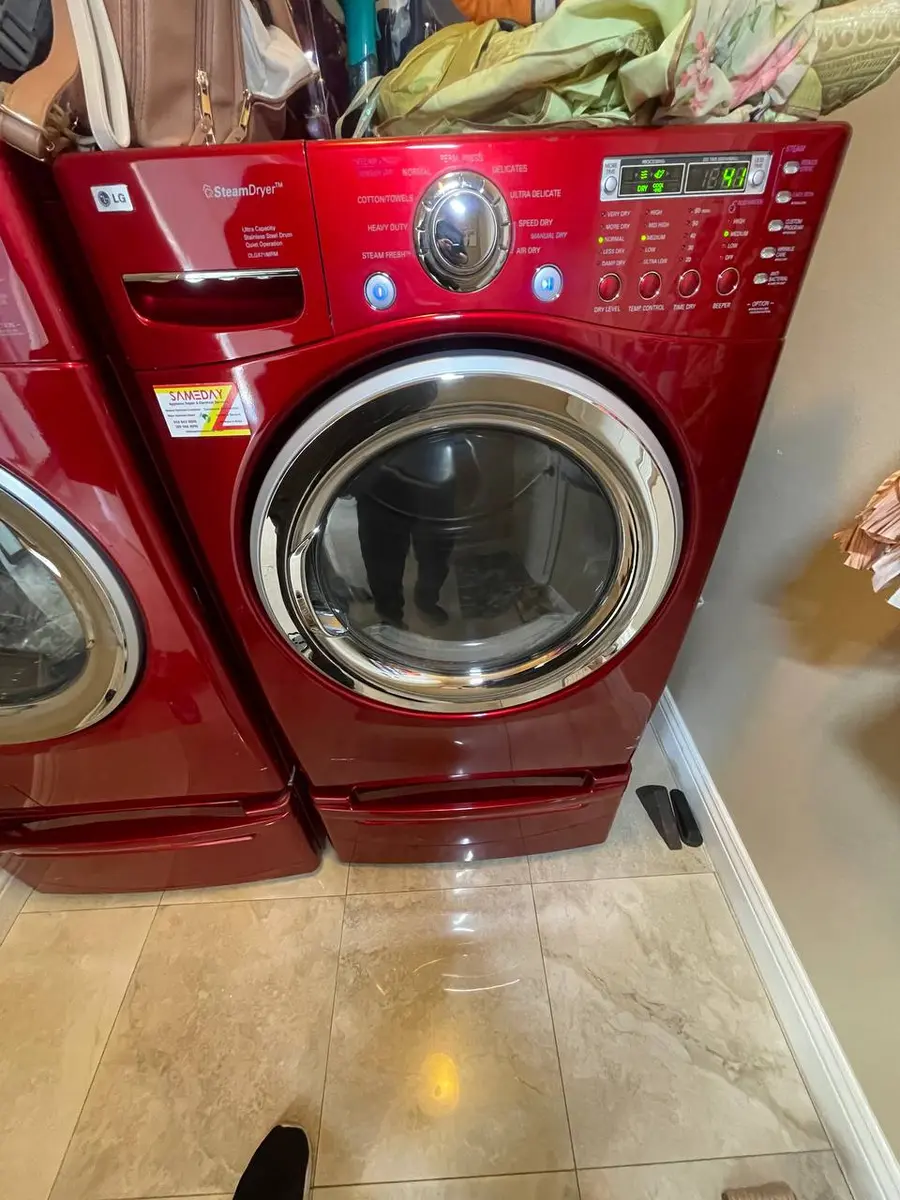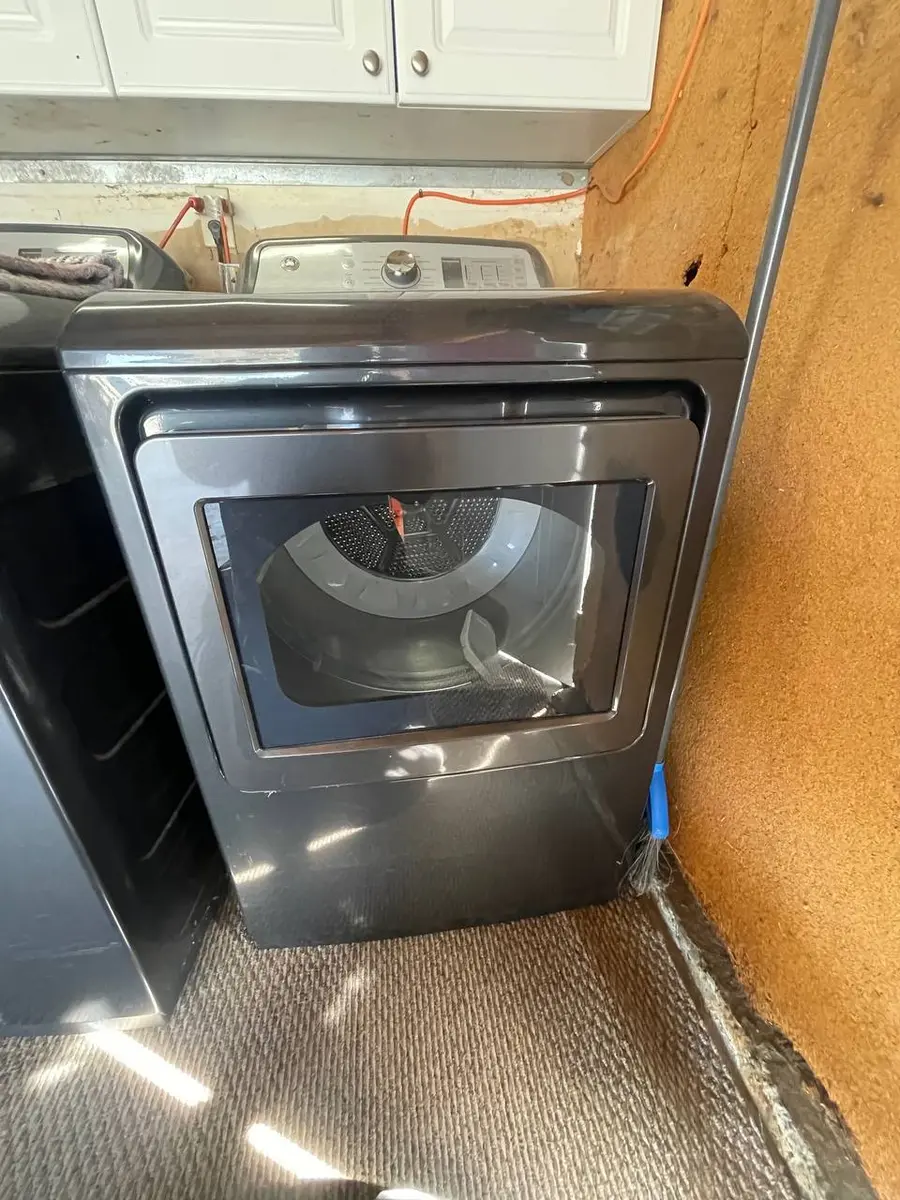
How to Clean an LG Dryer: Lint Filter
Cleaning an LG dryer goes well beyond the lint filter. Rinse the slot filter (soap-scrub it if water beads), vacuum the filter housing, wipe the moisture sensor bars with rubbing alcohol, and brush out the full exhaust vent to the exterior hood. On heat-pump DLHX models, also rinse the internal condenser filter…
LG dryers need brand-appropriate care. Beyond the lint filter, they rely on the moisture sensor bars inside the drum, the exhaust vent system, and — on LG Dual Inverter Heat Pump models (DLHX series) — an internal condenser filter cleaned monthly. Proper cleaning keeps the FlowSense vent-blockage indicator quiet, keeps Sensor Dry accurate, and protects the dual inverter compressor on heat-pump models.
Tools, Supplies, and Safety First#
- Tools needed: Vacuum with crevice attachment, soft-bristle brush, microfiber cloth, dryer vent cleaning brush kit (long flexible brush), rubbing alcohol
- Supplies needed: Water (for lint filter rinse), mild dish soap (for sensor bars)
- Time required: 30-45 minutes (internal) + 15-30 minutes (vent system)
- Difficulty: Beginner
- Safety warning: Unplug the dryer or turn off the circuit breaker. For gas LG dryers, also close the gas supply valve before pulling the unit out for vent access.
Do You Have the Right Tools?
Gas leak detector ($130), thermal fuse tester ($95), belt tension gauge, and vent inspection camera ($180). Our technician arrives with $3,000+ in professional tools — your diagnostic is free.
Licensed & Insured · 90-Day Warranty · Same-Day Service
Step-by-Step Instructions#
Step 1 — Clean the slot-style lint filter#
LG's lint filter slides up from a slot at the top of the door opening — pull it straight up by the handle tab. It is a long, narrow mesh screen (about 15 inches long and 4 inches wide) in a rigid plastic frame. Peel the lint off with your fingers, then rinse it under running water, which matters most if you use dryer sheets, since their invisible waxy residue clogs the mesh and cuts airflow. Water should pass freely through the mesh; if it beads or pools, the screen is coated. For a coated screen, add a few drops of dish soap, scrub both sides gently with a soft brush, rinse well, and air-dry completely before reinstalling. A coated filter cuts airflow by up to 25% and throws off Sensor Dry.
Step 2 — Vacuum the filter housing#
With the filter out, look down into the slot — lint collects at the bottom of the housing where the filter cannot reach. Push a vacuum crevice attachment into the slot and suction out the accumulated lint and debris that fell past the filter, reaching as deep as you can, since the housing runs several inches below the door opening. Clearing it keeps lint from bypassing the filter into the vent system.
Step 3 — Clean the moisture sensor bars#
LG Sensor Dry uses two metallic bars inside the drum, near the lint-filter slot, to read remaining moisture by the resistance between them when clothes touch. Coated with dryer-sheet or softener residue, they misread — leaving clothes over-dried or under-dried. Dampen a microfiber cloth with rubbing alcohol and wipe each bar firmly until the cloth stops picking up residue; clean, the bars feel smooth with a slightly rough metallic finish. Do this monthly or whenever drying gets inconsistent.
Step 4 — Clean the exhaust vent system#
Disconnect the dryer from the wall vent duct (usually a 4-inch flexible or rigid duct on a hose clamp or foil tape) and pull the dryer forward to reach the rear exhaust port. Feed a dryer-vent brush kit (a long flexible brush with a rotating head) into the wall duct from the dryer end and push it through to the exterior opening, rotating as you go to dislodge lint along the duct walls, then draw it back slowly to collect the lint. Vacuum the short exhaust port on the back of the dryer too. If your vent run is longer than 25 feet or has multiple 90-degree turns, consider professional cleaning yearly — each 90-degree turn adds roughly 5 feet of effective length and cuts airflow.
Step 5 — Check the exterior vent hood#
Go outside to where the vent exits the house. The hood flap should open freely when the dryer runs. Look for lint blocking the flap, bird nests or debris in the hood, crushed ductwork at the wall exit, or a screen/cage over the opening (remove those, since they trap lint). With the dryer running, hold your hand near the exterior vent — strong warm airflow is good, and weak airflow means a blockage somewhere in the run.
Step 6 — Reset the FlowSense indicator#
LG dryers with FlowSense show a vent-blockage level (d80, d90, d95 codes or bar indicators). After cleaning the vent, run a high-heat cycle for 5-10 minutes; the FlowSense sensor reads exhaust pressure, and once the vent is clear the indicator should drop to minimal or disappear. If it still shows blockage after a thorough vent cleaning, the internal lint duct between the drum and blower may be packed, which needs rear-panel removal to vacuum out.
Step 7 — Clean the condenser filter (heat-pump models only)#
LG Dual Inverter Heat Pump dryers (DLHX series) have NO external vent — they recirculate air through an internal condenser — and carry a condenser lint filter inside the unit, usually behind a lower front panel. It MUST be cleaned monthly, since it catches the lint the main filter misses. Open the access panel, pull the filter frame, rinse under running water until all lint is gone, and dry it completely before reinstalling. A clogged condenser filter makes the heat pump overwork, stretches drying times, and can trigger error codes.
Step 8 — Clean the drum interior#
Every 3-6 months, wipe the drum interior with a damp cloth to lift dryer-sheet residue, softener buildup, and any dye transfer. For stains like crayon, ink, or lipstick, use rubbing alcohol on a cloth. Never use abrasive cleaners or scouring pads inside the drum — they mar the finish and can mark clothing. A quick way to confirm a clean drum is to run a short cycle with a few damp white towels afterward: if they come out unmarked, any residue is gone, and if they pick up color or streaks, wipe the drum again before you trust it with a real load. This last check matters most after treating an ink or dye transfer, since a smear you cannot see on the steel will happily transfer onto the next light-colored load.
Troubleshooting Common Issues#
- FlowSense persists after vent cleaning: the internal lint duct between drum and blower is packed — remove the rear panel and vacuum the duct, using the blower-housing cleanout port on models that have one.
- Clothes take too long after sensor-bar cleaning: confirm the vent is clear (even partial blockage lengthens dry times sharply), and check that the filter mesh is not permanently clogged (replace it if water will not pass after a soap scrub).
- Condenser filter dirties very fast (heat-pump models): the main filter may have a gap or crack letting more lint through — inspect the main filter frame.
Safety First — Know the Risks
Gas dryers carry carbon monoxide and explosion risk. Even electric dryers involve 240V circuits that can deliver a fatal shock. Our techs are licensed and insured — let them handle the risk.
Licensed & Insured · 90-Day Warranty · Same-Day Service
When Should You Call a Professional?#
EasyBear technicians serving Sacramento and the Bay Area carry LG-specific diagnostic tools and replacement parts on every service call. Call one if you cannot reach the internal lint duct between drum and blower (partial disassembly), if the exterior vent run is long (25+ feet with turns) and a brush kit will not reach the full length, if FlowSense shows severe blockage (d95) that will not clear (a possible duct collapse inside the wall), or, on heat-pump models, if the condenser coils need cleaning beyond the filter.
| DIY | Professional Vent Cleaning | |
|---|---|---|
| Supplies | varies by model (brush kit, one-time) | N/A |
| Labor | varies | varies by model |
| Time | 45-75 min total | 30-45 min |
| Benefit | Regular maintenance possible | Industrial blower, full-length clean |
Need Professional Help?#
Need help with this repair? Schedule a free diagnostic — same-day LG dryer service across the Bay Area.
Lead Appliance Repair Technician · 12 years experience
Experienced technician with 12 years specializing in washing machine and dryer repairs across all major brands.