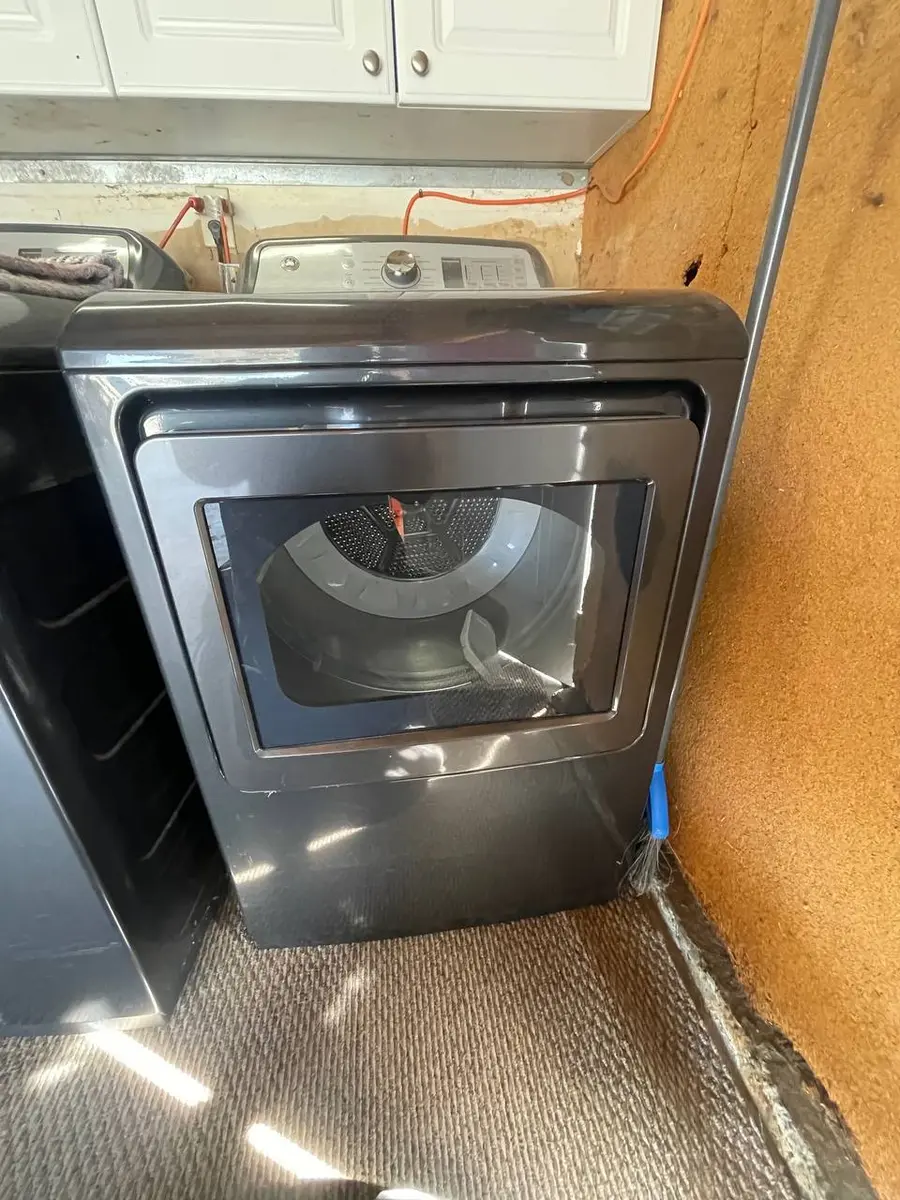
How to Clean a GE Dryer: Maintenance Guide
Deep-cleaning a GE dryer covers the lint trap and its housing, the interior cabinet, the Sensor Dry moisture bars, the full exhaust path, and the thermal-fuse area, finishing with the drum and a test cycle. It is an easy-to-intermediate 45-60 minute job with a vacuum and crevice tool, a dryer-vent brush, 220-grit…
The two payoffs of a real clean are airflow and drying accuracy: a clear exhaust cuts fire risk and cycle time, and lightly sanded, alcohol-wiped sensor bars stop the dryer from ending cycles early. Fabric-softener film on those bars is the most common hidden cause of clothes coming out damp.
Before You Start#
- Tools needed: Putty knife, Phillips #2 screwdriver, vacuum with crevice attachment, dryer vent brush kit (flexible rod type), fine-grit sandpaper (220 grit), rubbing alcohol, microfiber cloths
- Parts needed: None (cleaning procedure only)
- Time required: 45-60 minutes
- Difficulty: Easy to Intermediate
- Safety warning: Unplug the dryer from the wall outlet. For gas GE dryers (model prefix GTD with gas suffix), also shut off the gas supply valve behind the unit.
Do You Have the Right Tools?
Gas leak detector ($130), thermal fuse tester ($95), belt tension gauge, and vent inspection camera ($180). Our technician arrives with $3,000+ in professional tools — your diagnostic is free.
Licensed & Insured · 90-Day Warranty · Same-Day Service
Step-by-Step Instructions#
Step 1: Disconnect and Position the Dryer#
Unplug the dryer from the 240V outlet (electric) or 120V outlet (gas). If you have a gas model, locate the gas shutoff valve on the supply line behind the dryer and turn it perpendicular to the pipe. Pull the dryer away from the wall far enough to access the rear exhaust vent connection. Place a towel on the floor to catch lint debris.
Step 2: Clean the Lint Trap Assembly#
Remove the lint screen from the top of the dryer. GE dryers use a top-mounted lint trap that pulls straight up. Peel off the lint layer, then take the screen to your sink. Scrub both sides with a soft brush and warm soapy water to remove invisible fabric softener film. Hold the screen up to a light source. If water beads on the mesh rather than flowing through, the film is still present. Rinse thoroughly and allow to dry completely before reinstalling.
Step 3: Vacuum the Lint Trap Housing#
With the lint screen removed, look down into the housing slot with a flashlight. Use your vacuum crevice attachment to reach as deep as possible into this cavity. On GE dryers, this channel leads directly to the blower housing, and significant lint accumulates here over time. A flexible dryer vent brush can reach further than a vacuum alone.
Step 4: Access the Dryer Interior via Top Panel#
GE dryers use spring clips to secure the top panel. Insert a putty knife into the seam between the top panel and the front panel, approximately 2-3 inches from each corner. Press inward to release the spring clip, then lift the top panel up and back. It will rest on its hinges in an open position. This gives you access to the drum area and front bulkhead.
Step 5: Vacuum the Interior Cabinet#
With the top panel raised, use your vacuum to remove all visible lint from the cabinet interior. Pay special attention to the areas around the drum felt seal at the front, the lint chute area below the lint trap housing, and any lint resting on wiring harnesses. GE dryers tend to accumulate lint along the right side where the belt wraps around the idler pulley and motor pulley.
Step 6: Clean the Moisture Sensor Bars#
Locate the two parallel stainless steel bars inside the drum, usually positioned on the front bulkhead just below the door opening. These are the Sensor Dry bars. Dampen a microfiber cloth with rubbing alcohol and wipe both bars thoroughly. For stubborn buildup, gently rub with 220-grit sandpaper in the lengthwise direction, then wipe clean with alcohol. The bars should feel smooth and look uniformly shiny when properly cleaned.
Step 7: Clean the Exhaust System#
Disconnect the flexible exhaust duct from the back of the dryer. Vacuum both the dryer exhaust port and the inside of the duct. If your duct run is longer than 8 feet or has multiple elbows, use a rotary vent brush kit pushed through from the exterior vent hood. GE recommends a maximum equivalent vent length of 60 feet; longer runs significantly reduce efficiency and increase fire risk.
Step 8: Inspect the Thermal Fuse Area#
While you have rear access, locate the exhaust housing on the back of the dryer. The thermal fuse mounts on this housing and is a common failure point on GE dryers, often triggered by lint blockage causing overheating. Vacuum around this area thoroughly. A clean exhaust path prevents thermal fuse failures that would otherwise kill power to the dryer entirely.
Step 9: Clean the Drum Interior#
Wipe the inside of the drum with a damp cloth to remove any residue. If you notice marks from items left in pockets (crayon, ink, gum), use rubbing alcohol on a cloth for most stains. For melted synthetic residue, dampen a cloth with a small amount of nail polish remover (acetone), then immediately wipe with a clean damp cloth. Run a short cycle with damp rags afterward to ensure no cleaning product residue remains.
Step 10: Reassemble and Test#
Lower the top panel back into position until the spring clips engage with a click. Reconnect the exhaust duct and secure with a hose clamp (avoid foil tape for the dryer-to-duct connection as it can come loose from vibration). Push the dryer back into position, restore power (and gas if applicable), and run a 10-minute timed dry cycle with a few damp towels to verify proper operation. Check for any unusual noises or burning smells.
GE SmartHQ Diagnostics After Cleaning#
If your GE dryer has WiFi connectivity (GE Profile models and 2017+ standard models), open the SmartHQ app after cleaning. Navigate to your dryer and check for any stored error codes. Common codes after extended periods of lint buildup include sensor errors and heating anomalies. Clearing these after a thorough cleaning confirms the issue was maintenance-related rather than a component failure.
Safety First — Know the Risks
Gas dryers carry carbon monoxide and explosion risk. Even electric dryers involve 240V circuits that can deliver a fatal shock. Our techs are licensed and insured — let them handle the risk.
Licensed & Insured · 90-Day Warranty · Same-Day Service
Troubleshooting Common Issues#
If cleaning does not resolve performance problems with your GE dryer:
- If the dryer still takes multiple cycles to dry clothes after cleaning sensors and vents, check that the exhaust duct is not crushed behind the dryer. Flexible foil ducts kink easily when pushed against the wall. Consider replacing with semi-rigid aluminum duct
- If the dryer shuts off after only a few minutes, the thermal fuse may have already blown from prior lint buildup. Test with a multimeter for continuity. GE thermal fuses mount on the exhaust housing and cost varies by model and area-25 to replace
- If you notice a burning smell during the test cycle, immediately unplug the unit. Check for lint that may have fallen onto the heating element (electric models) or near the gas burner assembly. Lint on a hot surface is a fire hazard
- If the Sensor Dry cycles seem inconsistent, verify both sensor bars are clean and that loads are large enough for garments to contact the bars during tumbling. Very small loads may not touch the sensors reliably
- If the dryer runs but produces no heat, this is typically not a cleaning issue. Check the thermal fuse, high-limit thermostat, and heating element (electric) or igniter and gas valve coils (gas). GE Profile models display specific error codes via SmartHQ
When This Repair Won't Solve It#
- If the dryer shuts off after only a few minutes, a thermal fuse has already blown from prior lint buildup and must be tested and replaced, not just cleaned around.
- An exhaust duct routed through walls or ceiling is beyond a brush kit and needs a powered rotary vent-cleaning service.
- A drum that wobbles or grinds during the test cycle points at worn support rollers or a deteriorated felt seal, not dirt.
The Real Cost of DIY
Average DIY attempt: $150-400 in tools you may use once, plus the risk of further damage. Our diagnostic visit costs $0 — we find the problem and give you an honest quote.
Licensed & Insured · 90-Day Warranty · Same-Day Service
When Should You Call a Professional?#
EasyBear technicians serving Sacramento and the Bay Area carry GE-specific diagnostic tools and replacement parts on every service call. Contact a qualified technician if:
- You discover the exhaust duct is routed through walls or ceiling where you cannot access it for cleaning. Professional vent cleaning services use powered rotary brushes that reach 25+ feet
- The thermal fuse has blown and you are not comfortable working with electrical components behind the rear panel
- You notice the drum wobbles excessively or makes grinding noises during the test cycle, indicating worn drum support rollers or a deteriorated front felt seal
- The dryer fails to start after reassembly. This may indicate a door switch issue or a wiring connection disturbed during cleaning
- Your GE dryer is a gas model and you smell gas after reconnection. Leave the area immediately and call your gas utility
Maintenance Schedule for GE Dryers#
| Task | Frequency |
|---|---|
| Lint screen cleaning | Every load |
| Sensor bar wipe-down | Monthly |
| Deep lint trap housing vacuum | Every 3 months |
| Full exhaust vent cleaning | Every 12 months |
| Interior cabinet vacuum | Every 12 months |
| Flexible duct inspection | Every 12 months |
Don't Void Your Warranty
Opening your appliance yourself may void the manufacturer warranty. Our repair comes with a 90-day guarantee, and we document everything for warranty compliance.
Licensed & Insured · 90-Day Warranty · Same-Day Service
FAQ#
Q: How often should I deep clean my GE dryer? A: Perform a complete deep cleaning including interior cabinet vacuum and exhaust system every 12 months. If you use dryer sheets frequently, clean the sensor bars monthly as they accumulate film faster.
Q: Can I use a leaf blower to clean my GE dryer vent? A: While some homeowners use leaf blowers from the interior vent connection outward, this is not ideal. It pushes lint into a concentrated mass that can lodge at bends. A rotary brush kit physically dislodges and removes lint more effectively.
Q: Why does my GE dryer smell musty even after cleaning? A: Musty odors often originate from the drum felt seals that trap moisture and lint. Wipe the felt seals with a damp cloth and run a high-heat timed cycle for 20 minutes with the dryer empty to dry them thoroughly.
Q: Is it safe to clean a GE gas dryer myself? A: Yes, as long as you shut off both electricity and gas supply before starting. Never disconnect gas line fittings yourself — if you need to move a gas dryer farther than the flex connector allows, call a plumber or qualified technician.
Our service records show this procedure, done correctly, prevents the most common follow-up issues.
This fix requires some technical skill. If you'd rather have a pro handle it, book a same-day repair.
Lead Appliance Repair Technician · 12 years experience
Experienced technician with 12 years specializing in washing machine and dryer repairs across all major brands.