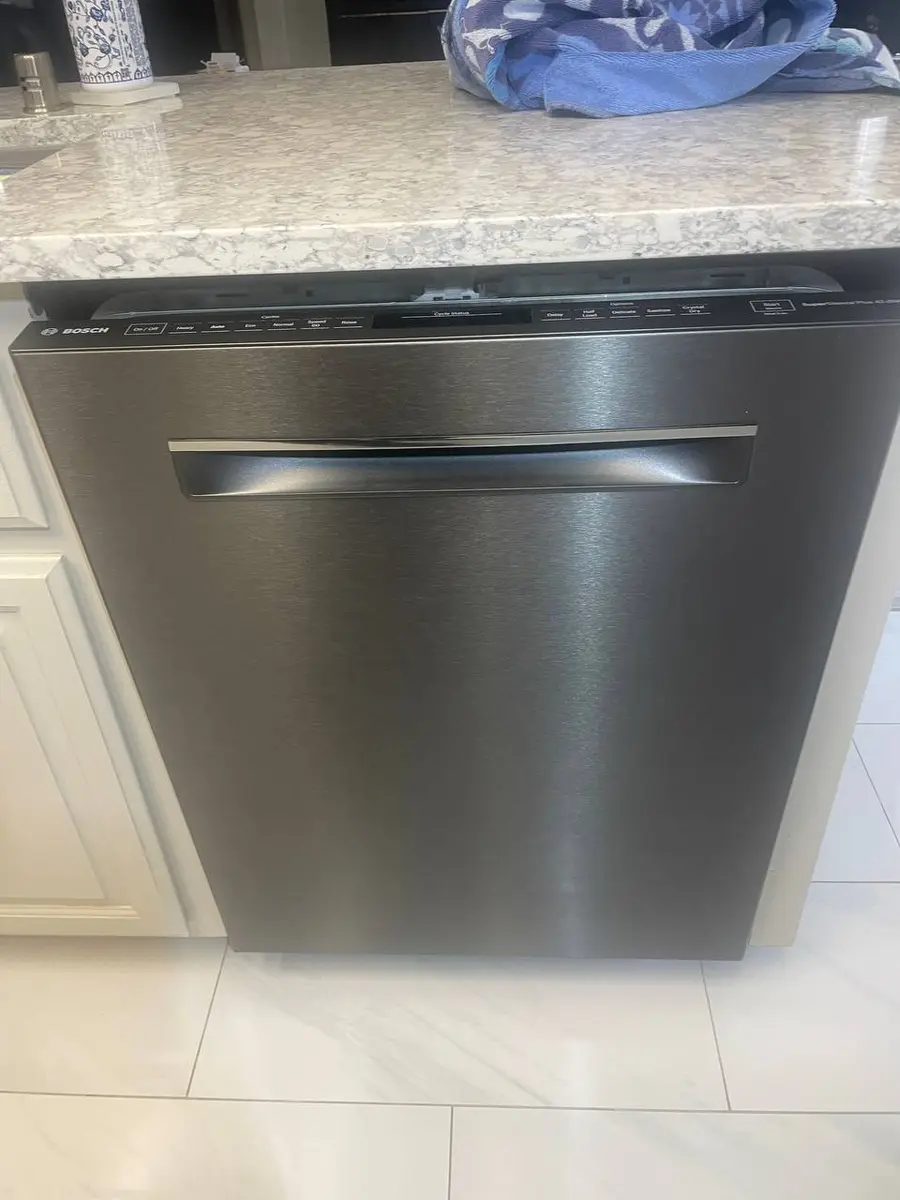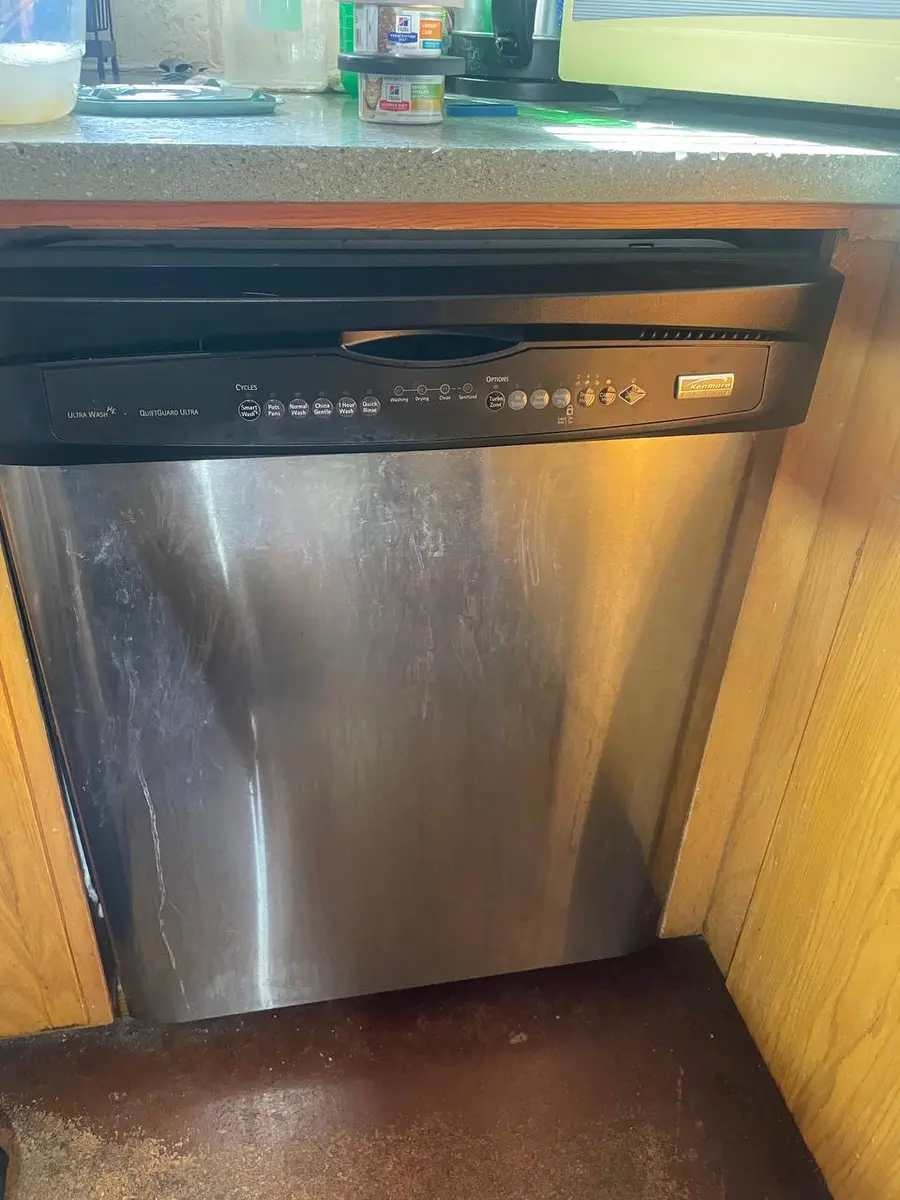
How to Deep Clean a GE Dishwasher
A GE dishwasher deep clean is a beginner, 30-45 minute job. You clear the two-part filter and the Piranha disposer area, clear the spray-arm jets, wipe the door and gasket, then run a vinegar cycle followed by a baking-soda rinse to leave the tub odour-free.
GE pairs a two-part filter with the Piranha hard-food disposer that grinds particles instead of only trapping them, so it needs less filter fuss than filter-only brands — but the disposer, spray arms, and tub still need periodic attention. These steps suit GE, GE Profile with Bottle Jets, and GE Cafe with AutoSense alike.
Tools and supplies#
| Item | Use |
|---|---|
| Phillips #2 screwdriver | Access |
| Soft brush, toothpick or pipe cleaner | Filter and spray jets |
| White vinegar, baking soda | Descaling and freshening |
| Microfiber cloth | Door, gasket, exterior |
Safety warning: Cancel any running cycle and open the door. No need to cut power for cleaning procedures, but avoid reaching into the Piranha disposer area with bare hands.
Do You Have the Right Tools?
Water pressure gauge ($60), spray arm tester, float switch multimeter ($85), and drain inspection camera. Our technician arrives with $3,000+ in professional tools — your diagnostic is free.
Licensed & Insured · 90-Day Warranty · Same-Day Service
Step-by-step#
1. Empty it and pull the racks#
Take out the dishes, the utensil basket, and both racks (lift the rear tabs on the upper rack to slide it free). That opens up the tub floor where the filter and disposer live.
2. Clean the two-part filter#
Twist the cylindrical upper filter a quarter turn counterclockwise and lift it out, then remove the flat ultra-fine filter beneath. Rinse both under warm water and brush the fine mesh; if there is a slimy film, soak both in warm water with a cup of white vinegar for fifteen minutes and brush again. Never use a wire brush.
3. Clear the Piranha disposer area#
With the filter out you can see into the sump where the Piranha grinder sits. Look for anything jammed at the grinder input — bones, pits, glass, or jar labels — and wipe around the opening with a damp cloth. Pour a cup of white vinegar into the sump for mineral buildup, and keep your fingers out of the mechanism; use a flashlight to inspect below the grinder plate.
4. Clean the spray arms#
The lower arm is held by a clip nut — turn it counterclockwise and lift the arm off its tower; the upper arm usually pulls straight down off its mount. Clear every jet with a toothpick or pipe cleaner and shake each arm to check flow. On Profile models, clear the separate Bottle Jets on the upper rack rails the same way.
5. Wipe the door, gasket, and edges#
The door edges, hinges, and the perimeter gasket never get sprayed, so mould and residue gather there. Wipe them with a fifty-fifty vinegar-water solution, paying attention to the bottom edge and the fold in the gasket. Water spots on a stainless tub are harmless and lift with a baking-soda paste.
6. Check the drain and air gap#
Look into the drain area at the tub floor and remove any glass, labels, or food that slipped past the disposer. If your setup has an air gap (the chrome dome on the counter), unscrew its cap and clear both hose connections.
7. Run a vinegar cycle#
Refit the ultra-fine filter, lock the cylindrical filter with a clockwise quarter-turn, and replace the spray arms. Stand a bowl of white vinegar on the top rack and run a hot cycle (Heavy or Pots & Pans) with no detergent and no dishes to dissolve scale through the whole water path.
8. Baking-soda rinse#
Sprinkle baking soda across the tub floor and run a short hot cycle (Rinse Only or Express Wash) to deodorise and clear any vinegar smell.
9. Finish the exterior#
Wipe the door with a damp microfiber cloth — with the grain on stainless — and clean the panel with a barely-damp cloth, never spraying cleaner directly onto the controls. If your model has SmartHQ, check the app for maintenance reminders.
If it still smells#
- Flush the under-sink drain hose with hot water; buildup inside holds odour.
- Confirm the high loop or air gap is correct so sewer gas cannot back up.
- On older units, run two vinegar cycles back-to-back to clear biofilm under the disposer blade.
Safety First — Know the Risks
Live 120V wiring in a wet environment is one of the most dangerous DIY scenarios. Water + electricity = serious shock risk. Our techs are licensed and insured — let them handle the risk.
Licensed & Insured · 90-Day Warranty · Same-Day Service
When to call a professional#
EasyBear technicians serving Sacramento and the Bay Area carry GE-specific diagnostic tools and replacement parts on every service call. Call one if a foul smell survives repeated cleaning (a cracked hose or failed check valve), if standing water will not drain (a failed drain pump, GE part WD26X10039, or a blocked path), if mould in the disposer housing resists vinegar, or if the door leaks from a damaged gasket.
Need Professional Help?#
Want a professional to handle it? Our GE-certified technicians are available today. Book a free diagnostic.
Appliance Repair Technician · 8 years experience
Experienced technician with 8 years specializing in dishwasher repairs and European appliance brands including Bosch and Thermador.