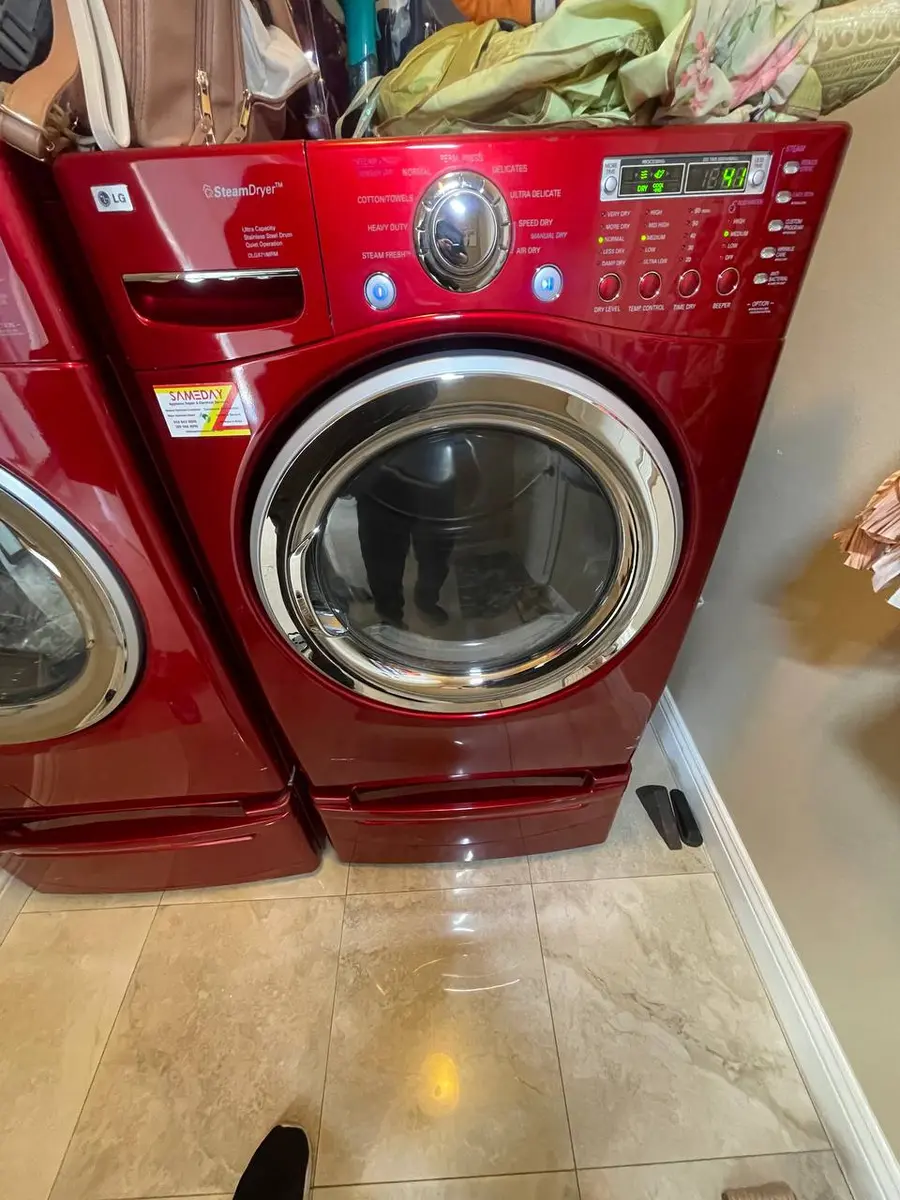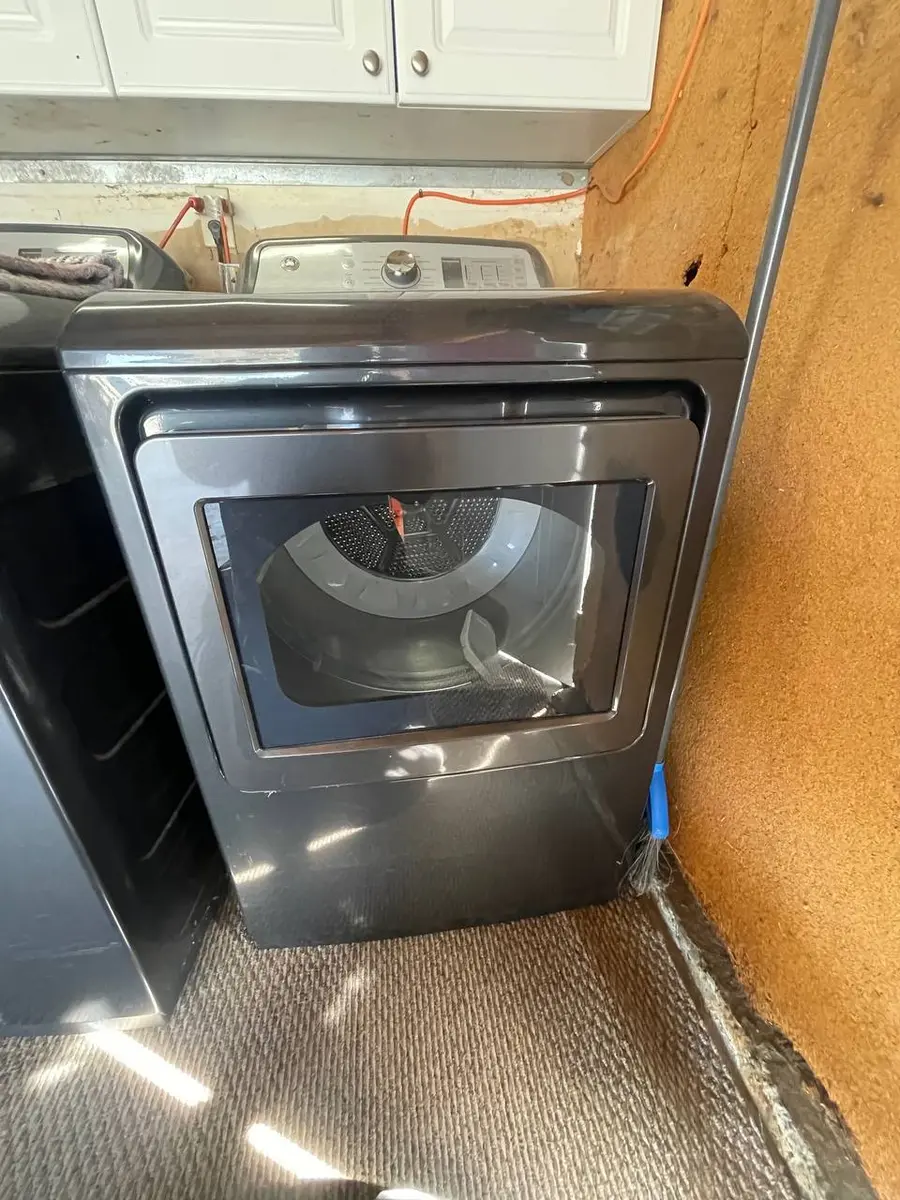
How to Deep Clean a Frigidaire Dryer
Longer drying times and the fire risk that comes with packed lint both ease off after a deep clean of the parts a routine trap-empty never reaches — above all the blower housing. Plan on 45 to 75 minutes every six to twelve months, at a beginner level.
Where the lint really hides#
Emptying the lint screen is only the surface. On a Frigidaire dryer the blower housing between the trap slot and the exhaust exit packs with lint over months, the felt seals and drum edges collect it, the DrySense moisture bars film over, and the vent run silts up. Clearing all of these is what restores airflow and safety.
Safety warning: Unplug the dryer completely. For gas dryers, also turn off the gas supply valve. Lint is highly flammable — do not use the dryer if you smell burning.
What you need#
| Category | Detail |
|---|---|
| Tools | Phillips #2 screwdriver, quarter-inch nut driver, vacuum with crevice tool, a dryer-vent brush kit, soft cloth, flashlight |
| Supplies | Mild soap solution, isopropyl alcohol for the DrySense bars |
| Time and level | 45 to 75 minutes, Beginner to Intermediate |
Do You Have the Right Tools?
Gas leak detector ($130), thermal fuse tester ($95), belt tension gauge, and vent inspection camera ($180). Our technician arrives with $3,000+ in professional tools — your diagnostic is free.
Licensed & Insured · 90-Day Warranty · Same-Day Service
Step by step#
1 - Clear the lint trap and its housing. Peel the screen clean, then shine a light down the trap slot — lint packs along the sides where the screen cannot reach. Vacuum the crevice tool as deep as it goes, since this slot feeds straight to the blower. Wash the screen itself in warm soapy water to strip dryer-sheet film, and dry it fully before refitting.
2 - Clean the blower housing — the big one. This is the step that makes the difference and the one generic guides skip. Remove the lower front or rear panel to expose the blower housing near the exhaust connection, and vacuum it out with a flexible brush; a machine that has never had this done can give up a fist-sized wad of lint. Check the blower fan for lint wrapped on the blades, which unbalances it and makes noise.
3 - Vacuum the drum felt seals. With a panel off, inspect the soft felt seals where the drum edges meet the cabinet. Vacuum both front and rear seals, since lint here opens a gap that lets more escape into the cabinet, and wipe the drum interior, lifting ink or grease marks with isopropyl alcohol.
4 - Clean the DrySense bars. Frigidaire's two DrySense moisture bars sit inside the drum by the lint opening and read when clothes are dry. Softener and lint film on them makes the dryer stop early with damp clothes, so wipe both bars with isopropyl alcohol until the metal is bright.
5 - Clean the full exhaust vent. Pull the exhaust hose off the back, vacuum the port, then run a vent brush through the whole duct to the exterior cap, vacuuming what it dislodges until it passes clean. At the wall cap, clear packed lint and confirm the flap swings freely, and reconnect with foil tape — never screws, and never a white vinyl hose.
6 - Vacuum the cabinet interior. With panels off, vacuum the whole cabinet — floor, sides and around the motor — paying closest attention to lint near the heating element or gas burner, which is the main fire risk.
7 - Reassemble and test. Refit the panels, run air-dry for a few minutes to confirm smooth operation and a clear airflow path, then run a small heated load — drying should be noticeably quicker. Step outside with it running to check for strong airflow at the wall cap; weak flow points at a crushed duct section you missed.
If it still runs long#
- Still slow after a full clean: the vent run may be too long or have too many elbows; each right-angle turn costs airflow, so shorten it or go to a larger duct.
- Burning smell: stop at once and reinspect the element area with the panels off.
- DrySense still ends cycles early: run a timed-dry to confirm the dryer heats; if timed-dry is fine, the sensor calibration has drifted.
- Lint on clothes after cleaning: worn drum felt seals may be letting cabinet lint back in — inspect and replace if you see gaps.
Safety First — Know the Risks
Gas dryers carry carbon monoxide and explosion risk. Even electric dryers involve 240V circuits that can deliver a fatal shock. Our techs are licensed and insured — let them handle the risk.
Licensed & Insured · 90-Day Warranty · Same-Day Service
When to call a professional#
Get help if you find scorched lint or melted parts inside — a past near-fire needing inspection — if the blower fan is damaged or seized, if the vent runs through walls you cannot reach with consumer tools, or if you ever smell gas, in which case leave and call the gas company.
Appliance Repair Technician · 11 years experience
Experienced technician with 11 years specializing in Frigidaire and Electrolux refrigerator and dryer repair with a focus on safety.