How to Deep Clean a Bosch Dishwasher: Triple-Filter System and Interior
Bosch dishwashers are engineered with a unique triple-filter system that traps food particles at three levels, keeping wash water clean throughout the cycle. Unlike single-filter designs found in budget brands, the Bosch system requires specific cleaning techniques to maintain its performance. This guide covers the complete cleaning process for Bosch 300, 500, and 800 series dishwashers, including the filter assembly, spray arms, door gasket, and interior tub.
Regular cleaning every 4-6 weeks prevents the most common Bosch dishwasher complaints: cloudy glassware, food residue on dishes, and musty odors that develop when the triple-filter becomes saturated with grease.
Before You Start
- Tools needed: Soft-bristle brush (old toothbrush works well), microfiber cloth, wooden toothpick or bamboo skewer, small bowl
- Supplies needed: White vinegar, baking soda, warm water, dish soap (non-foaming)
- Time required: 30-40 minutes
- Difficulty: Beginner
- Safety warning: Disconnect power at the breaker or unplug the unit before cleaning the filter area. The sump area beneath the filter contains the heating element which may still be hot after a recent cycle.
Do You Have the Right Tools?
Water pressure gauge ($60), spray arm tester, float switch multimeter ($85), and drain inspection camera. Our technician arrives with $15K+ in professional tools — your diagnostic is free.
Licensed & Insured · 90-Day Warranty · Same-Day Service
Step-by-Step Instructions
Step 1: Remove the Lower Rack and Spray Arm
Pull the lower dish rack completely out and set it aside. On Bosch models, the lower spray arm lifts straight up off its mounting post with no tools required. Grip the center hub and pull upward firmly. Set the spray arm on a towel near the sink.
Step 2: Remove the Triple-Filter Assembly
The Bosch triple-filter sits at the bottom center of the tub. It consists of three parts: the cylindrical mesh filter (coarse), the flat fine filter surrounding it, and the microfilter integrated into the base. To remove: grip the cylindrical mesh filter's handle and turn it one-quarter turn counterclockwise (follow the arrow molded into the plastic). Lift the cylinder straight up. Then lift the flat fine filter out by its edge — it simply rests in its channel.
Step 3: Clean the Mesh Filter
Hold the cylindrical mesh filter under warm running water. Use a soft brush to scrub the mesh from the outside in, dislodging trapped food particles. Pay attention to the bottom rim where grease accumulates. For stubborn grease, soak in warm water with a few drops of dish soap for 10 minutes, then scrub again. Never use abrasive pads or brushes — the fine mesh tears easily.
Step 4: Clean the Fine Filter and Microfilter
The flat fine filter requires more delicate handling. Rinse under gentle running water and brush lightly with a soft toothbrush. Hold it up to the light — you should see light passing through evenly. Dark spots indicate embedded grease that needs soaking. The microfilter (the perforated plate at the base of the filter housing) should be wiped with a damp cloth. If you see buildup in the sump area beneath where the filter sits, use a sponge to absorb any standing water and wipe the area clean.
Step 5: Clean the Spray Arms
Bosch spray arms have small holes that can become clogged with calcium deposits or food debris. Hold each spray arm under water and inspect every hole. Use a wooden toothpick or bamboo skewer to clear blocked holes — never use metal, which can enlarge the holes and reduce water pressure. Run water through the center opening to flush loosened debris out through the holes.
For the upper spray arm: open the door fully, pull the upper rack out, and twist the spray arm's center nut counterclockwise to remove it.
Step 6: Clean the Door Gasket and Edges
The rubber gasket around the door opening traps food particles and develops mold in the folds. Pull the gasket gently away from the tub and wipe inside the fold with a damp microfiber cloth. Pay special attention to the bottom corners where water pools. Also clean the bottom edge of the door itself — this area sits below the water line during cycles and accumulates a grimy film that the wash cycle doesn't reach.
Step 7: Run a Vinegar Cleaning Cycle
Reassemble the filter (fine filter first, then cylindrical mesh with quarter-turn clockwise to lock). Replace spray arms. Place a dishwasher-safe bowl containing 2 cups of white vinegar on the upper rack. Run the hottest cycle available (typically "Heavy" or "Sanitize" on Bosch models) with the dishwasher otherwise empty. The vinegar dissolves mineral deposits and cuts through grease film on the interior walls.
Step 8: Deodorize with Baking Soda
After the vinegar cycle completes, sprinkle one cup of baking soda across the bottom of the tub. Run a short hot cycle ("Quick Wash" or "Rinse" on Bosch panels). This neutralizes any remaining vinegar, brightens the stainless steel interior, and eliminates lingering odors.
Step 9: Clean the ActiveWater Sensor (If Applicable)
Bosch 500 and 800 series models have an ActiveWater turbidity sensor in the sump area that measures water clarity to optimize rinse cycles. If your dishwasher has been running longer cycles than usual, this sensor may be coated with grease. It looks like a small clear dome near the drain area. Wipe it gently with a soft damp cloth — do not use chemicals on the sensor lens.
Step 10: Clean the Exterior and Control Panel
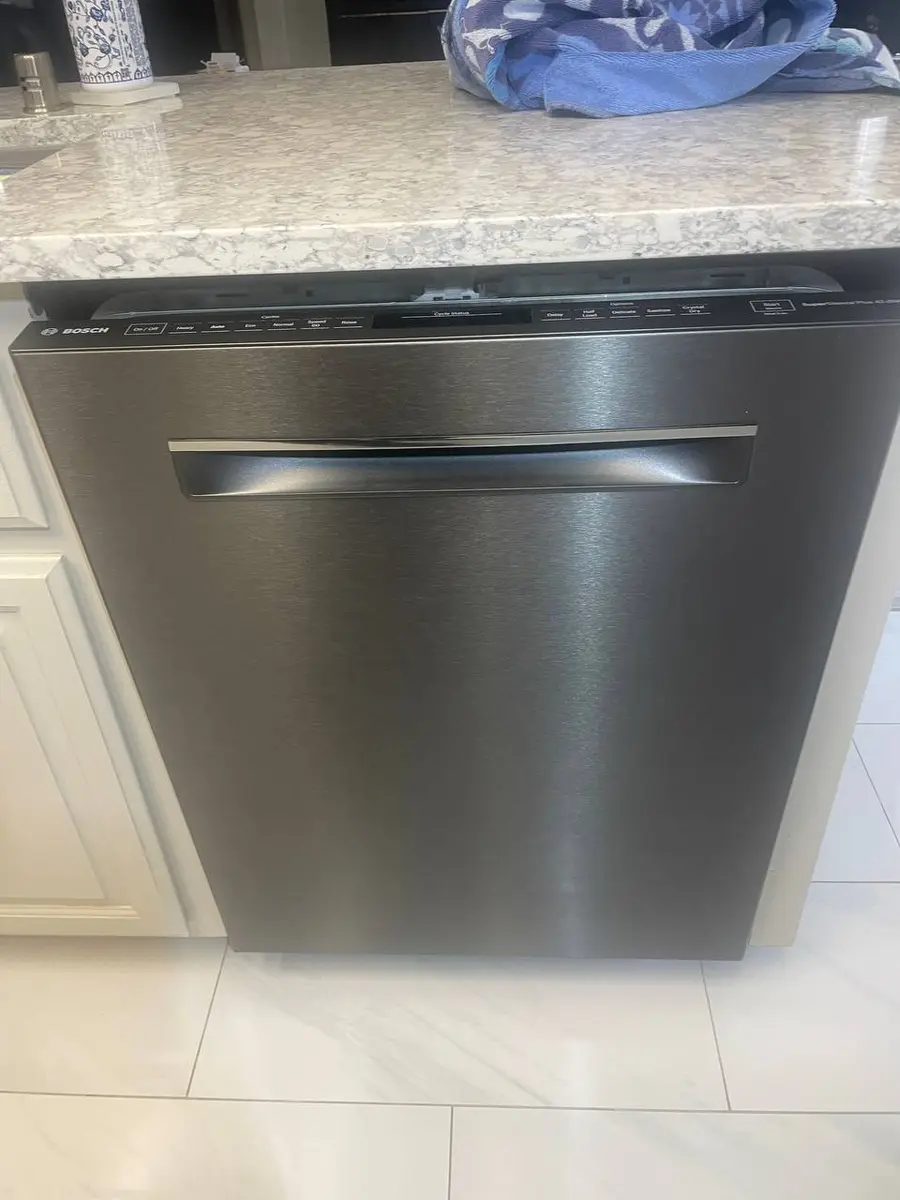
Wipe the stainless steel exterior with a microfiber cloth dampened with water (wipe in the direction of the grain). For the control panel, use a barely damp cloth only — excess moisture can seep behind buttons. If your model has an Info Light (red LED projected on the floor), that lens is in the bottom of the door edge — a quick wipe keeps the projection bright.
Troubleshooting Common Cleaning Issues
If your Bosch dishwasher still has problems after thorough cleaning:
- White film on glasses: Hard water mineral deposits. Use Bosch dishwasher cleaner (part number 00311580) or increase rinse aid dosage using the dial on the rinse aid cap — Bosch recommends setting 3-4 for hard water areas
- Musty smell persists: Check the drain hose connection under the sink. A low loop or missing high-loop allows sewer gas to back up into the dishwasher. The drain hose should loop up to the underside of the countertop before connecting
- Food residue after cleaning: Verify the filter is locked properly (arrow aligned with lock icon). An unlocked filter allows debris to bypass the filtration system and recirculate
- Standing water in sump: A small amount (about 1 cup) is normal — it keeps the pump seals lubricated. If water is above the filter base, check for a clogged drain hose or blocked garbage disposal knockout plug
Safety First — Know the Risks
Live 120V wiring in a wet environment is one of the most dangerous DIY scenarios. Water + electricity = serious shock risk. Our techs are licensed and insured — let them handle the risk.
Licensed & Insured · 90-Day Warranty · Same-Day Service
Maintenance Schedule for Bosch Dishwashers
| Task | Frequency |
|---|---|
| Clean triple-filter assembly | Every 4-6 weeks |
| Check spray arm holes | Monthly |
| Wipe door gasket | Every 2 weeks |
| Run vinegar cleaning cycle | Every 2-3 months |
| Clean ActiveWater sensor | Every 3 months |
| Inspect AquaStop hose | Annually |
When to Call a Professional
Sometimes cleaning alone won't solve performance issues with your Bosch dishwasher. Call a technician if:
- Error code E24 (drain issue) persists after cleaning the filter and checking the drain hose — the drain pump (BSH 00631200) may need replacement
- You notice water pooling under the unit — the AquaStop hose has a built-in flood sensor that shuts off water flow, but a failed sensor or cracked sump requires professional diagnosis
- The dishwasher develops an E09 error (heating fault) — the flow-through heater is integrated with the circulation pump on newer Bosch models and requires disassembly to access
- Spray arms wobble on their posts — worn bearing rings (BSH 00611317) need replacement
Same-Day Appliance Repair
Fixed or It's Free
$89 → $0 Service Call & Diagnosis — offer ends May 25
The Real Cost of DIY
Average DIY attempt: $150-400 in tools you may use once, plus the risk of further damage. Our diagnostic visit costs $0 — we find the problem and give you an honest quote.
Licensed & Insured · 90-Day Warranty · Same-Day Service
Cost Comparison: DIY Cleaning vs Professional Service
| DIY | Professional | |
|---|---|---|
| Supplies | $5-$15 | Included |
| Labor | $0 | $89-$150 |
| Time | 30-40 min | 45-60 min |
| Benefit | Regular maintenance | Deep service + inspection |
Need Professional Help?
Don't Void Your Warranty
Opening your appliance yourself may void the manufacturer warranty. Our repair comes with a 90-day guarantee, and we document everything for warranty compliance.
Licensed & Insured · 90-Day Warranty · Same-Day Service
FAQ
Q: How do I know when my Bosch dishwasher filter needs cleaning? A: The most reliable sign is food particles reappearing on dishes after a cycle, or a persistent odor when you open the door. Bosch recommends cleaning every 4-6 weeks, but households that pre-rinse less may need weekly filter checks. The filter is visible through the bottom rack — if you see visible debris trapped in the mesh, it's time to clean.
Q: Can I put Bosch dishwasher filters in the dishwasher to clean them? A: No. The filter components are not designed to withstand the water jets and detergent concentrations of a wash cycle. Hand-washing under running water with a soft brush is the only approved method. The fine mesh can tear if subjected to high-pressure spray.
Q: Is it safe to use bleach to clean my Bosch dishwasher? A: Bosch specifically warns against bleach in their stainless steel tub models — it can damage the interior finish and degrade rubber gaskets. Use white vinegar or Bosch-branded dishwasher cleaner (part 00311580) instead. Bleach is only acceptable in dishwashers with plastic tub interiors, which Bosch does not manufacture.
Q: Why does my Bosch dishwasher smell bad even after cleaning? A: The most common cause is the door gasket fold at the bottom of the door — food debris and mold hide in the rubber crease that never contacts wash water. Pull the gasket back and wipe inside with vinegar. Also check that the drain hose has a high loop (required by code) to prevent sewer gas backflow.
Need a certified technician? Book same-day repair →