Most Likely Cause#
A Hisense refrigerator freezing food in the fresh-food compartment is most often caused by a faulty thermistor reporting the wrong temperature, an air damper stuck open, or a setting that is simply too low. Hisense models use electronic temperature control with thermistors that report to the main board, so a sensor reading warmer than reality makes the board overcool.
The first thing worth checking costs nothing: your setting. The recommended fresh-food temperature is 37°F, and anything below about 35°F will freeze high-water-content items like lettuce, milk, and grapes. If the setting is right and food still freezes, the thermistor, damper, or a stuck relay is the likely cause.
Why a Hisense Fridge Freezes Food#
| Symptom | Cause | Share of cases |
|---|---|---|
| Fridge overcools, board calls for more cooling | Faulty thermistor reading too warm | 30% |
| Freezer air floods the fridge continuously | Air damper stuck open | 25% |
| Everything in the fridge is too cold | Temperature set too low | 20% |
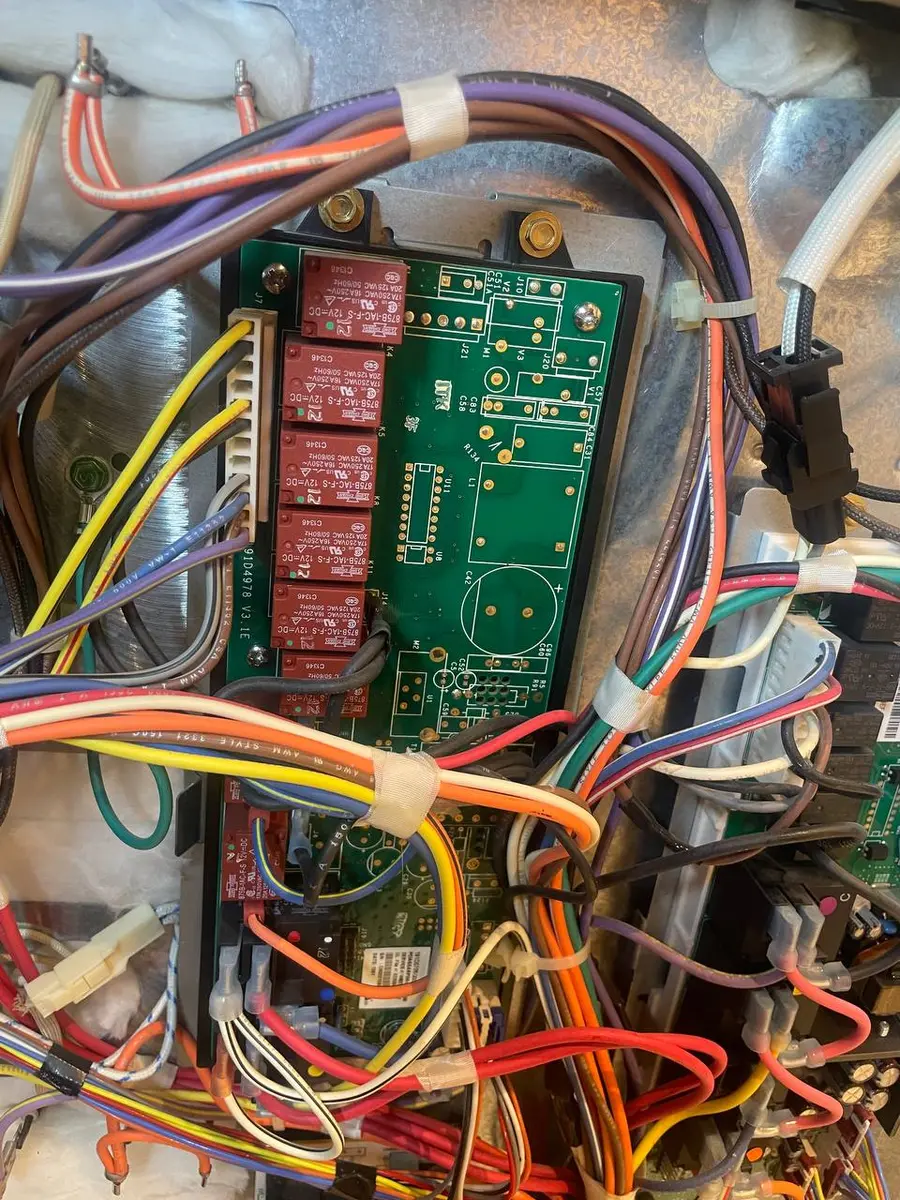
| Both fridge and freezer overcool | Control-board relay stuck closed | 15% |
| Only items near the vents freeze | Food placed too close to air vents | 10% |
Do You Have the Right Tools?
Refrigerant gauges ($200+), vacuum pump ($250), leak detector ($150), and EPA-certified recovery equipment. Our technician arrives with $3,000+ in professional tools — your diagnostic is free.
Licensed & Insured · 90-Day Warranty · Same-Day Service
How Hisense Regulates Fridge Temperature#
Hisense uses NTC thermistors to monitor each compartment and report to the control board, which then runs the compressor and manages a motorized damper between the freezer and fridge. When a thermistor fails and reports a higher temperature than actual, the board calls for more cooling and drives the fridge below freezing. When the damper motor fails or ices up in the open position — on models like the HRB171N6ASE the damper sits at the upper rear of the fridge — freezer air floods the compartment continuously, freezing the top shelf and rear first. A relay stuck closed keeps the compressor running and overcools both compartments. And at the simplest level, a setting below 35°F, or food pressed against a cold vent, freezes items even when everything works. Each has a distinct pattern.
Check It Yourself First#
Before troubleshooting your Hisense refrigerator, disconnect power at the circuit breaker or unplug the unit when working inside.
- Check the setting first. Confirm the fresh-food section is set to 37°F (3°C), not lower. On numbered-dial models, a mid setting of 3 to 4 is usually right. Allow 24 hours after any change to stabilize.
- Move food off the vents. Keep items two to three inches from the rear wall and any visible vent, especially delicate produce and herbs that freeze in concentrated cold air.
- Test the thermistor. A thermistor reporting too warm makes the board overcool; compare its resistance to the service value, since a failed sensor is the top internal cause.
- Check the damper. Look at the damper at the upper rear of the fridge. If it is stuck open or iced, freezer air pours in continuously — the top shelf and back freeze first.
- Watch both compartments. If the fridge and freezer are both colder than their settings and the compressor never rests, a stuck control-board relay is the likely cause.
Safety First — Know the Risks
Refrigerant (R-134a/R-600a) requires EPA certification to handle. Improper discharge is a federal violation and health hazard. Our techs are licensed and insured — let them handle the risk.
Licensed & Insured · 90-Day Warranty · Same-Day Service
Repair or Replace?#
A setting change and moving food are free; a thermistor or damper is an inexpensive part. A control board is the costlier exception — get a firm quote before replacing it. On a Hisense refrigerator, an overcooling fault rarely justifies a new unit, so repair is almost always the better value.
When to Call a Pro#
Call for service if the setting is correct, food is clear of the vents, and the fridge still freezes — pointing to the thermistor, damper, or a stuck relay. Sensor and board diagnosis benefits from the correct service values.
Hisense refrigerator freezing your food? Book an EasyBear technician — we test thermistors, dampers, and control boards on Hisense models.
Senior Appliance Repair Technician · 15 years experience
EPA-certified technician with 15 years of experience specializing in refrigerator and cooling system repairs.