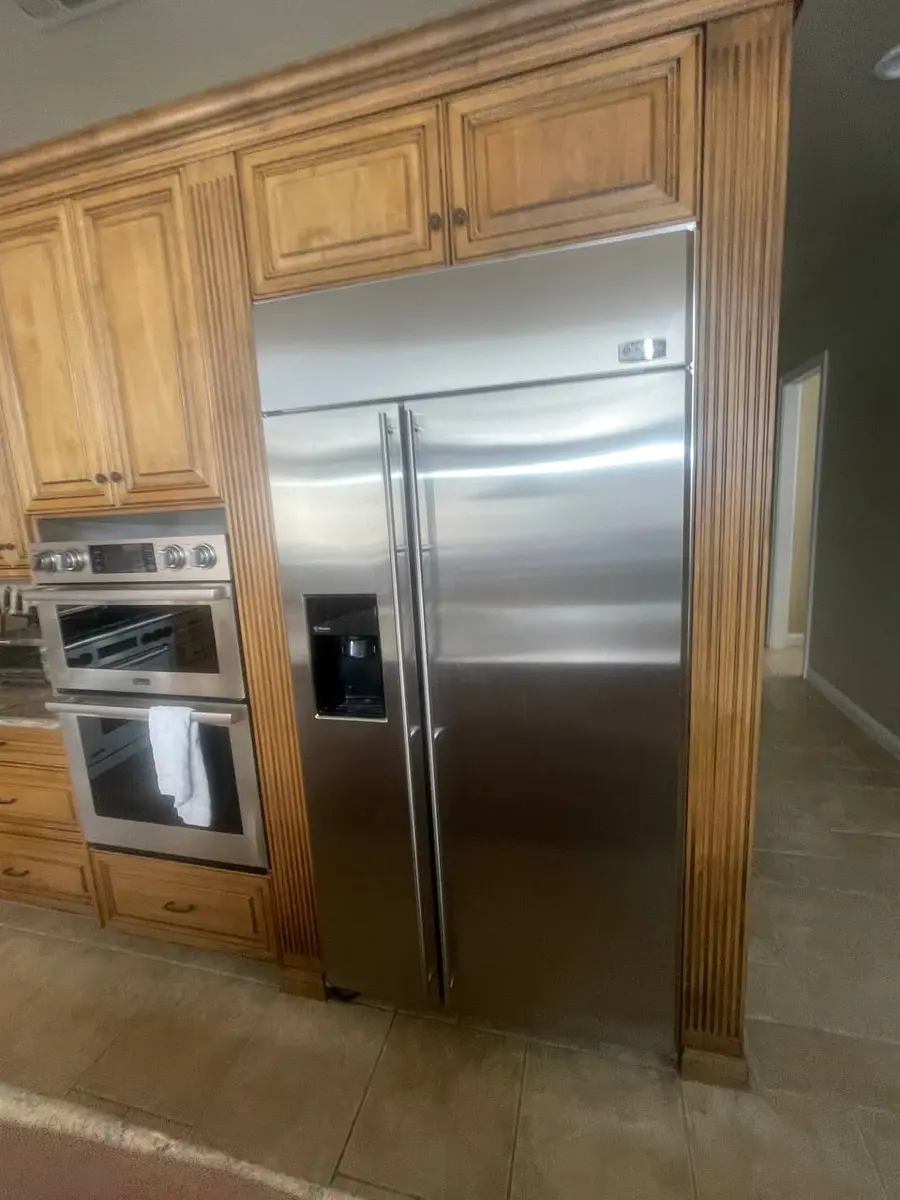
Condensation on a Whirlpool refrigerator door is a physics problem before it's a mechanical one — moisture in the room air condenses on any door surface that drops below the dew point. Whirlpool builds in low-wattage anti-sweat heaters to keep the surface warm enough to stay dry, so when the door sweats it's usually a failed heater, a leaking gasket, or simply very humid air. This guide ranks the causes.
The likely culprit#
Most likely: an anti-sweat heater circuit failure. A low-wattage heater molded into the flange around the door opening keeps that area above the dew point, and when its circuit opens — a broken element, a blown board relay, or a disconnected wire — the frame stops being warmed and condensation forms there. If the heaters are working, a deteriorated door gasket is the next suspect.
Do You Have the Right Tools?
Refrigerant gauges ($200+), vacuum pump ($250), leak detector ($150), and EPA-certified recovery equipment. Our technician arrives with $3,000+ in professional tools — your diagnostic is free.
Licensed & Insured · 90-Day Warranty · Same-Day Service
Why the door sweats#
The door's exterior is chilled from inside by the cold compartment, and in a humid room its surface can fall below the dew point and collect condensation. The anti-sweat heater exists to hold that surface just warm enough to prevent it. So sweating means either the surface is getting too cold — a failed heater, a gasket leak, or overcooling — or the room air is simply too humid for the heater to keep up.
Safety first#
Do not set temperatures below the recommended levels — overcooling provides minimal food-safety benefit while creating condensation risk.
Safety First — Know the Risks
Refrigerant (R-134a/R-600a) requires EPA certification to handle. Improper discharge is a federal violation and health hazard. Our techs are licensed and insured — let them handle the risk.
Licensed & Insured · 90-Day Warranty · Same-Day Service
Ranked causes at a glance#
| Likely cause | How common | What you'll notice / what to check |
|---|---|---|
| Anti-sweat heater circuit failure | 35% of cases | Condensation at the door frame where a heater circuit has gone open. |
| Deteriorated door gasket | 30% of cases | A wet stripe along a spot where the gasket leaks cold air onto the exterior. |
| High ambient humidity | 20% of cases | Sweating across the door when indoor humidity climbs past about 60%. |
| Refrigerator set too cold | 10% of cases | An overcooled interior chilling the door surface below dew point. |
| Damaged door insulation | 5% of cases | A localized cold spot where foam insulation has degraded. |
Working through each cause#
1. Anti-sweat heater circuit failure (35% of cases)#
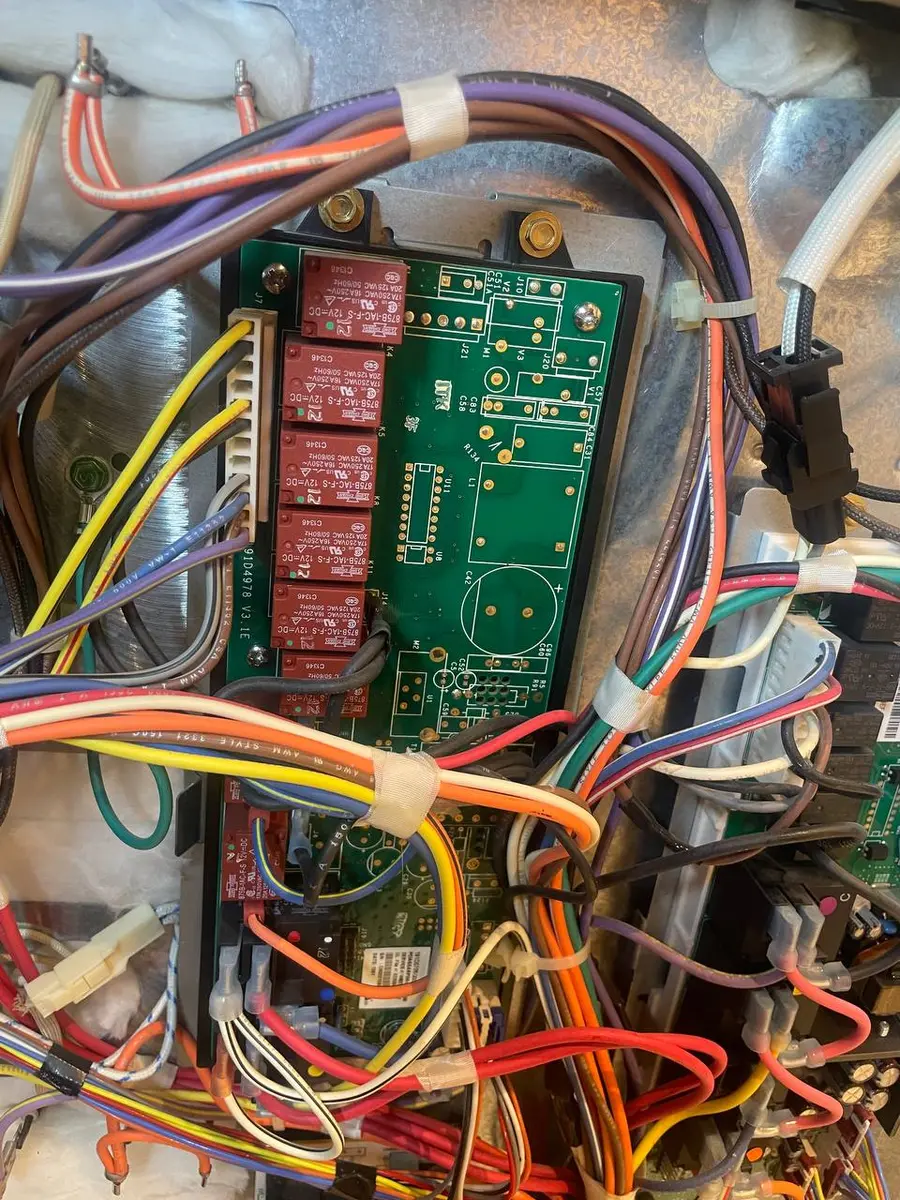
The anti-sweat heater is a low-wattage element in the flange around the door opening, controlled on Whirlpool models by the main board's energy-saver logic or a humidity sensor. When the circuit fails — an open element, a blown board relay, or a disconnected wire — the frame is no longer warmed and condensation appears there. Feel the frame for warmth or map it with an infrared thermometer; a cold frame where it should be warm points at the heater.
2. Deteriorated door gasket (30% of cases)#
A worn or compromised gasket lets cold compartment air leak past the seal and chill the exterior door panel right next to the gap, so room moisture condenses in a wet stripe along that line. The pattern gives it away — condensation follows the gasket failure rather than covering the whole door. The dollar-bill test confirms a weak seal at those points; replace the gasket if it's cracked, flattened, or torn.
3. High ambient humidity (20% of cases)#
Whirlpool refrigerators are designed to stay dry in normal indoor humidity — roughly 30-55% relative humidity — but when the room climbs past about 60%, common with evaporative cooling or humid weather without air conditioning, even a healthy anti-sweat system can't prevent all condensation. This is a limit of the heater wattage, not a fault. A dehumidifier and better kitchen ventilation usually resolve it.
4. Refrigerator set too cold (10% of cases)#
Setting the fridge or freezer well below the recommended levels — below about 35 degrees for the fridge — makes the interior surfaces extra cold, and that cold penetrates the door and gasket area to drop the exterior below the dew point. Whirlpool's recommended fridge setting is around 37 degrees. Raise the temperature to the recommended range; overcooling adds condensation risk without meaningful food-safety benefit.
5. Damaged door insulation (5% of cases)#
The door has foam insulation between the inner liner and outer panel to keep interior cold off the exterior surface, and if that foam is damaged — a cracked liner from impact, or moisture that degraded the foam — cold penetrates to the outside in one spot and condenses there. A localized cold, wet area that doesn't match a gasket line or a heater zone suggests insulation damage. This is a door-assembly repair.
The Real Cost of DIY
Average DIY attempt: $150-400 in tools you may use once, plus the risk of further damage. Our diagnostic visit costs $0 — we find the problem and give you an honest quote.
Licensed & Insured · 90-Day Warranty · Same-Day Service
The short version#
- Anti-sweat heater — 35%; a cold door frame where a circuit opened.
- Door gasket — 30%; a wet stripe along a leaking seal.
- High humidity — 20%; whole-door sweat above about 60% humidity.
- Set too cold — 10%; raise to the recommended range near 37 degrees.
- Damaged insulation — 5%; a localized cold spot from degraded foam.
What the repair usually involves#
A door-sweating repair rules out the free causes first — room humidity and the temperature setting — then checks the gasket seal and the anti-sweat heater circuit, leaving insulation damage for last. The heater circuit or gasket is the usual replacement, verified by confirming the door frame warms and stays dry. Heavy, continuous condensation can damage cabinetry and flooring, so it's worth addressing.
Don't Void Your Warranty
Opening your appliance yourself may void the manufacturer warranty. Our repair comes with a 90-day guarantee, and we document everything for warranty compliance.
Licensed & Insured · 90-Day Warranty · Same-Day Service
When to call a professional#
Call a technician if condensation persists after ruling out humidity and the temperature setting, if the anti-sweat heater circuit or the door gasket has failed, or if the door insulation is damaged. A tech can confirm which surface is dropping below dew point and quote the repair. The cost depends on whether it's a gasket, a heater circuit, or a door-assembly repair plus labor.
Doors sweating? Book an EasyBear technician — we service Whirlpool refrigerators and carry the gasket and anti-sweat heater parts these models use.
Lead Appliance Repair Technician · 12 years experience
Experienced technician with 12 years specializing in washing machine and dryer repairs across all major brands.