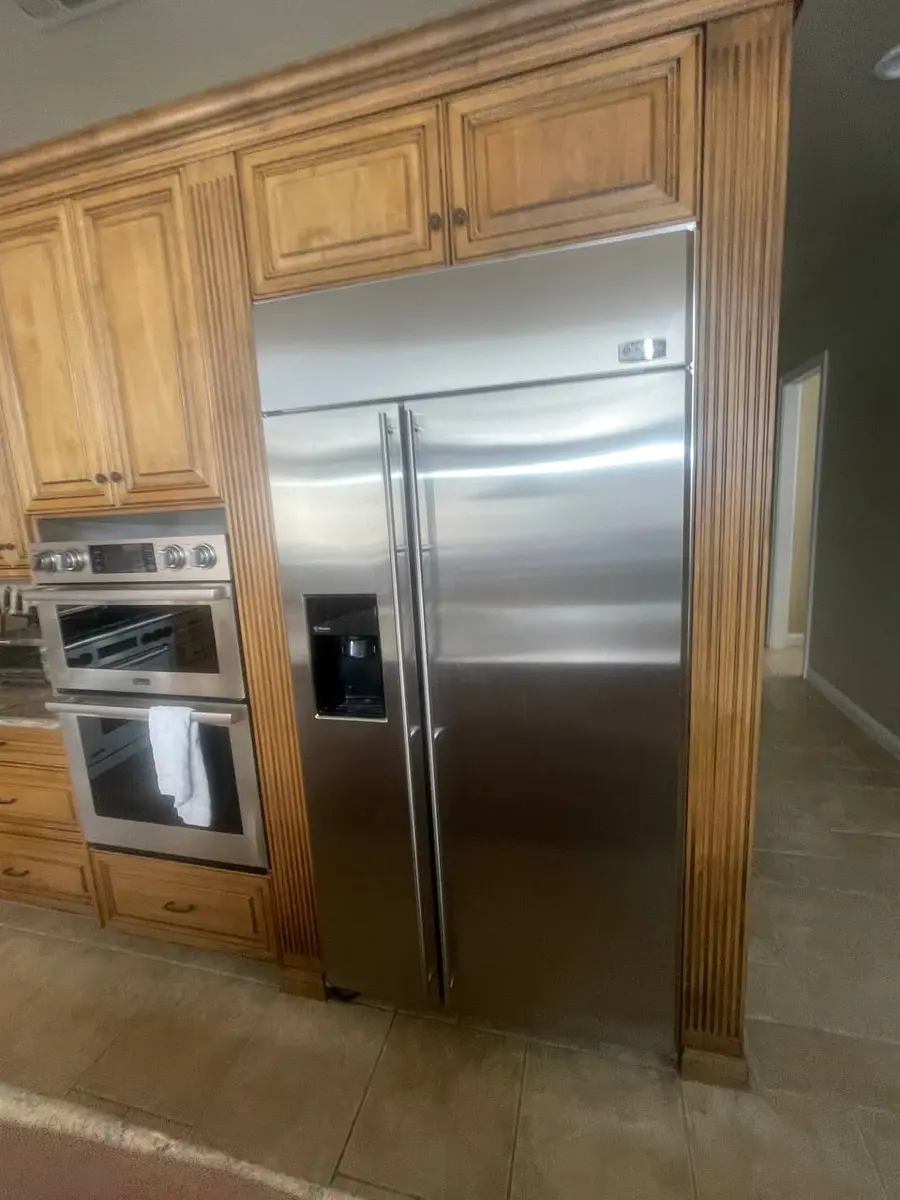
A burning smell from a GE refrigerator is an electrical warning and should be treated seriously — it means a component or wiring is overheating. The common sources are an overheating compressor start relay, a condenser fan motor that is binding and running hot, a defrost heater fault, or damaged wiring. Because these are electrical and carry a fire risk, the honest guidance is safety-first: if the smell is strong or there is any smoke, unplug the fridge and call a technician. This is largely a pro diagnosis, not a DIY fix. Here is how to respond and what is likely behind it.
Do this first (safety)#
- Assess the smell. A strong, acrid, burnt-plastic or burnt-electrical odor is a stop signal.
- If it is strong or there is smoke or a hot spot, unplug the fridge at the outlet (or trip its breaker) right away.
- Do not keep running it to "see if it gets worse" — an overheating electrical fault can escalate.
- Call a technician to diagnose before returning it to service. The food will keep for a few hours in a closed fridge.
Do You Have the Right Tools?
Refrigerant gauges ($200+), vacuum pump ($250), leak detector ($150), and EPA-certified recovery equipment. Our technician arrives with $3,000+ in professional tools — your diagnostic is free.
Licensed & Insured · 90-Day Warranty · Same-Day Service
Why a fridge smells like burning#
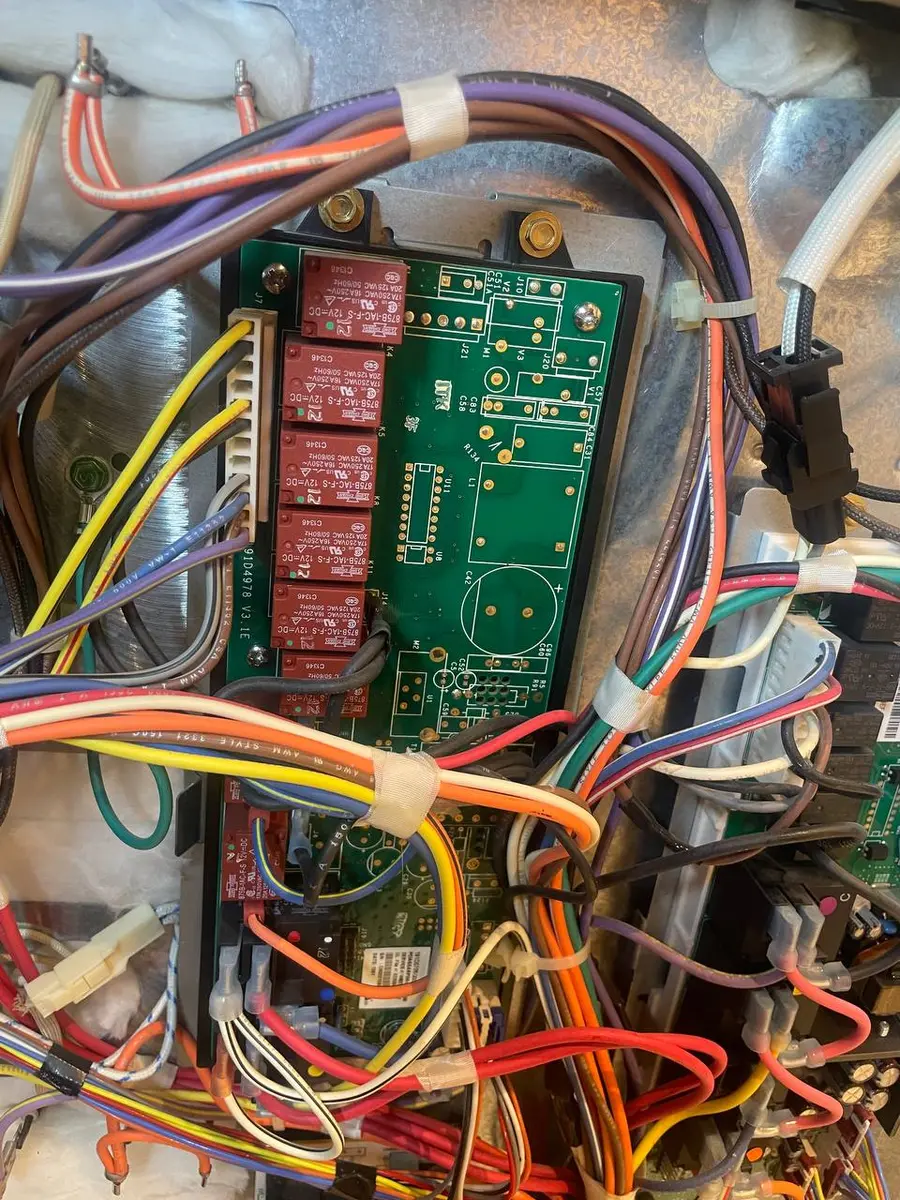
Almost everything that produces a burning smell in a refrigerator is electrical, and most of it lives in the compressor compartment at the back. Motors, relays, heaters, and wiring all run current, and when one overheats — from wear, a bearing seizing, or a connection arcing — it scorches insulation or plastic and produces that distinct burnt smell. Because the source is electrical and often near the high-current compressor circuit, this is a fault to isolate and repair properly, not to poke at while it is running.
Common sources#
Compressor start relay (common)#
The start relay helps the compressor start. When it fails, it can overheat and give off a burnt-plastic smell near the compressor at the back of the fridge. It is one of the most common sources of a burning odor and a modest part — but confirming and replacing it is a technician job because it sits on the compressor circuit.
Condenser fan motor#
The condenser fan near the compressor sheds heat from the coils. If its bearing binds, the motor overheats and can smell hot or burnt, and you may hear it laboring or stopping. A binding fan motor is replaced as a unit.
Defrost heater fault#
The defrost heater warms the evaporator coils to clear frost. A defrost heater or its wiring that faults can produce a hot or burning smell during the defrost cycle. This is diagnosed with the fridge de-energized.
Wiring and connections#
Damaged, chafed, or loose wiring anywhere in the fridge can arc and overheat, scorching insulation. A connection running hot — even a small one drawing tens of watts more than it should — can smell before it fails. Wiring faults are traced with the power off.
Ice-maker or dispenser motor#
A motor in the ice maker or dispenser that binds can overheat and smell. Less common, but part of the same electrical-overheating family.
Safety First — Know the Risks
Refrigerant (R-134a/R-600a) requires EPA certification to handle. Improper discharge is a federal violation and health hazard. Our techs are licensed and insured — let them handle the risk.
Licensed & Insured · 90-Day Warranty · Same-Day Service
Sources at a glance#
| Source | Share of burning-smell cases | Where |
|---|---|---|
| Compressor start relay | 25% | Compressor compartment, rear |
| Condenser fan motor | 20% | Near compressor |
| Wiring / connection arcing | 20% | Anywhere |
| Defrost heater fault | 15% | Freezer evaporator |
| Ice-maker / dispenser motor | 12% | Door / freezer |
The remaining share are the main control board or a new-unit break-in smell — but never assume break-in with a strong or persistent odor.
New unit versus a real fault#
A brand-new refrigerator can give off a faint warm-electronics or slightly plastic smell for the first day or two as components run in — that is usually harmless and fades. But this is the one place not to guess: a strong, acrid, or persistent burnt smell, especially with any warmth at a component or any visible smoke, is a real fault. When in doubt, unplug and have it checked. The cost of caution is a few hours of a warm fridge; the cost of ignoring a real electrical fault is far higher.
The Real Cost of DIY
Average DIY attempt: $150-400 in tools you may use once, plus the risk of further damage. Our diagnostic visit costs $0 — we find the problem and give you an honest quote.
Licensed & Insured · 90-Day Warranty · Same-Day Service
Why this is a pro diagnosis#
Every likely source is electrical and most sit on the compressor circuit at the back of the fridge. Finding which relay, motor, heater, or connection is overheating means working on live-adjacent, high-current wiring — testing the relay, checking the fan motor, metering the defrost circuit, and inspecting the harness. That is technician work. The homeowner's job here is the safety response: assess the smell, unplug if it is strong, and get it diagnosed before running the fridge again.
Tell an electrical smell from other odors#
Not every bad smell from a fridge is burning, and telling them apart matters. A burnt-plastic or acrid electrical smell, especially near the back or with any warmth or smoke, is the electrical warning this guide is about — treat it seriously. A musty or moldy smell is a cleaning issue (spoiled food, a dirty drip pan, or mildew), not an electrical fault. A chemical or ether-like smell is rare but can indicate a refrigerant issue. And a faint warm-electronics smell from a new unit for a day or two is usually harmless break-in. If it smells like hot plastic or scorched wiring, act on it; if it smells like spoiled food or mildew, clean rather than unplug.
Don't Void Your Warranty
Opening your appliance yourself may void the manufacturer warranty. Our repair comes with a 90-day guarantee, and we document everything for warranty compliance.
Licensed & Insured · 90-Day Warranty · Same-Day Service
Where the heat usually is#
Almost all burning smells originate in the compressor compartment at the back-bottom of the fridge, because that is where the high-current parts live: the compressor, its start relay, and the condenser fan. If you carefully locate the smell to that area — without touching anything while it is powered — it strongly supports a relay or fan-motor fault. A smell coming from inside the freezer during a defrost cycle points instead at the defrost heater. Locating the source area (by smell, not by touch) helps the technician arrive prepared, but it does not change the response: if the smell is strong, unplug first.
What a technician checks#
- De-energizes the fridge, then inspects the compressor start relay for heat damage or a burnt smell and tests it.
- Checks the condenser fan motor for a binding bearing and signs of overheating.
- Meters the defrost heater circuit if the smell tracks the defrost cycle.
- Inspects the wiring harness and connections for arcing, scorching, or a hot connection.
All of it is done with the fridge unplugged, which is exactly why it is not a live-troubleshooting DIY job.
Is It Worth Your Time?
Diagnosing a cooling issue requires testing the compressor, start relay, thermostat, condenser fan, and defrost system — 4-6 hours of DIY research and testing. Our technician diagnoses the issue in about 30 minutes — same-day appointments available.
Licensed & Insured · 90-Day Warranty · Same-Day Service
Which causes need a technician#
Which causes need a technician#
- Compressor start relay: tested and replaced on the compressor circuit.
- Condenser fan motor: replaced when it binds and overheats.
- Defrost heater and wiring: metered and repaired de-energized.
- Any arcing connection: traced and repaired.
Essentially all of it is a technician's; the homeowner side is recognizing the smell and cutting power safely.
Staying safe#
- Never ignore a strong or persistent burnt-electrical smell — unplug and call for service.
- Keep the back of the fridge and the coils clean so motors and relays do not overheat from strain.
- Do not run a fridge you suspect has an electrical fault just to save the food.
The Risk of Getting It Wrong
A wrong diagnosis often turns a simple fix into a costly replacement. Without proper diagnostic tools, you might replace the wrong part — or cause additional damage. Our free diagnostic eliminates the guesswork.
Licensed & Insured · 90-Day Warranty · Same-Day Service
Frequently Asked Questions#
Why does my GE refrigerator smell like burning?#
A burning smell from a fridge is electrical and should be taken seriously. The common sources are an overheating compressor start relay, a condenser fan motor binding and overheating, a defrost heater fault, or damaged wiring. If the smell is strong or you see smoke, unplug the fridge and call a technician.
Is a burning smell from a refrigerator dangerous?#
It can be — an overheating electrical component or wiring is a potential fire risk. If the smell is strong, acrid, or accompanied by smoke or a hot spot, unplug the fridge immediately and do not run it until it is diagnosed. A faint hot-electronics smell from a new unit can be break-in, but do not assume.
What part usually causes a burning smell in a GE fridge?#
The compressor start relay is a common culprit — when it fails it can overheat and give off a burnt-plastic smell near the compressor at the back. A binding condenser fan motor is another. Both are near the compressor compartment and are technician repairs.
Can I keep using a GE refrigerator that smells like burning?#
No. Unplug it and have it diagnosed. Running a fridge with an overheating electrical fault risks the fault worsening into a fire. The food will keep for a few hours; the safety risk is not worth it.
Senior Gas Appliance Specialist · 18 years experience
AGA-certified gas appliance specialist with 18 years of experience in residential and commercial oven, range, and cooktop repairs.