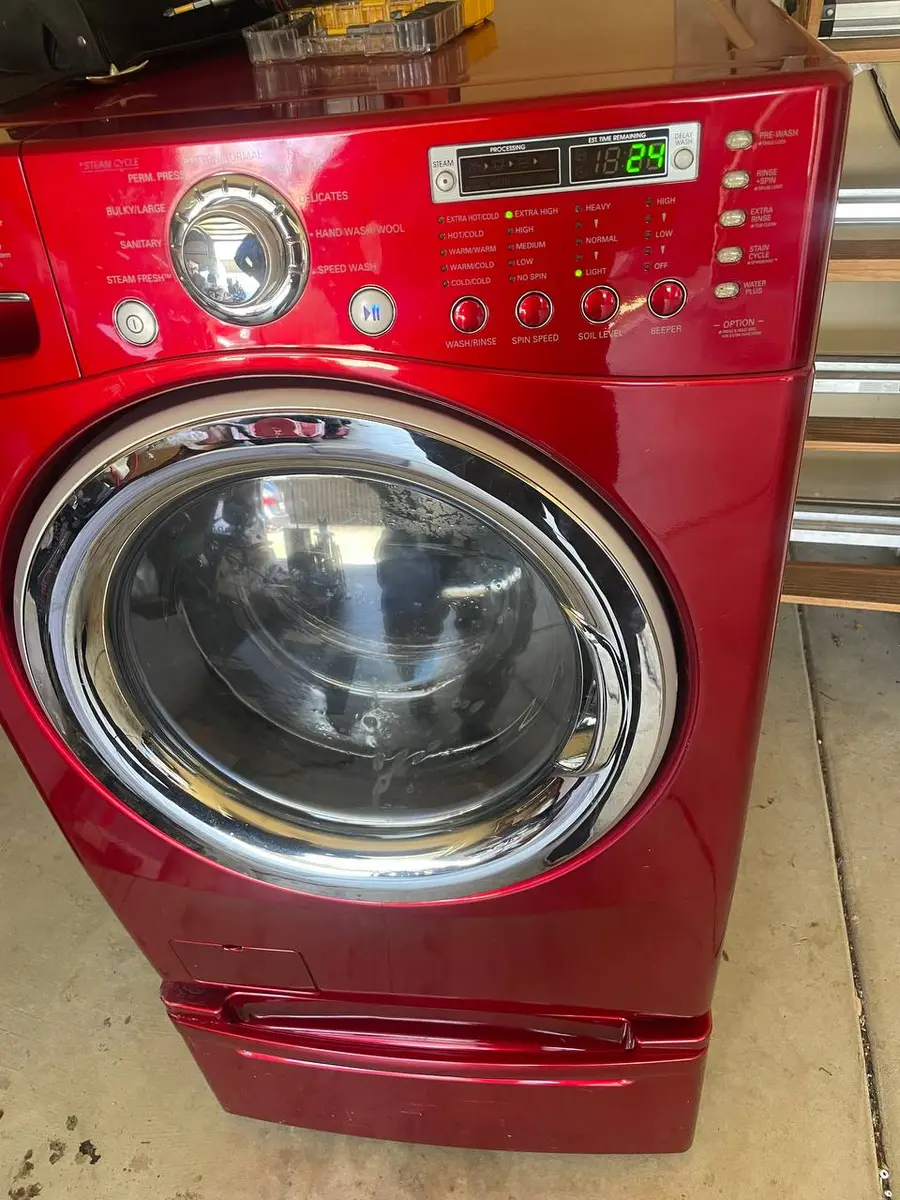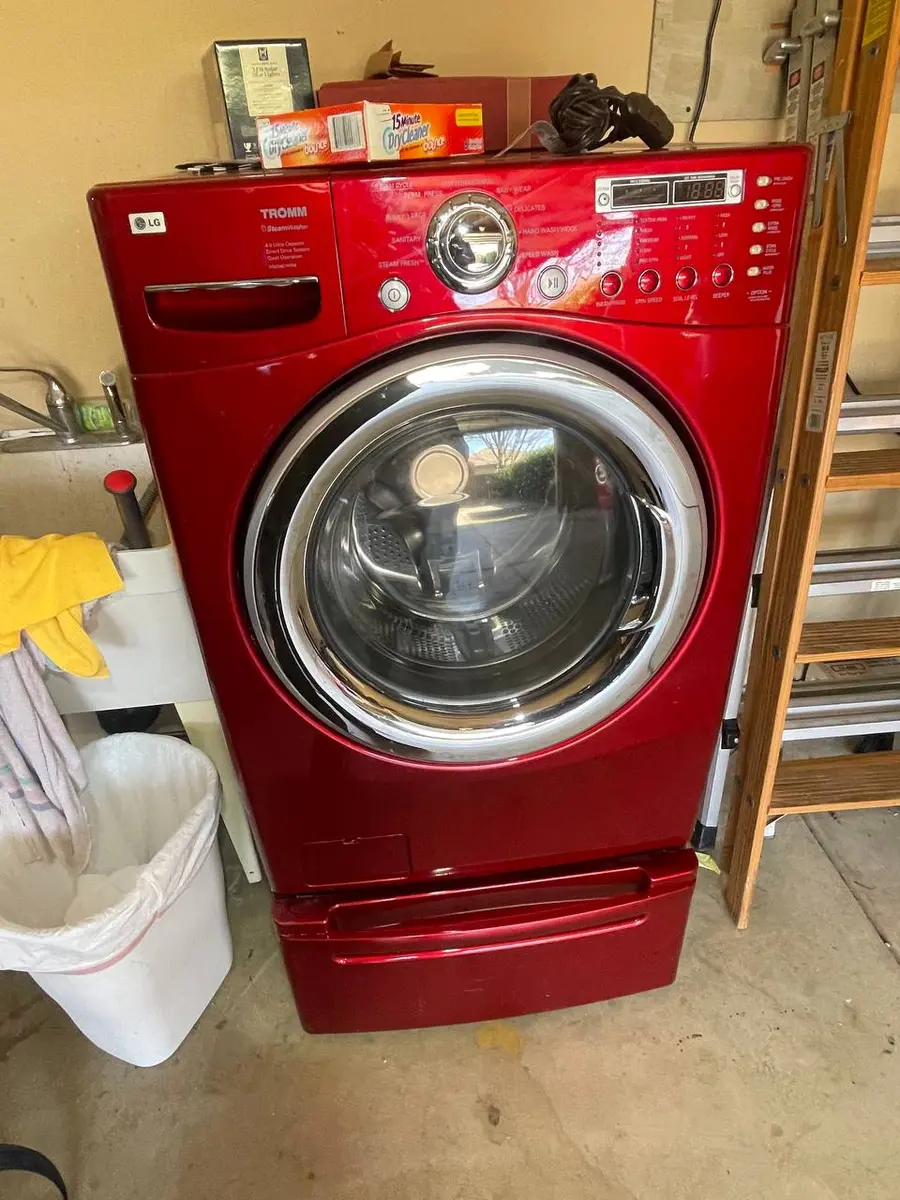
Haier washers serve a unique niche in the US market — they are among the top-selling compact and portable washing machines for apartment dwellers, RV owners, and anyone without traditional laundry hookups. Haier also produces full-size front-load and top-load models under both the Haier and GE Appliances brands. When a Haier washer encounters a problem, it displays an E-code on the control panel. This guide covers every Haier washer error code across all product lines, including the popular HLP21N and HLP24E portable models, the compact 24-inch units, and the full-size machines.
How Haier Washer Error Codes Work#
Haier washers use a microprocessor-based control system that monitors water levels, motor speed, temperature, door/lid position, and drain performance. When any parameter exceeds its threshold, the control board halts the cycle and displays an error code. On models with a simple LED display (like the portable washers), codes appear as a blinking sequence.
Universal reset procedure:
- Press the Power button to turn off the washer.
- Unplug from the wall outlet for 2 minutes.
- Plug back in and select a Rinse & Spin cycle to test.
- If the error returns, use the specific troubleshooting below.
Important for portable models: Portable Haier washers (HLP21N, HLP24E, QTW60A) connect to a sink faucet via an adapter. Many error codes on these models are caused by the faucet connection rather than an internal component failure.
Do You Have the Right Tools?
Bearing puller set ($120), drum spider wrench ($85), multimeter ($85), and diagnostic software. Our technician arrives with $3,000+ in professional tools — your diagnostic is free.
Licensed & Insured · 90-Day Warranty · Same-Day Service
E1 — Water Supply / Fill Error#
The washer is not filling with water or is filling too slowly. The control board expects water to reach the required level within a set time (typically 8–10 minutes).
Common causes:
- Water supply valves not fully open (full-size models)
- Faucet adapter not secured properly (portable models)
- Low water pressure — Haier washers require at least 14.5 PSI
- Clogged inlet screen filters (sediment buildup in the mesh)
- Failed water inlet valve solenoid (part varies by model)
- Kinked or crushed inlet hose
How to fix:
- Portable models: Check the faucet adapter connection. The adapter must be fully threaded onto the faucet aerator with no leaks. If water dribbles rather than flows, the faucet may have a flow restrictor — remove the aerator and clean or remove the restrictor.
- Full-size models: Verify both hot and cold supply valves are fully open. Turn off water, disconnect inlet hoses, and clean the mesh screen filters at both ends (washer connection and wall valve connection) with an old toothbrush.
- All models: Check water pressure. Turn on the faucet or valve fully and measure flow — you should get at least 2 gallons per minute. If pressure is low throughout the house, the issue is plumbing-related.
- If screens are clean and pressure is adequate, the water inlet valve may have failed. Test with a multimeter — the solenoid coil should read 500–1500Ω. Replacement inlet valves cost varies by model and region.
E2 — Drain Error#
The washer cannot pump water out within the allotted drain time (usually 8–10 minutes). The tub remains full of water.
Common causes:
- Clogged drain pump filter (lint, coins, small items)
- Kinked or clogged drain hose
- Drain hose too high (the discharge point must be below 39 inches / 1 meter for most models)
- Failed drain pump motor
- For portable models: drain hose not properly positioned in the sink
How to fix:
- Portable models: Ensure the drain hose is positioned in the sink basin and not kinked where it drapes over the sink edge. The hose end must be lower than the top of the washer tub.
- All models: Check the drain pump filter. On front-load Haier models, the filter access is at the bottom-left behind a small panel. Place towels and a shallow pan underneath, turn the filter cap counterclockwise slowly, and remove any debris.
- Check the drain hose for blockages by disconnecting it and running water through it.
- If the filter and hose are clear, the drain pump may have failed. Listen for the pump activating during a drain cycle — you should hear a humming/whirring sound. If silent, the pump motor is likely burned out. Replacement drain pumps cost varies by model and region.
Safety First — Know the Risks
High-voltage components and pressurized water lines create flood and shock risk. A single loose fitting can cause thousands in water damage. Our techs are licensed and insured — let them handle the risk.
Licensed & Insured · 90-Day Warranty · Same-Day Service
E3 — Motor / Spin Speed Error#
The motor cannot reach the target spin speed, or the motor speed sensor (tachometer/hall sensor) is sending incorrect readings to the control board.
Common causes:
- Overloaded drum (too many clothes for the drum capacity)
- Unbalanced load preventing spin-up
- Failed motor hall sensor / tachometer
- Worn motor brushes (on models with brushed motors)
- Drive belt slipping or broken (belt-drive models)
How to fix:
- Reduce the load. Haier compact washers have smaller capacities (1.0–2.4 cu ft) than full-size units (4.0–5.0 cu ft). Overloading is the most common cause of E3, especially on compact models. Follow the capacity guide in your manual.
- Redistribute clothes evenly in the drum. A single heavy item bunched on one side prevents proper spin-up.
- If E3 appears with normal loads, the hall sensor on the motor may be faulty. This sensor is mounted on the stator and monitors rotor position. Replacement hall sensors cost varies by model and region and are a relatively simple swap.
- On belt-drive models, inspect the drive belt for cracks, glazing, or stretching. A slipping belt cannot transfer motor torque to the drum. Replacement belts cost varies by model and region.
E4 — Water Overflow / Overfill#
The washer detects water above the maximum safe level. It will immediately activate the drain pump as a safety measure.
Common causes:
- Water inlet valve stuck open (continuing to fill after the signal to close)
- Faulty water level pressure sensor (sending incorrect level readings)
- Clogged pressure sensor hose (air tube from tub to sensor)
- Excessive suds creating false high-water reading
How to fix:
- Check if you used too much detergent. Haier washers (especially HE front-loaders) require very small amounts of HE detergent — typically 1–2 tablespoons. Excessive suds trick the pressure sensor into reading a higher water level.
- Run an empty hot cycle with 1 cup of white vinegar to clear residual suds.
- If E4 appears with correct detergent usage, unplug the washer and observe: if water continues flowing in, the inlet valve is mechanically stuck open and must be replaced immediately.
- Check the pressure sensor hose — a small-diameter rubber or silicone tube running from the outer tub to the pressure switch on the control board area. Blow gently into the hose (disconnected from the switch end) and listen for a click from the switch. A clogged hose or failed switch causes incorrect water level readings.
The Real Cost of DIY
Average DIY attempt: $150-400 in tools you may use once, plus the risk of further damage. Our diagnostic visit costs $0 — we find the problem and give you an honest quote.
Licensed & Insured · 90-Day Warranty · Same-Day Service
E5 — Water Temperature Sensor Error#
The water temperature thermistor is reading outside the expected range — either open circuit, short circuit, or a value that does not correlate with the selected wash cycle temperature.
Common causes:
- Failed thermistor (NTC sensor)
- Disconnected wire harness at the sensor connector
- Control board sensor input circuit failure
How to fix:
- Locate the thermistor — it is typically mounted in the outer tub wall or near the heating element (on models with an internal heater). It is a small cylindrical probe connected by two wires.
- Test with a multimeter: at room temperature (77°F / 25°C), a working NTC thermistor should read approximately 10,000–15,000Ω (10–15kΩ). Resistance decreases as temperature increases. A reading of 0Ω or OL/infinite indicates failure.
- Inspect the wire connector for corrosion or loose pins.
- Replacement thermistors cost varies by model and region and take about 15 minutes to install.
E6 — Door / Lid Lock Error#
The washer cannot confirm that the door (front-load) or lid (top-load) is properly locked. The cycle will not start.
Common causes:
- Door or lid not fully closed
- Clothing caught in the door gasket or lid seal
- Failed door lock actuator or solenoid
- Broken latch mechanism or strike
- Wiring issue between control board and lock assembly
How to fix:
- Open the door/lid fully and check for any clothing or objects preventing closure. On front-load models, inspect the rubber boot gasket for foreign objects lodged in the folds.
- Close the door firmly. You should hear a distinct click or latch engagement.
- If the door appears closed but E6 persists, the door lock assembly may be faulty. On front-load models, the lock is accessible by peeling back the rubber gasket on the right side of the door opening. Inspect for cracked plastic, burn marks, or disconnected wires.
- Test the door lock with a multimeter. The solenoid should read 600–1000Ω.
- Replacement door locks cost varies by model and region.
Note for portable top-load models: The HLP21N and similar portables have a lid switch rather than a lock mechanism. The lid switch is a simple on/off device — test continuity with the lid closed. Replacement switches cost varies by model and region.
Don't Void Your Warranty
Opening your appliance yourself may void the manufacturer warranty. Our repair comes with a 90-day guarantee, and we document everything for warranty compliance.
Licensed & Insured · 90-Day Warranty · Same-Day Service
E7 — Motor Communication Error#
The control board cannot communicate with the motor controller (inverter board on variable-speed models) or is not receiving the expected motor feedback signals.
Common causes:
- Loose wire harness between the main board and the motor/inverter
- Failed inverter board (on inverter-drive models)
- Failed main control board
- Power surge damage to either board
How to fix:
- Unplug the washer. Locate the main control board (usually at the top rear or behind the control panel) and the motor controller/inverter (usually near the motor at the bottom). Reseat all wire connectors firmly.
- Inspect all connectors for burn marks, melted plastic, or corroded pins.
- If connectors are sound, a board replacement is likely needed. Determine which board by checking if the control panel responds to button presses and if the motor attempts to run at all. If the panel works but the motor is completely dead, the inverter/motor controller is suspect.
- Main control boards cost varies by model and region. Motor controllers cost varies by model and region.
E8 — Overload / Excessive Vibration#
The washer has detected excessive vibration or load weight beyond its rated capacity. This is a safety feature to prevent mechanical damage.
Common causes:
- Overloaded drum (exceeding rated capacity)
- Shipping bolts still installed (new installation)
- Washer not level on the floor
- Worn shock absorbers or suspension springs
- Failed vibration sensor
How to fix:
- Check for shipping bolts first. This is extremely common on new installations. Haier washers ship with 3–4 transit bolts securing the drum. They must be removed before first use. Check the rear of the machine for any remaining bolts with rubber spacers.
- Reduce the load size. Compact Haier washers are easily overloaded — the drum looks like it can hold more than the rated capacity allows.
- Level the washer using a bubble level placed on top. Adjust all four feet until level and ensure the unit does not rock. Tighten the lock nuts against the chassis.
- On models with shock absorbers (front-load), inspect for leaking oil or collapsed dampers. Replacement shocks cost varies by model and region each (typically 2 per unit).
Is It Worth Your Time?
Washer problems have dozens of possible causes from bearings to control boards. Average DIY troubleshooting: 3-5 hours plus parts ordering delays. Our technician diagnoses the issue in about 30 minutes — same-day appointments available.
Licensed & Insured · 90-Day Warranty · Same-Day Service
E9 — EEPROM / Board Memory Error#
The control board's onboard memory (EEPROM) has a read/write failure. This stores the operating parameters and cycle configurations.
Common causes:
- Power surge or brownout corrupting the memory chip
- Failed EEPROM chip on the control board
- Control board end-of-life failure
How to fix:
- Perform a hard reset: unplug the washer for 10 minutes, then plug back in and attempt to run a cycle.
- If E9 persists, the control board needs replacement. There is no field-serviceable repair for EEPROM corruption — the entire board must be swapped.
- Some authorized service centers can reprogram the EEPROM using Haier's service tool, but this option is rarely available outside of warranty service.
- Main control boards cost varies by model and region depending on the model.
EA — Communication Error (Dual-Board Models)#
On models with separate display and main control boards, EA indicates a communication failure between the two boards.
Common causes:
- Loose or damaged ribbon cable between boards
- Failed display board
- Failed main control board
How to fix:
- Unplug the washer. Remove the control panel cover to access both boards.
- Reseat the ribbon cable or wire harness connecting the two boards. Check for bent or broken pins.
- If the display is completely blank (no lights at all), the display board or its power supply circuit is likely faulty.
- Display boards cost varies by model and region. Main control boards cost varies by model and region.
The Risk of Getting It Wrong
A wrong diagnosis often turns a simple fix into a costly replacement. Without proper diagnostic tools, you might replace the wrong part — or cause additional damage. Our free diagnostic eliminates the guesswork.
Licensed & Insured · 90-Day Warranty · Same-Day Service
Portable Washer Specific Tips#
Haier's portable washers (HLP21N, HLP24E, QTW60A, QTW80B) have unique considerations:
- Faucet flow rate: Most faucet aerators restrict flow to 1.5–2.2 GPM. If your faucet has a very restrictive aerator (1.0 GPM or less, common in California drought fixtures), the washer may take too long to fill, triggering E1. Remove or replace the aerator with a higher-flow model.
- Drain height: The drain hose must discharge into a sink or tub that is at or below the top of the washer. If the discharge point is too high, the pump cannot overcome gravity.
- Power requirements: Portable washers require a grounded 120V outlet. Using an extension cord (especially a light-duty one) can cause voltage drop that triggers E3 or E7 codes. Plug directly into a wall outlet.
- Vibration on floors: Portable washers on upper floors or uneven surfaces are prone to E8 codes. Use a rubber anti-vibration mat (varies by model and region) under the unit.
Frequently Asked Questions#
Q: How do I reset my Haier washer after an error code? A: Turn off the washer using the Power button, unplug it for 2 minutes, then plug back in and run a test cycle. For persistent errors, try pressing and holding the Power button for 10 seconds before unplugging. Most error codes clear once the underlying issue is fixed and a successful cycle completes.
Q: My Haier portable washer shows E1 — is it the washer or the faucet? A: Start by checking the faucet connection. Open the faucet fully and make sure water is flowing freely through the adapter. If you can see strong water flow into the washer when the fill cycle starts, the washer is fine and the issue was a loose adapter or restricted faucet. If the faucet flow is strong but E1 persists, the inlet valve inside the washer may be faulty.
Q: Can I use regular detergent in my Haier washer? A: For front-load and HE top-load models, use HE (High Efficiency) detergent only. For traditional top-load models and most portable washers, regular detergent is acceptable but use less than you think — Haier compact washers need only 1–2 tablespoons per load. Excessive detergent causes suds buildup that triggers E4 codes and can damage the pressure sensor.
Q: Where can I find Haier washer parts? A: Haier parts are available through GE Appliances Parts (parts.geappliances.com), Encompass Parts, and major parts retailers like RepairClinic and AppliancePartsPros. Since Haier owns GE Appliances, many parts cross-reference between brands. For portable washer parts specifically, Amazon often stocks third-party compatible components at lower prices.
Q: Is it worth repairing a Haier portable washer? A: Haier portable washers retail for varies by model and region. Simple repairs (inlet valve, drain pump, lid switch) costing varies by model and region in parts are worth doing. Motor or control board failures (varies by model and region in parts) put you in the 50% replacement cost territory where buying new makes more sense, especially for units over 3 years old.
Free Diagnostic Visit — Zero Risk
Our certified technician comes to your home, diagnoses the problem with professional tools, and gives you an honest quote — all at zero cost. No parts markup, no hidden fees. If you decide not to proceed, you pay nothing.
Licensed & Insured · 90-Day Warranty · Same-Day Service
When to Call a Professional#
Most Haier washer error codes point to component-level issues that experienced DIYers can handle. However, call a professional for:
- E7 with both boards suspected — Misdiagnosing which board failed wastes varies by model and region on an unnecessary part.
- E3 with a seized motor — Motor replacement requires disassembly of the washer and may involve the mounting hardware and wiring.
- Persistent E2 with a clear drain path — May indicate an impeller issue inside the pump or a wiring problem that is difficult to trace.
- Any burning smell — Stop using the washer immediately and unplug it. Electrical faults in a washer surrounded by water are a safety hazard.
- Repeated E4 / overflow — A stuck-open inlet valve combined with a non-functioning drain can create a flood situation.
Struggling with a Haier washer error code? EasyBear technicians service all Haier washer types — compact, portable, and full-size — and carry common replacement parts. We offer free diagnostic visits with same-day or next-day scheduling. Our tech will identify the exact problem, explain repair vs. replace economics, and complete most repairs in a single visit. Every repair is backed by our 90-day parts and labor warranty. Schedule your free diagnosis today.
Lead Appliance Repair Technician · 12 years experience
Experienced technician with 12 years specializing in washing machine and dryer repairs across all major brands.