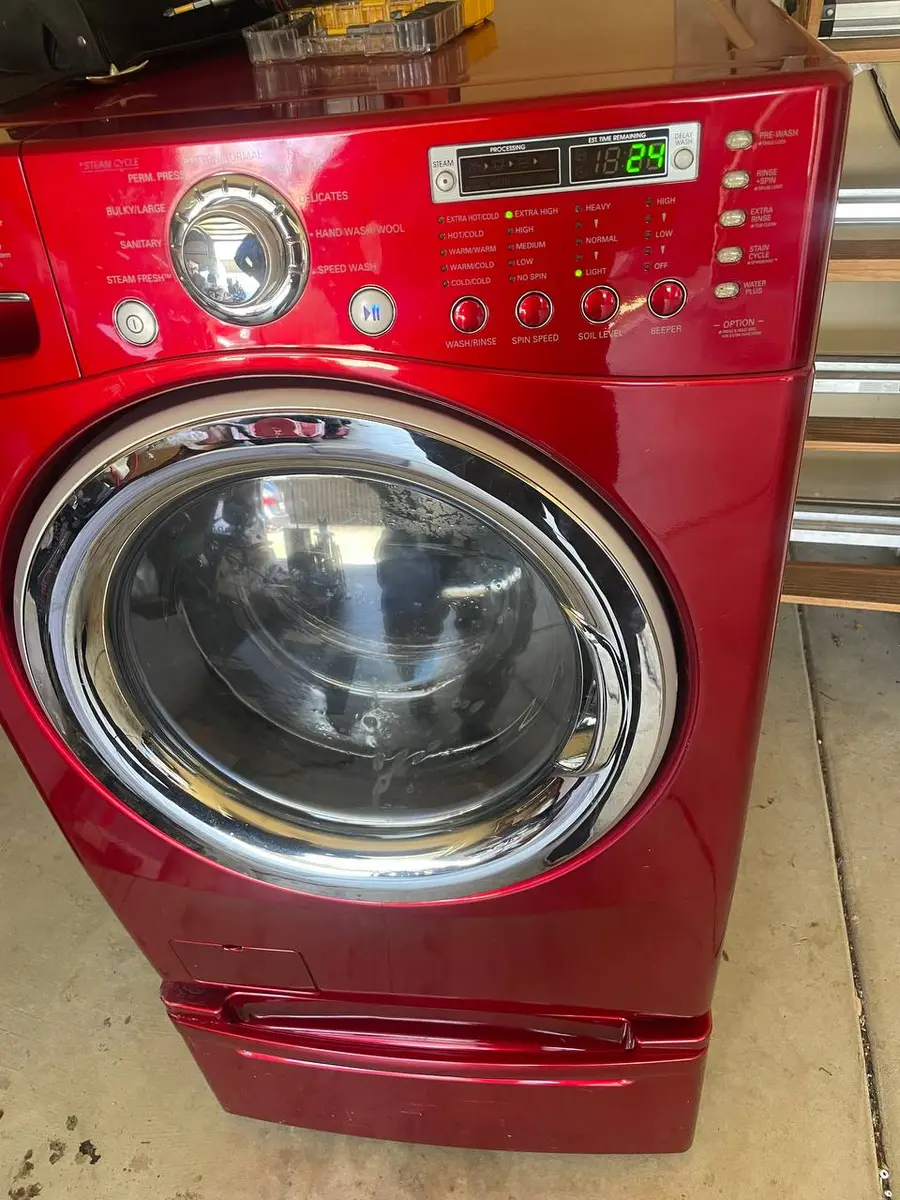
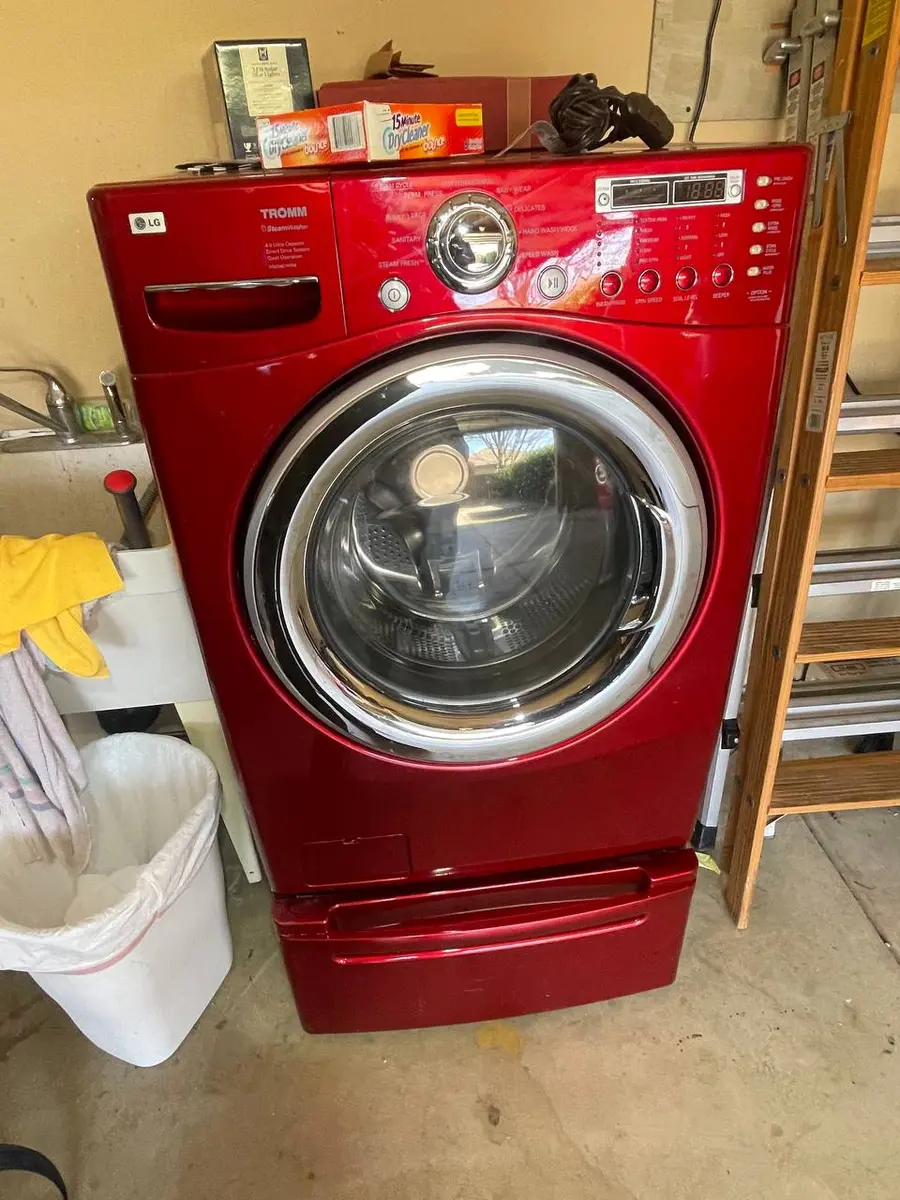
GE Profile washers represent GE's mid-premium laundry line, featuring the UltraFresh Vent System with OdorBlock (designed to prevent mold and mildew in front-load drums), SmartHQ Wi-Fi connectivity, SmartDispense automatic detergent dispensing, and Microban antimicrobial technology. Models like the PFW870SP, PFW950SP, and PTW900BP varies and are among the most feature-rich washers in California homes.
GE Profile washers use the GE E-code error platform shared across the product line, but include Profile-specific codes related to the UltraFresh vent system, SmartDispense, and the advanced motor drive systems that enable features like the Dynamic Balancing Technology for vibration reduction.
How GE Profile Washer Error Codes Work#
Profile washers display error codes on the front-panel LED or LCD display. On SmartHQ-connected models, error notifications push to your phone with suggested troubleshooting steps. The control board monitors water level, motor current, door lock status, drain function, temperature, and the UltraFresh vent system throughout each cycle phase.
To reset most error codes: Press the Power button to turn off the washer, then unplug for 60 seconds. Plug back in and run a Rinse & Spin cycle to test. If the error returns, the underlying cause persists.
SmartHQ diagnostics: Connected Profile washers store cycle history, error logs, and component health data accessible through the SmartHQ app — often providing more diagnostic context than the error code alone.
Do You Have the Right Tools?
Bearing puller set ($120), drum spider wrench ($85), multimeter ($85), and diagnostic software. Our technician arrives with $3,000+ in professional tools — your diagnostic is free.
Licensed & Insured · 90-Day Warranty · Same-Day Service
E2 — Drain Error#
E2 means the washer cannot drain water from the tub within the allotted time (typically 8–10 minutes).
Common causes:
- Clogged drain pump filter (coins, hair ties, lint buildup, small clothing items) — the number one cause
- Kinked or blocked drain hose
- Drain pump motor failure (part WH23X28418)
- Standpipe or house drain blockage
- Drain hose height violation (must be between 30 and 96 inches at the standpipe entry)
How to fix:
- Locate the drain pump filter access panel at the bottom-front of the washer. Place towels and a shallow pan underneath.
- Slowly turn the filter cap counterclockwise — water will drain out. Remove and clean all debris from the filter and the pump cavity behind it.
- Check the drain hose for kinks. Ensure the hose height at the standpipe is between 30 and 96 inches per GE specification.
- Disconnect the drain hose from the standpipe and test by draining into a bucket at floor level. If it drains fine, the house drain has a blockage.
- If the filter is clean and the hose is clear, test the drain pump motor continuity (expect 5–15 ohms).
Profile-specific note: GE Profile washers with SmartDispense use a larger internal reservoir for auto-dispensing, which means more residual water in the system. The drain filter on SmartDispense models can accumulate more detergent residue buildup than standard models, creating a gel-like blockage that restricts flow without showing obvious debris. Clean the filter monthly and flush with hot water to dissolve detergent gel. Sacramento hard water accelerates this buildup.
Part cost: Drain pump assembly varies by part. Professional repair: varies by part.
E4 — Unbalanced Load#
E4 indicates the washer detected excessive drum imbalance during the spin cycle and halted to protect the bearings and suspension system.
Common causes:
- Single heavy item (comforter, jeans, towels) bunched on one side of the drum
- Washing a single large item alone without counterbalance
- Washer not level on the floor (all four feet must make firm contact)
- Worn shock absorbers or suspension rods (typical after 6–8 years)
- Loose drum counterweight bolts (rare but possible after transport)
How to fix:
- Open the door and redistribute the load evenly around the drum. Spread items rather than bunching them.
- For single large items, add 2–3 towels to provide balance mass on the opposite side of the drum.
- Check that the washer is perfectly level — place a bubble level on top, front-to-back and side-to-side. Adjust the front leveling legs and tighten lock nuts firmly. GE Profile front-loaders have rear self-leveling legs that must be properly seated.
- If E4 occurs frequently with properly balanced loads, the shock absorbers or suspension rods are worn. Push down firmly on the drum — if it bounces more than once before settling, suspension components need replacement.
Profile-specific note: GE Profile washers feature Dynamic Balancing Technology — a ring of steel balls inside the drum that automatically redistributes to counter imbalance during spin-up. If E4 occurs with properly loaded cycles on a washer less than 4 years old, the balance ring may have lost fluid or the balls may have seized. This is uncommon but is a Profile-specific component not present on standard GE washers. Balance ring replacement cost varies by model and region.
Part cost: Suspension rod kit (4 pack) varies by part. Balance ring varies by part. Shock absorbers varies by part each. Professional repair: varies by part.
Safety First — Know the Risks
High-voltage components and pressurized water lines create flood and shock risk. A single loose fitting can cause thousands in water damage. Our techs are licensed and insured — let them handle the risk.
Licensed & Insured · 90-Day Warranty · Same-Day Service
E8 — Overflow Error#
E8 is a critical safety code indicating water level has exceeded the maximum safe limit in the tub.
Common causes:
- Water inlet valve stuck open (mechanically failed — cannot shut off)
- Pressure switch failure (cannot detect water level accurately)
- Pressure switch hose disconnected, cracked, or blocked
- Control board fault sending continuous fill signal
How to fix:
- Unplug the washer immediately — E8 is a flood risk.
- Turn off both hot and cold water supply valves behind the washer.
- Check if water continues to enter the tub after unplugging. If yes, the inlet valve is mechanically stuck open and must be replaced immediately (it will flood your home if water valves are reopened).
- If water stops with the unit unplugged, the control board was sending a continuous fill signal. Check the pressure switch and hose first — disconnect the hose and blow gently (you should hear a click from the switch).
- Inspect the pressure switch hose for cracks, kinks, or blockage that would prevent accurate water level sensing.
Profile-specific note: GE Profile washers draw water through a mixing valve that serves both the standard fill and the SmartDispense pre-mix system. Sacramento and Bay Area homes with hard water can develop calcium deposits inside the mixing valve body, which can prevent the valve from closing completely even when the solenoid de-energizes. This partial sticking causes slow overfilling that eventually triggers E8. If E8 occurs on a Profile washer over 3 years old in a hard water area, inspect the mixing valve for calcification — descaling with vinegar may restore function temporarily, but replacement is the permanent fix.
Part cost: Water inlet/mixing valve varies by part. Pressure switch varies by part. Professional repair: varies by part.
dE — Door Lock Error#
The dE code means the washer cannot confirm the door is properly locked — the cycle will not start, or it halts mid-cycle for safety.
Common causes:
- Door not fully closed (clothing caught in the gasket/boot seal)
- Faulty door lock assembly (part EBF61315802) — the latch mechanism or solenoid has failed
- Broken door strike or latch mechanism
- Wiring fault between the door lock and the control board
- Swollen or deformed door boot seal preventing full door closure
How to fix:
- Open the door fully. Check for clothing, wash items, or debris caught in the door boot seal that would prevent a complete close.
- Close the door firmly until you hear and feel a distinct positive click/latch engagement.
- Inspect the door lock assembly: peel back the boot seal gasket along the lock side (usually right side). Look for burn marks on the lock mechanism, broken plastic tabs, or disconnected wire connectors.
- Test the door lock solenoid resistance: approximately 600–900 ohms. Open reading = coil has burned out.
- Check the door strike alignment — the metal catch on the door frame must align precisely with the lock mechanism on the tub opening.
Profile-specific note: GE Profile front-load washers with the UltraFresh Vent System have a modified door boot seal with an integrated antimicrobial mesh vent. This seal is thicker than standard GE boot seals and can occasionally shift during heavy-vibration cycles, partially blocking the door from closing completely. If dE appears after a high-spin cycle, reposition the boot seal at the latch point to ensure it sits flush in its channel.
Part cost: Door lock assembly varies by part. Door boot seal varies by part. Professional repair: varies by part.
The Real Cost of DIY
Average DIY attempt: $150-400 in tools you may use once, plus the risk of further damage. Our diagnostic visit costs $0 — we find the problem and give you an honest quote.
Licensed & Insured · 90-Day Warranty · Same-Day Service
E1 — Water Inlet Error#
E1 means the washer is not filling with water or is filling too slowly (cannot reach the required level within 8 minutes).
Common causes:
- Water supply valves not fully open
- Kinked supply hoses
- Clogged inlet screen filters (mesh screens inside the hose connections clog with sediment)
- Failed water inlet valve solenoid
- Low household water pressure (below 20 PSI)
How to fix:
- Verify both hot and cold water valves are fully open.
- Turn off water, disconnect inlet hoses, and inspect mesh screens at both the valve and hose ends. Clean sediment with an old toothbrush and vinegar.
- Check water pressure — GE Profile requires 20–100 PSI. Sacramento homes with older galvanized pipes often have reduced pressure from internal corrosion buildup.
- Test inlet valve solenoids with a multimeter — each should read approximately 500–1,500 ohms. No continuity = solenoid has burned out.
Profile-specific note: Profile washers with SmartDispense pre-mix detergent before the fill cycle, which requires adequate water pressure through the mixing valve. If E1 appears specifically at the start of a SmartDispense cycle but not during manual-dispense cycles, the SmartDispense mixing valve inlet screen is clogged. This separate screen is inside the dispenser housing and requires removing the dispenser drawer to access.
Part cost: Inlet valve varies by part. Screens: free to clean. Professional repair: varies by part.
Additional GE Profile Washer Codes#
- E3 — Temperature sensor error. The NTC thermistor is reading out of range. Test resistance (approximately 50,000 ohms at 77 degrees F). Replace if readings are fixed or erratic (varies by model and region).
- E5 — Motor drive error. The inverter cannot control the motor properly. Could be motor winding failure, inverter board fault, or wiring issue. Professional diagnosis required (varies by model and region).
- E6 — Motor tachometer error. The control board is not receiving speed feedback from the motor. Check tach sensor connection and motor rotor position sensor (varies by model and region).
- dC — UltraFresh vent door error (Profile-specific). The vent flap motor on the UltraFresh Vent System is not responding. Check vent mechanism for obstruction or motor failure (varies by model and region).
- SD — Excessive suds detected. Too much detergent or wrong detergent type (must use HE). The washer adds rinse cycles to clear. Reduce detergent amount — most people use 2–3 times more than needed.
- LF — Long fill. Similar to E1 but specifically triggered by a timeout during the fill phase. Check water supply pressure and valve screens.
Don't Void Your Warranty
Opening your appliance yourself may void the manufacturer warranty. Our repair comes with a 90-day guarantee, and we document everything for warranty compliance.
Licensed & Insured · 90-Day Warranty · Same-Day Service
UltraFresh Vent System Codes#
GE Profile front-loaders with UltraFresh include a unique vent system designed to dry the drum between uses and prevent mold/mildew:
- dC — Vent door motor fault. The small motor that opens/closes the vent flap has failed or is obstructed.
- Fan indicator flashing — The Microban fan that circulates air through the drum is not operating. Check fan motor and wiring.
- UltraFresh not activating — If the system does not run after cycle completion, verify it is enabled in settings (it can be turned off accidentally through SmartHQ or the panel).
These are Profile-exclusive components that standard GE washers do not have.
SmartHQ Washer Diagnostics#
Profile washers with SmartHQ connectivity offer:
- Cycle analytics — view water usage, spin speed achieved, cycle duration, and any faults per load.
- SmartDispense monitoring — tracks detergent reservoir level and usage per load, alerting when refill is needed.
- Error history — last 30 error events with timestamps and cycle phase context.
- Remote cycle control — start, pause, and monitor cycles from the app. Useful for post-repair verification.
- Maintenance alerts — reminders for drain filter cleaning, tub clean cycles, and gasket inspection.
Is It Worth Your Time?
Washer problems have dozens of possible causes from bearings to control boards. Average DIY troubleshooting: 3-5 hours plus parts ordering delays. Our technician diagnoses the issue in about 30 minutes — same-day appointments available.
Licensed & Insured · 90-Day Warranty · Same-Day Service
GE Profile Washer Diagnostic Mode#
Enter diagnostic mode: with the washer off, press Signal + Delay Start simultaneously, then press Power within 3 seconds. The washer enters test mode, cycling through: door lock (t1), fill valve hot (t2), fill valve cold (t3), drain pump (t4), motor slow (t5), motor fast spin (t6), heater (t7). Each test runs 30–60 seconds.
Frequently Asked Questions#
Q: Are GE Profile washer codes different from standard GE washer codes? A: The core E-codes (E1, E2, E4, E8) and dE are shared across the GE washer platform. Profile adds codes specific to the UltraFresh Vent System (dC), SmartDispense system (mixing valve related), and the more advanced motor drive (E5, E6). Parts differ between Profile and standard — particularly the door boot seal (UltraFresh integrated), mixing valve (SmartDispense), and motor assembly (variable-speed).
Q: My Profile washer smells musty even with UltraFresh. Should I see an error code? A: Mild odor without an error code means UltraFresh is working but not overcoming the mold already present. Run a Tub Clean cycle with an enzymatic washer cleaner (Affresh or similar), verify UltraFresh is enabled in settings, and wipe the door boot seal dry after each use. If musty odor persists with UltraFresh confirmed active, check for mold deep inside the outer tub — this requires professional disassembly and cleaning or outer tub replacement.
Q: My SmartDispense is using too much detergent. Related to E2? A: SmartDispense over-dispensing does not directly cause E2, but excess detergent creates excessive suds that can slow draining (triggering E2 indirectly) and coat the drain filter with detergent gel. Recalibrate SmartDispense through the SmartHQ app settings or manually reduce the dispensing level. If E2 occurs alongside SD (suds detected), reduce detergent and clean the drain filter.
Q: Why does my Profile washer vibrate more than it used to? A: Increasing vibration without E4 codes suggests gradual suspension wear. GE Profile front-loaders have 4 shock absorbers and a balance ring. After 5–7 years of daily use, the shock absorber damping fluid degrades. Replace all 4 shocks as a set (varies by model and region each) rather than individually — mismatched damping causes asymmetric vibration. If vibration is extreme with proper loading, the rear bearing may also be failing (a much more expensive repair).
Q: How does Sacramento hard water affect my GE Profile washer? A: Sacramento's hard water (typically 8–15 grains per gallon) causes calcium deposits in the inlet valve screens, mixing valve body (SmartDispense models), drain pump impeller, and pressure switch hose. It also leaves mineral residue on the drum and boot seal that promotes mold growth. Run monthly Tub Clean cycles with citric acid-based cleaner, clean inlet screens every 6 months, and consider a whole-house water softener for long-term appliance protection.
The Risk of Getting It Wrong
A wrong diagnosis often turns a simple fix into a costly replacement. Without proper diagnostic tools, you might replace the wrong part — or cause additional damage. Our free diagnostic eliminates the guesswork.
Licensed & Insured · 90-Day Warranty · Same-Day Service
Professional GE Profile Washer Service#
GE Profile washers feature UltraFresh, SmartDispense, Dynamic Balancing Technology, and SmartHQ connectivity — all systems that require Profile-specific knowledge for accurate diagnosis. EasyBear technicians understand these Profile-exclusive systems and carry common Profile parts including door lock assemblies, drain pumps, inlet valves, and UltraFresh vent components. We provide free diagnostic visits and complete most Profile washer repairs on the first visit. Every repair is backed by our 90-day parts and labor warranty. Schedule your free diagnosis today.
Lead Appliance Repair Technician · 12 years experience
Experienced technician with 12 years specializing in washing machine and dryer repairs across all major brands.