GE Oven Thermostat Replacement Guide
A GE oven's mechanical thermostat opens and closes the element circuit to hold your set temperature. If it drifts, calibrate it first — a quarter-turn of the screw is about 25°F. If that cannot bring it in line, replace it with OEM WB20X29590. It is a fix worth doing before the holidays, when an oven that runs 50°F…
Thermostat or Sensor? Check Your Controls#
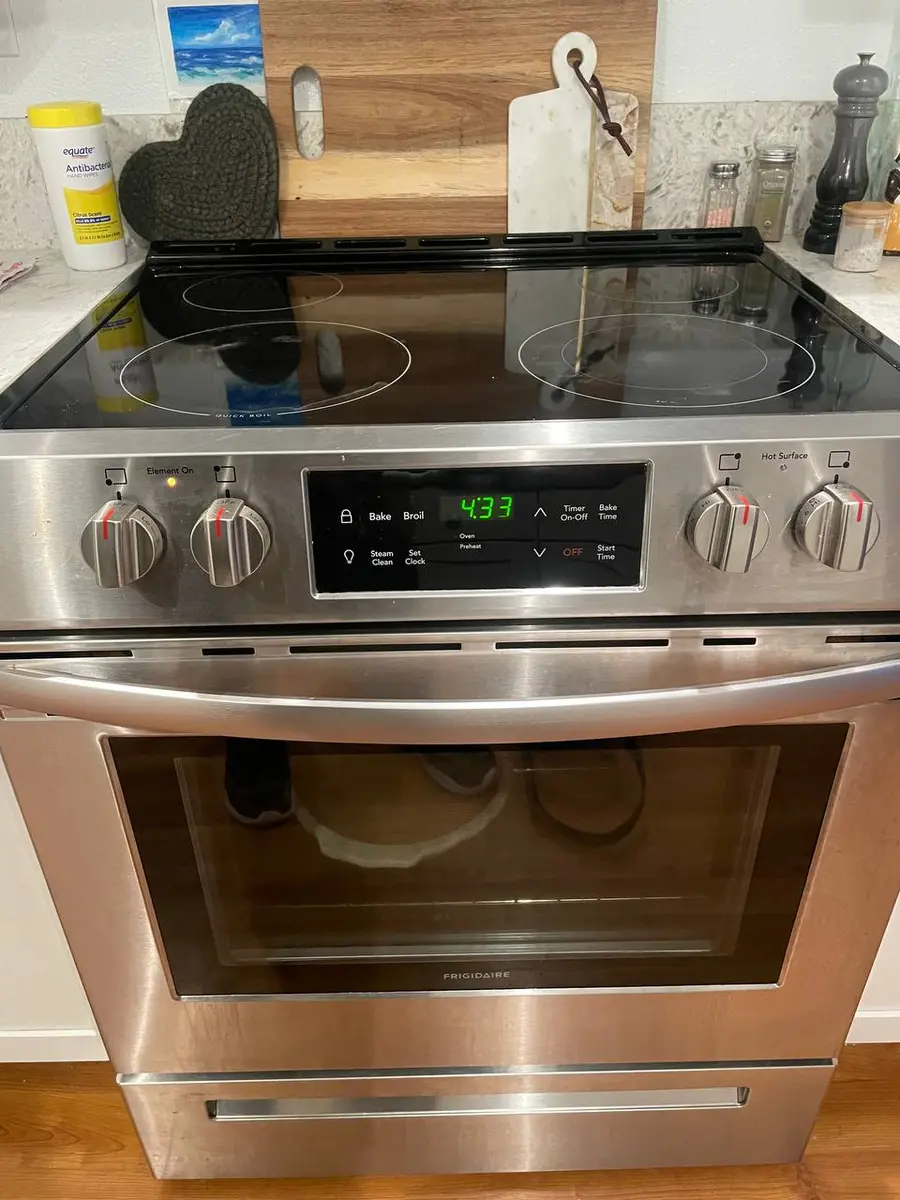
If your GE oven has a rotary knob with temperature markings, it uses a mechanical thermostat and this guide applies. If it has a digital display with electronic touch controls, it uses an electronic oven control (EOC) board with an RTD temperature sensor instead — see the control-board and sensor guides for those models.
Symptoms of a Failing Thermostat#
- The oven does not heat — the contacts are stuck open.
- The oven overheats — the contacts have welded shut and keep the element on.
- Temperature is off by more than 50°F — calibration has drifted past the normal range.
- Temperature swings wildly — the thermostat is cycling erratically.
Do You Have the Right Tools?
Combustion analyzer ($300), igniter tester ($120), temperature calibrator ($150), and gas pressure manometer. Our technician arrives with $3,000+ in professional tools — your diagnostic is free.
Licensed & Insured · 90-Day Warranty · Same-Day Service
Try Calibration Before Replacing#
Most GE mechanical thermostats have a calibration screw on the back of the shaft:
- Pull the temperature knob off.
- Find the small screw on the back of the shaft.
- Turn it clockwise to raise the temperature, counterclockwise to lower it.
- Each quarter-turn changes the reading by roughly 25°F.
- Test with an oven thermometer at 350°F and adjust.
If calibration cannot bring the oven within about 25°F of the setting, the thermostat itself needs replacing.
Part Numbers#
| Component | GE Part Number |
|---|---|
| OEM thermostat (current) | WB20X29590 |
| OEM thermostat (older models) | WB20X10009 |
Confirm the correct number against your model before ordering, since GE revised the part across production runs.
Safety First — Know the Risks
Gas ovens involve live gas lines — a loose connection creates explosion and carbon monoxide risk. Electric ovens run on 240V circuits. Our techs are licensed and insured — let them handle the risk.
Licensed & Insured · 90-Day Warranty · Same-Day Service
Replacing the Thermostat#
- Turn off the breaker and confirm power is off.
- Pull off the temperature knob and remove the back panel of the control console. The thermostat sits behind the knob shaft, with a capillary tube running into the oven cavity.
- Disconnect the 2 wires from the thermostat terminals and remove the 2 mounting screws.
- Carefully draw the thermostat out, guiding the capillary tube and sensing bulb out of the cavity. Do not kink the tube — it is filled with sensing fluid.
- Route the new tube along the same path, seat the bulb in the upper cavity, mount the thermostat, and reconnect the wires.
- Refit the knob, restore power, set the oven to 350°F, and check it with a thermometer after 20 minutes. Adjust the calibration screw if needed.
Why Accuracy Matters for the Cooking Season#
A thermostat that reads high or low quietly throws off every recipe — especially the long, temperature-sensitive bakes that fill an oven around the holidays. Calibrating or replacing it restores true temperatures so a dish set for 350°F actually bakes at 350°F. If the oven is overheating from welded contacts, cut the breaker right away; an element that will not shut off is a fire risk.
Need help with your GE oven? EasyBear technicians carry OEM parts and diagnostic tools on every service call. Schedule service.
Senior Gas Appliance Specialist · 18 years experience
AGA-certified gas appliance specialist with 18 years of experience in residential and commercial oven, range, and cooktop repairs.