Quick Answer: Why Your GE Oven Temperature Is Off#
Most likely: a drifted RTD temperature sensor or a stale calibration offset, which together account for the majority of "runs hot" and "runs cold" complaints. Keep some perspective first — a 25°F swing around the set point is normal cycling for any home oven, and only variations of 50°F or more point to a real fault. GE regulates heat with a feedback loop: the board fires the element or gas igniter, the RTD reports the rising temperature, and the board cuts the heat at target. When the sensor's resistance curve wanders or a partly failed element cannot reach wattage, that loop misses the mark.
Likely Causes at a Glance#
| Cause | Likelihood | What to check |
|---|---|---|
| RTD temperature sensor drift | Most likely (~35%) | should read ~1080-1090 ohms at 72°F and ~1580 ohms at 350°F; outside spec means it has drifted |
| Calibration offset needed | Common (~25%) | GE allows a ±35°F trim in 5°F steps; verify against a rack thermometer |
| Heating element partial failure (electric) | Occasional (~15%) | a bake element should read 15-30 ohms; higher or uneven glow signals a fracture |
| Weak gas igniter (gas) | Occasional (~15%) | normal light-off is 30-90 seconds; over two minutes or a dim glow means a tired igniter |
| Convection fan not running (Profile/Cafe) | Rare (~5%) | no fan sound during a convection cycle leaves hot spots near the ring element |
| Control board processing error | Rare (~5%) | a diagnosis of exclusion after sensor, element and igniter all test good |
Do You Have the Right Tools?
Combustion analyzer ($300), igniter tester ($120), temperature calibrator ($150), and gas pressure manometer. Our technician arrives with $3,000+ in professional tools — your diagnostic is free.
Licensed & Insured · 90-Day Warranty · Same-Day Service
Walking Through the Diagnosis#
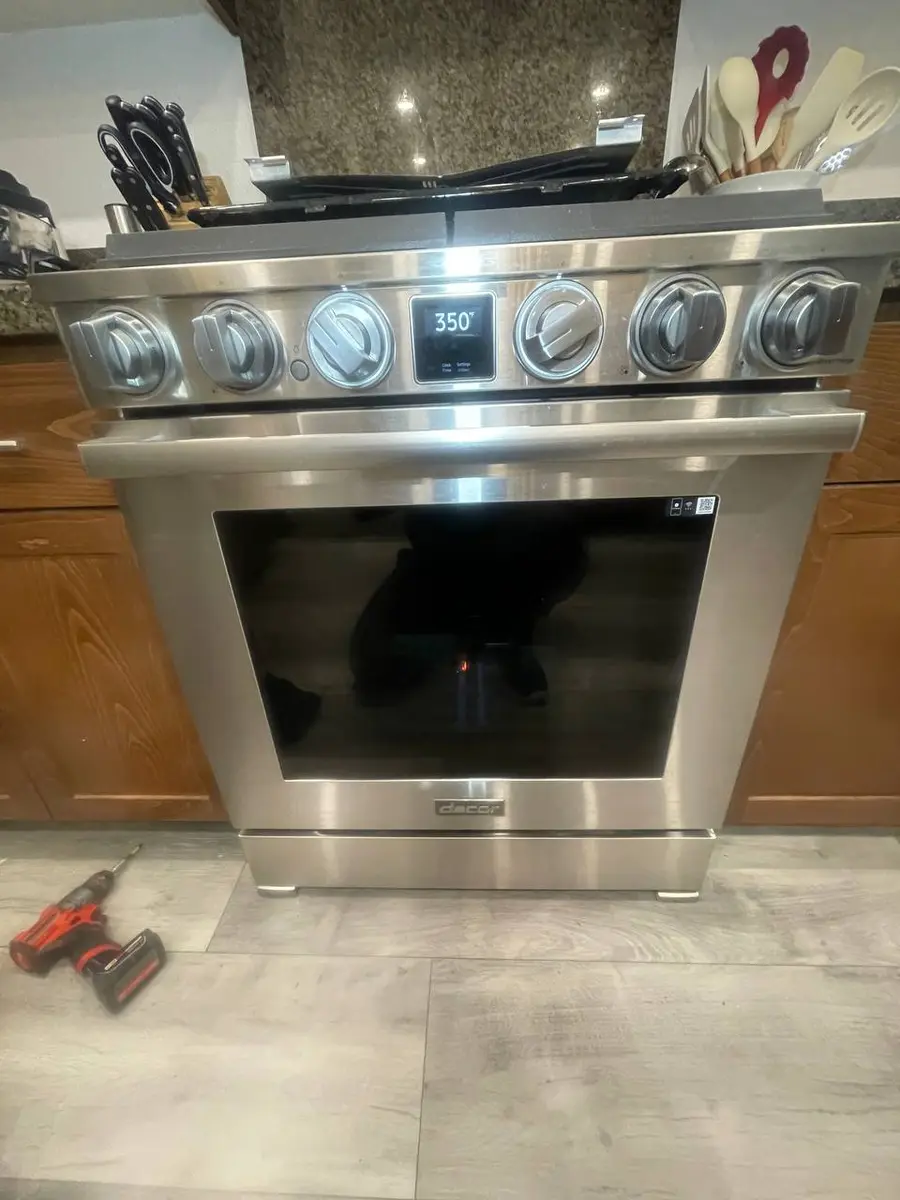
Before anything, confirm the fault is real with an independent oven thermometer at the center of the middle rack. Set the oven to 350°F, wait 30 minutes past the preheat tone, and read it — anything in the 325-375°F band is normal cycling. Bay Area and Sacramento homeowners on PG&E should also locate the gas shutoff valve before touching a gas model.
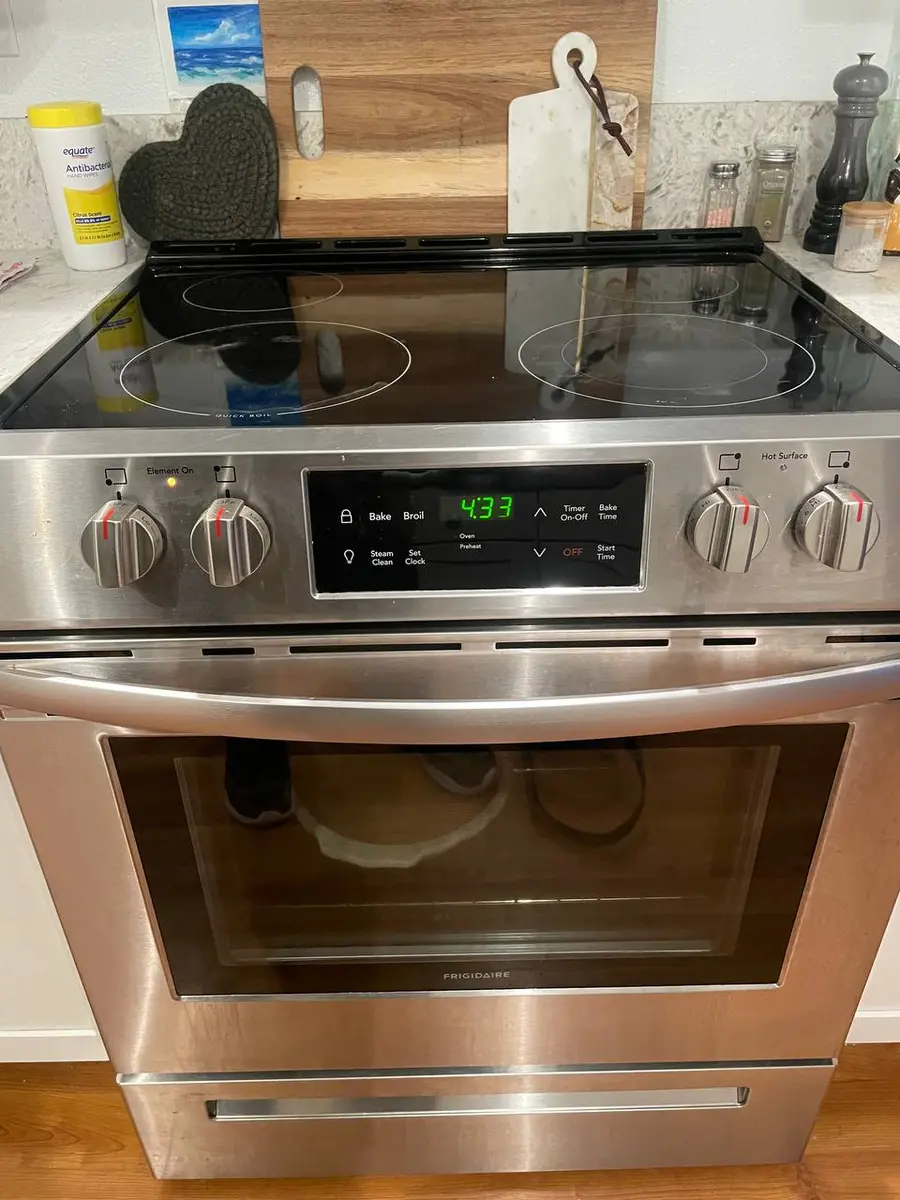
If the average is genuinely off, start at the sensor. The RTD probe extends from the rear cavity wall and should measure about 1080-1090 ohms at a 72°F room temperature, climbing to roughly 1580 ohms at 350°F. Years of self-clean heat near 880°F can push it out of spec; a reading below about 1050 or above 1120 cold confirms drift. If the sensor is in range but the oven is consistently a touch off, use GE's built-in calibration — hold Bake + Broil for three seconds, then trim the offset in 5°F increments up to ±35°F, judging against your rack thermometer after a full 20-minute stabilization.
When the heat source itself is suspect, meter it. An electric bake element should read 15-30 ohms and glow evenly; a fractured element reads high and shows dim patches. A gas igniter should light the burner within 30-90 seconds — beyond two minutes it is drawing too little current to trip the safety valve cleanly and needs replacing. On Profile and Cafe convection models, listen for the rear fan; without circulation the ring element bakes unevenly even when it heats.
Repair or Replace? The Short Version#
A sensor, calibration trim, element or igniter is a targeted repair that sits far below the half-rule line on an oven that otherwise works. Because a calibration offset costs nothing but a few minutes, always try that before ordering parts. If metering an RTD or a gas igniter is not your idea of a good afternoon, our technicians arrive with GE-specific parts and confirm the cause before any spend — book a same-day visit.
Safety First — Know the Risks
Gas ovens involve live gas lines — a loose connection creates explosion and carbon monoxide risk. Electric ovens run on 240V circuits. Our techs are licensed and insured — let them handle the risk.
Licensed & Insured · 90-Day Warranty · Same-Day Service
Frequently Asked Questions#
How much temperature variation is normal in a GE oven?#
A ±25°F swing around the set point is normal, because the oven cycles the heat on and off around the target. Only a consistent 50°F or greater deviation indicates a component problem worth chasing.
My GE oven takes forever to preheat but gets there eventually — what is wrong?#
That pattern points to a weak gas igniter on gas models or a partially failed bake element on electric ones. The heat source still works but at reduced output, so the oven reaches temperature two to three times slower than normal.
Can I trust the oven's built-in temperature display?#
Only as much as you trust the sensor feeding it — the display shows what the board infers from the RTD, so a drifted sensor shows a wrong number. Always verify critical baking with an independent oven thermometer.
How do I recalibrate my GE oven?#
Hold Bake + Broil for three seconds to reach the calibration screen, then use the arrows to trim the offset in 5°F steps within the ±35°F range and press Start. Judge the result against a rack thermometer after a full 20-minute stabilization, not the first ten minutes.
Senior Gas Appliance Specialist · 18 years experience
AGA-certified gas appliance specialist with 18 years of experience in residential and commercial oven, range, and cooktop repairs.