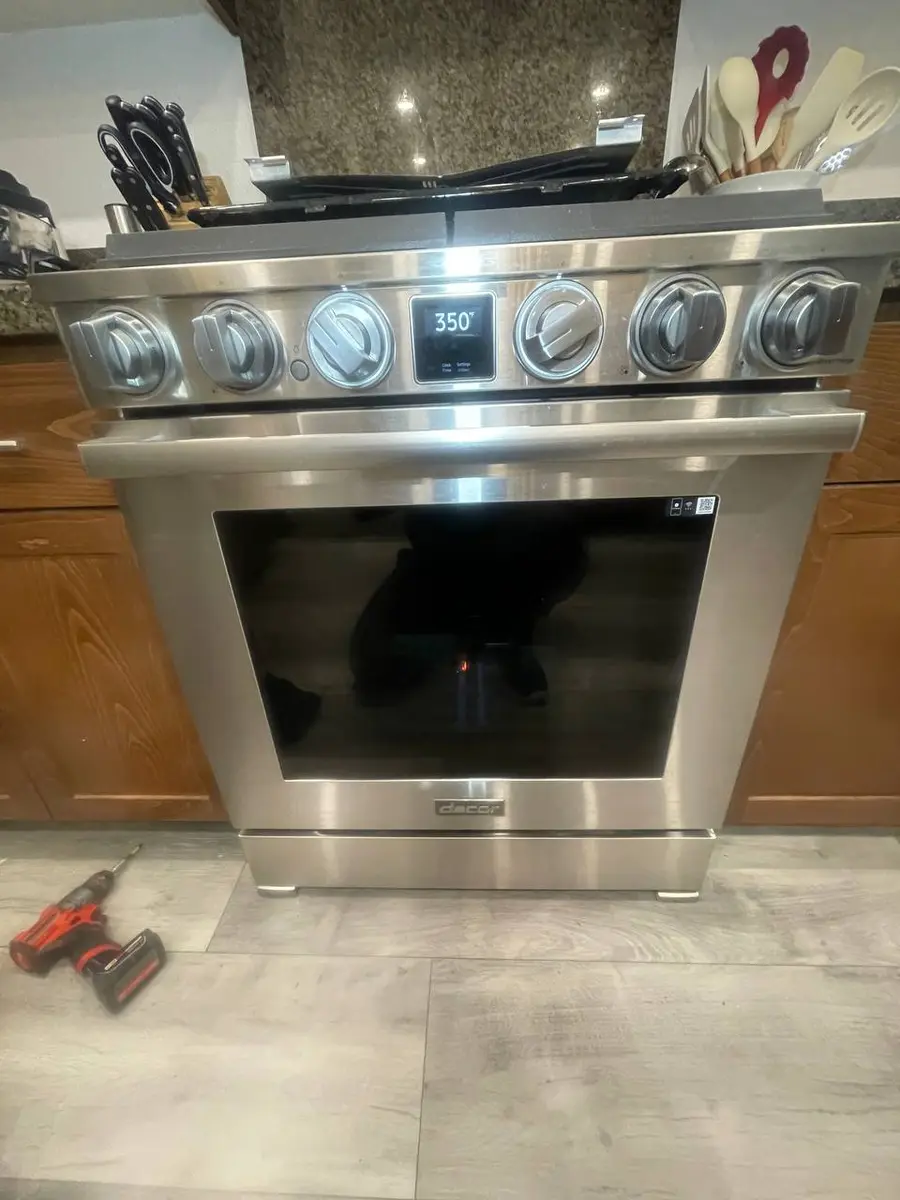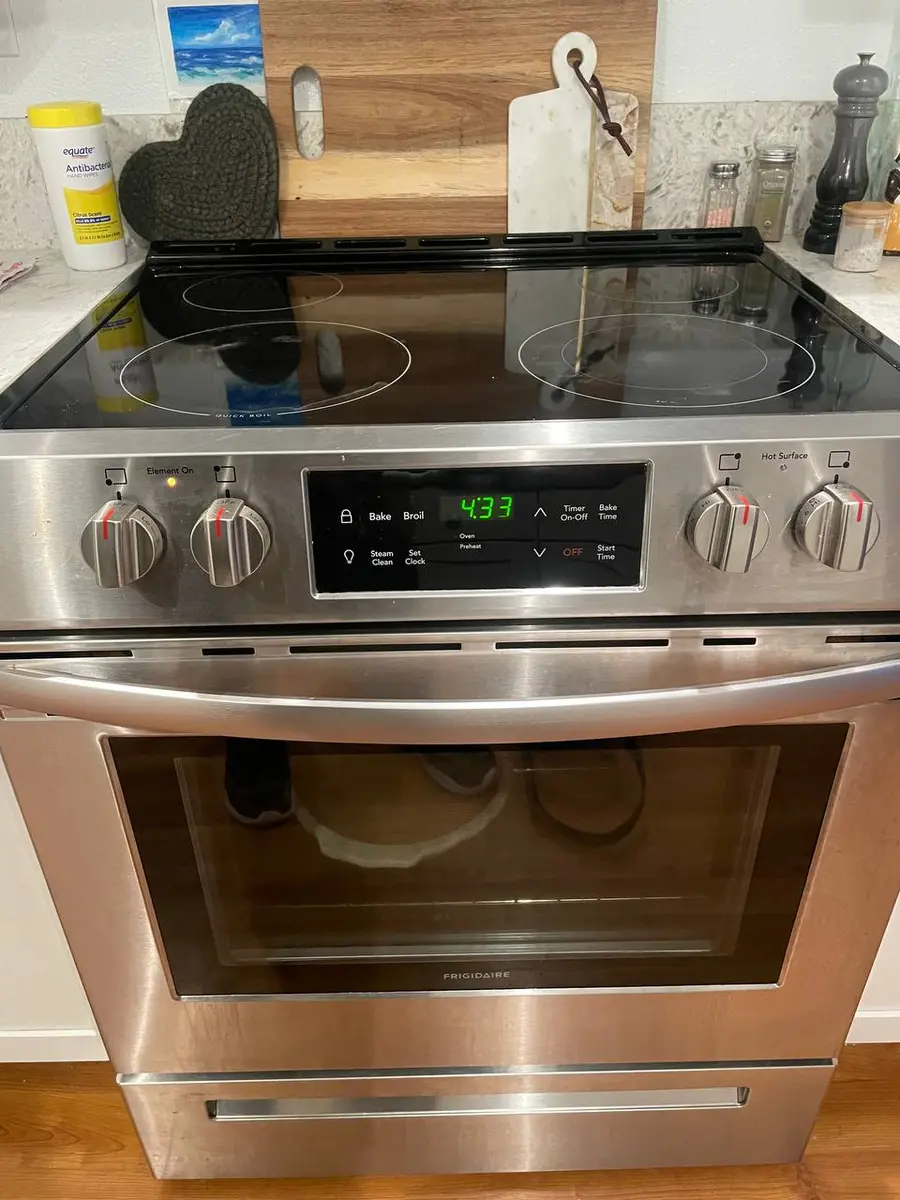
When a GE oven quits partway through a bake, roast, or self-clean, the cause is almost always one of five components — and GE's F-code system usually tells you which before you pick up a screwdriver. A drifting temperature sensor leads the list; a blown thermal fuse after self-clean is a close second.
How the Oven Decides to Stop#
GE ovens run a closed-loop control: the electronic range control board (ERC) watches cavity temperature through an RTD sensor at the rear wall and pulses the element or gas valve to hold your setting. If the sensor reports something impossible, or the board detects an internal fault, it ends the cycle and posts an F-code. Profile and Cafe ovens with True European Convection add a rear ring element and a fan motor — more parts to fail, but also more data for the board to work with.
Do You Have the Right Tools?
Combustion analyzer ($300), igniter tester ($120), temperature calibrator ($150), and gas pressure manometer. Our technician arrives with $3,000+ in professional tools — your diagnostic is free.
Licensed & Insured · 90-Day Warranty · Same-Day Service
Most Likely Causes, Ranked#
| Cause | Share | Signature code |
|---|---|---|
| Drifted / failed temperature sensor | 30% | F3 |
| Blown thermal fuse | 25% | no code / no heat |
| Control board (ERC) failure | 20% | F1 |
| Failed heating element | 15% | uneven glow |
| Weak gas igniter | 10% | heats then quits |
1. Drifted temperature sensor (30%)#
The oven sensor (GE part WB21X5301 on most models) is an RTD whose resistance climbs with temperature — roughly 1,080 ohms at room temperature and about 1,645 ohms at 350°F. As it drifts out of range, the board either overcorrects and cycles endlessly or gives up with an F3 and shuts down. Years of heat cycling, especially self-clean runs above 900°F, stress the element and its wiring. It mounts through the rear wall on two screws, making it one of the easier fixes.
2. Blown thermal fuse (25%)#
GE ovens carry a one-shot thermal fuse that opens for good if the cavity overheats. Once it blows, the oven may start and then die as soon as the element draws full current, or not heat at all. This is most common right after a self-clean cycle, which pushes the cavity to 880-930°F — close to the fuse's limit. A worn door seal or a blocked vent nudges it over the edge, and a [Sacramento](/sacramento/sacramento) summer (garages and unventilated kitchens past 100°F) removes the thermal headroom that let it survive a winter self-clean.
3. Control board / ERC failure (20%)#
The ERC (GE part WB27X10311 on JB-series, WB27T11312 on Profile) runs every oven function, and its relay contacts wear after thousands of cycles. When the board or its relays fail, the oven can start normally but lose the ability to hold the heating cycle. An F1 code generally points straight at the board itself.
4. Failed heating element (15%)#
Electric GE ovens use a bake element on the bottom and a broil element on top. An element with an internal break that only opens when hot will heat from cold, then quit mid-cycle as it expands. With the oven off, inspect the bake element (GE WB44T10011 on many models) for blisters or cracks, then run it at 350°F and watch for a uniform orange glow — dark patches mean a partial break. On Profile convection ovens the hidden rear element can fail on its own, underheating only in convection mode.
5. Weak gas igniter (10% of gas ovens)#
On GE gas ranges (JGB735, JGBS66, PGS930) the igniter must draw enough current — roughly 3.2 to 3.6 amps — to open the safety valve. As igniters age their resistance rises and current falls; one drawing too little may light a warm valve at first but fail to reopen it after an off-cycle, so the oven heats, then cools permanently mid-bake.
GE F-Code Quick Reference#
| Code | Meaning | Action |
|---|---|---|
| F1 | ERC board failure | Replace control board |
| F2 | Oven over-temperature | Check sensor, thermal fuse, door seal |
| F3 | Open sensor circuit | Check wiring, replace sensor |
| F4 | Shorted sensor | Replace sensor |
| F5 | Latch motor | Check self-clean latch |
| F7 | Stuck keypad button | Check keypad membrane |
| F9 | Door lock | Check lock motor and switch |
Safety First — Know the Risks
Gas ovens involve live gas lines — a loose connection creates explosion and carbon monoxide risk. Electric ovens run on 240V circuits. Our techs are licensed and insured — let them handle the risk.
Licensed & Insured · 90-Day Warranty · Same-Day Service
Working Through It#
Note any F-code before pressing Clear, then disconnect power at the breaker before opening panels. Measure the sensor at its connector (about 1,080 ohms at room temperature), inspect the bake element for a uniform glow, test the thermal fuse for continuity, and on gas models watch whether the igniter glows but the gas never lights — the sign of a weak igniter. A worn door gasket that bleeds heat is a frequent hidden trigger for repeated thermal-fuse trips.
GE oven quitting mid-cycle across the JB, Profile, or Cafe lines? Our Sacramento and Bay Area technicians read the F-code and fix it the same day. Schedule your repair.
Senior Gas Appliance Specialist · 18 years experience
AGA-certified gas appliance specialist with 18 years of experience in residential and commercial oven, range, and cooktop repairs.