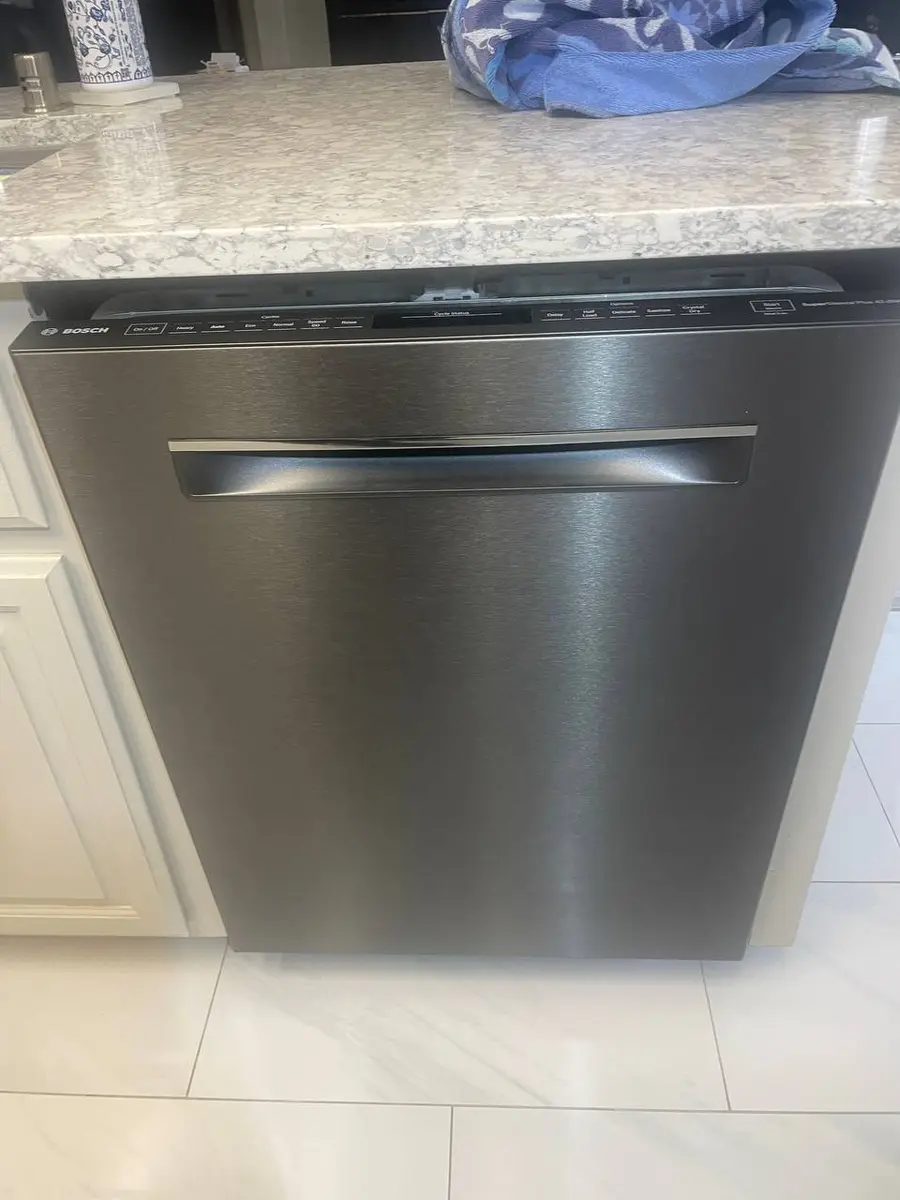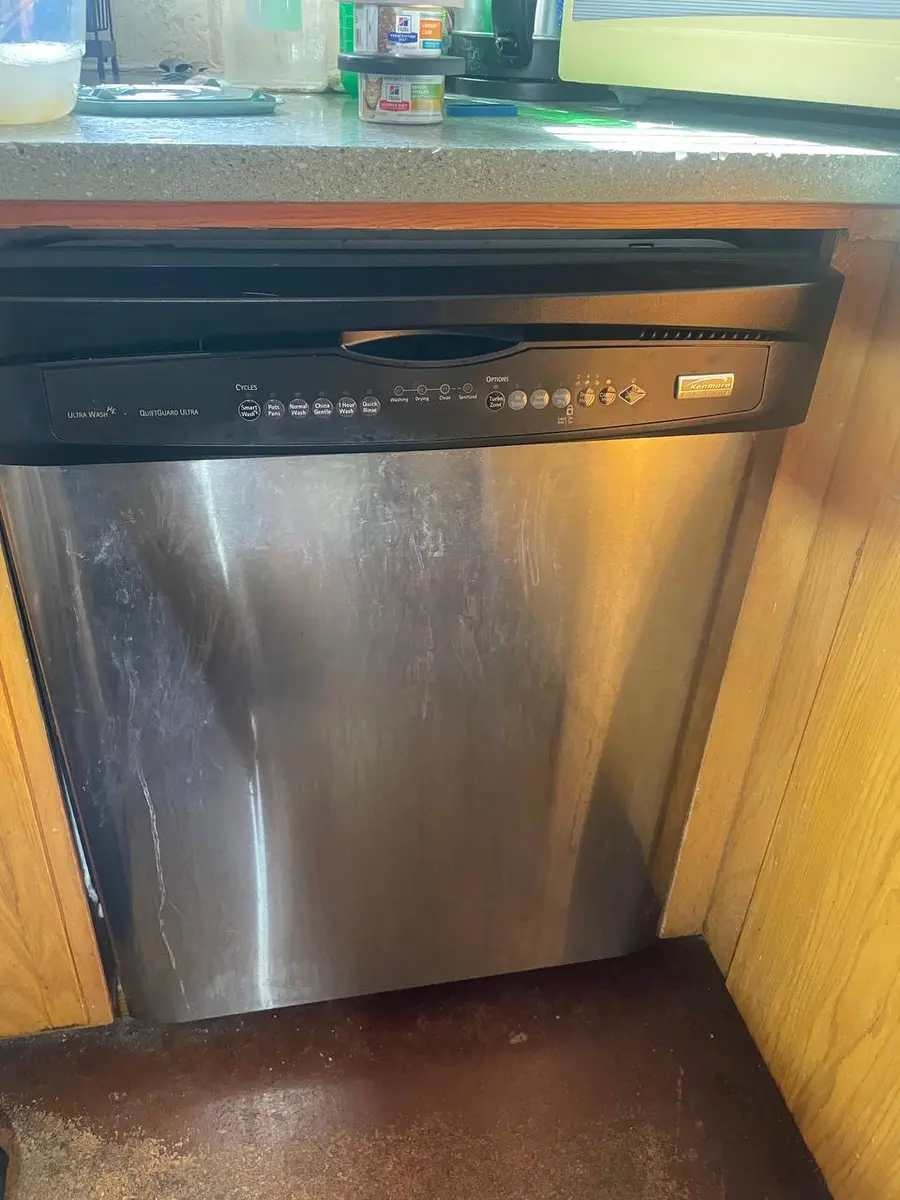
Quick Answer: It Is Usually Structural#
Most likely, a GE dishwasher that vibrates or shakes is not properly leveled, or it is missing the brackets that secure it to the countertop. GE dishwashers ride on adjustable front legs and rear legs or wheels, and if those are off, the wash motor's rotational force amplifies into a rocking that rattles the whole cabinet. Without the top mounting brackets, the machine slowly walks forward out of the opening over weeks of operation. A worn wash-motor bearing, a loose drain pump, an unbalanced spray arm, and plumbing water hammer round out the causes — but the first two are structural and account for most cases.
Cause-by-Symptom Table#
| What you notice | Most likely cause | GE part |
|---|---|---|
| Rocks and rattles during the wash | Not level on its legs | adjustable front and rear legs |
| Slowly slides out of the cabinet | Missing or loose mounting brackets | countertop brackets |
| Constant vibration through all wash phases | Wash-motor bearing or loose mounting | wash motor (4 Torx T20 screws) |
| Buzzing in 15-to-60-second bursts | Drain pump mounting loose or worn | WD26X10039 / WD26X23258 |
| Sharp bang at the end of each fill | Water hammer at the inlet valve | WD15X10003 |
Do You Have the Right Tools?
Water pressure gauge ($60), spray arm tester, float switch multimeter ($85), and drain inspection camera. Our technician arrives with $3,000+ in professional tools — your diagnostic is free.
Licensed & Insured · 90-Day Warranty · Same-Day Service
Level It, Then Secure It#
Begin by leveling. Adjust the front legs and the rear legs or wheels until the machine sits solid and does not rock when you push its corners, because a dishwasher that is not all-fours firm on the floor turns the motor's normal forces into cabinet-shaking motion. Next, open the door and look at the top of the machine for the countertop mounting brackets: they keep it from tipping forward when a loaded rack is extended and, just as importantly, stop the vibration-driven walk out of the opening. If they are missing or loose, reattach them — a machine that keeps sliding forward is telling you the brackets are the problem.
The Motor, Pump, and Plumbing#
Constant vibration through every wash phase points to the wash motor. On GDT models it mounts under the tub with four Torx T20 screws on post-2018 production, and loose screws amplify any bearing play, so tighten the mounting first — it often cures the vibration outright. If the mounting is tight but the shaft has play when you wobble it by hand with the power off, the bearing is worn and the motor is replaced, along with its sump gasket. A buzzing that comes in 15-to-60-second bursts during drain is the drain pump (WD26X10039 or WD26X23258): its mounting screws are loose or the rubber isolators have hardened, or the impeller has cracked and spins unbalanced. Finally, a sharp bang at the end of each fill is water hammer — GE's fast-acting inlet valve (WD15X10003) closes abruptly, and in homes without hammer arrestors that pressure wave shakes the machine and the pipes.
Safety First — Know the Risks
Live 120V wiring in a wet environment is one of the most dangerous DIY scenarios. Water + electricity = serious shock risk. Our techs are licensed and insured — let them handle the risk.
Licensed & Insured · 90-Day Warranty · Same-Day Service
Don't Overlook the Spray Arm#
One cheap check belongs before you condemn the motor: the spray arms. An arm that is cracked, clogged unevenly, or loose on its hub spins out of balance and adds a vibration of its own during the wash, and if that vibration rises specifically on heavier soil loads, the Piranha food disposer may be partly blocked and running unbalanced. Spin each arm by hand to confirm it turns freely and seats securely. It takes a minute and rules out a whole cause before you pull the kick panel to reach the motor.
Load and Level to Prevent It#
Two habits keep a GE dishwasher from shaking in the first place. Load the racks evenly rather than piling heavy items on one side, since a lopsided load makes the wash motor work against an imbalance and amplifies any vibration into the cabinet. And treat a new vibration as something to address quickly, not live with — a loose mounting screw or a bearing just beginning to fail worsens rapidly under continued shaking, so a five-minute check to tighten the legs, brackets, and motor or pump hardware early can head off a motor replacement later. Because most of the causes here are structural, keeping the machine level and secured is most of the prevention.
The Real Cost of DIY
Average DIY attempt: $150-400 in tools you may use once, plus the risk of further damage. Our diagnostic visit costs $0 — we find the problem and give you an honest quote.
Licensed & Insured · 90-Day Warranty · Same-Day Service
Repair or Replace?#
Vibration is a repair, and often a free one: leveling and reattaching brackets cost nothing, and tightening motor or pump hardware frequently solves it. A worn wash-motor bearing or a cracked pump impeller is a serviceable part, not a reason to replace the dishwasher. Address a new vibration promptly, because a loose screw or a starting bearing failure worsens quickly under continued shaking. When the motor or pump is the source, book a GE dishwasher repair to confirm the part before ordering.
Senior Gas Appliance Specialist · 18 years experience
AGA-certified gas appliance specialist with 18 years of experience in residential and commercial oven, range, and cooktop repairs.