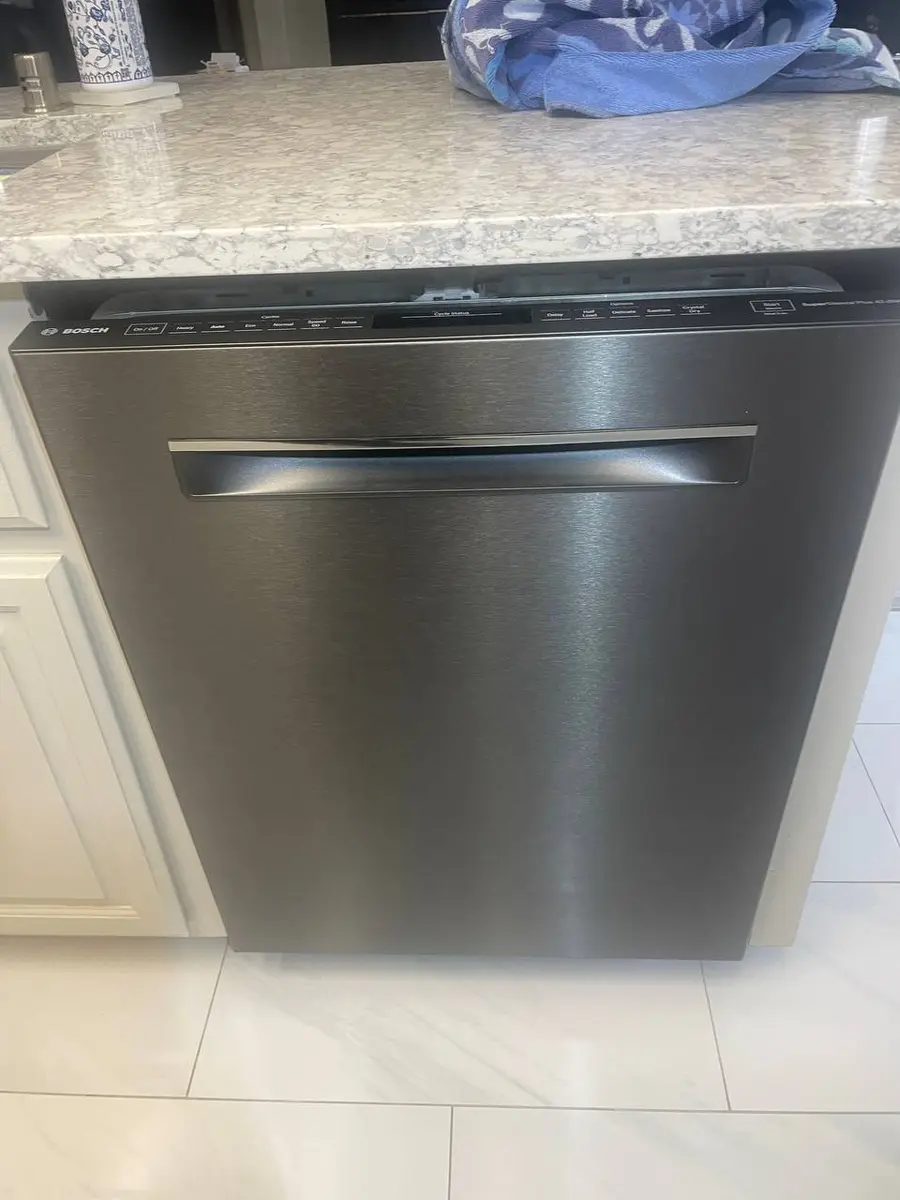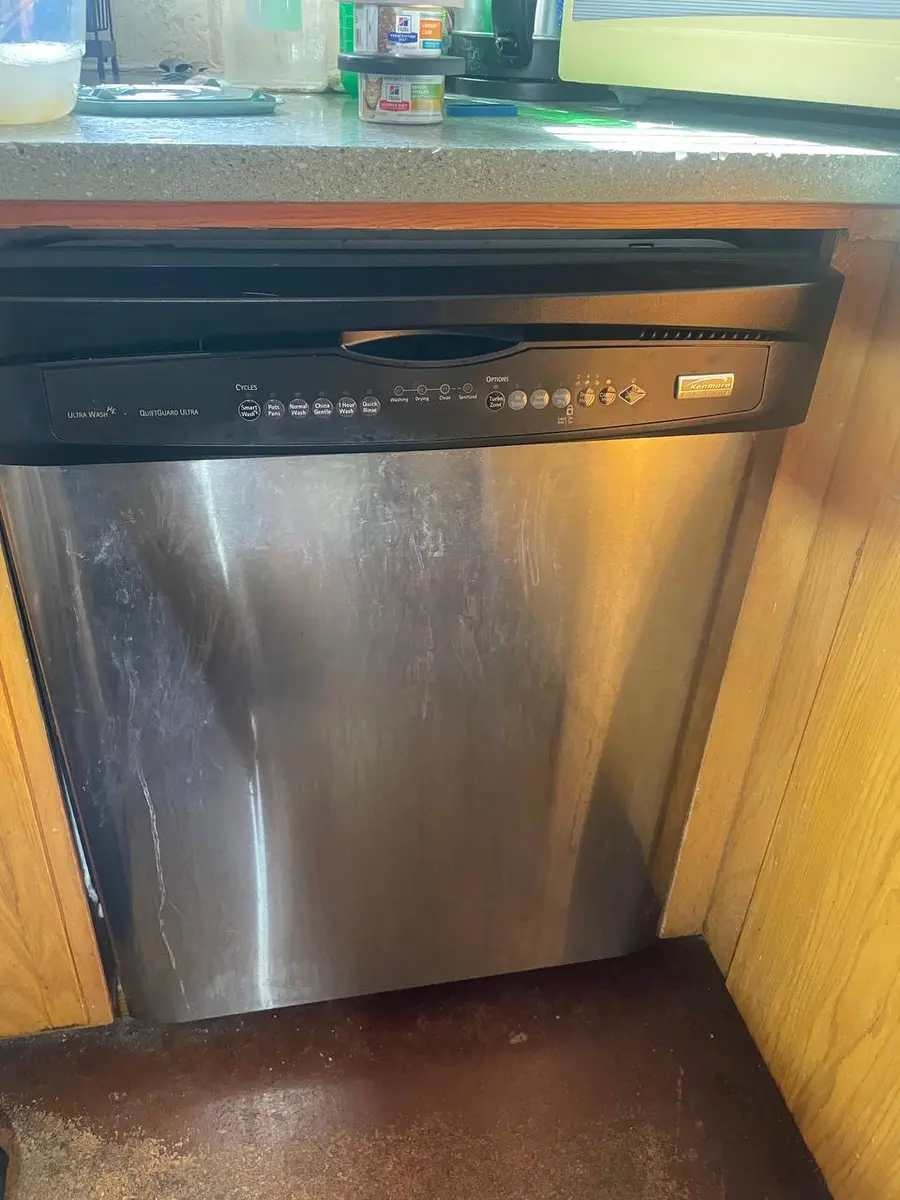
A GE [dishwasher](/blog/repair-or-replace-dishwasher) tripping the breaker is a genuine electrical fault leaking to ground — most often the heating element bleeding through worn tub grommets, a shorted wash or drain motor, or damaged wiring. A telling clue: if it only trips on Sani Rinse or Heavy, the hot, high-current cycles, suspect the element. Leave the breaker off until you know why.
Safety Comes Before Diagnosis#
This is not a nuisance trip to reset away — the breaker is stopping a shock or fire hazard. Do not keep flipping it back on to force a cycle; each reset re-exposes the fault. Leave the breaker off until you have found the cause, and never work on the machine standing on a wet floor. One quick distinction matters up front: if the breaker trips the instant you reset it, before the dishwasher even starts, the fault is live with the machine idle, which is more serious than a fault that only shows up mid-cycle.
Do You Have the Right Tools?
Water pressure gauge ($60), spray arm tester, float switch multimeter ($85), and drain inspection camera. Our technician arrives with $3,000+ in professional tools — your diagnostic is free.
Licensed & Insured · 90-Day Warranty · Same-Day Service
Plug-In or Hardwired Changes Everything#
How your GE dishwasher is connected decides how touchy the trip is. Plug-in units share an under-sink GFCI outlet with the disposal, and a GFCI trips at just five milliamps of leakage — while a normal dishwasher motor already leaks one to three milliamps, so even a small rise from moisture or aging insulation tips it over. Hardwired units run through a junction box to a standard 15A or 20A breaker that only trips on real overcurrent or a dead short, and is far less sensitive — a fault that trips a GFCI might never trip it. GE specifies a dedicated 15A or 20A circuit either way. Knowing which install you have tells you whether you are chasing a tiny leak or a hard short.
The Causes, Most Common First#
Heating element ground fault (about 35%)#
The leading cause, and the one with the giveaway symptom. The element passes through rubber grommets in the tub floor, and as those grommets harden and crack with heat and age, moisture creeps along the element tube and forms a conductive path from the 120V element wire to the grounded metal tub. On GDT and GDP models the element runs hottest during Sani Rinse, near a 155°F target, and that higher current across the leak makes trips far more likely on Sani or Heavy than on Normal — so an owner reporting "it only trips on Sani" has all but diagnosed it. Confirm by disconnecting power, pulling the lower panel, disconnecting the element wires, and metering each terminal to the tub: anything other than infinite resistance is a ground fault, and even a megohm or two of leakage will trip a GFCI at 120V. Replace the element and the grommets together — a new element through old grommets simply faults again.
Motor winding insulation failure (about 25%)#
The wash motor and drain pump (parts WD26X10039 and WD26X23258) carry windings whose insulation can break down, especially after the motor has overheated from a bearing seizure or a jammed chopper, letting current leak from the winding to the motor housing. The phase that trips points at the culprit: a trip during wash implicates the wash motor, a trip during drain the drain pump. Disconnect the motor harness and meter each motor lead to the housing — infinite is good, any reading means failed insulation and a replacement motor. Find why it overheated, or the new motor meets the same end.
Wiring damage or loose connections (about 20%)#
Chewed or abraded insulation, installation nicks, or loose wire-nut joints can create either a ground fault or a straight short, and the junction box beneath a hardwired dishwasher is the usual trouble spot. Inspect the wiring from the junction box through the base for bare copper, melted nuts, or conductors touching the chassis, and check that every wire nut is tight — a loose joint arcs, which trips a GFCI first and eventually a standard breaker. Repair with properly rated wire, replace corroded nuts, re-route wires off sharp edges, and add loom where rodents can reach.
GFCI aging or sensitivity (about 12%)#
On a plug-in install, the GFCI itself grows more sensitive as it ages, so a years-old outlet can begin tripping on the same machine's normal one-to-three-milliamp leakage it tolerated for years. Rule out the real faults first, then consider whether an old GFCI is simply reading normal operation as a fault; replacing the outlet, or moving to a hardwired standard breaker where code allows, resolves the true nuisance cases.
Water reaching electrical parts (about 8%)#
Least common: a leak from the tub, door boot, or a hose can wet a connector or the base electronics and create a leakage path directly. Dry everything thoroughly, find and fix the water source, and inspect the wetted connections for corrosion before restoring power.
Safety First — Know the Risks
Live 120V wiring in a wet environment is one of the most dangerous DIY scenarios. Water + electricity = serious shock risk. Our techs are licensed and insured — let them handle the risk.
Licensed & Insured · 90-Day Warranty · Same-Day Service
Confirm the Fix Before You Restore Power#
Replacing the faulted part is only half the job — you have to prove the leak is gone before energizing the circuit. After swapping an element and grommets, meter each element terminal to the tub chassis and confirm a truly open reading, not merely a higher one; any residual leakage will trip the breaker again the first time the water heats. Do the same after a motor replacement, checking each motor lead to the housing. On a wiring repair, verify insulation between hot and ground, hot and neutral, and neutral and ground all read open with the machine off. Only when every leakage path meters open should you turn the breaker back on and run a full Sani cycle as the real-world test, since that hot, high-current cycle is where any remaining fault will surface.
Keep It From Coming Back#
- Give it a dedicated circuit. Sharing with the disposal on a GFCI is what turns a minor leak into a repeat trip; a dedicated line removes the ambiguity.
- Fix leaks fast. Water is the common thread behind element grommet failure and wetted connections — a dry tub floor keeps both at bay.
- Address noises early. A grinding wash motor or a jammed chopper is what overheats windings into an insulation failure down the line.
- Protect the wiring. Loom over exposed runs and a rodent check under the machine prevent the chewed-insulation shorts that are otherwise hard to trace.
The Real Cost of DIY
Average DIY attempt: $150-400 in tools you may use once, plus the risk of further damage. Our diagnostic visit costs $0 — we find the problem and give you an honest quote.
Licensed & Insured · 90-Day Warranty · Same-Day Service
Work It Safely and in Order#
Start at the breaker, off and verified dead. Use the pattern: trips only on Sani or Heavy means the element and grommets; trips during a specific pump phase means that motor; trips immediately at reset with the machine idle means a hard short in wiring or the board; trips randomly on a plug-in means an aging GFCI. Metering to ground is the confirmation for every electrical suspect. If you are not comfortable working line-voltage connections or reading a meter to chassis, this is the point to bring in an appliance technician, and anything in the house wiring or the breaker panel itself belongs to a licensed electrician rather than a homeowner.
Related reading: a GE dishwasher that won't start and a GE dishwasher that won't heat.
GE [dishwasher repair](/blog/complete-guide-dishwasher-repair) across [Sacramento](/sacramento/sacramento) and the Bay Area — element, motor, and electrical diagnostics in one visit. Schedule a technician.
Senior Gas Appliance Specialist · 18 years experience
AGA-certified gas appliance specialist with 18 years of experience in residential and commercial oven, range, and cooktop repairs.