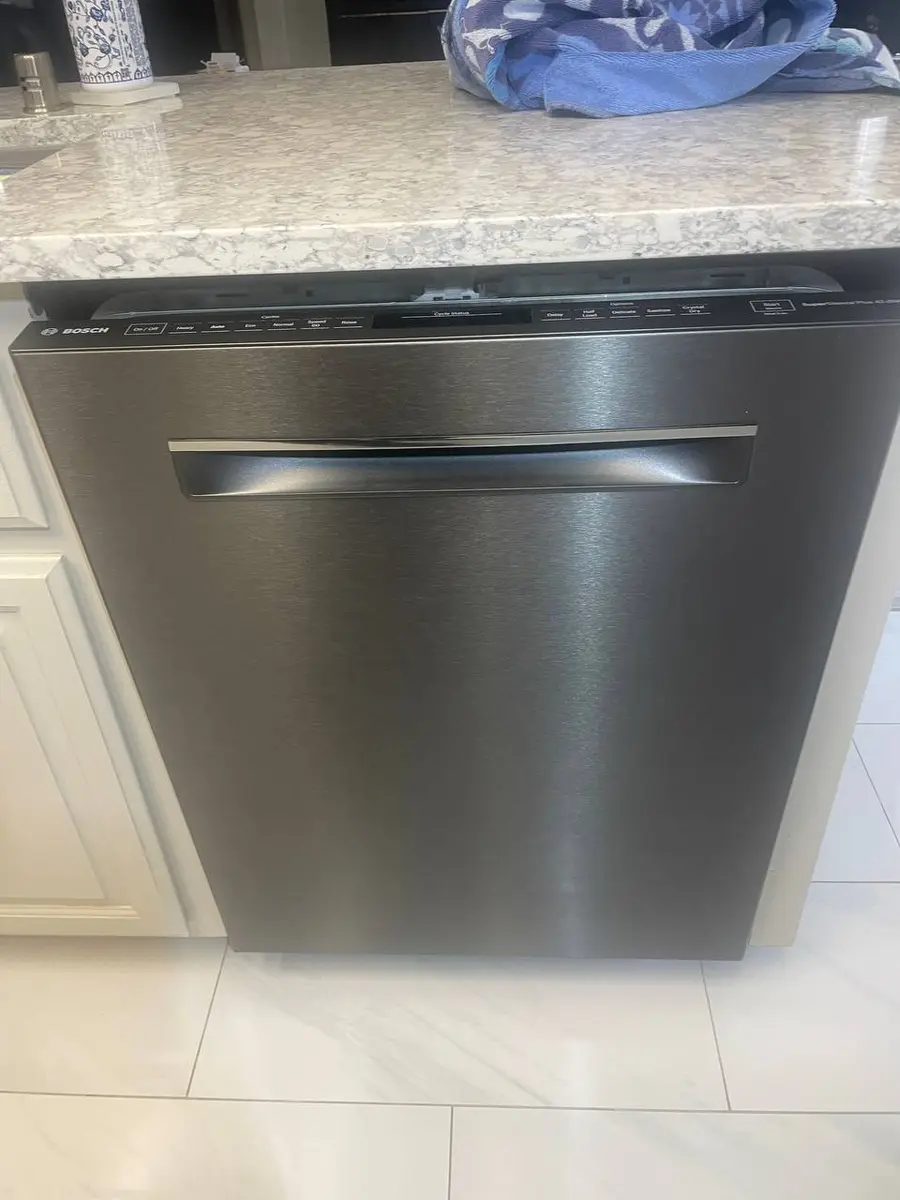
GE Dishwasher Leaking Water — Door Seal, Tub, and Pump Leak Diagnosis
Water appearing beneath or around your GE dishwasher demands immediate attention — both for preventing floor damage and because leaks in the base area can reach electrical components. GE dishwashers use a flood protection system with a float switch in the base pan; when this sensor detects water, it activates the drain pump continuously. If you notice your GE dishwasher draining unexpectedly or displaying error code C3, a leak has likely reached the base pan. Identifying the leak source requires understanding GE's specific component layout.
Where GE Dishwashers Leak — Component Map
GE dishwasher leaks originate from five distinct zones. Knowing which zone is wet immediately narrows the diagnosis:
- Front bottom edge — Door gasket or lower door seal (tub gasket)
- Underneath center — Tub crack, pump seals, or internal hose connections
- Left side underneath — Water inlet valve or supply line connection
- Right side underneath — Drain hose connection to pump
- Rear bottom — Spray arm feed tube or circulation pump outlet
Do You Have the Right Tools?
Water pressure gauge ($60), spray arm tester, float switch multimeter ($85), and drain inspection camera. Our technician arrives with $15K+ in professional tools — your diagnostic is free.
Licensed & Insured · 90-Day Warranty · Same-Day Service
Safety First
- Disconnect power at the breaker before investigating any leak
- If water has pooled under the unit, do not step in it before confirming power is off
- Turn off the hot water supply valve under the sink
- Have towels and a shallow pan ready before removing the lower access panel (two 1/4-inch hex screws)
Cause 1: Door Gasket Deterioration (32% of Cases)
The door gasket runs around the entire perimeter of the tub opening. On GE dishwashers, this is a friction-fit rubber seal that presses against the tub flange when the door closes. Over time — particularly in Sacramento's hot summers when the rubber dries between uses — the gasket loses elasticity, develops cracks, or pulls away from the tub edge.
GE-Specific Detail: GE uses a two-piece door seal system on GDT models: the main perimeter gasket plus a bottom corner baffle on each side that prevents water spray from exiting at the door hinge corners. Both sections can fail independently. The bottom baffles are a frequently overlooked leak source.
Diagnosis:
- Open the door fully and run your finger along the entire gasket perimeter
- Look for cracks, hardened sections, areas where the gasket has pulled away from the channel
- Pay special attention to the bottom baffles in each lower corner — these triangular rubber pieces often tear
- With the door closed, run a cycle and observe the very bottom of the door — water escaping here indicates gasket failure
Fix:
- Replace the perimeter gasket (press-fit into the channel — no adhesive needed on most GDT/GDP models)
- Replace bottom corner baffles if torn or missing
- Clean the gasket channel with a toothbrush and soapy water before installing new seal
- Verify door latch alignment — if the door does not pull tight against the tub, even a new gasket will leak
Parts Cost: $18–$45 | Professional Repair: $95–$175
Safety First — Know the Risks
Live 120V wiring in a wet environment is one of the most dangerous DIY scenarios. Water + electricity = serious shock risk. Our techs are licensed and insured — let them handle the risk.
Licensed & Insured · 90-Day Warranty · Same-Day Service
Cause 2: Pump Seal or Hose Connection Leak (25% of Cases)
The circulation pump and drain pump connect to the sump with rubber seals and hose clamps. Vibration during operation gradually loosens these connections, and heat cycling degrades the rubber seals over years of use.
GE-Specific Detail: On GE dishwashers with the Piranha disposer, the sump assembly has more connection points than filter-only designs — creating additional potential leak locations. The wash motor-to-sump gasket is the most common failure point, and GE recommends replacing this gasket whenever the motor is removed for any reason.
Diagnosis:
- Remove the lower access panel
- Place dry paper towels beneath each connection point (pump inlet, pump outlet, motor-to-sump junction)
- Run a cycle and check which towel gets wet first
- For slow drips that are difficult to localize, add food coloring to the tub water — it makes small leaks visible on white paper
Fix:
- Tighten hose clamps at all connection points (5/16-inch nut driver)
- Replace worn pump seals — the motor-to-sump gasket requires removing the motor (4x Torx T20 screws on newer models)
- Replace the drain hose if it is cracked at either end connection
- Check the pump housing itself for hairline cracks — replacement required if cracked
Parts Cost: $8–$35 (seals and clamps) | Professional Repair: $125–$225
Cause 3: Water Inlet Valve Drip (18% of Cases)
The water inlet valve (GE part WD15X10003) controls water flow into the dishwasher. When its internal diaphragm wears out, water can seep through even when the valve is not energized — creating a slow drip that fills the tub between cycles or leaks externally at the valve body.
Diagnosis:
- Check if there is water in the tub when the dishwasher has been idle for hours — indicates the valve is not shutting off completely
- Look for dripping at the valve body (behind the lower access panel, left side)
- Check the household supply hose connection to the valve for weeping at the threaded fitting
Fix:
- Tighten the supply line connection — use two wrenches (one to hold the valve, one to tighten the nut) to avoid cracking the valve body
- Replace the inlet valve if it drips from the body or fails to shut off completely
- Install a new stainless steel supply line if the rubber hose connection is degraded
Parts Cost: $22–$48 | Professional Repair: $105–$180
The Real Cost of DIY
Average DIY attempt: $150-400 in tools you may use once, plus the risk of further damage. Our diagnostic visit costs $0 — we find the problem and give you an honest quote.
Licensed & Insured · 90-Day Warranty · Same-Day Service
Cause 4: Tub Damage or Corrosion (12% of Cases)
GE dishwasher tubs are made of either stainless steel (Profile/GDP models) or a polymer-coated steel (standard GDT models). On polymer-coated models, chips or scratches that expose the underlying steel will eventually rust through, creating pinhole leaks that drip during operation.
GE-Specific Detail: The most vulnerable area on GE polymer-coated tubs is around the rack track mounting points where rollers slide in and out thousands of times. Rack rollers (WD12X10277) with worn wheels can gouge the track surface, exposing bare metal to detergent-laden water.
Diagnosis:
- Remove both racks and visually inspect the tub interior — focus on the bottom, lower side walls near rack tracks, and around the spray arm mounting point
- Run your hand along the tub floor feeling for rough spots or pitting
- With an empty dishwasher, fill to just above the door threshold with water from a bucket — check underneath for drips (this isolates tub leaks from pump/hose issues)
Fix:
- Small rust spots can be sealed with food-safe epoxy appliance repair paint as a temporary measure
- Multiple pinholes or structural corrosion means the tub is compromised — the dishwasher needs replacement
- For stainless steel tubs (GDP models), leaks at the tub seam indicate a failed welded joint — not repairable
Parts Cost: $15 (repair compound) to N/A (replacement) | Professional Assessment: $85–$125
Cause 5: Spray Arm Seal Failure (8% of Cases)
Each spray arm connects to the water distribution system through a rotating seal. The lower spray arm mounts to the pump tower with a clip nut (turns left to remove), and the upper spray arm slides onto a feed tube connected to the upper rack. Worn seals here spray water toward the door gasket area, making it appear as a door leak.
GE-Specific Detail: On GE Profile models with Bottle Jets, the upper spray arm system has an additional seal at the Bottle Jets manifold connection. Leaks here spray water directly onto the upper door gasket — a frequently misdiagnosed issue where the gasket gets blamed but is actually fine.
Diagnosis:
- Run a cycle with the door open just enough to observe (hold the door switch depressed with tape)
- Watch spray arm bases for water spraying outward instead of through the nozzles
- Check the lower spray arm mounting — wobble indicates a worn clip nut or seal
Fix:
- Replace the lower spray arm seal/clip nut assembly
- On Profile models, check and replace the Bottle Jets manifold O-ring
- Ensure the upper spray arm slides fully onto its feed tube — partial seating causes a mist leak
Parts Cost: $8–$28 | Professional Repair: $95–$155
Same-Day Appliance Repair
Fixed or It's Free
$89 → $0 Service Call & Diagnosis — offer ends May 25
Don't Void Your Warranty
Opening your appliance yourself may void the manufacturer warranty. Our repair comes with a 90-day guarantee, and we document everything for warranty compliance.
Licensed & Insured · 90-Day Warranty · Same-Day Service
Cause 6: Overfilling Due to Float Switch Failure (5% of Cases)
A float switch in the tub base detects when water reaches the correct level. If this switch sticks in the down position or its wiring fails, the dishwasher overfills and water exits through the door gasket at the bottom — simulating a door leak.
Diagnosis:
- Manually lift the float dome inside the tub (front-left on most GE models) — it should move up and down freely
- If stuck, clean around the float base with a damp cloth
- With the float in the up position, the fill valve should not activate — if water keeps flowing, the float switch or control board has failed
Fix:
- Clean debris from around the float mechanism
- Replace the float switch (accessed from beneath, behind the lower panel)
- Check for detergent pod packaging that may be blocking the float from rising
Parts Cost: $12–$30 | Professional Repair: $95–$155
Leak Localization Procedure
- Remove the lower kick panel and place dry paper towels in a grid pattern beneath the machine
- Run a normal wash cycle from start to finish
- After the cycle, check which towels are wet:
- Front-center wet → door gasket or bottom baffles
- Left-side wet → inlet valve or supply line
- Center wet → pump seal or tub floor
- Right-side wet → drain pump outlet or drain hose
- For intermittent leaks, repeat over 2–3 cycles — some leaks only manifest during high-pressure wash phases
- SmartHQ users: check for C3 error code (flood sensor activated) which confirms water reached the base pan
Is It Worth Your Time?
Dishwasher issues overlap between drain pump, wash motor, inlet valve, and control board. DIY diagnosis averages 3-5 hours. Our technician diagnoses the issue in about 30 minutes — same-day appointments available.
Licensed & Insured · 90-Day Warranty · Same-Day Service
Cost Summary
| Leak Source | DIY? | Parts | Pro Repair |
|---|---|---|---|
| Door gasket | Yes | $18–$45 | $95–$175 |
| Pump seal/hose | Intermediate | $8–$35 | $125–$225 |
| Inlet valve | Yes | $22–$48 | $105–$180 |
| Tub damage | Assessment only | $15+ | $85–$125 |
| Spray arm seal | Yes | $8–$28 | $95–$155 |
| Float switch | Intermediate | $12–$30 | $95–$155 |
Prevention
- Inspect the door gasket every 6 months for cracks or hardening
- Do not overload the lower rack — tall items deflecting spray toward the door increases gasket wear
- Check under the machine annually with a flashlight for early signs of moisture
- Use only dishwasher-specific detergent — hand dish soap creates excessive suds that can push past seals
- On GE models with the Sani Rinse option, the higher water temperature (155°F) accelerates rubber degradation — factor this into gasket replacement intervals
The Risk of Getting It Wrong
A wrong diagnosis often turns a simple fix into a costly replacement. Without proper diagnostic tools, you might replace the wrong part — or cause additional damage. Our free diagnostic eliminates the guesswork.
Licensed & Insured · 90-Day Warranty · Same-Day Service
FAQ
Q: My GE dishwasher leaks only during certain cycles. Why?
Different cycles use different water levels and temperatures. Heavy Wash fills higher and runs hotter — marginal gaskets that hold during Normal may fail under these conditions. Sani Rinse adds the highest temperature, which also temporarily softens some seal materials.
Q: Water pools under my GE dishwasher but I cannot see where it comes from. What should I do?
Place dry paper towels in a grid pattern under the machine and run a complete cycle. The first wet towel identifies the zone. Also check if the dishwasher's built-in flood sensor has triggered (error code C3 on display models, or the drain pump running continuously on non-display models).
Q: Is a leaking GE dishwasher dangerous?
Water near electrical connections creates shock risk and can damage flooring/subfloor. GE's flood protection system (base pan + float sensor + continuous drain pump activation) is designed to minimize damage, but it is a reactive system — the leak has already occurred when it activates. Address leaks promptly.
Water under your GE dishwasher? Our technicians carry door gaskets, pump seals, and inlet valves for on-the-spot repair. Schedule a repair →