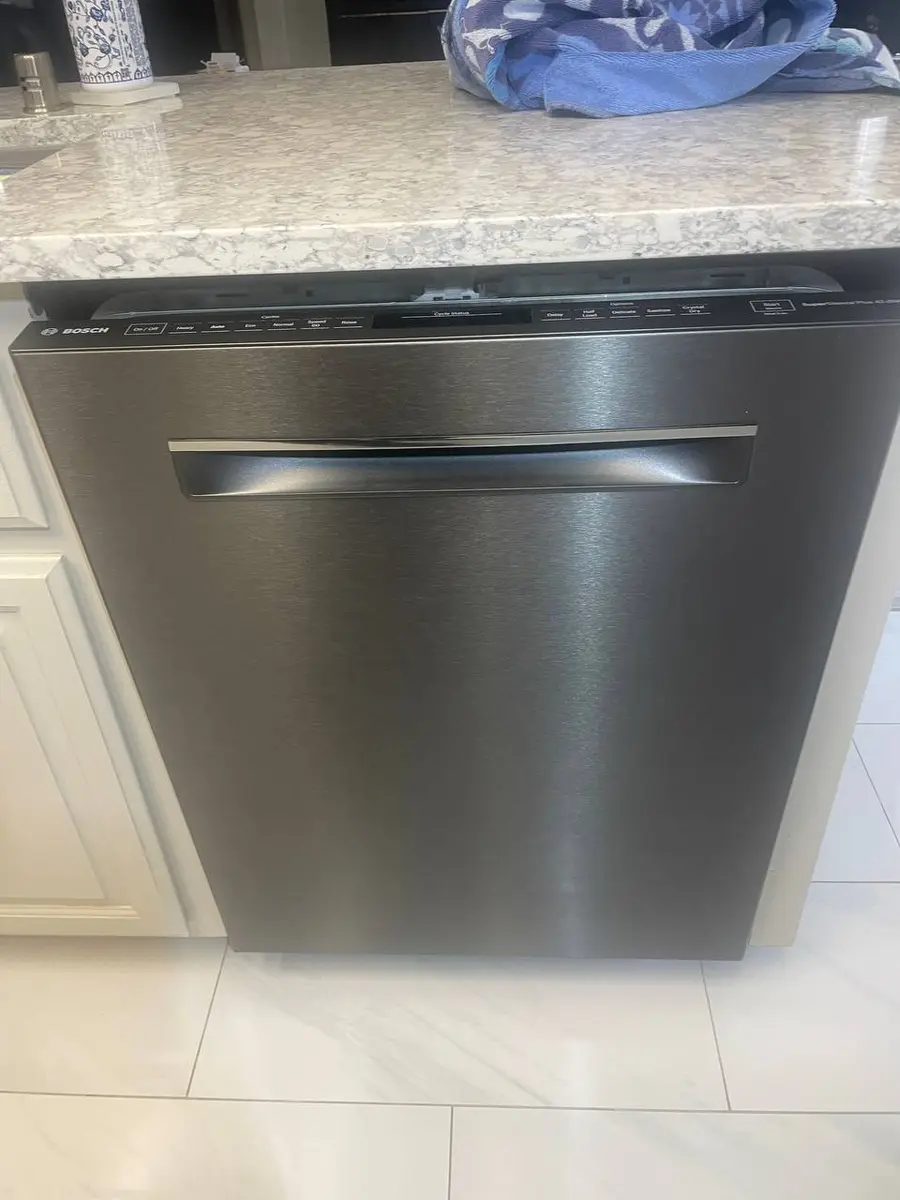
GE Dishwasher Control Board Replacement
Order by model prefix, not by photo. Current production takes WD21X24901; pre-2019 units take WD21X10487, and anything built before the 2016 Haier changeover uses the legacy connector pinout that the WD21X24xxx boards abandoned. Before you spend anything, confirm 120V is reaching the machine and that the door latch…
The failure has a signature#
GE boards die in two ways. A voltage spike kills one outright: no display, no beep, nothing on any button. The other death is slow, and it is the one people misdiagnose — a cycle that skips drying today and works tomorrow, buttons needing several presses, codes that appear and clear on their own.
Inconsistency is the tell. A failing wash motor is consistent: it hums, or it stays silent. A failing board gives you different symptoms on different days, because the components on the PCB degrade at different rates.
How the machine reports it depends on the tier. Base GDT units flash LED blink codes; display models (GDP, CDT, ZDT) print alphanumeric ones. All the LEDs blinking together, or a display showing garbage characters, is board territory. Unplug for five minutes first — codes that survive a clean restart are real.
Prefix decides the part#
| Prefix | Line | Board note |
|---|---|---|
| GDT | Standard tall-tub | Base-tier board, WD21X24901 in current production |
| GDP | Profile | Extra sensor inputs for Bottle Jets and SmartDispense |
| GDF | Front-control | GDT internals, different mounting bracket |
| CDT | Cafe | Profile-equivalent board with a Cafe UI overlay |
| ZDT | Monogram | Premium board, extra diagnostics |
Firmware is tier-specific, so a GDT board dropped into a Profile fits the bracket and washes dishes — and Bottle Jets stay dead while SmartDispense empties its whole reservoir in one go. A Profile board in a Cafe unit works correctly but may show Profile-style icons.
Aftermarket boards run 40-60% cheaper and come without the GE 1-year parts warranty; on a unit still under extended coverage, OEM is the only option that keeps the coverage.
Do You Have the Right Tools?
Water pressure gauge ($60), spray arm tester, float switch multimeter ($85), and drain inspection camera. Our technician arrives with $3,000+ in professional tools — your diagnostic is free.
Licensed & Insured · 90-Day Warranty · Same-Day Service
Four checks before you order#
- Incoming power. Multimeter at the junction box under the unit — you are looking for 120V AC. A tripped GFCI or a loose wire nut looks exactly like a dead board.
- The board itself. Pull the inner door panel (6 screws along the top edge, Phillips or Torx T20) and look for burnt components, swollen capacitors, corroded solder joints. Water tracking in from a leaking door gasket is a common board killer here.
- The door latch switch. The board will not power up with the interlock circuit open. Check continuity across the latch terminals with the door closed.
- A hard reset. Power off for 5 minutes, restore, start a cycle. Some glitches clear once the capacitors fully discharge.
The swap#
Kill the breaker rather than pulling the plug — some installations are hardwired. Towels on the floor. The board lives behind the inner door panel at the top of the door; on GDF front-control models you come at it from the front instead, removing the screws at each end of the faceplate and tilting the panel on its hinges.
Photograph every connector before anything moves. The harnesses are colour-coded but a photo removes all argument at reassembly. Release each connector by its locking tab and pull straight out — never by the wires. Two to four screws hold the board to its bracket.
Mount the new board, reconnect against your photos, and make sure nothing is pinched between panel and door frame. The connectors are keyed, but checking orientation is what stops bent pins.
Restore power and run a Quick Wash or Rinse. You want the fill valve audible within 60 seconds, the wash motor engaging, the drain pump running at the end. On WiFi models, open SmartHQ — a successful connection confirms the firmware matches your machine.
Safety First — Know the Risks
Live 120V wiring in a wet environment is one of the most dangerous DIY scenarios. Water + electricity = serious shock risk. Our techs are licensed and insured — let them handle the risk.
Licensed & Insured · 90-Day Warranty · Same-Day Service
Keeping the next one alive#
Surges are the primary killer, so a whole-house surge protector or a dedicated appliance surge strip pays for itself. Inspect the door gasket quarterly, because water reaching the door frame reaches the board. And on the two-part filter system, clean the fine and ultra-fine filters every two weeks — pump strain shows up as electrical stress on the board.
Burn marks, or corrosion that says water is still getting in? Fix the cause first, or the new board follows the old one. Book a diagnostic.
Appliance Repair Technician · 8 years experience
Experienced technician with 8 years specializing in dishwasher repairs and European appliance brands including Bosch and Thermador.