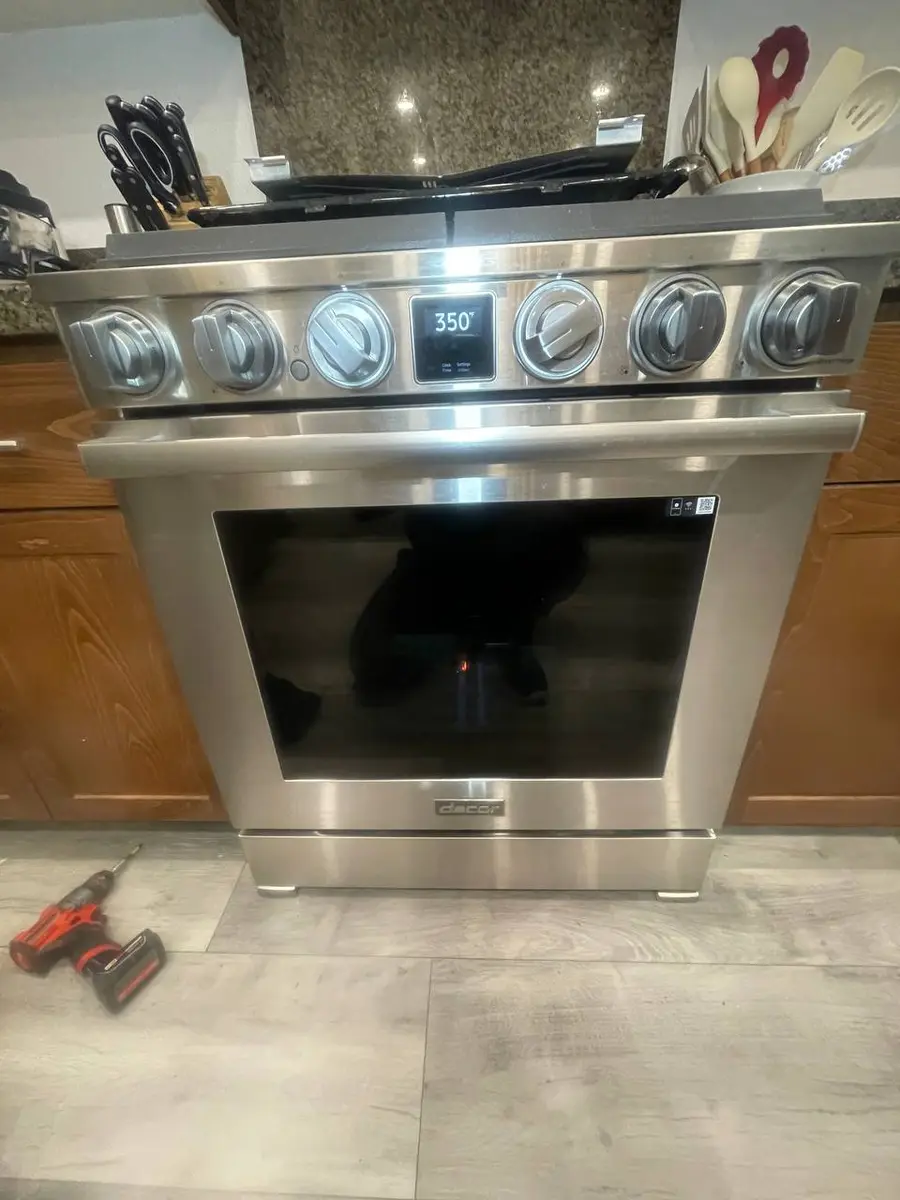
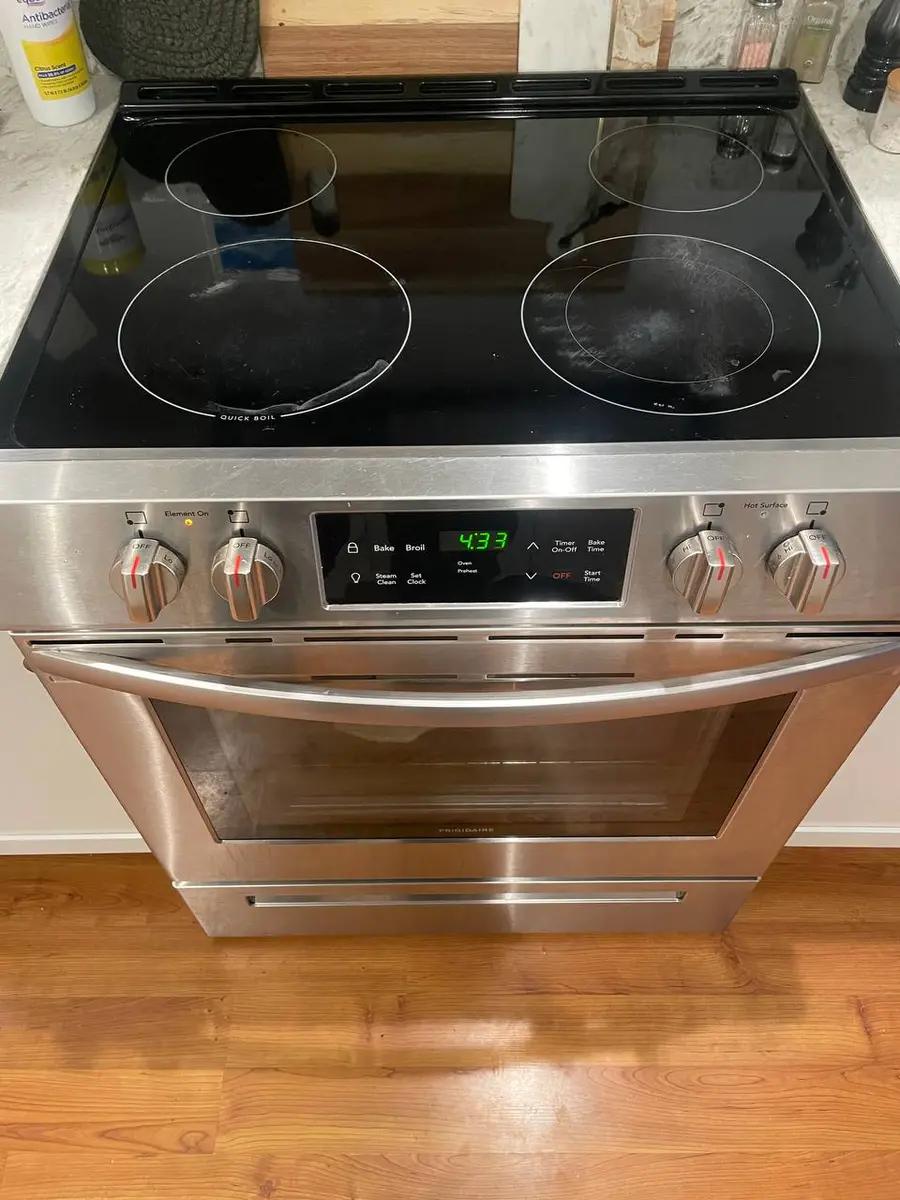
Gas Range Amps, Watts & Breaker Size
A gas range plugs into an ordinary 120 V outlet and draws 3 to 6 A, with no 240 V circuit anywhere. The electricity does not cook: it runs the ignition, the oven controls, the fan and the light — which is exactly why a gas range behaves the way it does in a power cut.
Gas Range Power Requirements at a Glance#
A gas range runs on an ordinary 120 V outlet, drawing about 3 to 6 A for at most 1,800 W on a 15 to 20 A circuit, plus a gas line — no 240 V branch of the kind an electric range needs. That surprises people twice: first that a gas appliance needs an outlet at all, and then that pulling the plug does not simply leave you cooking on gas. The table below sets out which half of the range the electricity actually owns.
Gas Range Electrical Specifications#
| Configuration | Voltage | Amps | Watts (max load) | Breaker | Outlet (NEMA) |
|---|---|---|---|---|---|
| Standard gas range (electric ignition and controls) | 120 V | 3–6 A | 1,800 W | 15–20 A | 5-15R |
A gas range cooks with flame but leans on electricity for its spark igniters, oven controls, clock and convection blower, so it plugs into a standard outlet behind the appliance. Lose power and the cooktop still lights by match while the oven goes dark, which is why the modest circuit still matters day to day.
Do You Have the Right Tools?
Multimeter ($85), vacuum pump ($250), diagnostic software, and specialized hand tools. Our technician arrives with $3,000+ in professional tools — your diagnostic is free.
Licensed & Insured · 90-Day Warranty · Same-Day Service
What the 120 V supply actually powers on a gas range#
The gas does the cooking; the outlet does everything that decides whether the gas is allowed to flow. This is the split.
| What it powers | What happens without it | What that means for you |
|---|---|---|
| Electric ignition at the surface burners | The burners can generally be lit by hand | This is the part people find out about in an outage, and it is why a gas cooktop keeps cooking when an electric one cannot |
| The oven’s controls and safety valve | The oven does not light at all | The oven is the half of a gas range that genuinely stops in an outage — reading "gas range" as "works without power" is how a holiday dinner is lost |
| The convection fan, clock, light and display | They stop, and nothing else changes | None of them touch the gas, and none of them justify a heavier circuit: the whole appliance is 1,800 W at most |
| All of it, from one 15 to 20 A branch | Nothing — this is an ordinary receptacle | A gas range is one of the few large kitchen appliances with no need for a dedicated 240 V circuit at all |
| Nothing whatever about the gas supply | The gas line is a separate trade | The connection, the shutoff and the leak test belong to a gas fitter; the electrical half is the easy half of this install |
One configuration is counted above, because a gas range has only one electrical arrangement: an ordinary outlet. The figure is a manufacturer maximum, and the whole content of this page is what that small load is responsible for — every part of the range except the flame itself.
Circuit and Breaker Sizing for the Gas Range#
A gas range asks very little of its circuit. At 3 to 6 A the electronic ignition, controls and convection fan draw a small fraction of a standard 15 to 20 A branch, so an ordinary 120 V conductor and receptacle serve it easily. Convection running alongside the oven light and igniters is what nudges the draw toward the top of that range and the connected load toward 1,800 W, but even then it is nowhere near needing a dedicated high-amperage feed. Compared with an electric range, which requires a 240 V, 40 to 50 A circuit, a gas range's electrical demand is trivial — the wiring is a plain outlet, and the engineering attention goes to the gas connection.
Safety First — Know the Risks
Appliances involve high voltage (120-240V), pressurized water, gas lines, and chemical refrigerants. Over 400 DIY repair injuries are reported yearly. Our techs are licensed and insured — let them handle the risk.
Licensed & Insured · 90-Day Warranty · Same-Day Service
Gas Line and 120-Volt Power for the Gas Range#
A gas range lives on two supplies: a light 120 V feed and a gas line. The receptacle is a standard 5-15R on a 15 to 20 A circuit, powering the spark igniters, the electronic control board, the oven light and the convection fan at 3 to 6 A. The cooking heat comes entirely from gas delivered through a shutoff valve and an approved flexible connector to the range’s inlet. Because the ignition and controls are electric, the cooktop burners on many modern ranges will not spark automatically during a power outage — though they can usually be lit carefully by hand — while the oven, which depends on its electronic controls and safety valve, generally will not operate at all without power.
Installation and Safety Notes for Gas Range Wiring#
Electrically, installing a gas range is just plugging into a grounded 5-15R outlet — no cord-to-receptacle matching as with an electric range. The gas connection carries the real responsibility: an approved flexible connector and shutoff valve, a leak-tested joint, and correct clearances. A homeowner can often slide the range in and connect a flexible gas line carefully, but a new gas line or a new 120 V outlet should go to the trades — a licensed gas fitter for the fuel and an electrician for the circuit. Converting a gas range location to electric would require adding a full 240 V, 40 to 50 A circuit.
The Real Cost of DIY
Average DIY attempt: $150-400 in tools you may use once, plus the risk of further damage. Our diagnostic visit costs $0 — we find the problem and give you an honest quote.
Licensed & Insured · 90-Day Warranty · Same-Day Service
Gas Range Electrical FAQ#
Does a gas range need a 240-volt outlet like the electric one?#
No. A gas range runs on a standard 120 V outlet drawing about 3 to 6 A. Only an electric range needs the 240 V, 40 to 50 A circuit; the gas version uses an ordinary 5-15R receptacle plus a gas line.
What breaker does the gas cooking model require?#
A gas range’s 120 V circuit is a standard 15 to 20 A branch. Drawing only 3 to 6 A, the range uses a small fraction of it and needs no dedicated high-amperage feed.
Why must a flame appliance be plugged in at all?#
Electricity powers the spark igniters, the electronic controls, the oven light and any convection fan. The flame cooks, but the range needs its 120 V feed — about 3 to 6 A — to ignite and control the burners and run the oven.
Can the cooktop still light during a power outage?#
Often the surface burners can be lit carefully by hand during an outage, since the gas valves are manual, but the electronic spark will not fire on its own. The oven, which relies on its electronic controls and safety valve, generally will not work without power.
What gas connection does a freestanding model use?#
A freestanding gas range connects to a gas shutoff valve through an approved flexible appliance connector, with the joint leak-tested. Alongside it, the range plugs into a standard 120 V outlet.
How high does the draw climb with convection running?#
With the convection fan, oven light and igniters all active, a gas range draws toward the upper end of its 3 to 6 A range for a connected load near 1,800 W — still a small load on a standard 15 to 20 A circuit.
Appliance Repair Technician & Diagnostics Specialist · 10 years experience
Electronics and diagnostics specialist with 10 years of experience in modern smart appliance repair, specializing in LG and Samsung.