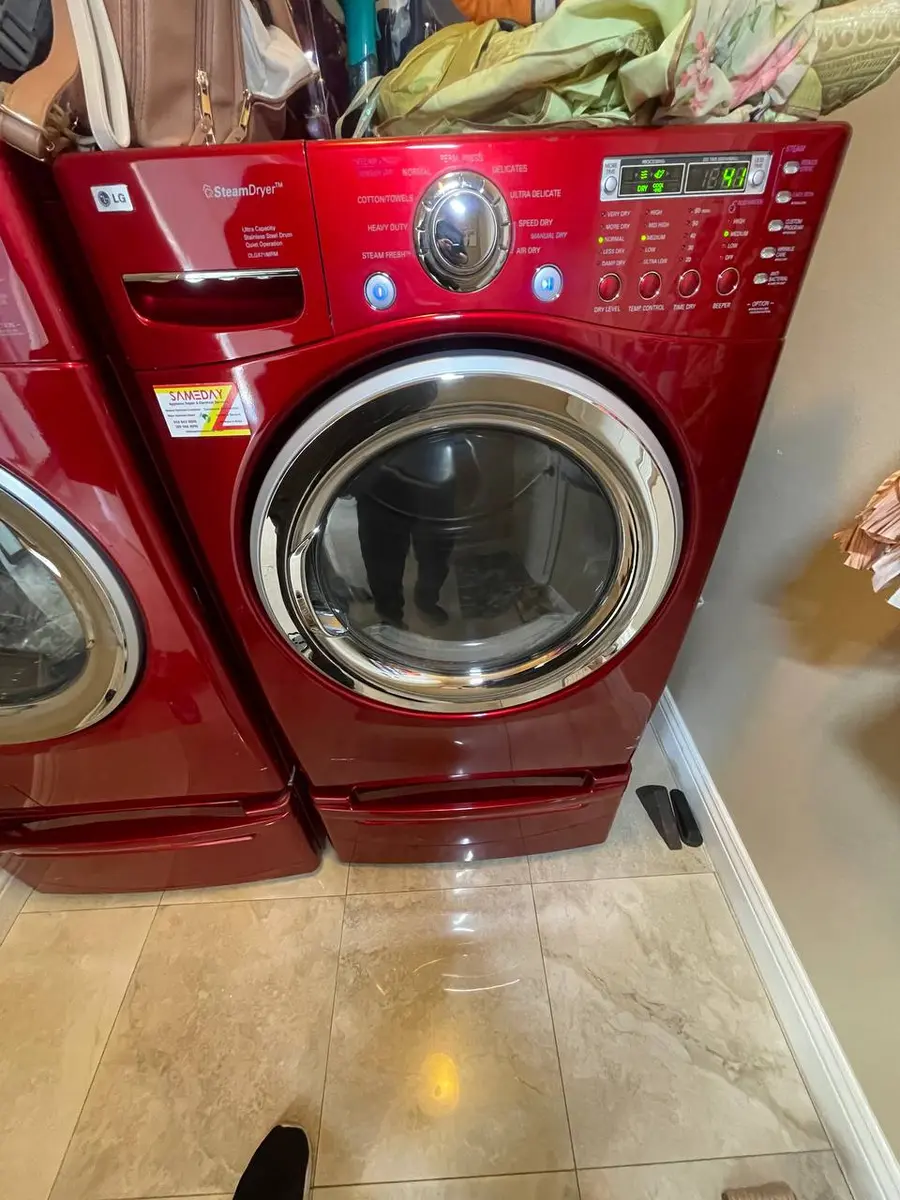
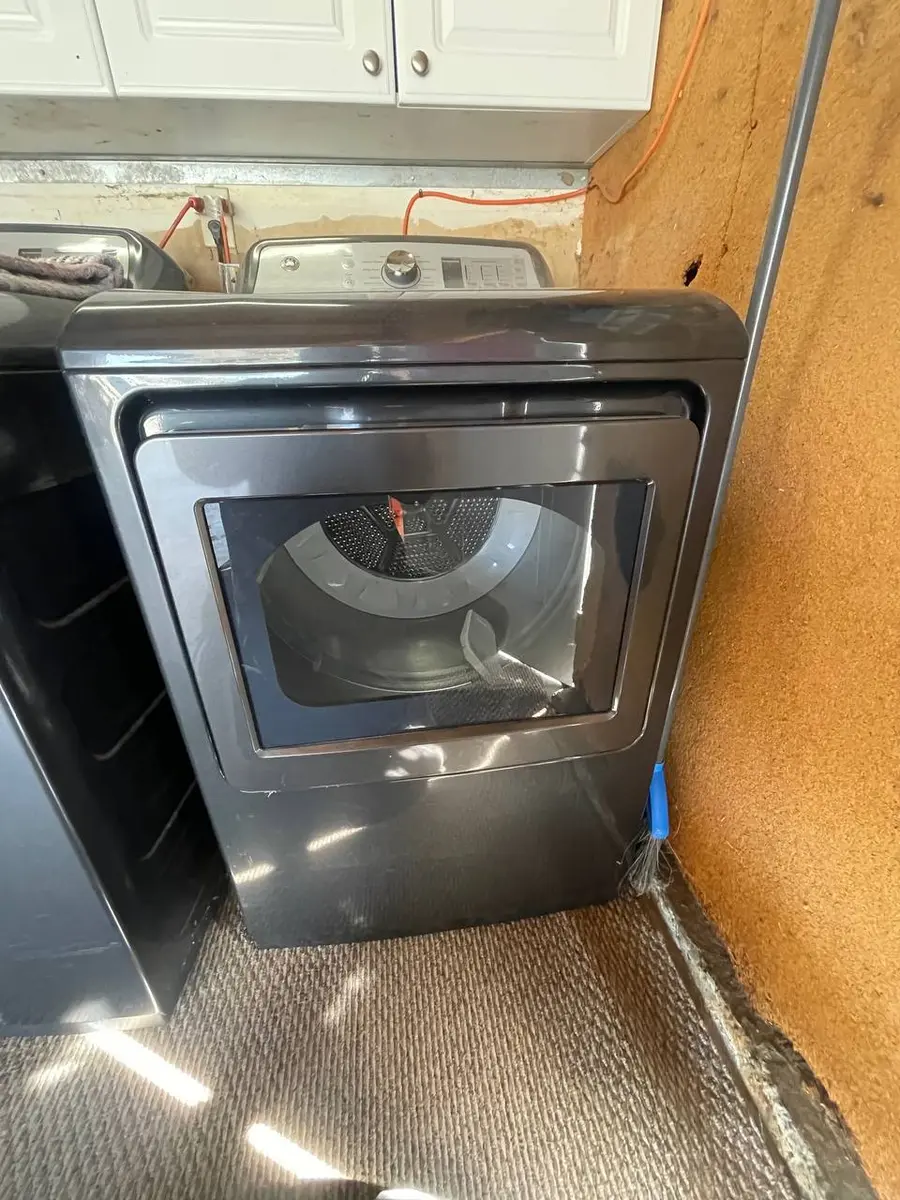
Gas Dryer Amps, Watts & Breaker Size
A gas dryer plugs into an ordinary 120 V outlet and draws 5 to 7 A. The electricity runs the drum motor, the controls and the igniter — not the heat — so the heavy 240 V receptacle behind an electric dryer is of no use to it, and the gas line it does need may not be there.
Gas Dryer Power Requirements at a Glance#
A gas dryer runs on an ordinary 120 V outlet, drawing about 5 to 7 A for 600 to 800 W on a 15 to 20 A circuit, plus a gas line — no 240 V branch at all. That makes the electrical half of a gas-dryer install trivial and the other half decisive: almost every question about swapping an electric dryer for a gas one is about what is already plumbed into the laundry room, not about amps. The table below works through it.
Gas Dryer Electrical Specifications#
| Configuration | Voltage | Amps | Watts (max load) | Breaker | Outlet (NEMA) |
|---|---|---|---|---|---|
| Standard gas dryer (electric controls and motor) | 120 V | 5–7 A | 600–800 W | 15–20 A | 5-15R |
A gas dryer burns fuel for its heat yet still needs household current to spin the drum, run the controls and spark the igniter, so it plugs into an everyday outlet instead of the heavy receptacle an electric model demands. A rigid gas line, a shutoff and a flexible connector complete the hookup behind the machine.
Do You Have the Right Tools?
Gas leak detector ($130), thermal fuse tester ($95), belt tension gauge, and vent inspection camera ($180). Our technician arrives with $3,000+ in professional tools — your diagnostic is free.
Licensed & Insured · 90-Day Warranty · Same-Day Service
Swapping an electric dryer for gas: what your laundry room already has#
Look behind the machine that is there now. What you find decides whether this is an afternoon or a trade job.
| What is there now | What a gas dryer needs | Verdict |
|---|---|---|
| A 240 V dryer receptacle and no gas line | A 120 V outlet and a gas connection | The heavy receptacle is of no use to a gas machine. The gas line is new work, and it is what decides the swap — not the appliance price |
| A gas line capped behind the old machine | That line, plus an ordinary 5-15R outlet in reach | The happy case: the house was plumbed for gas laundry and somebody put an electric dryer in front of it |
| An ordinary 120 V outlet on a 15 to 20 A branch | Exactly that and nothing more | At 5 to 7 A and 600 to 800 W a gas dryer is a light load — it can share the laundry branch with the washer beside it |
| A shared laundry receptacle with the washer on it | Nothing more | Between them a washer and a gas dryer are a modest load; it is an electric dryer that cannot join a shared branch |
| A vent run to the outside wall | The same as any dryer | Gas or electric, the exhaust requirement does not change — and a gas dryer puts combustion products in that duct, so the run is never optional |
One configuration is counted above, and it is deliberately unremarkable — a gas dryer is an ordinary plug-in appliance electrically. Everything that makes a gas dryer install expensive is on the other side of the machine, in a gas line this page cannot measure for you.
Circuit and Breaker Sizing for the Gas Dryer#
A gas dryer's electrical side is light because the fuel does the heating. At 5 to 7 A the motor, controls and igniter draw far less than an electric dryer's element, so a standard 15 to 20 A branch circuit and an ordinary 120 V conductor are all the receptacle needs. It does not require a dedicated circuit the way a heavy 240 V appliance does, though a reliable, not-overloaded 120 V outlet is still best so the dryer isn't sharing with a space heater on the same branch. The real installation constraint is not amperage at all — it is the gas connection, which is where the safety attention belongs.
Safety First — Know the Risks
Gas dryers carry carbon monoxide and explosion risk. Even electric dryers involve 240V circuits that can deliver a fatal shock. Our techs are licensed and insured — let them handle the risk.
Licensed & Insured · 90-Day Warranty · Same-Day Service
Gas Line and 120-Volt Power for the Gas Dryer#
The defining feature of a gas dryer is that it splits its needs: a modest 120 V electrical feed plus a fuel line. The receptacle behind it is a plain 5-15R on a 15 to 20 A circuit, powering the drum motor, the ignition and the electronic controls at 5 to 7 A. The heat, though, comes from burning gas, delivered through a dedicated shutoff valve and a rated flexible connector to the dryer’s inlet. That gas hookup — leak-testing the connection, using an approved connector, and confirming proper venting of combustion byproducts — is the part that demands care, and it is why a gas dryer still needs to be plugged in even though it barely uses the electricity.
Installation and Safety Notes for Gas Dryer Wiring#
On the electrical side, installation is as simple as plugging into a grounded 5-15R outlet; there is no cord-and-receptacle matching drama as with an electric dryer. The gas side is where the rules bite: the connection must use an approved flexible connector and shutoff valve, be leak-tested, and vent properly. Plugging in and hooking up a flexible gas connector is within reach of a careful homeowner, but if a new gas line or a new 120 V circuit is needed, bring in the trades — a licensed plumber or gas fitter for the fuel line and an electrician for the circuit. A gas dryer hookup cannot be converted to run an electric dryer without adding a 240 V circuit.
The Real Cost of DIY
Average DIY attempt: $150-400 in tools you may use once, plus the risk of further damage. Our diagnostic visit costs $0 — we find the problem and give you an honest quote.
Licensed & Insured · 90-Day Warranty · Same-Day Service
Gas Dryer Electrical FAQ#
Does a gas dryer need a 240-volt outlet?#
No. A gas dryer runs on a standard 120 V outlet, drawing about 5 to 7 A. The gas burner provides the heat, so no 240 V line is required — only an ordinary 5-15R receptacle plus a gas hookup.
What breaker does the fuel-fired model sit on?#
A gas dryer’s 120 V circuit is a standard 15 to 20 A branch. At 5 to 7 A the dryer uses only a fraction of that, so it does not need a dedicated high-amperage circuit.
Can it plug into a standard three-prong outlet?#
Yes. A gas dryer plugs into an ordinary grounded 5-15R (three-prong) 120 V outlet, the same kind used across the house — no special receptacle is required.
Why does a gas model still need electricity at all?#
The gas supplies heat, but electricity spins the drum, runs the blower, powers the electronic controls and lights the igniter. That is why even a gas dryer must be plugged in, drawing about 5 to 7 A.
What gas line and connector does the hookup use?#
The dryer connects to a dedicated gas shutoff valve through an approved flexible connector rated for appliance use. The joint must be leak-tested, and the dryer must vent combustion byproducts properly.
Can this hookup be converted to run an electric unit?#
Not directly. An electric dryer needs a 240 V, 30 A circuit and a dedicated four-prong dryer outlet, which a gas dryer’s 120 V receptacle cannot provide. Converting means adding a new 240 V circuit.
Appliance Repair Technician & Diagnostics Specialist · 10 years experience
Electronics and diagnostics specialist with 10 years of experience in modern smart appliance repair, specializing in LG and Samsung.