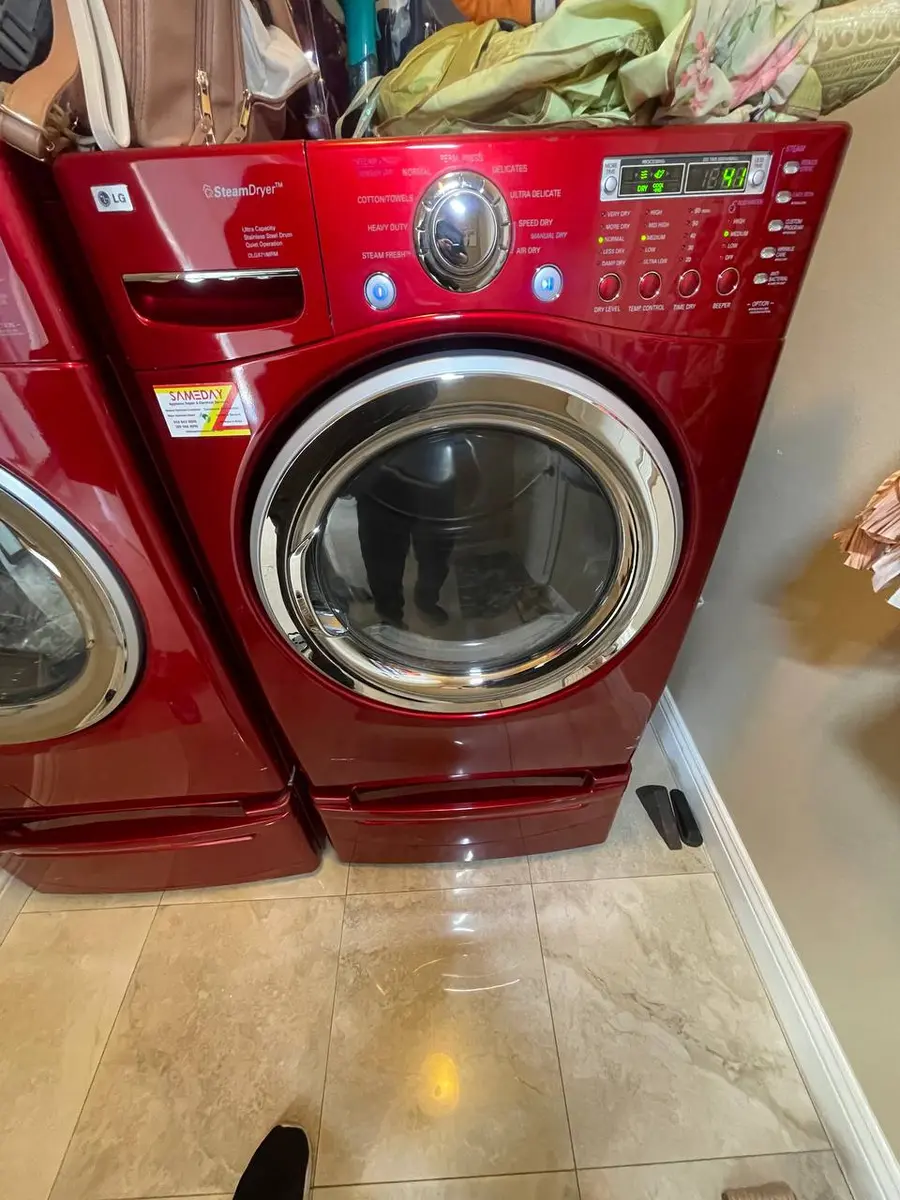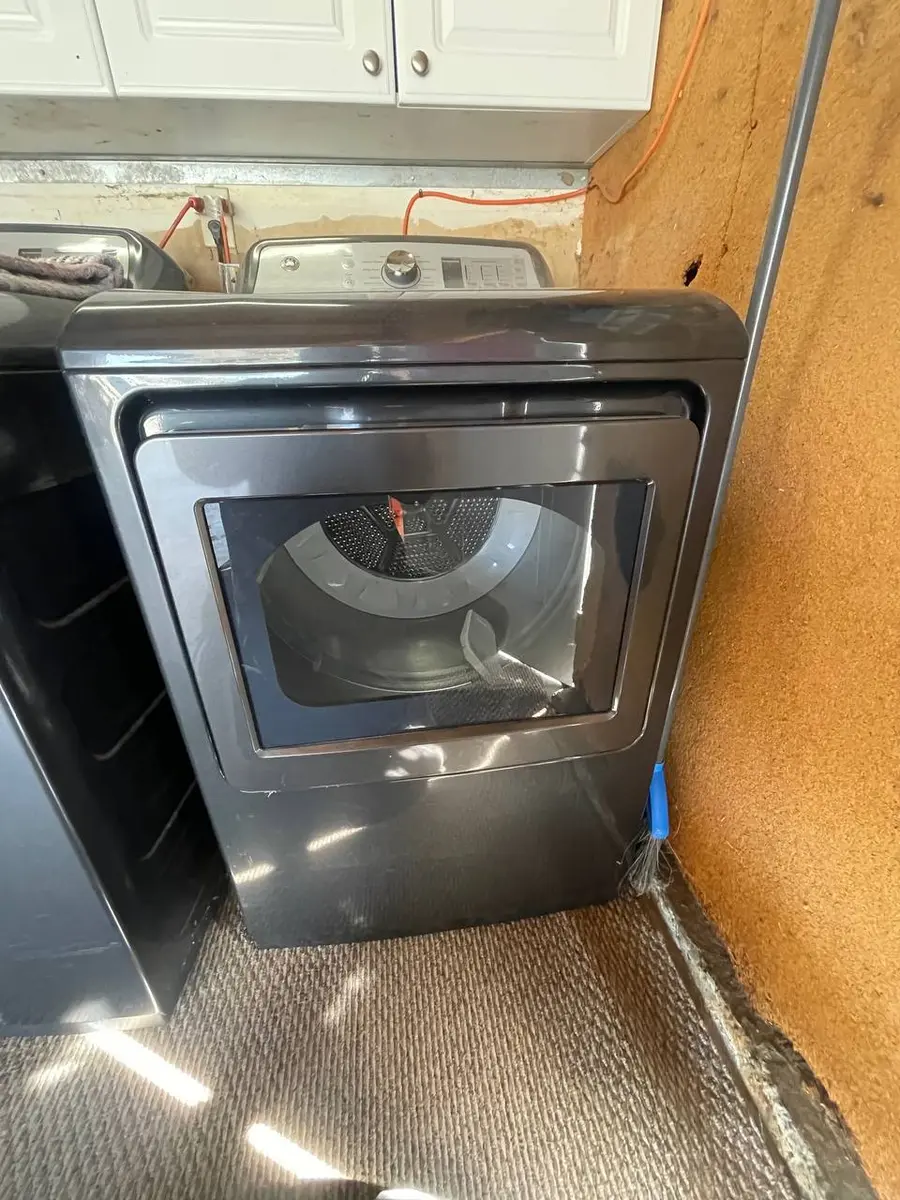
A leaking Bosch ventless dryer means its water-management system has failed somewhere: an overflowing condensate tank, a leaking pump seal, a degraded condenser gasket, a kinked direct-drain hose, or a worn door seal. Where the water shows up — under the machine, at the front panel, or inside the door — tells you which one it is.
Why a Ventless Dryer Holds Water at All#
Unlike a vented dryer that blows moisture outdoors, a Bosch heat-pump or condenser dryer pulls the moisture out of your clothes as liquid water. Warm, damp air passes through a condenser where it cools past its dew point, and the water that drips out collects in a sump at the base of the machine. From there it is pumped up into a removable tank you empty by hand, or sent straight to a household drain. Every leak on one of these dryers is a break somewhere along that water path, so the fix always starts with finding where the water escapes.
Do You Have the Right Tools?
Gas leak detector ($130), thermal fuse tester ($95), belt tension gauge, and vent inspection camera ($180). Our technician arrives with $3,000+ in professional tools — your diagnostic is free.
Licensed & Insured · 90-Day Warranty · Same-Day Service
Find the Puddle First#
Before removing a single panel, pin down the source. Water under the machine points at the pump or sump; water on the front panel or dripping from the door points at the door gasket; condensation pooling inside the drum or on the door glass points at the condenser gaskets; water at the rear points at the drain hose. That one observation cuts the list from five suspects to one or two.
The Causes, Most Common First#
Condensate tank overflow (about 30%)#
The most frequent cause is the simplest. If the collection tank fills and is not emptied, water backs up in the sump and spills onto the floor. The dryer is supposed to show an E:08 tank-full warning and halt before that happens, but a float sensor that sticks or responds slowly lets it overflow anyway. Empty the tank every two to three loads, and rinse the float sensor in the tank with clean water. If the machine overflows while the tank is only partway full, the float sensor itself needs replacing.
Drain pump seal leak (about 25%)#
The condensate pump relies on rubber seals that harden over years of constant heat and water, and once a seal fails, water weeps from the pump housing straight down onto the base and out the bottom. To confirm it, pull the lower front service panel, run a cycle, and watch the pump area — active dripping there is the seal. This one leaves its puddle directly beneath the front of the machine, which is why locating the water first is so useful.
Condenser housing gasket failure (about 20%)#
The condenser slides into a housing sealed by rubber gaskets that keep the moist airstream on its intended path. When those gaskets compress, tear, or slip out of line, damp air bypasses the condenser and condenses on other internal surfaces, eventually pooling. The tell here is different from a pump leak: water shows up inside the door, as condensation on the glass, or on outside surfaces rather than in a floor puddle. Pull the condenser from the lower front and inspect its gaskets, replacing any that are torn or flattened.
Direct-drain hose problem (about 15%)#
On units plumbed to drain instead of using the tank, the drain hose can kink, clog with lint, or work loose. Water that cannot leave through the hose backs up and overflows the sump. Check that the hose is not pinched behind the dryer, that it slopes downhill to its drain point, and flush it out to clear any lint blockage. This is often a no-parts fix — just re-routing or clearing the line.
Door seal leak (about 10%)#
The door gasket seals the drum opening so warm, humid air stays inside. If it is compressed flat, torn, or fouled with lint on its sealing face, moist air escapes and condenses on the front panel or floor. Close the door and watch the gasket compress all the way around — look for tears, flat spots, or debris. A wipe-down fixes a dirty gasket; a deformed one gets replaced.
Safety First — Know the Risks
Gas dryers carry carbon monoxide and explosion risk. Even electric dryers involve 240V circuits that can deliver a fatal shock. Our techs are licensed and insured — let them handle the risk.
Licensed & Insured · 90-Day Warranty · Same-Day Service
Work Through It in Order#
With the source narrowed, confirm it methodically: check and empty the tank, and clean a sticky float; pull the lower front panel and run a cycle watching the pump; pull the condenser and inspect its gaskets; examine the door gasket for tears and debris; and on a direct-drain install, verify the hose routing and clear any clog. Most of these are approachable at home — a tank, a hose, or a gasket wipe is easy — while a pump seal or a full condenser reseal is the point where a service visit usually saves time.
Heat-Pump and Condenser Models Leak the Same Way#
Bosch builds both heat-pump and straight-condenser ventless dryers, and while the heat-pump models are gentler on clothes and far more efficient, both share the same water-handling architecture: a condenser, a sump, a pump, and either a tank or a drain. That is good news for diagnosis, because the five causes above apply to both regardless of which one you own. The practical difference is access — heat-pump units pack more into the lower cabinet, so reaching the pump or condenser can take an extra panel or two. Identify the puddle location first either way, and the type of dryer only changes how many screws stand between you and the part, not which part is at fault.
The Real Cost of DIY
Average DIY attempt: $150-400 in tools you may use once, plus the risk of further damage. Our diagnostic visit costs $0 — we find the problem and give you an honest quote.
Licensed & Insured · 90-Day Warranty · Same-Day Service
Keep It Dry#
- Empty the condensate tank on schedule — every two to three loads, sooner for heavy towels or jeans that shed more water.
- Clean the lint filter after every load so airflow stays high and moisture actually reaches the condenser.
- Rinse the condenser and its filter on the interval your model specifies to keep the gaskets seating cleanly.
- On a direct-drain setup, check the hose for kinks whenever you move the machine.
Related reading: a Bosch dryer that won't drain and [Bosch dryer error codes](/blog/bosch-dryer-error-codes).
Bosch [dryer repair](/bay-area/services/dryer-repair), same-day across [Sacramento](/sacramento/sacramento) and the Bay Area — pump seals, gaskets, and condenser service in one visit. Book your repair.
Appliance Repair Technician · 8 years experience
Experienced technician with 8 years specializing in dishwasher repairs and European appliance brands including Bosch and Thermador.