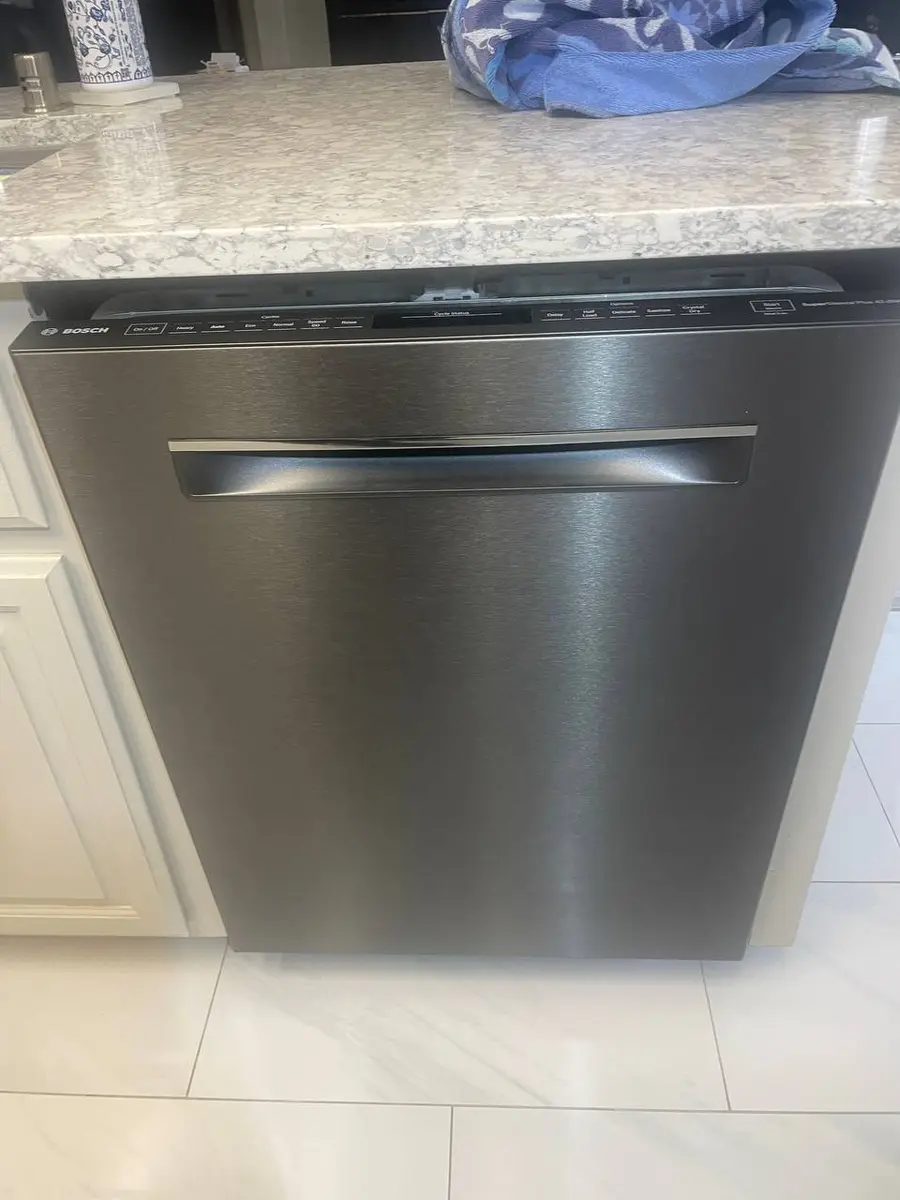
A Bosch [dishwasher](/blog/repair-or-replace-dishwasher) that trips the breaker has a real electrical fault leaking current to ground — most often the flow-through heater shorting inside the circulation pump, a loose or scorched junction-box connection, or a shorted pump motor winding. This is a fire-safety issue: never keep resetting the breaker. When in the cycle it trips points straight at the cause.
Treat a Repeated Trip as a Warning, Not a Nuisance#
A breaker trips to protect your home from an over-current or a ground fault, so a dishwasher that trips it repeatedly is telling you something is wrong in its electrical path. If the breaker ever failed to trip, that same fault could start a fire. Resetting it and hoping is the one thing not to do — find and fix the root cause. The good news is that Bosch dishwashers give you a precise diagnostic clue for free: the moment in the cycle the breaker lets go.
Do You Have the Right Tools?
Water pressure gauge ($60), spray arm tester, float switch multimeter ($85), and drain inspection camera. Our technician arrives with $3,000+ in professional tools — your diagnostic is free.
Licensed & Insured · 90-Day Warranty · Same-Day Service
How a Bosch Dishwasher Is Wired#
Because Bosch machines are usually hardwired through a junction box rather than plugged into a receptacle, there are more connection points between the breaker and the machine where a fault can start. In normal operation the dishwasher draws roughly 8 to 12 amps for the circulation pump and heater together, peaking near 12 to 15 amps while the heater runs at full wattage; the pump motors alone pull only 2 to 4 amps. The circuit should be dedicated, protected by a 20-amp breaker (older installs used a 15-amp), and GFCI-protected where local code now requires it. Knowing those numbers helps you tell a genuine short from a circuit simply asked to do too much.
Let the Timing Name the Fault#
Heating element short to ground (about 35%)#
The flow-through heater lives inside the circulation pump (Bosch part BSH 00442548), and its insulation can break down so current leaks from the element to the grounded metal housing. It rarely fails as a dead short — it begins as a high-resistance ground fault that worsens until leakage exceeds what the breaker tolerates. The signature is unmistakable: the breaker trips 5 to 15 minutes into the cycle, right as the heater switches on for the main wash. Run a quick-rinse cycle that never heats and the breaker holds — that alone confirms the heater. To verify, cut power, reach the heater terminals at the base, and measure resistance from each terminal to the pump housing; anything other than infinite (even megohms on an insulation tester) means the insulation is gone. The heater is not separately serviceable, so the fix is a new circulation-pump assembly.
Junction-box wiring fault (about 25%)#
The hardwired junction box behind the lower access panel sees occasional moisture and constant vibration. Over time a wire nut loosens into a hot, high-resistance joint, insulation cracks from heat cycling, condensation corrodes a connection, or a conductor works free and touches another terminal or the metal box. The tell is different from the heater fault: the breaker trips the instant power is restored, before the dishwasher even starts, or trips intermittently with no relation to the cycle. Kill power, confirm it dead with a non-contact tester, remove the lower access panel (two T20 Torx screws), and open the box. Look for scorching, melted wire nuts, bare copper against the box, or wires pulled loose. Strip back to clean copper, remake the joints with correctly sized wire nuts, and replace the box itself if it shows burn marks.
Pump motor winding short (about 20%)#
Either the circulation pump or the drain pump can short a winding when moisture gets into the motor or age breaks down the insulation, drawing excess current or faulting to the housing. Here the breaker trips when that specific pump runs — during wash for the circulation pump, at drain transitions for the drain pump — so the phase that triggers the trip identifies the pump. Disconnect the suspect motor and measure winding resistance: a circulation pump reads about 5 to 15 ohms across its terminals, a drain pump about 150 to 300 ohms. A reading near zero means shorted windings, and any continuity from a terminal to the housing is a ground fault. Replace the failed pump (circulation BSH 00442548, drain BSH 00631200).
GFCI nuisance tripping (about 12%)#
Where code now requires GFCI protection on a dishwasher circuit, the small, normal ground-fault currents from moisture inside the machine can trip a sensitive GFCI even with no actual fault — a well-known nuisance-trip pattern rather than a defect. Before assuming this, rule out the real faults above; a true heater or motor ground fault trips a GFCI too, and only replacing the failed part fixes that. If everything tests clean and the trips coincide with steam-heavy phases, the GFCI sensitivity is the likely story, and an electrician can advise on a compliant remedy.
Damaged internal wiring harness (about 8%)#
Least common but worth a look: a chafed or pinched internal harness can short where it rubs a metal edge or where a connector has overheated. Inspect the routing for melted insulation, discoloration, or a connector that looks cooked, and repair or replace the affected section. Pay special attention to where the harness passes the door hinge and the pump area, since flexing and heat concentrate the wear there and make those the spots a chafed conductor is most likely to finally short.
Safety First — Know the Risks
Live 120V wiring in a wet environment is one of the most dangerous DIY scenarios. Water + electricity = serious shock risk. Our techs are licensed and insured — let them handle the risk.
Licensed & Insured · 90-Day Warranty · Same-Day Service
Rule Out a Simply Overloaded Circuit#
Before condemning the dishwasher, make sure the breaker is not just doing honest work. If another appliance shares the circuit — a disposal, a microwave, a second outlet on the same run — the combined draw can exceed the breaker during the heating peak even though nothing inside the dishwasher has failed. Bosch specifies a dedicated circuit for exactly this reason. Confirm the machine is alone on its breaker, and check that the breaker itself is the correct rating and not weak from age; a tired breaker can trip below its label after years of thermal cycling. If the trip only ever happens when the disposal or microwave runs at the same time, the fix is a dedicated circuit, not a dishwasher part. Only once the circuit is proven dedicated and correctly sized does a repeated trip point cleanly at an internal ground fault.
Safety Order of Work#
Always start at the breaker — off, and verified dead with a tester — before touching anything. Then use the timing to skip straight to the likely fault: immediate trip on power-up means the junction box; a trip 5 to 15 minutes in at heat means the heater; a trip tied to a specific pump means that motor. Electrical shorts and hardwired connections sit at the edge of DIY, so if you are not comfortable metering to ground or remaking line-voltage joints, this is the right time to bring in an appliance technician or, for the house wiring and panel, a licensed electrician.
Related reading: a Bosch dishwasher that won't start and the Bosch dishwasher error-code guide.
Bosch [dishwasher repair](/blog/complete-guide-dishwasher-repair) with full electrical diagnostics — [Sacramento](/sacramento/sacramento) and the Bay Area. Schedule a technician.
Appliance Repair Technician · 8 years experience
Experienced technician with 8 years specializing in dishwasher repairs and European appliance brands including Bosch and Thermador.