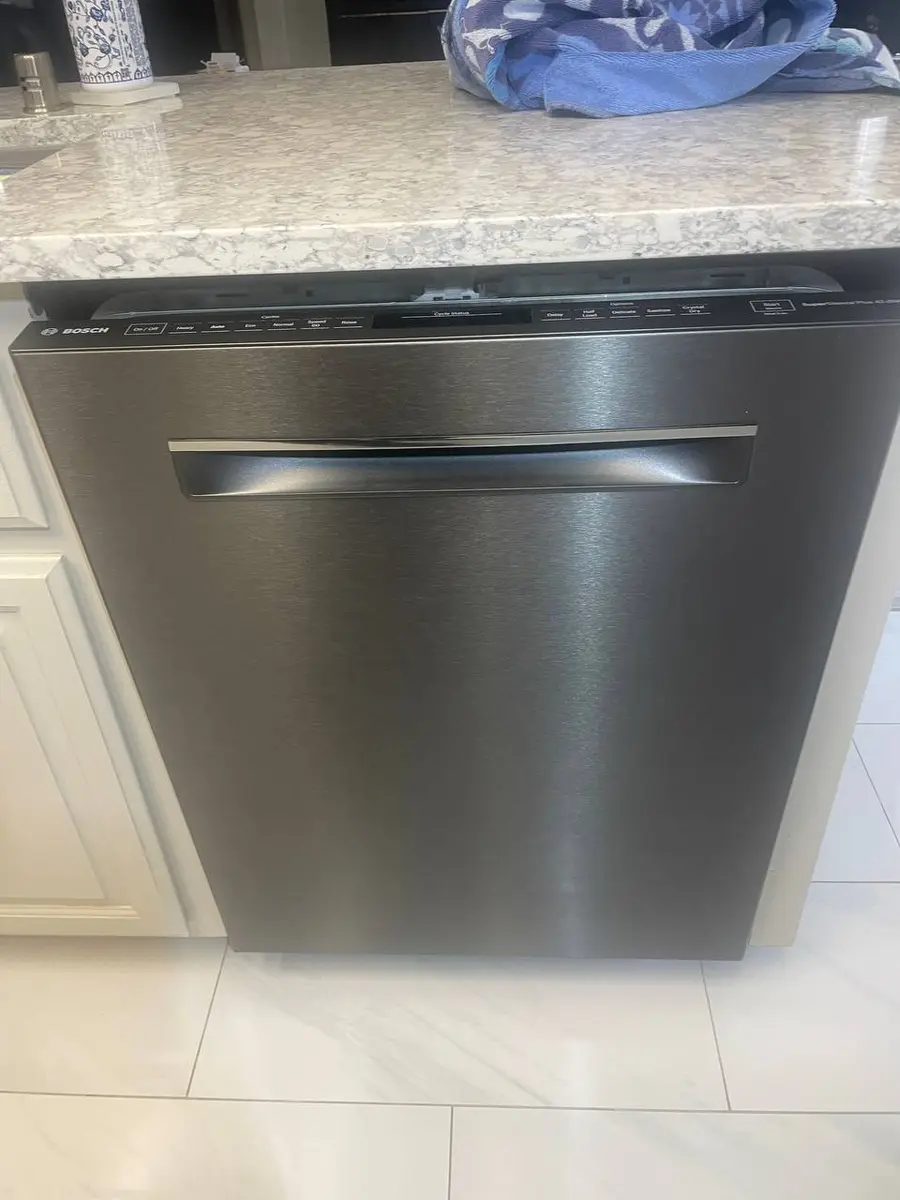
Most Likely Cause#
Most "rust" in a Bosch dishwasher is not the tub rotting — it is the nylon coating on the rack wires wearing through so the exposed steel tips corrode, which accounts for about 45% of what we see. Iron transferred from cast-iron or carbon-steel cookware is next at roughly 25%, followed by corroding internal fasteners at about 15%, iron in the water supply at about 10%, and genuine chemical damage to the stainless tub itself in only about 5% of cases. The fix is completely different depending on which of these it is, so identify the source before you buy anything.
Symptom-to-Cause Table#
| What you see | Most likely source | First check |
|---|---|---|
| Orange-brown at the rack tine tips | Rack coating worn through (45%) | Inspect the tips; cap or repaint the bare wire |
| Random rust stains that wipe partly away | Iron from cast-iron or carbon-steel items (25%) | Stop washing those items; descale the tub |
| Rust around screws and the spray-arm hub | Corroded internal fasteners (15%) | Replace with stainless hardware where possible |
| Uniform staining on tub, racks, and dishes | Iron in the water supply (10%) | Test the water; add an iron filter |
| Pitting or rough spots in the tub steel | Chemical attack on the stainless tub (5%) | Stop harsh cleaners; watch for E15 leaks |
Do You Have the Right Tools?
Water pressure gauge ($60), spray arm tester, float switch multimeter ($85), and drain inspection camera. Our technician arrives with $3,000+ in professional tools — your diagnostic is free.
Licensed & Insured · 90-Day Warranty · Same-Day Service
Surface Stain or Real Corrosion?#
This distinction decides everything. A rust stain sitting on the tub wall is surface contamination — iron deposited from cookware or water — and it wipes or descales away without harming the steel underneath. Real corrosion is the stainless itself pitting, which is rare and usually caused by bleach or acid cleaners. Telling the two apart saves you from replacing a tub that only needs a wipe, or from endlessly cleaning a stain whose source keeps re-depositing iron on every cycle.
The Sources in Detail#
Rack tine coating is first because it is both the most common and the most self-inflicting: once the vinyl tip chips from a heavy pan or abrasive scrubbing, the bare wire rusts and then bleeds orange onto everything it touches. Cast-iron and carbon-steel residue is a close second — running those items deposits iron across the tub that looks like rust but is really transferred metal, best lifted with a citric-acid or oxalic-acid cleaner. Non-stainless internal fasteners on some older models corrode and drip rust from specific points such as the spray-arm hub or filter screws. Well water or aging iron pipes introduce dissolved iron that precipitates when heated and stains uniformly across every surface. Actual tub corrosion is last and rare, showing as pitting rather than wipeable stains, and severe pitting near the sump can eventually leak and trip the E15 flood sensor.
Safety First — Know the Risks
Live 120V wiring in a wet environment is one of the most dangerous DIY scenarios. Water + electricity = serious shock risk. Our techs are licensed and insured — let them handle the risk.
Licensed & Insured · 90-Day Warranty · Same-Day Service
How to Fix Each Source#
- Rack tips: sand the rust back, then cap the tips with slip-on vinyl covers or Bosch tine repair paint, letting it cure a full day before the next cycle. Replace the whole rack only if many tines are gone.
- Cookware iron: stop running cast iron and carbon steel entirely, then lift the deposits with a baking-soda paste or an empty citric-acid cycle. A non-abrasive oxalic-acid cleaner clears stubborn spots without harming the steel.
- Fasteners: identify the corroding hardware and swap in stainless equivalents, adding a little food-grade silicone grease at reassembly.
- Water iron: test the supply, fit an iron filter on the dishwasher line or the whole house, and run a monthly citric-acid cycle to keep deposits from building back.
- Tub pitting: seal minor pits with food-safe appliance epoxy, monitor near the sump for leaks, and never use bleach or strong acids again.
Repair or Replace?#
Almost every rust complaint here is a cleaning job or a cheap parts fix — rack caps, an iron filter, or a descaling cycle — not a reason to replace the machine. Even corroded fasteners are inexpensive to swap out. Only a genuinely pitted, leaking tub pushes toward replacement, and that is the rare 5% case. EasyBear can identify the true source and handle the parts in a single visit — book now.
The Real Cost of DIY
Average DIY attempt: $150-400 in tools you may use once, plus the risk of further damage. Our diagnostic visit costs $0 — we find the problem and give you an honest quote.
Licensed & Insured · 90-Day Warranty · Same-Day Service
Prevent It Coming Back#
- Inspect the rack tips as you load and touch up any chip within a day or two, before the bare wire can rust.
- Wipe the tub interior monthly to catch staining while it is still easy to remove.
- Run a citric-acid cycle each quarter — two tablespoons in the detergent cup, empty machine, hot cycle.
- Never wash cast iron, carbon-steel knives, or rusty bakeware in the dishwasher, and skip bleach and acid-based cleaners entirely.
Appliance Repair Technician · 8 years experience
Experienced technician with 8 years specializing in dishwasher repairs and European appliance brands including Bosch and Thermador.