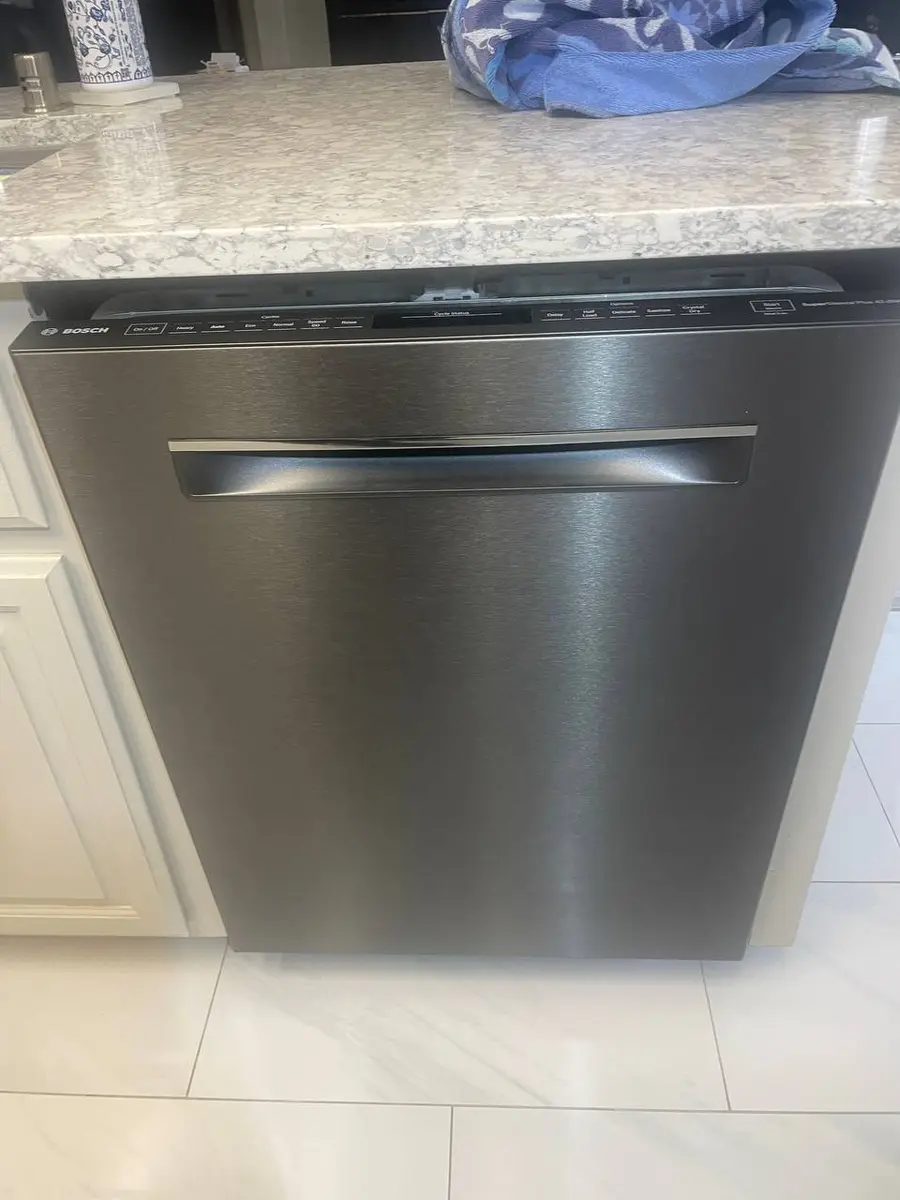
Diagnosing why a Bosch [dishwasher](/blog/repair-or-replace-dishwasher) is not cleaning dishes properly requires checking a few key areas — this guide walks through each one. Unlike American dishwashers that use brute-force water volume and a built-in food grinder (hard food disposer), Bosch dishwashers rely on precision — targeted spray patterns, intelligent water recycling, and meticulous filtration. This engineering approach delivers superior results when maintained but degrades faster when the filter system is neglected.
Quick Answer#
Diagnosing why a Bosch dishwasher is not cleaning dishes properly requires checking a few key areas — this guide walks through each one.
The fundamental rule for Bosch cleaning performance: these machines need their triple-filter assembly cleaned weekly. There is no food disposer to fall back on. Every particle of food that enters the wash water must be caught by the filters — or it recirculates onto your dishes during the next spray pass.
Do You Have the Right Tools?
Water pressure gauge ($60), spray arm tester, float switch multimeter ($85), and drain inspection camera. Our technician arrives with $3,000+ in professional tools — your diagnostic is free.
Licensed & Insured · 90-Day Warranty · Same-Day Service
Understanding Bosch PrecisionWash Technology#
PrecisionWash (available on 500 and 800 series, model prefixes SHP, SHV) uses intelligent sensors to continuously monitor water quality during the cycle. The system:
- Sprays water through multiple arm levels with targeted nozzle patterns
- Monitors water turbidity (clarity) through the ActiveWater sensor in the sump
- Adjusts spray pressure, temperature, and cycle duration based on soil level
- Concentrates spray on areas with heavier soiling
On lower-end models (100, 300 series — SHE, SHX prefixes), the spray system is simpler but still relies on the same fundamental filter-and-recirculate principle. Water is heated by the circulation pump's integrated heating element (BSH 00442548), sprayed through the arms, collected in the sump, filtered, reheated, and sprayed again.
The implication: Any obstruction to the spray arms, any filter clogging, or any heating failure directly results in poor cleaning — because the same water is recycled throughout the cycle.
Cause 1: Neglected Triple-Filter Assembly (40% of Cleaning Problems)#
This is overwhelmingly the primary cause of poor Bosch cleaning performance, and it's entirely a maintenance issue. Bosch's European engineering philosophy eliminates the garbage disposal found in American brands — all food debris must be caught by three filter layers:
- Coarse mesh filter — catches large food pieces
- Fine flat filter — traps medium particles
- Cylindrical microfilter — captures fine sediment (twist-lock mechanism)
When any layer clogs, water recirculates through reduced flow, spray pressure drops, and soil redeposits on dishes. The microfilter in particular accumulates grease that isn't visible without close inspection — the filter may appear clean but actually be coated with a transparent grease film that restricts flow.
Repair Steps:
- Remove the lower rack and pull the lower spray arm straight up off its post
- Locate the cylindrical microfilter in the sump — rotate counterclockwise (quarter turn) and lift
- Remove the flat fine filter beneath the microfilter
- Clean BOTH filters under hot running water using a soft brush (old toothbrush works well)
- For grease removal: soak filters in warm water with a tablespoon of dish soap for 10 minutes, then scrub
- Inspect the sump cavity below where filters sat — remove any debris, bones, glass, or labels
- Check the coarse mesh (it remains in place) — clear any trapped items
- Reassemble: flat filter first (align with the guides), then microfilter (quarter turn clockwise to lock)
Cost: (maintenance) or if filters are physically damaged and need replacement
Safety First — Know the Risks
Live 120V wiring in a wet environment is one of the most dangerous DIY scenarios. Water + electricity = serious shock risk. Our techs are licensed and insured — let them handle the risk.
Licensed & Insured · 90-Day Warranty · Same-Day Service
Cause 2: Spray Arm Nozzle Blockage or Malfunction (25% of Cases)#
Each Bosch spray arm has multiple precision-engineered nozzles that direct water at specific angles. Calcium buildup, food debris, or broken items (toothpick pieces, label adhesive) can block individual nozzles, creating dead zones where dishes receive no water contact.
Diagnosis: Remove each spray arm (lower: pull straight up; upper: pull straight down from its feed tube mount) and hold up to a light. Look through each nozzle — light should pass freely through every opening. Also spin the arm on its center bearing — it should rotate with zero resistance.
Repair Steps:
- Remove the lower spray arm by pulling straight up off the mount post
- Remove the upper spray arm by pulling straight down from the upper rack feed tube
- Hold each arm under running water and observe flow through each nozzle
- Clear blocked nozzles with a toothpick or thin wire — DO NOT enlarge the openings
- For mineral buildup: soak the entire arm in white vinegar for 2 hours, then flush with water
- In [Sacramento](/sacramento/sacramento) and Bay Area cities where water hardness averages 10-17 grains per gallon, this issue is especially common. Check the spray arm bearings (BSH 00611317) — if the arm wobbles or doesn't spin freely, replace the bearing
- Reinstall arms and verify free rotation with the racks loaded — no items should contact the spinning arms
Parts Cost: (spray arm bearing BSH 00611317) or (complete spray arm if cracked) Professional Repair Cost:
Cause 3: Insufficient Water Temperature (15% of Cases)#
Bosch dishwashers heat water internally using a flow-through heater integrated into the circulation pump. Detergent activation requires water at 130–150°F minimum. If the heating element portion of the circulation pump (BSH 00442548) is failing, or if extremely cold incoming water overwhelms the heater capacity, cleaning performance drops dramatically.
Diagnosis: At the end of a wash cycle, immediately open the door and feel the stainless steel tub walls — they should be noticeably hot (too hot for prolonged hand contact). If barely warm, the heating system is underperforming. Error code E09 confirms heating element failure; E01 indicates heating timeout.
Repair Steps:
- First, ensure you're running hot water at the kitchen sink BEFORE starting the dishwasher — this ensures hot water in the supply line reaches the machine immediately rather than filling with cold water from the pipe
- Enter diagnostic mode (Power Scrub Plus + Regular Wash held 3 seconds) and run the heating test
- Check the NTC temperature sensor on the circulation pump — resistance should be ~50K ohms at room temperature
- Measure heater resistance: disconnect power, access circulation pump through base plate, measure across heater terminals — expect 10–15 ohms
- If the heater is open-circuit (infinite resistance), the entire circulation pump/heater assembly (BSH 00442548) needs replacement
Parts Cost: (circulation pump with integrated heater) Professional Repair Cost:
The Real Cost of DIY
Average DIY attempt: $150-400 in tools you may use once, plus the risk of further damage. Our diagnostic visit costs $0 — we find the problem and give you an honest quote.
Licensed & Insured · 90-Day Warranty · Same-Day Service
Cause 4: Detergent Dispenser Malfunction (10% of Cases)#
The detergent dispenser opens at a specific time during the wash cycle via a bimetallic release mechanism. If this mechanism fails, detergent either stays locked in the dispenser or releases at the wrong time (during rinse instead of wash, for example).
Diagnosis: After a completed cycle, check the dispenser door. If it's still closed with detergent inside, the release mechanism has failed. If the dispenser door is open but the detergent tab is still intact (not dissolved), it released too late in the cycle or water wasn't hot enough to dissolve it.
Repair Steps:
- Test the dispenser manually: set the timer/program to the point where detergent should release, close the door, and listen for the dispenser click
- Check for food debris jamming the dispenser door pivot
- Verify the bi-metallic actuator — it should deflect when heated (careful: this is a fragile component)
- If the actuator has failed, the entire dispenser assembly (BSH 00490467) must be replaced
- Ensure rinse aid is also dispensing properly — rinse aid helps detergent distribute evenly across dish surfaces
Parts Cost: (dispenser assembly BSH 00490467) Professional Repair Cost:
Cause 5: Improper Loading Blocking Spray Patterns (5% of Cases)#
Bosch racks have narrower European-style tine spacing compared to American brands. This is intentional — it guides specific dish angles that maximize spray coverage. Loading a Bosch like an American dishwasher (flat plates face-forward, large items anywhere) creates spray shadows where water never reaches.
Bosch-specific loading rules:
- Plates in the lower rack should face the center spray arm post — not all facing one direction
- No items should extend below the rack rail height (they'll contact the lower spray arm)
- The upper rack (especially RackMatic adjustable rack on 500+ series) should be set to the height where items don't block the upper spray arm rotation
- Tall items (cookie sheets, cutting boards) go along the sides or back — never in front of the spray arm rotation path
- Cups and bowls must angle downward for both cleaning and draining — never flat
Don't Void Your Warranty
Opening your appliance yourself may void the manufacturer warranty. Our repair comes with a 90-day guarantee, and we document everything for warranty compliance.
Licensed & Insured · 90-Day Warranty · Same-Day Service
Cause 6: ActiveWater Sensor Contamination (5% of Cases)#
The turbidity sensor (500 and 800 series models) measures water clarity to determine cycle length and spray intensity. When grease coats this optical sensor, it consistently reads "dirty water" and either runs excessively long cycles or fails to trigger proper spray intensity adjustments.
Resolution: Clean the sensor window (located in the sump near the filter assembly) with a soft cloth dampened with rubbing alcohol or white vinegar. This should be part of your monthly maintenance routine.
The Rinse Aid Factor#
Rinse aid isn't just for drying — it affects cleaning too. Rinse aid reduces surface tension, helping water sheet across dish surfaces rather than beading. Without proper rinse aid:
- Water beads on surfaces, reducing cleaning coverage area
- Mineral deposits form where beads sit during heating phases
- The final rinse can't fully evacuate detergent residue
Set your Bosch dispenser to 3–5 (depending on water hardness) and refill monthly.
Is It Worth Your Time?
Dishwasher issues overlap between drain pump, wash motor, inlet valve, and control board. DIY diagnosis averages 3-5 hours. Our technician diagnoses the issue in about 30 minutes — same-day appointments available.
Licensed & Insured · 90-Day Warranty · Same-Day Service
Maintenance Schedule for Optimal Bosch Cleaning#
| Frequency | Task |
|---|---|
| Weekly | Clean triple-filter assembly (microfilter + fine filter) |
| Monthly | Inspect and clear spray arm nozzles, refill rinse aid |
| Quarterly | Run empty hot cycle with dishwasher cleaner or citric acid |
| Annually | Check spray arm bearings, inspect door gasket, verify heating performance |
How Can You Prevent This?#
- Clean filters weekly — this cannot be overstated for Bosch's filter-only system
- Scrape dishes before loading — no food grinder means all debris goes to the filters
- Run hot water at the sink before starting the dishwasher — pre-heats the supply line
- Don't pre-rinse obsessively — modern Bosch detergents need some soil to activate properly (just scrape, don't rinse)
- Use quality detergent — Bosch recommends tabs/pods over powder for consistent dosing
Your Bosch dishwasher issue is likely a straightforward repair. Our Sacramento and Bay Area technicians can diagnose it today. Schedule your repair
The Risk of Getting It Wrong
A wrong diagnosis often turns a simple fix into a costly replacement. Without proper diagnostic tools, you might replace the wrong part — or cause additional damage. Our free diagnostic eliminates the guesswork.
Licensed & Insured · 90-Day Warranty · Same-Day Service
Frequently Asked Questions#
What should I do if my Bosch [dishwasher not cleaning dishes](/bay-area/services/dishwasher-not-cleaning-dishes) properly?#
When a Bosch dishwasher fails to clean effectively, the root cause almost always traces back to one of two Bosch-specific design elements: the triple-filter system or the PrecisionWash spray arm technology. Unlike Am
Across hundreds of Bosch service calls, our technicians identify wear on the primary failure component as the primary culprit when diagnosing not cleaning properly — solved.
How much does Bosch dishwasher not cleaning dishes properly repair cost?#
Repair costs vary by cause. Typical ranges vary by model and repair type.; ;. Parts-only costs are lower for DIY repairs.
Is it worth repairing a Bosch dishwasher with not cleaning dishes properly?#
In most cases, yes — especially if your Bosch dishwasher is under 8-10 years old. Repair costs are significantly less than replacement (for a comparable new unit). Bosch appliances are built to last, and a single component failure does not mean the entire unit is failing. A professional diagnostic confirms whether repair or replacement is the better investment.
Appliance Repair Technician · 8 years experience
Experienced technician with 8 years specializing in dishwasher repairs and European appliance brands including Bosch and Thermador.