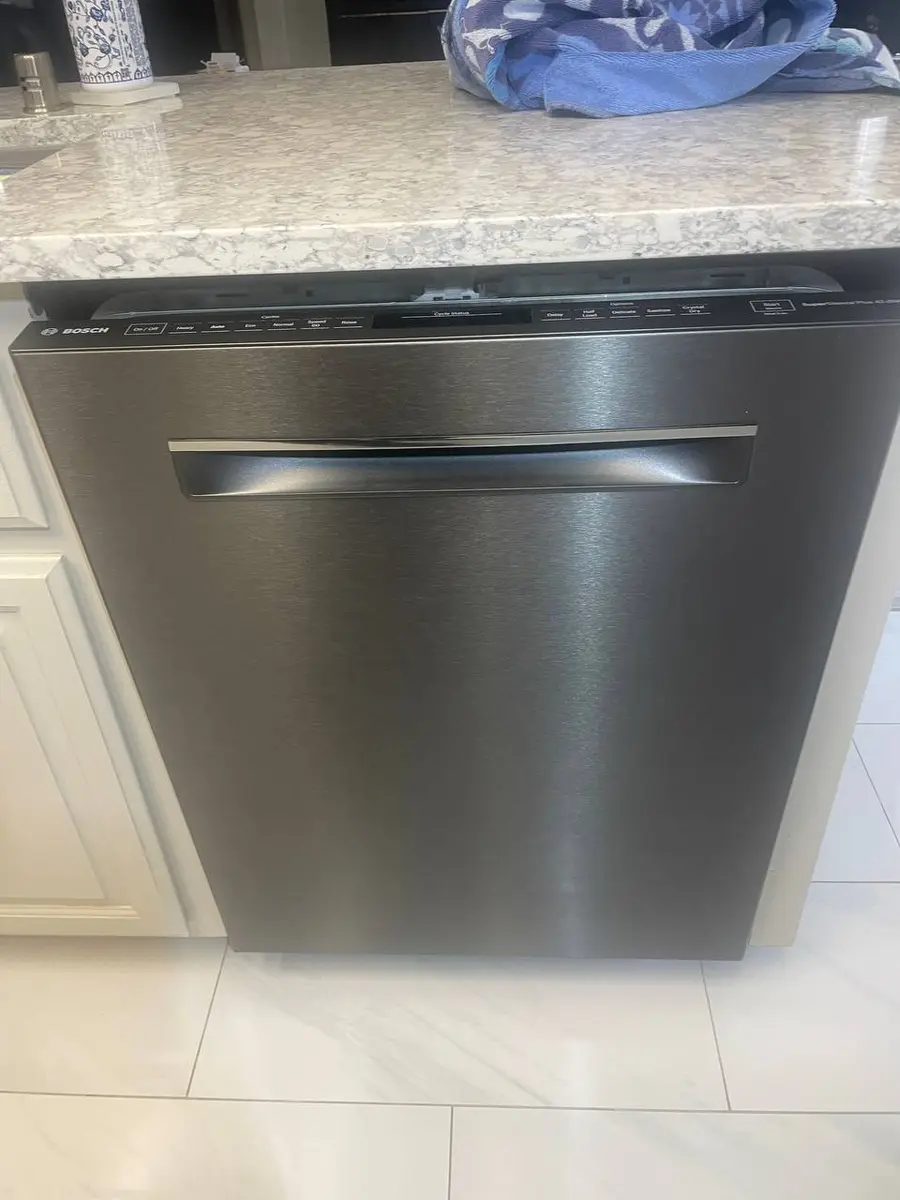
A noisy Bosch [dishwasher](/blog/repair-or-replace-dishwasher) is best diagnosed by the kind of sound it makes, because each noise maps to a different part. Bosch dishwashers are engineered to be very quiet, so a new grinding, buzzing, or knocking sound stands out and almost always has a specific mechanical cause — most often debris that found its way into the pump or spray arm. The good news is that the most common causes are things you can clear yourself; only a worn bearing or a failed pump needs a technician.
Quick answer#
Identify the sound first. Grinding or buzzing from the base means debris in the drain or wash pump — clear the filter and pump, which fixes most noise complaints for free. Rhythmic knocking or clicking during the cycle is usually a spray arm striking a tall item — rearrange the load. A continuous humming that was always there is normal. A grind that persists after the pump is clean is a worn bearing, and that is a technician repair.
Do You Have the Right Tools?
Water pressure gauge ($60), spray arm tester, float switch multimeter ($85), and drain inspection camera. Our technician arrives with $3,000+ in professional tools — your diagnostic is free.
Licensed & Insured · 90-Day Warranty · Same-Day Service
Diagnose by the sound#
Grinding#
Hard grinding from the tub floor is the classic "something is in the pump" sound. A fruit pit, a chip of glass, a bit of bone, or grit gets past the filter and rattles against the impeller. Clear it (steps below) and the grind stops. If it does not, the wash-pump bearing is wearing — the grind then rises with pump speed and is constant, not intermittent.
Buzzing or rattling#
A sharp buzz usually comes from the drain pump laboring against a partial obstruction or a small object trapped at the impeller. It is loudest during the drain phase. A looser rattle can be the check valve or a loose spray arm.
Knocking or clicking, rhythmic#
A knock timed to the spray-arm rotation is almost always the arm clipping a pot handle, a tall glass, or a utensil poking through the rack. It is not a fault — it is loading. Open up, rearrange, and it goes quiet.
Humming, continuous and low#
This is normal circulation on a quiet Bosch. If it has always sounded like this, nothing is wrong. Only a change in the sound signals a problem.
Causes by likelihood#
| Cause | Share of noise complaints | Fix |
|---|---|---|
| Debris in drain or wash pump | 30% | Clear it — DIY |
| Spray arm striking a loaded item | 25% | Rearrange — DIY |
| Worn wash-pump bearing | 20% | Technician — pump replacement |
| Drain pump obstruction or wear | 12% | Clear, or replace if worn |
| Loose spray arm or check valve | 8% | Reseat — DIY, or part |
The remaining share are install-related — a machine not level, or in contact with the cabinet so it transmits vibration — which a shim or a small adjustment cures.
Safety First — Know the Risks
Live 120V wiring in a wet environment is one of the most dangerous DIY scenarios. Water + electricity = serious shock risk. Our techs are licensed and insured — let them handle the risk.
Licensed & Insured · 90-Day Warranty · Same-Day Service
Clear the pump and filter (fixes most noise)#
- Cut power at the breaker — Bosch units are hardwired.
- Remove the lower rack and lift out the cylindrical sump filter.
- Twist off the wash-pump impeller cover in the sump and check for glass, seeds, or debris; remove anything wrapped on the impeller.
- Feel that the impeller turns freely and the spray arms spin without catching.
- Refit the filter firmly and run a short cycle to confirm the noise is gone.
When the noise means a worn part#
- Wash-pump bearing: a constant grind that tracks pump speed and survives a clean pump means the bearing is going. The circulation pump is replaced as an assembly — a technician job.
- Drain pump: a buzz during drain with a clear impeller, or a pump that runs weakly, points at a failing drain motor.
- Codes E3 or E17: if a noisy machine also flags these, treat the noise and the code together, as they can share a pump or drain root cause.
The rule: debris and loading are yours; a bearing or motor inside a sealed pump is a technician’s.
The Real Cost of DIY
Average DIY attempt: $150-400 in tools you may use once, plus the risk of further damage. Our diagnostic visit costs $0 — we find the problem and give you an honest quote.
Licensed & Insured · 90-Day Warranty · Same-Day Service
Time the noise to the cycle phase#
When the sound happens is as diagnostic as what it sounds like. A noise only during the drain phase (a short burst at the start and end of the cycle) points at the drain pump — an object at its impeller or a worn drain motor. A noise throughout the wash phase, steady with the circulation, points at the wash pump or a spray-arm obstruction. A noise that comes and goes rhythmically tracks the spray-arm sweep and is almost always a loaded item in the way. Stand by the machine through one full cycle and note which phase is loud; you will have narrowed it to a subsystem before you open anything.
Match the sound to the part#
| Sound | When | Likely part |
|---|---|---|
| Hard grinding | Wash phase, constant | Debris in, or worn bearing on, the wash pump |
| Sharp buzz | Drain phase | Drain pump obstruction or wear |
| Rhythmic knock/click | Tracks arm rotation | Spray arm hitting a loaded item |
| Rattle | Intermittent | Loose spray arm or check valve |
| Low hum | Whole cycle, unchanged | Normal circulation |
Don't Void Your Warranty
Opening your appliance yourself may void the manufacturer warranty. Our repair comes with a 90-day guarantee, and we document everything for warranty compliance.
Licensed & Insured · 90-Day Warranty · Same-Day Service
What a technician checks on a noisy Bosch#
- Runs a diagnostic cycle and listens by phase to confirm wash pump versus drain pump.
- Pulls the sump and inspects the impellers for debris and the bearing for play — a bearing with side-to-side movement grinds and is replaced with the pump.
- Checks the spray arms spin freely and their bearings are intact.
- Confirms the check valve and any related codes (E3, E17) are not flagging a drain fault alongside the noise.
- Verifies the machine is level and isolated from the cabinet so normal vibration is not amplified.
Level and isolation in depth#
A surprising number of "noisy Bosch" complaints are a perfectly healthy machine transmitting its normal, quiet operation into the surrounding cabinetry. If the unit is not level, a leg is not firmly down, or the tub is touching a side cabinet or the countertop, ordinary vibration becomes an audible buzz or drone through the wood. Check with a level front-to-back and side-to-side, make sure all feet bear weight, and confirm there is a small gap or a felt pad between the tub and adjacent surfaces. This costs nothing and quiets a machine that has nothing mechanically wrong with it — always rule it out before condemning a pump.
Is It Worth Your Time?
Dishwasher issues overlap between drain pump, wash motor, inlet valve, and control board. DIY diagnosis averages 3-5 hours. Our technician diagnoses the issue in about 30 minutes — same-day appointments available.
Licensed & Insured · 90-Day Warranty · Same-Day Service
Access and level#
Deeper access is via the lower kick panel (T20 Torx) with the power off. Also confirm the machine is level and not touching the adjacent cabinets — a Bosch that is otherwise fine can sound loud simply because it is transmitting normal vibration into the cabinetry. A quick level check and a felt pad often quiet a "noisy" unit with nothing wrong inside.
New noises after an install or move#
If a Bosch got loud right after it was installed, moved, or had cabinets worked on around it, suspect the setup before the machine. A leg that lost contact with the floor, a tub nudged into a side cabinet, packaging foam left in the base, or a drain hose now resting against the cabinet wall all turn normal operation into audible noise. Re-level the unit, confirm every foot bears weight, check nothing was left inside the base, and make sure the hoses and tub are not touching anything rigid. This is the first thing to check on a post-install noise complaint and it costs nothing.
The Risk of Getting It Wrong
A wrong diagnosis often turns a simple fix into a costly replacement. Without proper diagnostic tools, you might replace the wrong part — or cause additional damage. Our free diagnostic eliminates the guesswork.
Licensed & Insured · 90-Day Warranty · Same-Day Service
Sounds that are actually normal#
- A soft, steady hum throughout the cycle — that is the circulation pump, and Bosch runs it quietly by design.
- Periodic water sounds — filling, draining, and the spray arms sweeping.
- A brief click at cycle transitions — the diverter or drain valve changing state.
None of these is a fault. Only a new or changed sound — a grind, a sharp buzz, a knock that was not there before — signals a problem worth chasing.
When a noise means stop using it#
Most dishwasher noises are safe to run until you can address them, but two are not. A hard grinding that keeps getting worse can mean a pump bearing is disintegrating, and running it risks seizing the pump and shredding the impeller into the sump. A sharp electrical buzz paired with the drain not clearing can mean the drain motor is stalled and drawing hard, which stresses the control. If either appears, stop running cycles and get it diagnosed rather than pushing a failing part to complete failure.
Free Diagnostic Visit — Zero Risk
Our certified technician comes to your home, diagnoses the problem with professional tools, and gives you an honest quote — all at zero cost. No parts markup, no hidden fees. If you decide not to proceed, you pay nothing.
Licensed & Insured · 90-Day Warranty · Same-Day Service
Preventing noise#
- Scrape plates and rinse the filter regularly so debris never reaches the pump.
- Load so nothing protrudes into the spray-arm path.
- Keep the unit level and clear of the cabinet sides.
- Reseat the lower spray arm firmly after cleaning — a loose arm rattles and can clip the rack.
- Address a new grind early, while it is still debris, before it becomes a worn bearing that takes the whole pump with it.
- If the machine sits on a hard tile floor, a thin anti-vibration mat under the feet can cut transmitted noise noticeably without any repair at all.
Frequently Asked Questions#
Why is my Bosch dishwasher suddenly loud?#
A sudden noise usually means something got into the pump or spray arm — a seed, a shard, or a small item that fell through. Grinding and buzzing point at the drain or wash pump; a rhythmic knock is often a spray arm hitting a tall item. Start by clearing the filter and pump.
What does a grinding noise in a Bosch dishwasher mean?#
Grinding usually means debris in the drain or wash pump — glass, a fruit pit, or grit — or a failing pump bearing. Clear the sump and pump first; if the grind continues with a clean pump, the bearing is wearing and the pump needs replacing.
Is it normal for a Bosch dishwasher to make noise?#
A low hum and water sounds are normal — Bosch dishwashers are among the quietest made. What is not normal is grinding, sharp buzzing, or knocking. Those are debris or a worn part, and they are worth diagnosing before the part fails completely.
Is a noisy Bosch dishwasher worth repairing?#
If it is debris, the fix is free. A worn wash-pump bearing or a failed drain pump is a defined repair and worth it on a unit under about ten years old — Bosch tubs outlast a single pump, so replacing one keeps a good machine running.
Appliance Repair Technician · 8 years experience
Experienced technician with 8 years specializing in dishwasher repairs and European appliance brands including Bosch and Thermador.