<p>The igniter is the most frequently replaced component in Wolf gas and dual-fuel ranges. Wolf uses a proprietary flat-style igniter that operates differently from the round igniters found in standard appliance brands. When this igniter weakens or fails, the oven will not light even though the cooktop burners may work perfectly. Understanding Wolf's specific igniter requirements helps you diagnose the problem accurately and avoid unnecessary repair costs.</p>
<h2>Quick Answer</h2>
<p>Wolf range igniter failure is most commonly caused by: amperage draw falling below the 3.2A minimum required to open the gas safety valve. The igniter may glow visibly but cannot produce enough current. Expected for igniter replacement.</p>
<h2>How Wolf Igniters Differ from Standard Brands</h2>
<p>Standard appliance brands use round silicon carbide igniters that draw 2.5-3.0 amps. Wolf uses a flat-style igniter with a wider heating surface that requires 3.2-3.6 amps to open their heavier-duty gas safety valve. This higher threshold means Wolf igniters have a narrower operating window — they can appear to work (glowing orange) while actually being too weak to complete the ignition circuit. This is why "my igniter glows but the oven won't light" is the number-one Wolf service call.</p>
<h2>Affected Wolf Models</h2>
<ul>
<li><strong>DF486G / DF484DG</strong> — 48-inch dual-fuel ranges</li>
<li><strong>DF606DG</strong> — 60-inch dual-fuel range</li>
<li><strong>GR486G</strong> — 48-inch all-gas range</li>
<li><strong>GR606DG</strong> — 60-inch all-gas range</li>
</ul>
<h2>What Are the Common Causes?</h2>
<h3>1. Igniter Amperage Below Threshold</h3>
<p>The gas safety valve requires a minimum current flow through the igniter circuit to energize its bimetal mechanism. As the igniter element ages and develops microscopic cracks, its resistance increases and current flow decreases. At 3.0 amps, the valve stays closed. At 3.2 amps, it opens. This narrow 0.2-amp window means the igniter transitions from working to failed with minimal warning. Professional diagnosis uses a clamp-on ammeter to measure actual draw during the ignition attempt.</p>
<p>Our field data from Wolf repairs confirms igniter amperage below threshold drives most complaints of this nature that we diagnose.</p>
<h3>2. Cracked Igniter Element</h3>
<p>Wolf flat igniters are made from silicon carbide with a ceramic mounting bracket. Thermal cycling from normal use causes micro-fractures in the element over thousands of heat cycles. Self-clean mode at 900 degrees F accelerates this process dramatically. Visible cracks, chips, or white discoloration on the igniter surface indicate imminent failure even if the igniter still functions intermittently.</p>
<h3>3. Porcelain Wire Connector Failure</h3>
<p>Wolf connects the igniter to the wiring harness via porcelain insulated connectors that withstand oven temperatures. Over time, the porcelain can crack from thermal shock, or the wire terminals inside corrode from moisture during self-clean steam cycles. A corroded connector adds resistance to the circuit, reducing amperage below the valve threshold.</p>
<h3>4. Gas Safety Valve Internal Failure</h3>
<p>In approximately 10% of "igniter not working" calls on Wolf ranges, the igniter is actually fine — the gas safety valve's bimetal strip has lost its calibration. Even with proper amperage, the valve does not open. Diagnosing this requires testing igniter amps (confirming 3.2A+) and valve solenoid resistance (300-400 ohms). If both test normal but the valve does not open, the valve assembly requires replacement.</p>
<h3>5. Control Board Igniter Relay</h3>
<p>The control board sends 120V AC to the igniter through a relay. If this relay fails open, no power reaches the igniter at all — it will not glow. If the relay fails closed (welded contacts), the igniter receives power continuously, which can overheat and damage it prematurely.</p>
<h2>Step-by-Step Diagnosis</h2>
<ol>
<li><strong>Safety first:</strong> Turn off the gas supply at the shutoff valve behind the range. Disconnect from electrical power.</li>
<li><strong>Access the igniter:</strong> Remove the oven racks and the oven floor panel (typically two screws at the rear). The flat igniter is mounted at the rear of the oven burner assembly.</li>
<li><strong>Visual inspection:</strong> Look for cracks, chips, or white discoloration on the igniter element. Check the porcelain wire connectors for cracks or corrosion.</li>
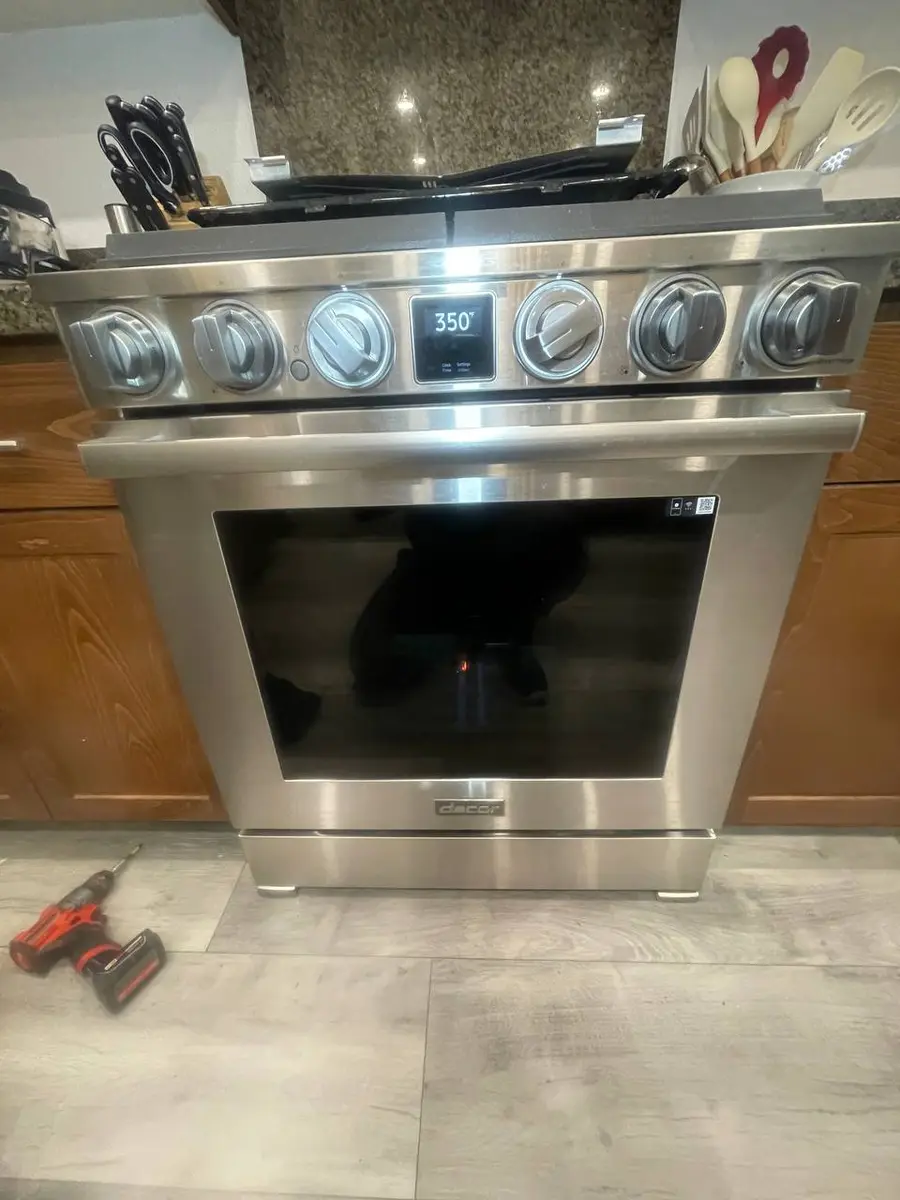
<li><strong>Reconnect and test:</strong> Restore power and gas. Set oven to BAKE 350 degrees F. Observe the igniter through the oven vent. It should glow bright orange within 30 seconds. Time how long until you hear the gas valve click open (should be 60-90 seconds).</li>
<li><strong>If the igniter glows but gas does not flow:</strong> The igniter amperage is likely below threshold. This requires a clamp-on ammeter for definitive diagnosis — call a Wolf-trained technician.</li>
</ol>
<p>. The Wolf flat igniter part varies by model and condition. Labor runs depending on the range configuration and accessibility. Gas safety valve replacement, if needed, adds .</p>
<h2>Frequently Asked Questions</h2>
<h3>Why does my Wolf igniter glow but the oven does not light?</h3>
<p>Wolf igniters must draw 3.2-3.6 amps to generate enough current through the gas safety valve circuit. An aging igniter may glow orange visually but only draw 2.5-3.0 amps — below the threshold needed to open the valve. This is the most common Wolf oven failure and requires a clamp-on ammeter to diagnose definitively. Replacement varies by model and condition.</p>
<h3>How often does a Wolf igniter need replacement?</h3>
<p>Wolf flat igniters typically last 5-8 years under normal use. Heavy self-clean usage accelerates wear because the 900-degree F cleaning cycle stresses the igniter element. Limiting self-clean to 2-3 times per year extends igniter life. A proactive replacement at the 7-year mark can prevent unexpected oven failure during holiday cooking.</p>
<h3>Can I replace a Wolf igniter myself?</h3>
<p>While physically possible, Wolf strongly recommends professional installation. The flat igniter is fragile — the ceramic element cracks if flexed. Additionally, the porcelain wire connectors require careful handling, and improper installation can create a <a href="https://www.cpsc.gov/Safety-Education/Safety-Guides/General-Information/Carbon-Monoxide-Information-Center" rel="nofollow noopener" target="_blank">gas leak</a> at the burner assembly. A professional Wolf igniter replacement takes 45-60 minutes and varies by model and condition total.</p>
<p><em>Need Wolf igniter service? <a href="/book">Book an EasyBear technician</a> — our team carries Wolf flat igniters in stock and can diagnose amperage draw issues on-site.</em></p>
4.85 (232 verified reviews)
Same-Day Appliance Repair
Fixed or It's Free
Free Service Call & Diagnosis — no hidden fees, offer ends Jun 10
AT
Angela Thompson
Appliance Repair Technician · 11 years experience
EPA 608 UniversalNASTeC Certified
Experienced technician with 11 years specializing in Frigidaire and Electrolux refrigerator and dryer repair with a focus on safety.