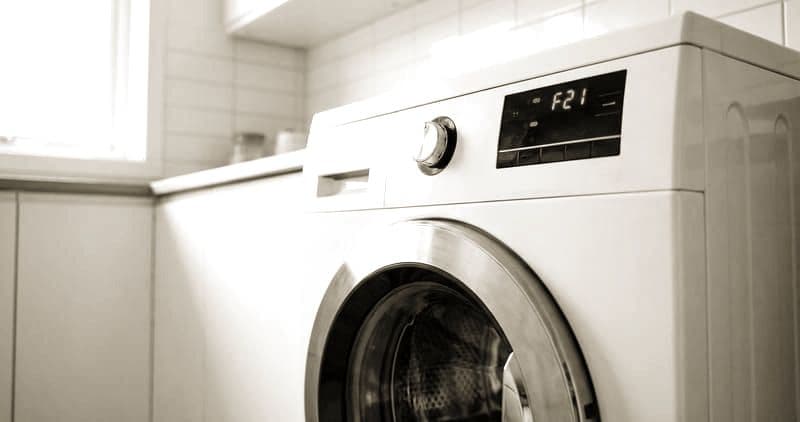
What is the Whirlpool Washer F8E3 error?#
F8E3 is a safety-critical overflow: the washer detected water where it should not be and fired the drain pump to protect your home. The most dangerous cause is a stuck inlet valve that keeps filling. If you see this code or water on the floor, shut off the supply valves immediately and do not restart the machine until the cause is fixed.
F8E3 on a Whirlpool Washer: likely causes and repair cost#
On a Whirlpool Washer, the F8E3 code signals: overflow.
| Likely cause | Typical likelihood |
|---|---|
| Inlet valve stuck | Most common |
| Pressure switch failure | Common |
Typical professional repair: $150–$320 · Difficulty: professional only · usually a technician job
Symptoms that often accompany F8E3: Water on the floor around the washer; Washer fills continuously without stopping; Drain pump runs non-stop; Water level rises above the door seal on front-loaders
Technician diagnostic sequence for F8E3:
- Immediately turn off both water supply valves behind the washer
- Unplug the washer and check for standing water in the tub
- Test the water inlet valve — apply power to each solenoid individually. If water flows with power disconnected, the valve is stuck open
- Inspect the pressure switch and its hose (same diagnosis path as F3E1 — air dome blockage)
- Check the CCU board for relay damage that could be sending continuous fill signals
Parts a technician may check or replace: Water Inlet Valve Assembly; Pressure Switch
Field note: F8E3 is a safety-critical overflow condition. On Whirlpool and Maytag front-loaders, the overflow sensor is in the sump area — if it detects water, the machine triggers F8E3 and activates the drain pump immediately. A stuck inlet valve is the most dangerous cause as it can flood the home. Always shut off supply valves before diagnosis.
Safety note: Flood risk. Shut off water supply valves immediately when this code appears. Do not attempt to restart the washer until the cause is identified and repaired.
Do You Have the Right Tools?
Bearing puller set ($120), drum spider wrench ($85), multimeter ($85), and diagnostic software. Our technician arrives with $3,000+ in professional tools — your diagnostic is free.
Licensed & Insured · 90-Day Warranty · Same-Day Service
How to troubleshoot the F8E3 error yourself#
This is one where the safe action is to stop, not to tinker. The moment F8E3 appears, close the hot and cold supply valves at the wall — a stuck-open inlet valve can flood the room, so cutting the water is the priority. Mop up standing water and keep the area clear. Do not restart the washer hoping the code clears; if the inlet valve is stuck or the pressure switch has failed, restarting simply invites another overflow. Owner troubleshooting genuinely ends here. Diagnosing whether the fault is a stuck inlet valve or a failed pressure switch, and replacing either safely, is a technician job — this is a flood-risk code, and it is not worth improvising on to save a service call.
Is the Whirlpool Washer F8E3 error worth fixing?#
F8E3 is worth fixing promptly, and the cost is reasonable for what it protects. Replacing a stuck inlet valve or a failed pressure switch runs $150 to $320 installed — modest next to water-damage repair, let alone a new washer. On any machine I would have this diagnosed and repaired without delay, because the failure mode is a flood. There is no wait-and-see here; even at the top of the range, the repair is far cheaper than the mess an ignored F8E3 can cause.
Safety First — Know the Risks
High-voltage components and pressurized water lines create flood and shock risk. A single loose fitting can cause thousands in water damage. Our techs are licensed and insured — let them handle the risk.
Licensed & Insured · 90-Day Warranty · Same-Day Service
Whirlpool Washer F8E3: frequently asked questions#
What does F8E3 mean on a Whirlpool washer?#
It is an overflow code — the washer sensed excess water and started the drain pump to protect against flooding. A stuck inlet valve is the most dangerous cause.
Is it safe to keep using the washer with F8E3?#
No. Shut off the supply valves at once and stop using it — this is a flood risk until the inlet valve or pressure switch is repaired.
Can I clear F8E3 myself?#
The safe step is to close the supply valves and call a technician. Do not restart it — a stuck inlet valve will simply overflow again.
How much does it cost to repair F8E3?#
From $150 to $320 to replace a stuck water inlet valve or a failed pressure switch, installed.
Which parts fail when a washer throws F8E3?#
A stuck-open water inlet valve most dangerously, or a failed pressure switch that no longer signals the correct water level.
Is a washer with F8E3 worth repairing?#
Yes, and quickly. At $150 to $320 it is far cheaper than water damage or a new washer, and it removes a genuine flood risk.
Why does a stuck inlet valve trigger F8E3?#
The overflow sensor in the sump sees water climbing past the safe level and raises F8E3, firing the drain pump. A valve that will not close keeps feeding that overflow.
Lead Appliance Repair Technician · 12 years experience
Experienced technician with 12 years specializing in washing machine and dryer repairs across all major brands.