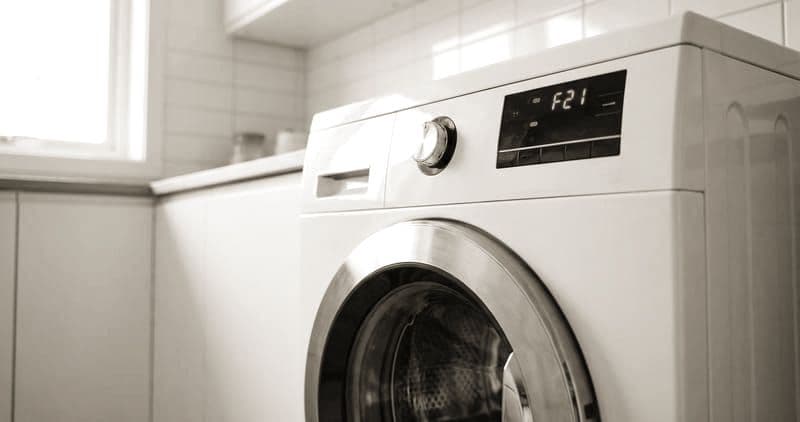
What is the Whirlpool Washer F5E2 error?#
F5E2 means the door lock will not confirm it is latched, so the cycle stops within seconds of starting. Unlike the door-switch code, this is the lock mechanism itself — most often a worn wax-motor actuator that no longer drives the bolt fully home. If the lock taps or clicks but never catches, the pellet actuator is the prime suspect.
F5E2 on a Whirlpool Washer: likely causes and repair cost#
On a Whirlpool Washer, the F5E2 code signals: door lock error.
| Likely cause | Typical likelihood |
|---|---|
| Wax-motor actuator in the door lock worn out | Most common |
| Lock plunger jammed by lint or a warped latch lever | Common |
| Lock-feedback switch not confirming the bolt is thrown | Less common |
| Overheated lock coil after repeated rapid start attempts | Occasional |
Typical professional repair: $100–$230 · Difficulty: moderate · usually a technician job
Symptoms that often accompany F5E2: The lock taps or clicks but never fully catches; The cycle kicks off then quits within a few seconds; The door stays trapped shut after a mid-cycle stop; The locked-door light blinks instead of holding steady
Technician diagnostic sequence for F5E2:
- Give it a three-minute rest off power before retrying; a lock element that overheated from back-to-back start attempts needs to cool before it can throw the bolt again, and that alone clears a lot of one-off trips
- With the door shut, start a cycle and listen right at the boot for the lock to actuate — a healthy unit gives a distinct thunk as the bolt seats, and dead silence there means the actuator never moved
- Open the boot and eyeball the latch body for a snapped lever or a cracked housing that stops the bolt travelling its full throw
- Ohm the lock element across its terminals for a sane coil reading; an open or wildly-off value condemns the actuator, an in-range value sends you to the feedback switch instead
- This platform drives the bolt with a heat-warping wax element rather than a plain solenoid, so a lock that clicks yet will not hold has a spent wax pellet and the latch is replaced as a unit
Parts a technician may check or replace: Door Lock Assembly; Door Latch
Field note: The wax-pellet actuator is the wear item: it softens and warps to drive the bolt, and after years of heat cycles it can no longer travel the full stroke, so the bolt taps but never latches. Any unit past about five years that clicks-without-holding is telling you the pellet is spent — replace the latch rather than chasing the wiring.
Do You Have the Right Tools?
Bearing puller set ($120), drum spider wrench ($85), multimeter ($85), and diagnostic software. Our technician arrives with $3,000+ in professional tools — your diagnostic is free.
Licensed & Insured · 90-Day Warranty · Same-Day Service
How to troubleshoot the F5E2 error yourself#
Start with the simple checks, then know when to stop. Unplug the washer for a minute to clear any overheated-coil latch-out, since repeated rapid start attempts can heat the lock coil and make it drop out. Inspect the latch pocket for lint or a warped lever jamming the plunger, and clear anything obvious. Watch and listen as you start a cycle: a lock that taps or clicks but never fully throws the bolt is the classic worn-actuator signature. Here is the DIY limit — the wax-pellet actuator inside the lock is a sealed wear item, and once it can no longer travel its full stroke, no cleaning revives it. On any washer past about five years that clicks without holding, the latch assembly needs replacing, and that is a technician repair rather than a household fix. There is one genuinely useful safety point while you wait for that repair: if the door has trapped your laundry after a mid-cycle stop, do not wrench it open, because forcing a partially thrown bolt can crack the latch body and turn a straightforward part swap into a bigger job. Most models have a manual release you can reach from underneath the front panel to free the door once the drum has drained. And watch for the tell that separates a worn actuator from a simple jam: a lock that taps and clicks but never fully catches is the pellet giving out, whereas a lock that does not move at all points instead at the wiring or the lock coil, and knowing which saves the technician a step.
Is the Whirlpool Washer F5E2 error worth fixing?#
F5E2 is a sensible repair. A new door lock assembly, fitted, runs $100 to $230, and it restores a safety interlock the machine will not run without. On a washer in otherwise good shape that is easy to justify against a new machine, and the wax-motor actuator that failed is a known wear part rather than a sign of deeper trouble. I would repair this readily; replacement only makes sense when the washer is already old and accumulating other faults, and even then the sub-$230 fix often wins.
Safety First — Know the Risks
High-voltage components and pressurized water lines create flood and shock risk. A single loose fitting can cause thousands in water damage. Our techs are licensed and insured — let them handle the risk.
Licensed & Insured · 90-Day Warranty · Same-Day Service
Whirlpool Washer F5E2: frequently asked questions#
What does F5E2 mean on a Whirlpool washer?#
It is a door-lock error — the lock cannot confirm the bolt is thrown, so the cycle quits early. A worn wax-motor actuator is the usual cause.
Is it safe to keep using the washer with F5E2?#
It will not complete a cycle and may trap the door shut mid-wash, but it poses no hazard. It is a safety interlock, so do not bypass it.
Can I clear F5E2 myself?#
Try a one-minute unplug and clear any lint from the latch. If the lock taps but never holds, the actuator is spent and needs replacing.
How much does it cost to repair F5E2?#
From $100 to $230 for a new door lock assembly, installed.
Which parts fail when a washer throws F5E2?#
The wax-motor actuator in the door lock, sometimes the latch lever or the lock-feedback switch that confirms the bolt is home.
Is a washer with F5E2 worth repairing?#
Yes on a sound machine — a sub-$230 lock repair restores a required safety interlock and beats replacement comfortably.
Why does a worn wax-motor actuator trigger F5E2?#
The wax pellet softens and warps to drive the bolt. After years of heat cycles it can no longer travel the full stroke, so the bolt taps but never latches and the control raises F5E2.
Senior Gas Appliance Specialist · 18 years experience
AGA-certified gas appliance specialist with 18 years of experience in residential and commercial oven, range, and cooktop repairs.