What is the Whirlpool Washer F1E2 error?#
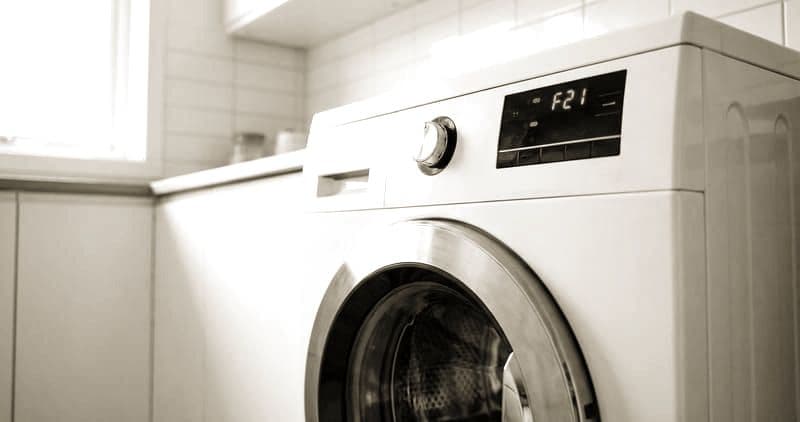
F1E2 on a Whirlpool washer is a motor error — the control commanded the drum to turn and the motor circuit reported a fault, so the drum will not spin. Take it seriously if it arrives with grinding or a burning smell: stop the cycle and unplug, because a shorted winding can overheat. The most useful first check is to spin the drum by hand with the machine off.
F1E2 on a Whirlpool Washer: likely causes and repair cost#
On a Whirlpool Washer, the F1E2 code signals: motor error.
| Likely cause | Typical likelihood |
|---|---|
| Motor failure | Most common |
| Wiring issue | Common |
Typical professional repair: $300–$550 · Difficulty: professional only · usually a technician job
Symptoms that often accompany F1E2: Drum does not spin at all; Loud grinding noise during agitation; Error appears only during spin cycle; Strong burning odor from machine
Technician diagnostic sequence for F1E2:
- Unplug the washer and check the motor wiring harness connector for secure contact
- Use a multimeter to test motor windings resistance — should read 4-6 ohms between each pair of terminals
- Inspect the rotor position sensor (RPS/Hall sensor) mounted on the stator for damage or loose connection
- Check for foreign objects jammed between the stator and rotor (coins, underwire)
- If motor windings test open or shorted, replace the motor assembly
Parts a technician may check or replace: Drive Motor Assembly; Rotor Position Sensor; Stator Assembly
Safety note: Do not run the washer if you smell burning — a shorted motor winding can overheat and damage surrounding components.
Do You Have the Right Tools?
Bearing puller set ($120), drum spider wrench ($85), multimeter ($85), and diagnostic software. Our technician arrives with $3,000+ in professional tools — your diagnostic is free.
Licensed & Insured · 90-Day Warranty · Same-Day Service
How to troubleshoot the F1E2 error yourself#
Safe DIY on F1E2 is narrow, so respect the limit. With the washer unplugged, open it and try to rotate the drum by hand. If it spins freely, the bearings are probably fine and the fault is electrical in the motor or its control; if it grinds or will not move, suspect the drive system. Do one power reset — unplug for a couple of minutes — in case the code was a single glitch during a spin. Look, without dismantling, for anything obviously wedged between the drum and tub that could stall the motor. Then stop: any burning odor means unplug at once and test no further, because the winding can short to ground. Reading motor resistance and checking the rotor-position sensor is a technician's work, and restarting a machine with a real motor fault will not clear it.
Is the Whirlpool Washer F1E2 error worth fixing?#
F1E2 is a repair you cost out carefully. The professional fix runs $300 to $550 because a drive motor or its control is a premium part and the labor to reach it is substantial. On a Whirlpool washer under roughly seven years old and otherwise reliable, that is comfortably below a comparable new machine and I would repair it. But when the washer is older, has other complaints, and the estimate sits near $550, you are approaching new-washer money — and that is where replacement becomes the smarter buy rather than putting $550 into a tired machine.
Safety First — Know the Risks
High-voltage components and pressurized water lines create flood and shock risk. A single loose fitting can cause thousands in water damage. Our techs are licensed and insured — let them handle the risk.
Licensed & Insured · 90-Day Warranty · Same-Day Service
Whirlpool Washer F1E2: frequently asked questions#
What does F1E2 mean on a Whirlpool washer?#
It is a motor error — the drum would not spin under the control's command. The usual causes are a failed drive motor or a wiring fault in the motor circuit.
Is it safe to keep using the washer with F1E2?#
No, especially with any burning smell or grinding. Unplug it — a shorting motor winding can overheat, so this is not a code to run through.
Can I clear F1E2 myself?#
Only a single power-cycle is worth trying, in case of a one-off glitch. A genuine motor fault will return and needs a technician to diagnose safely.
How much does it cost to repair F1E2?#
From $300 to $550, since the drive motor and its control are among the more expensive washer parts to replace.
Which parts fail when a washer throws F1E2?#
Most often the drive motor itself, sometimes the wiring or connector feeding it. A burning smell points strongly at the motor winding.
Is a washer with F1E2 worth repairing?#
On a newer, healthy washer, yes. On an older machine where the bill nears $550, replacement deserves a serious look.
Why does motor failure trigger F1E2?#
The board commands the motor to turn the drum and watches for a response. When a winding opens or shorts, the motor cannot answer, so the control raises F1E2 and stops.
Appliance Repair Technician · 11 years experience
Experienced technician with 11 years specializing in Frigidaire and Electrolux refrigerator and dryer repair with a focus on safety.