Whirlpool Washer Door Lock Assembly Replacement
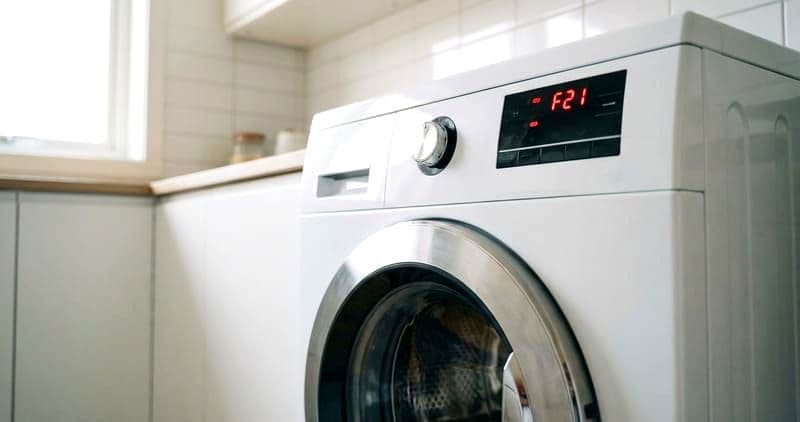
An F5E1 error on a Whirlpool front-loader almost always means the door lock assembly — a wax-motor latch that heats to lock and cools to release. When the wax pellet or the feedback switches wear out, the board can't confirm the door is locked and the cycle won't start.
The lock works off a wax motor: a coil heats a wax pellet, the wax expands and drives a lever that swings the lock hook into place, and cutting power lets the wax cool and a spring pull it back open. Locking takes about 5–10 seconds after the board sends the signal.
What failure looks like#
- F5E1 — the lock-circuit fault code: the board sent the lock command but got no confirmation back.
- Won't lock, cycle won't start — a failed or jammed wax motor.
- Locks, but the board doesn't know — the feedback switches inside the assembly have failed, so the door is physically latched yet unconfirmed.
- Won't unlock after a cycle — the mechanism is stuck; wait 5 minutes, and if it's still locked the assembly needs replacing.
- F5E2 means the door won't lock; F5E3 means it won't unlock; an intermittent F5E1 is a wax motor or switch on its way out.
Do You Have the Right Tools?
Bearing puller set ($120), drum spider wrench ($85), multimeter ($85), and diagnostic software. Our technician arrives with $3,000+ in professional tools — your diagnostic is free.
Licensed & Insured · 90-Day Warranty · Same-Day Service
Why it wears out#
The wax motor is cycled every wash — heated to expand, cooled to contract, thousands of times — until the wax loses its stroke or micro-fractures. When the stroke falls short the hook doesn't seat, the feedback switches stay open, and the board throws F5E1. Wash moisture also corrodes the switch contacts over time, so even a lock that physically engages may not report in.
Testing#
Cut power and reach the lock behind the door boot seal. Unplug its connector, then briefly apply 120V AC to the coil terminals — the hook should engage within 10 seconds. Check the feedback switches with a multimeter: continuity when locked, open when unlocked.
Safety First — Know the Risks
High-voltage components and pressurized water lines create flood and shock risk. A single loose fitting can cause thousands in water damage. Our techs are licensed and insured — let them handle the risk.
Licensed & Insured · 90-Day Warranty · Same-Day Service
Replacing the lock#
- Unplug the washer — the lock circuit is 120V AC.
- Open the door and find the lock on the frame, usually on the right.
- Peel back the boot seal at the lock; you don't need to pull the whole boot.
- Remove the 2–3 mounting screws (Phillips or Torx T20).
- Pull the assembly inward through the frame opening.
- Squeeze the tab and unplug the connector.
- Plug in the new assembly.
- Seat it and drive the screws — snug only, since the plastic ears crack if overtightened.
- Press the boot seal back into place.
- Power up and confirm the lock engages in 5–10 seconds.
Tools: Phillips #2 or Torx T20, multimeter, and a flat blade for the boot.
If the door is stuck shut#
First unplug and wait 5–10 minutes for the wax motor to cool and release. If it's still locked, remove the lower access panel and pull the manual release tab, or take off the top panel (3 rear screws) and reach down to disengage the hook by hand. Never force the door — you'll bend the hook and strike plate and turn a one-part job into two.
The Real Cost of DIY
Average DIY attempt: $150-400 in tools you may use once, plus the risk of further damage. Our diagnostic visit costs $0 — we find the problem and give you an honest quote.
Licensed & Insured · 90-Day Warranty · Same-Day Service
Check the strike plate too#
The strike plate is the metal tongue on the door that enters the lock. If it's bent — often after someone shoves the door — the lock buzzes but never clicks home. Confirm it's straight, centered, and entering the frame opening cleanly; straighten a slight bend with pliers, or replace the strike if it's badly fatigued. That's far cheaper than a whole lock.
Parts and lifespan#
| Part | Role | Cost & effort |
|---|---|---|
| Door lock assembly | Latches the door, confirms locked | Board-level part — 20–30 min DIY |
| Strike plate | The hook the lock grabs | Cheap — inspect and adjust first |
Match the part to your exact model: connector pin counts (3-, 4-, or 5-pin), mounting spacing, and wax-motor voltage (120V AC on some, 12V DC from the CCU on others) all vary by generation. A lock lasts roughly 3,000–5,000 cycles — about 8–15 years at 5–7 loads a week — with hot and steam cycles wearing the wax faster.
Never bypass the lock. The drum spins past 1,000 RPM, so an unlocked door during spin is an extreme hazard — don't run the washer until the lock is replaced.
Whirlpool washer repair across Sacramento and the Bay Area — our technicians arrive with Whirlpool-specific parts. Book a same-day visit
Lead Appliance Repair Technician · 12 years experience
Experienced technician with 12 years specializing in washing machine and dryer repairs across all major brands.