Samsung Washer Sensor Replacement
Before you order anything, disconnect the little rubber air hose from the pressure sensor and blow through it. Detergent sludge collecting where that hose meets the tub is the single most common cause of Samsung water-level problems, it mimics a dead sensor exactly, and clearing it costs nothing. If the hose is clear,…
What a failing sensor looks like#
| Symptom | What is happening |
|---|---|
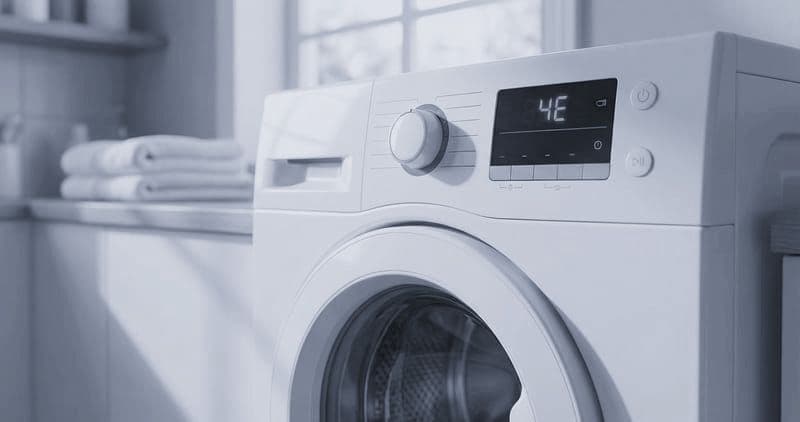
| Tub overfills, sometimes with OE displayed | The sensor never reports that the correct level was reached |
| Will not fill at all | The sensor reads falsely full, so the board skips the fill phase |
| Level varies from cycle to cycle | Partially clogged or cracked air hose |
| 1E or PE on the display | A direct fault in the pressure sensor circuit |
| Fills to the wrong level for the load size chosen | Sensor calibration has drifted |
You can pull stored codes by holding the diagnostic button combination for your model — the sequence varies, so check the manual — and the display will step through what is in memory.
One caveat on overfilling: a water inlet valve stuck open will flood the tub no matter how healthy the sensor is. If a new sensor does not stop it, that valve is the next suspect.
Why Samsung's sensor is not a simple switch#
This is a frequency-based pressure sensor. Rather than closing a contact at a set level, it sends the control board a signal whose frequency shifts as water rises. That has a practical consequence: you cannot check it with a continuity test the way you would an older float switch. Testing means a multimeter in frequency mode and Samsung's own documentation, which is a fair reason to stop and call someone if the diagnosis is not obvious.
Do You Have the Right Tools?
Bearing puller set ($120), drum spider wrench ($85), multimeter ($85), and diagnostic software. Our technician arrives with $3,000+ in professional tools — your diagnostic is free.
Licensed & Insured · 90-Day Warranty · Same-Day Service
The replacement#
Your model number is inside the door frame or under the lid, and Samsung washers start with WF or WA.
- Unplug the washer.
- Take off the control panel housing — 2-3 Phillips screws at the rear.
- Find the pressure sensor: a small round or rectangular body with an electrical connector and a rubber air hose running down to the tub.
- Do the hose check now. Pull it off the sensor and blow through it. Clear means move on; blocked means you may already be finished.
- Unplug the wire harness.
- Remove the mounting screw or clip and lift the sensor out.
- Fit DC32-00008A, reconnect the air hose and the harness.
- Reassemble and run a cycle, watching that the fill level suits the load size.
A Phillips #2 covers the mechanical work. Stop immediately if you find melting or scorching around the connector — that is a different problem and not a DIY one.
Part numbering#
DC32-00008A is the primary OEM number. Samsung's prefix system — DA, DC, DD, DG, DE — encodes which appliance division built the part, and Samsung revises components across production runs, so check the number against your specific WF or WA model before ordering. The wrong part brings fit problems and warranty complications.
Safety First — Know the Risks
High-voltage components and pressurized water lines create flood and shock risk. A single loose fitting can cause thousands in water damage. Our techs are licensed and insured — let them handle the risk.
Licensed & Insured · 90-Day Warranty · Same-Day Service
Making the next one last#
Expect 8-12 years from a Samsung pressure sensor. Almost everything that shortens that comes back to the air hose: detergent sludge clogging it, vibration working the connection loose and producing intermittent readings, and overdosing detergent to create the sludge in the first place.
So pull the hose once a year, blow it clear, and replace it if it has cracked. Stick to the recommended dose of HE detergent, and run Self Clean+ monthly to break down what has already built up. If your model reports to SmartThings, the notifications will often flag a sensor drifting well before it fails outright.
On whether to bother: a washer under 8 years old with this as its only fault is worth repairing without much thought. Past 10-12 years, or with several components going at once, price the repair against a replacement machine before committing.
Still overfilling after a new sensor? That is the inlet valve — get started here.
Lead Appliance Repair Technician · 12 years experience
Experienced technician with 12 years specializing in washing machine and dryer repairs across all major brands.