LG Washer Will Not Start — Troubleshooting Guide
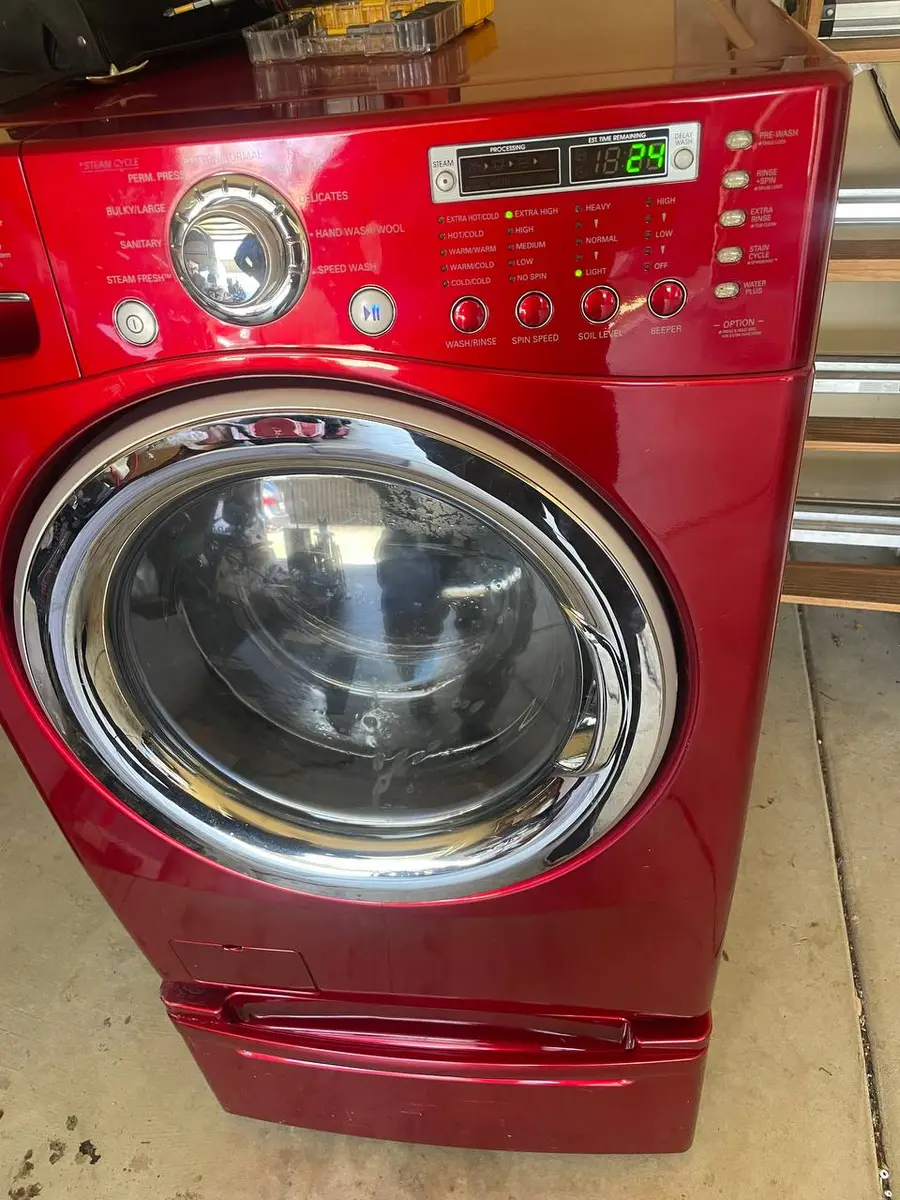
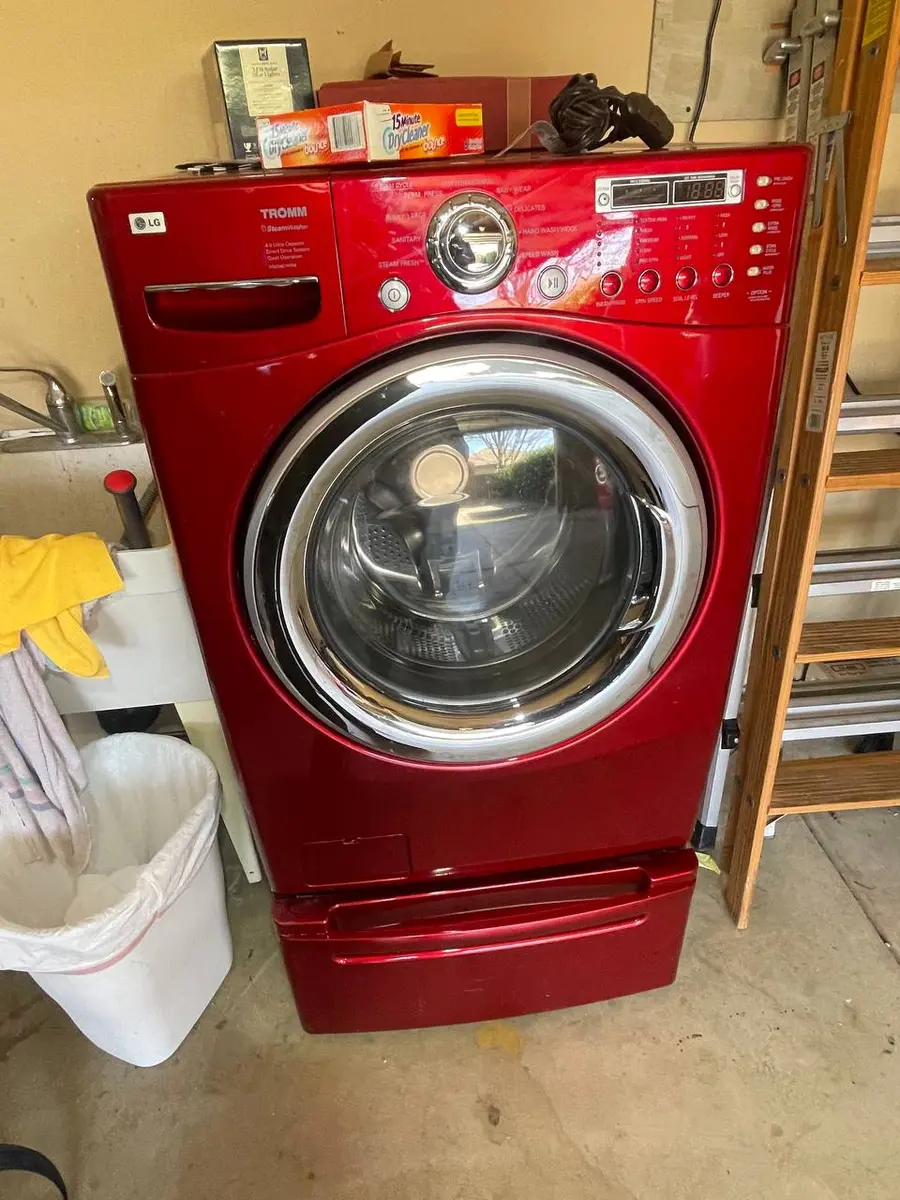
An LG washer that will not start may show no display at all (completely dead), display lights but not respond to the Start button, or begin filling but immediately halt. Each scenario points to different failure mechanisms specific to LG's Direct Drive architecture and SmartThinQ control system.
This guide separates these distinct failure modes and provides targeted diagnostics for each, based on field data from our Sacramento-area repair team.
Three Types of "Will Not Start"
Type 1: Completely Dead — no display, no lights, no response to any button. Points to power supply failure (outlet, cord, line filter, main board power section).
Type 2: Display Active But Start Fails — panel lights up, buttons respond, but pressing Start does nothing or produces a beep-then-nothing. Points to door lock, child lock engagement, or Start button failure.
Type 3: Starts Then Immediately Stops — machine begins filling or attempts to tumble but halts within seconds. Points to motor fault (LE error), overheating protection, or sensor failure.
Do You Have the Right Tools?
Bearing puller set ($120), drum spider wrench ($85), multimeter ($85), and diagnostic software. Our technician arrives with $15K+ in professional tools — your diagnostic is free.
Licensed & Insured · 90-Day Warranty · Same-Day Service
LG Error Codes at Startup
- CL — Child Lock engaged. Not an error — hold the Child Lock button (or button combination per your model) for 3 seconds to deactivate.
- dE — Door not fully latched. The washer will not start any cycle until the door lock confirms engagement.
- LE — Motor locked. The Direct Drive motor cannot turn — possibly seized bearings, foreign object in tub, or hall sensor failure.
- PF — Power failure recovery. Appears after a power outage interrupted a cycle. Press Start to resume or Power to reset.
- IE — Inlet valve failure. Machine tries to fill but receives no water within the time limit.
Most Common Causes (Ranked by Frequency)
1. Door Lock Not Engaging (24% of cases)
LG washers have an electronic door lock (part 6601ER1004C on most WM-series) that must physically latch and electronically confirm before any cycle begins. The lock uses a wax motor actuator — a device that expands when heated and mechanically pushes the latch. After years of use, the wax motor weakens and cannot fully engage the latch.
Symptoms: You press Start, hear a click from the door area, but the cycle does not begin. The display may flash dE momentarily. On some models, the Start button light blinks but the machine sits idle.
LG-specific: Some WM models (WM3700, WM4000) have a secondary microswitch inside the lock that must confirm full engagement. Even if the latch appears closed, a worn microswitch prevents the start signal.
DIY Difficulty: Easy Parts Cost: $35–$70 Professional Repair Cost: $140–$240
Repair Steps:
- Unplug the washer.
- Open the door. Peel back the front edge of the boot seal to expose the outer wire clamp.
- At the lock position (right side), remove the two Phillips screws securing the lock assembly to the front panel.
- Reach behind the panel, disconnect the wire harness from the lock.
- Connect harness to new lock assembly, mount with screws.
- Ensure boot seal sits properly over the lock housing.
- Plug in and test — the door should click firmly and hold when Start is pressed.
2. Power Supply Failure — Line Filter (20% of cases)
LG washers have a line filter (noise filter / EMI filter) mounted where the power cord enters the machine. This component filters electrical noise and provides surge protection. When it fails — common after Sacramento summer voltage spikes — the washer appears completely dead: no display, no response, nothing.
Diagnosis: Unplug the machine. Remove the top panel (2 Phillips screws at rear, slide back). Locate the line filter — a cylindrical or rectangular component near the power cord entry point. Check for visible burn marks, cracked housing, or swollen body. Test with a multimeter: continuity from line-in to line-out on each conductor. No continuity = failed filter.
LG Part Numbers: Varies by model — typically EAM-series (e.g., EAM62492302).
DIY Difficulty: Moderate Parts Cost: $20–$50 Professional Repair Cost: $120–$220
3. Control Board Power Section (16% of cases)
The main control board has a power supply section that converts 120V AC to the various DC voltages needed for the display, relays, and motor driver. If this section fails (blown fuse on board, shorted bridge rectifier, or failed voltage regulator), the washer may be completely dead or may have a display that lights but cannot activate relays.
Sacramento-specific: Repeated voltage spikes during summer brownouts progressively damage the board's MOV (metal oxide varistor) protection components. Once the MOV fails, the next spike takes out the power supply section.
Diagnosis: Remove top panel, inspect board for visible damage — burnt components, swollen capacitors, or discolored areas on the PCB.
DIY Difficulty: Easy (swap) but expensive Parts Cost: $150–$350 Professional Repair Cost: $300–$550
4. Child Lock Engaged — CL Display (12% of cases)
The CL indicator is not an error code — it means Child Lock is active, disabling all buttons except Power. This is frequently the cause when a washer "suddenly stopped responding" after a household member accidentally activated it.
Fix per model:
- Most WM-series: Hold the Child Lock button for 3 seconds.
- Models without dedicated button: Hold Temp + Option simultaneously for 3 seconds.
- WT-series top-loaders: Hold the designated button pair per your owner's manual.
The CL icon should disappear and buttons become responsive.
DIY Difficulty: Easy Parts Cost: $0 Professional Repair Cost: $0 (service call unnecessary)
5. Power Outlet/Circuit Issue (10% of cases)
Before diagnosing the washer itself, verify the outlet has power. Washer outlets are typically 120V dedicated circuits with GFCI protection in laundry rooms.
Check: Plug a lamp or phone charger into the same outlet. If no power, check the circuit breaker panel and any GFCI reset buttons. In Sacramento homes with older wiring, the laundry outlet may share a circuit with the bathroom GFCI — a tripped bathroom GFCI can kill the washer outlet.
DIY Difficulty: Easy Parts Cost: $0 Professional Repair Cost: Electrician $80–$200 if wiring issue
6. Start Button/User Interface Board (8% of cases)
The user interface (UI) board behind the control panel contains the membrane switches for all buttons. If the Start/Pause button membrane develops a dead spot, pressing it registers no input. Other buttons may still work.
Diagnosis: If all other buttons respond (cycle selection, temperature, etc.) but Start specifically does not, the UI board membrane is the likely cause.
DIY Difficulty: Moderate (requires control panel disassembly) Parts Cost: $50–$120 Professional Repair Cost: $150–$280
7. Thermal Overload Trip on Direct Drive Motor (6% of cases)
If the Direct Drive motor overheated during the previous cycle (heavy load, worn bearings creating drag), it may have tripped internal thermal protection. The motor will not restart until it cools completely — typically 30-60 minutes. During this time, pressing Start does nothing or produces LE error briefly.
Diagnosis: If the washer ran a heavy load previously and now will not start, wait 60 minutes and try again. If it starts after cooling, the motor thermal protector tripped — check for bearing wear causing excess drag.
DIY Difficulty: N/A (wait) or Hard (bearing replacement if recurring) Parts Cost: $0 or $60–$140 (bearings) Professional Repair Cost: $0 (wait) or $350–$550 (bearings)
8. Hall Sensor Signal Loss at Startup (4% of cases)
The control board performs a motor position check at startup by reading the hall sensor (6501KW2002A). If the sensor provides no signal (failed or disconnected), the board cannot determine rotor position and refuses to start the motor. May display SE or LE code briefly, then nothing.
Diagnosis: Remove rear panel, check the hall sensor 3-pin white connector on the stator. Ensure it is firmly seated. If connector looks good, the sensor itself may be failed — replace ($8-25 part).
DIY Difficulty: Easy-Moderate Parts Cost: $8–$25 Professional Repair Cost: $100–$200
Safety First — Know the Risks
High-voltage components and pressurized water lines create flood and shock risk. A single loose fitting can cause thousands in water damage. Our techs are licensed and insured — let them handle the risk.
Licensed & Insured · 90-Day Warranty · Same-Day Service
Diagnostic Sequence
- Identify failure type — completely dead, display active but Start fails, or starts then stops?
- Check outlet — plug in another device to verify power.
- Check for CL — Child Lock indicator on display.
- Listen at door — press Start and listen for the door lock click. No click = lock issue.
- Hard reset — unplug 60 seconds, replug. Clears PF condition and resets thermal timers.
- Inspect line filter — under top panel, near power cord entry.
- Smart Diagnosis — if display is active, run ThinQ diagnosis for specific fault identification.
Same-Day Appliance Repair
Fixed or It's Free
$89 → $0 Service Call & Diagnosis — offer ends May 25
Prevention Tips
- Surge protector — dedicated strip on the laundry outlet prevents the line filter and control board damage that causes 36% of no-start conditions.
- Close door firmly — the LG door lock mechanism requires the door to be fully seated against the boot seal before the latch can engage.
- Teach household members about CL — knowing how to deactivate Child Lock prevents unnecessary service calls.
- Monitor for LE codes — intermittent LE during normal operation (motor overheating) predicts eventual no-start condition. Address the underlying cause (bearing wear, overloading) before it becomes a failure.
The Real Cost of DIY
Average DIY attempt: $150-400 in tools you may use once, plus the risk of further damage. Our diagnostic visit costs $0 — we find the problem and give you an honest quote.
Licensed & Insured · 90-Day Warranty · Same-Day Service
FAQ
Q: My LG washer has no display at all — is it dead?
Not necessarily. A completely dark display most commonly indicates a failed line filter ($20-50 part) rather than a dead control board. The line filter is the first component to fail from voltage spikes because it is designed as a sacrificial protection device. A $150+ control board failure is possible but less common.
Q: Why does my LG washer beep when I press Start but not actually start?
A beep followed by inaction indicates the control board received the Start input but a precondition is not met — most commonly the door lock not confirming engagement. Less commonly: the selected cycle has a delay-start timer active, or the machine detected an error condition on the previous cycle that was not cleared.
Q: Can I bypass the LG door lock to start the machine?
This is not recommended and may not be possible on newer models — LG's control firmware requires the door lock signal before energizing the motor. Bypassing the lock also creates a safety hazard with the high-speed spin cycle. Replace the lock assembly ($35-70) rather than attempting bypass.
LG washer completely unresponsive? Our technicians carry line filters, door lock assemblies, and control boards for all WM and WT series. Same-day diagnosis and repair across Sacramento, Roseville, Elk Grove, and Folsom. Schedule a repair →