LG Washer Fills Slowly or Will Not Fill — Troubleshooting Guide
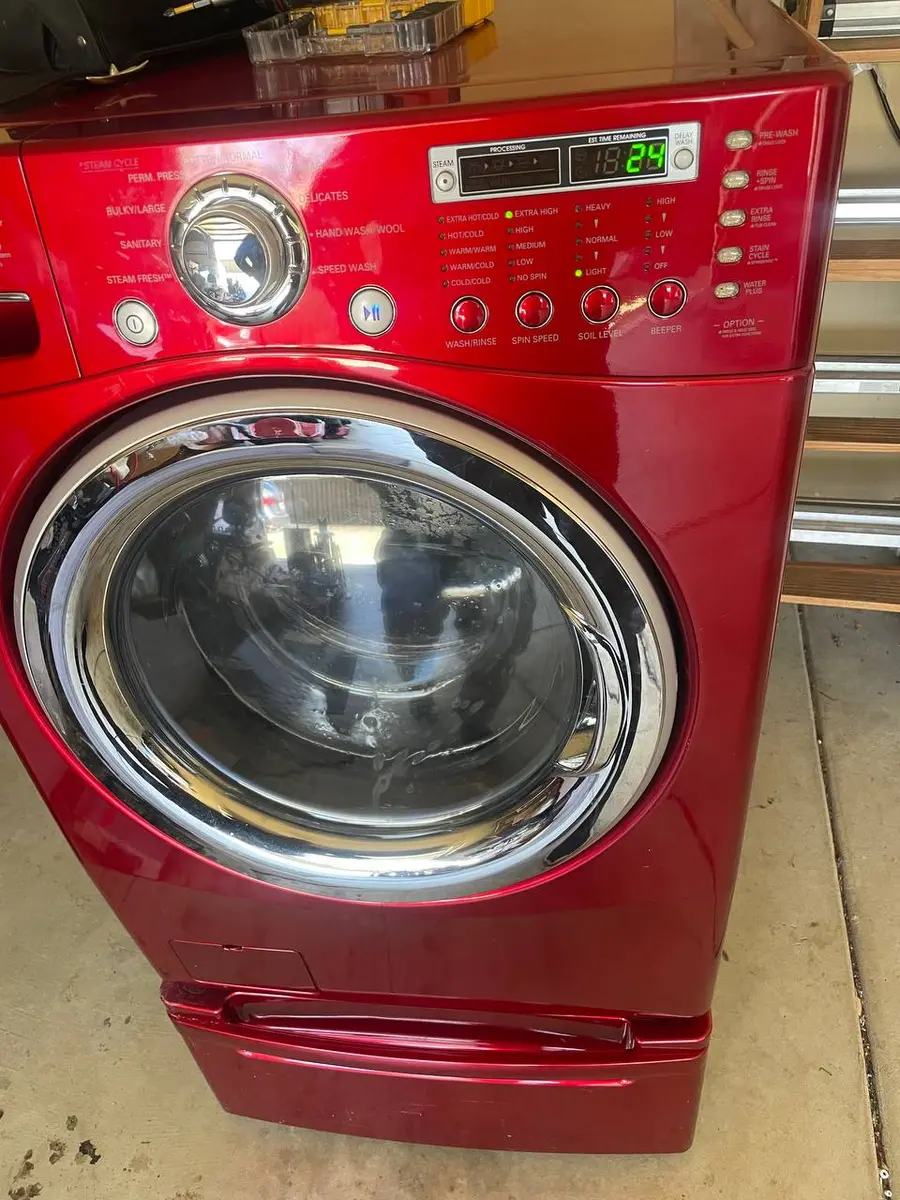
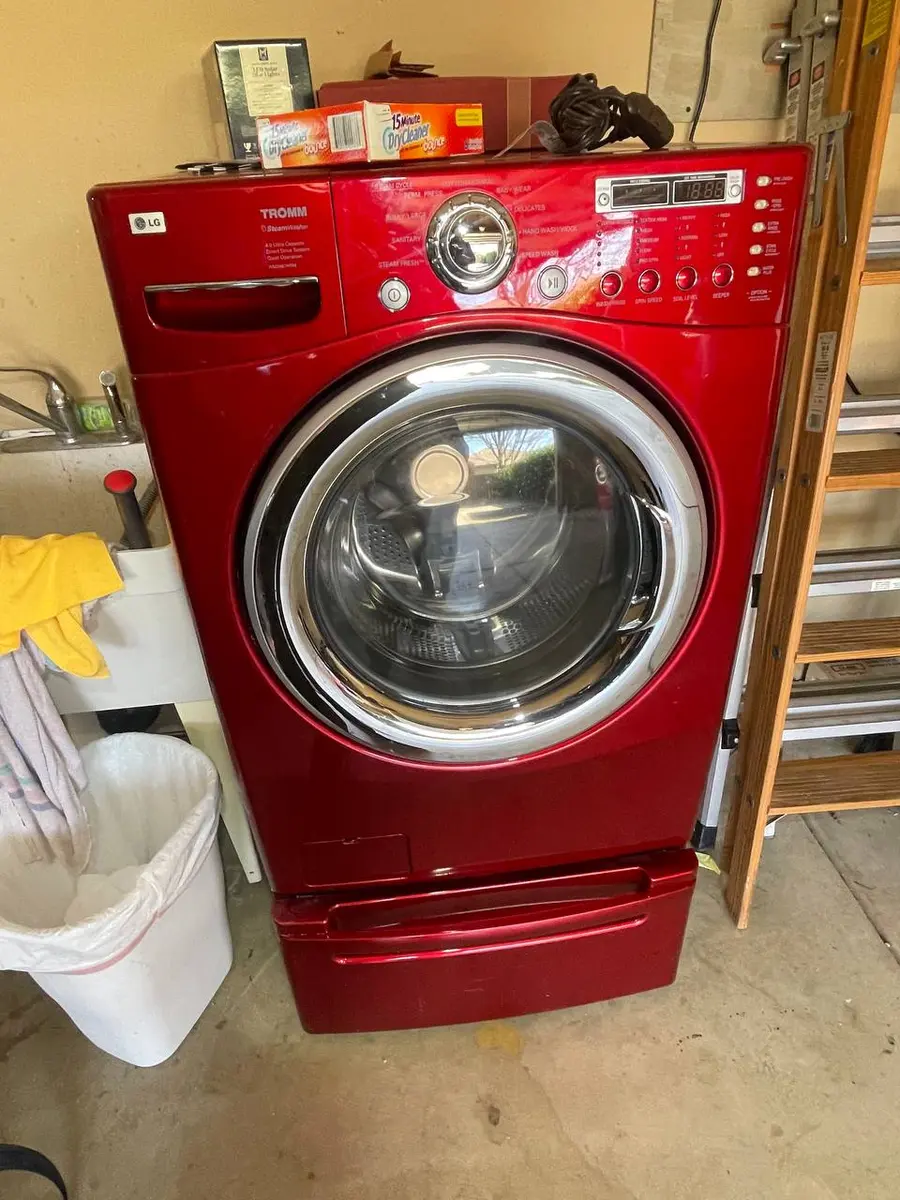
When an LG washer fills slowly or shows the IE error code (inlet error), the problem almost always involves restricted water flow before it reaches the tub. LG front-load washers (WM series) require a minimum of 20 PSI water pressure at the inlet valve — below this threshold, the solenoid cannot hold the valve open against spring pressure and the machine either fills agonizingly slowly or triggers IE and halts.
This guide covers fill-rate issues specific to LG washers, with particular attention to Sacramento's hard-water conditions that accelerate inlet screen clogging.
LG-Specific Fill System Overview
LG front-load washers have a dual-solenoid inlet valve (part 5220FR2006H on most WM models) with separate hot and cold water paths. Each inlet port has a fine mesh filter screen that catches sediment before it reaches the solenoid. The valve connects to the detergent dispenser housing via internal hoses, then water flows from the dispenser to the tub.
On TurboWash-equipped models (WM3900, WM4000, WM6700), an additional recirculation pump draws water from the tub and sprays it back onto clothes through internal nozzles. If the tub never fills adequately, TurboWash cannot function — so slow fill affects both wash quality and cycle duration.
Do You Have the Right Tools?
Bearing puller set ($120), drum spider wrench ($85), multimeter ($85), and diagnostic software. Our technician arrives with $15K+ in professional tools — your diagnostic is free.
Licensed & Insured · 90-Day Warranty · Same-Day Service
Most Common Causes (Ranked by Frequency)
1. Clogged Inlet Screens (40% of cases)
The mesh filter screens at the inlet valve ports are the single most common cause of slow fill on LG washers. Sacramento's water has significant mineral content — particularly in East Sacramento, Folsom, and the El Dorado Hills corridor — that deposits calcium and sediment on these screens over 2-3 years of use.
Diagnosis: Turn off supply valves, disconnect both hoses from the back of the washer. Look inside the valve ports — you should see fine mesh screens. If they are coated with white/brown mineral deposits, this is the cause.
DIY Difficulty: Easy Parts Cost: $0 (cleaning) to $5 (replacement screens) Professional Repair Cost: $80–$140
Repair Steps:
- Turn off both supply valves. Unplug washer.
- Disconnect supply hoses from the washer (have towels ready).
- Gently pull the inlet screens out of the valve ports using needle-nose pliers.
- Soak screens in white vinegar for 30 minutes to dissolve mineral deposits.
- Scrub with an old toothbrush under running water.
- Reinstall screens, reconnect hoses, turn on valves.
- Run a quick fill test — the tub should fill visibly within 2-3 minutes.
2. Supply Valve Not Fully Open (20% of cases)
Gate-style supply valves (the older round-handle type) can appear open but be partially restricted internally due to mineral deposits on the gate. Ball valves (quarter-turn lever handles) are less prone to this.
Diagnosis: Disconnect the supply hose from the washer and direct it into a bucket. Turn on the valve. Flow should be strong and steady. If flow is weak, the valve itself is restricted.
Fix: Replace old gate valves with quarter-turn ball valves ($15 each, or $40 for a dual-valve assembly). This is a permanent fix that eliminates flow restriction.
DIY Difficulty: Easy (if valve accessible) or requires plumber Parts Cost: $15–$40 Professional Repair Cost: $100–$200
3. Water Inlet Valve Failure (22% of cases)
The solenoid inside the inlet valve (5220FR2006H) requires adequate voltage and functioning coil windings to open. If a solenoid coil partially shorts, it opens less than fully — allowing reduced flow. Complete failure (no flow at all) produces the IE error code.
LG-specific: Some WM models have a triple-valve (hot, cold, and bleach/prewash compartment). Failure of the third solenoid manifests only during specific cycles (prewash or bleach cycles have no water).
Diagnosis: With the washer running a fill cycle, listen at the inlet valve. A healthy valve clicks open when the cycle starts. No click = solenoid not receiving power (check board) or coil failed. Click but no flow = solenoid opens but internal blockage.
DIY Difficulty: Moderate Parts Cost: $30–$60 Professional Repair Cost: $130–$240
4. Low House Water Pressure (18% of cases)
LG specifies a minimum 20 PSI and maximum 120 PSI at the inlet valve. Many Sacramento homes in older neighborhoods (Oak Park, Del Paso Heights, certain North Sacramento areas) have water pressure below 30 PSI — especially during peak usage hours (morning, evening).
If fill is slow only during certain hours but fine at 2 AM, low house pressure during peak demand is the cause.
Diagnosis: Connect a pressure gauge ($10 at hardware store) to an outdoor hose bib. Check pressure during the time of day when fill problems occur. Below 20 PSI = pressure booster needed.
Fix: For the washer specifically — ensure no other fixtures are running simultaneously. For the house — a pressure booster pump ($200-400 installed) resolves the issue permanently.
DIY Difficulty: N/A (plumber for booster) Parts Cost: $0 (schedule around peak) or $200–$400 (booster) Professional Repair Cost: $80 (diagnosis) + plumber for booster
Smart Diagnosis for Fill Issues
Run ThinQ Smart Diagnosis when IE appears. The diagnostic differentiates between:
- No water flow at all (valve electrical failure)
- Slow flow (restriction or low pressure)
- Intermittent flow (valve opening/closing erratically)
Same-Day Appliance Repair
Fixed or It's Free
$89 → $0 Service Call & Diagnosis — offer ends May 25
Safety First — Know the Risks
High-voltage components and pressurized water lines create flood and shock risk. A single loose fitting can cause thousands in water damage. Our techs are licensed and insured — let them handle the risk.
Licensed & Insured · 90-Day Warranty · Same-Day Service
Prevention Tips
- Clean inlet screens annually — takes 10 minutes and prevents 40% of fill issues.
- Install sediment pre-filter — a $20 inline filter on the supply hoses catches sediment before it reaches the inlet screens. Replace cartridge annually.
- Upgrade to braided stainless hoses — provides better flow than rubber hoses and eliminates burst risk.
- Replace gate valves with ball valves — eliminates the gradual restriction that gate valves develop.
FAQ
Q: Why does my LG washer fill with cold water even when set to hot?
LG's ColdWash technology intentionally uses cold water on certain cycles, using enhanced tumbling motions to achieve cleaning comparable to warm water. This is by design, not a malfunction. If you need hot water specifically, select cycles labeled with temperature settings (not ColdWash-optimized cycles). If hot water never arrives on any cycle, the hot water supply valve may be closed or the hot-side inlet solenoid has failed.
Q: How long should it take for my LG washer to fill?
LG front-loaders (WM series) use relatively little water — typically 13-17 gallons per cycle. At normal household pressure (40-60 PSI), initial fill should complete in 4-8 minutes. If fill takes longer than 15 minutes, there is a restriction.
Q: Can hard water damage my LG washer beyond the inlet screens?
Yes. Hard water deposits affect TurboWash spray nozzles (clogging them over time), the detergent dispenser (residue buildup), and the heating element on models with steam/Allergiene cycles. A whole-house water softener ($500-2000 installed) protects all appliances and fixtures.
LG washer filling too slowly or showing IE? Our technicians carry inlet valve assemblies and screen kits for all WM and WT models. Serving Sacramento, Roseville, Elk Grove, and Folsom. Schedule a repair →