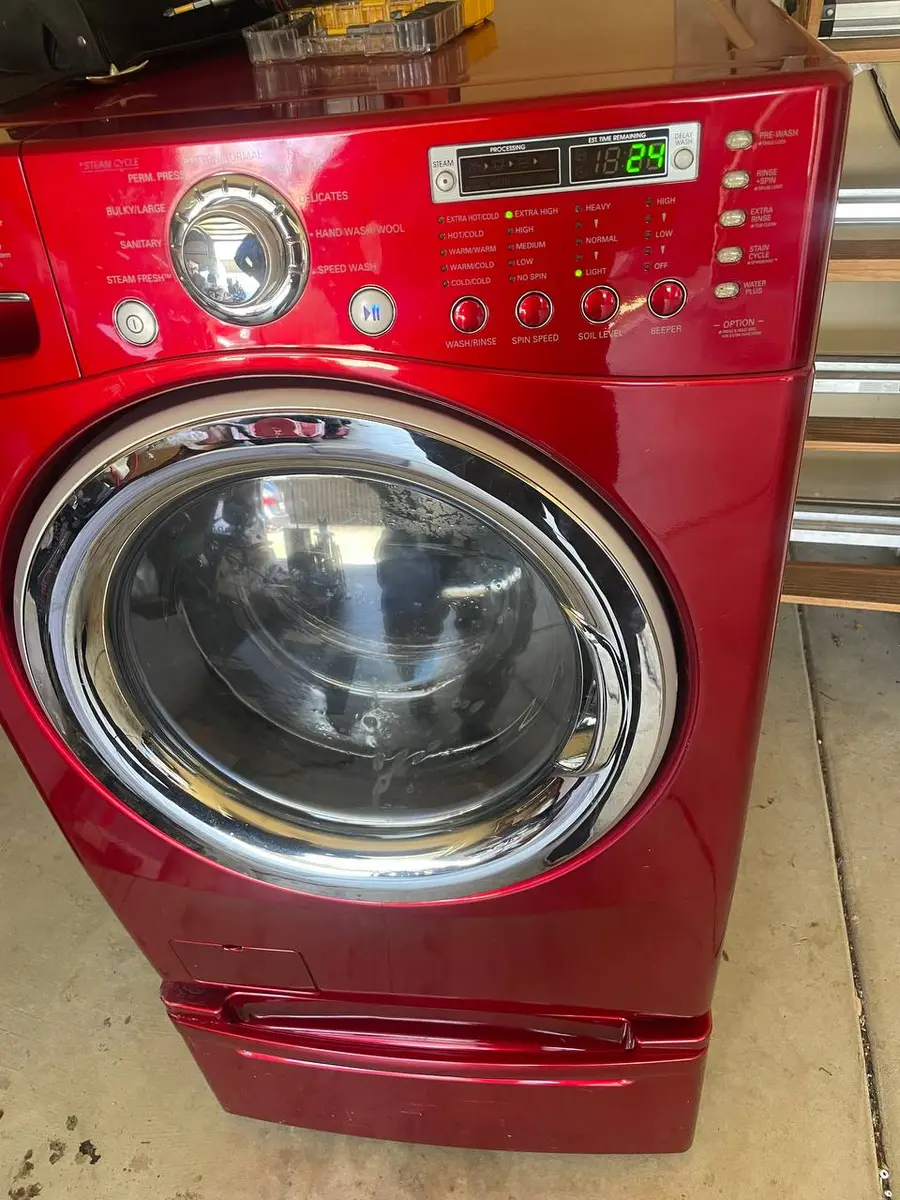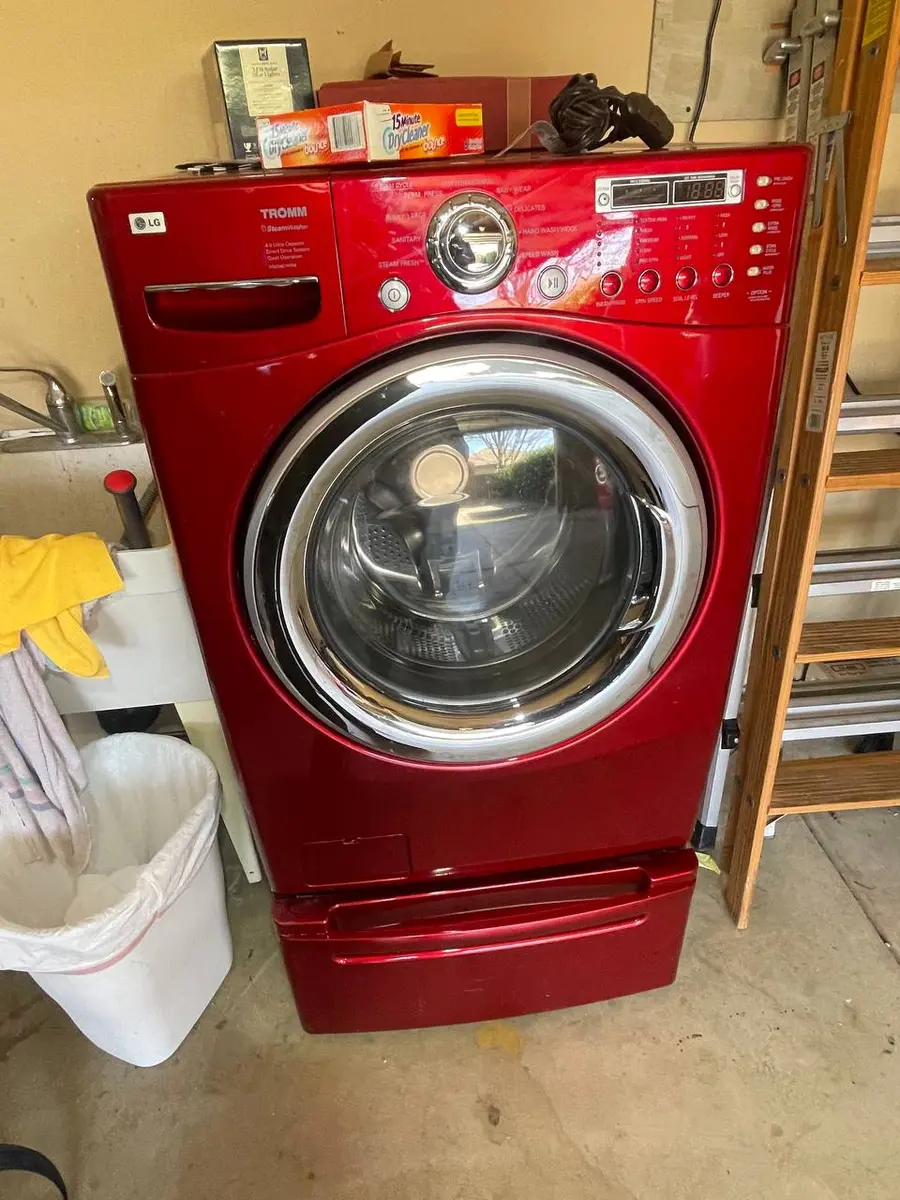
An LG washer door-latch failure shows up in one of two ways, and telling them apart is the whole diagnosis: either the door will not lock, so the cycle never starts, or it will not release at the end, so you cannot get your laundry out. Both trace to the door-lock assembly — the latch and the interlock the control reads. A won't-lock is usually alignment or a worn latch; a won't-open is usually the lock not disengaging, often over standing water. Identify which you have, then act.
Quick answer#
If it will not lock, check the door alignment and strike first — the latch must physically catch before the interlock can confirm it. If it will not open, cut power, let the drum stop, drain the tub, and use the manual release; the door will not unlock over water by design. A lock assembly that fails either test is a defined, moderate LG repair.
Do You Have the Right Tools?
Bearing puller set ($120), drum spider wrench ($85), multimeter ($85), and diagnostic software. Our technician arrives with $3,000+ in professional tools — your diagnostic is free.
Licensed & Insured · 90-Day Warranty · Same-Day Service
Won't lock: the cycle won't start#
The control will not run the wash until the interlock reports the door locked. When it cannot:
- Inspect the strike (the catch on the door) and the latch on the frame for wear, cracks, or debris.
- Check the door alignment — a hinge that has sagged leaves the latch missing the strike. Lift the door slightly as you close it to test.
- Confirm nothing (a garment, a bungee) is holding the door proud of the seal.
- If alignment is good but it still will not confirm, the door-lock assembly (part family 6601ER1004C) has failed electrically.
Won't open: laundry trapped inside#
For safety the door stays locked while the drum turns or holds water, plus a short delay after. If it is still locked well past cycle end:
- Cut power and wait a minute for the drum to fully stop.
- Open the pump-filter flap at the lower front and drain any water — the lock will not release over standing water.
- Reach the manual release cord behind the lower kick panel and pull it gently to disengage the latch.
- If it releases but fails to lock next cycle, the assembly is failing and should be replaced.
Safety First — Know the Risks
High-voltage components and pressurized water lines create flood and shock risk. A single loose fitting can cause thousands in water damage. Our techs are licensed and insured — let them handle the risk.
Licensed & Insured · 90-Day Warranty · Same-Day Service
Causes by likelihood#
| Cause | Share of latch complaints |
|---|---|
| Door-lock assembly failed (won't confirm) | 35% |
| Strike / latch worn or misaligned | 22% |
| Water in drum keeping it locked | 16% |
| Door alignment / sagged hinge | 12% |
| Control not commanding lock/release | 8% |
The remaining share are wiring to the lock or a jammed strike mechanism.
Which causes need a technician#
- Door-lock assembly that will not lock or release with alignment good — replaced as a unit; on many LG models this includes the interlock and its wiring (MDS47123602-class door components).
- Control not commanding the lock — confirmed once the assembly tests good; the 120V feed to the lock is checked with a meter.
The manual release, the drain, and alignment are yours; a failed electrical lock is a technician repair.
The Real Cost of DIY
Average DIY attempt: $150-400 in tools you may use once, plus the risk of further damage. Our diagnostic visit costs $0 — we find the problem and give you an honest quote.
Licensed & Insured · 90-Day Warranty · Same-Day Service
How the LG door interlock works#
LG front-loaders use a motorized interlock: when you start a cycle, the control energizes the lock, a solenoid or bi-metal element throws the latch, and a set of contacts confirms back to the board that the door is secured. Only then does the wash begin. At the end, the control de-energizes the lock once the drum has stopped and the water is gone, and the latch releases after a short safety delay. A failure anywhere in that chain — the solenoid, the contacts, or the control signal — shows up as either "will not lock" (no start) or "will not release" (trapped laundry). Knowing the chain explains why the same assembly causes both symptoms.
New-machine and post-move latch issues#
A latch that never worked, or stopped right after a move, is often alignment rather than a failed part. Shipping can shift the door or its strike, and a machine set on an uneven floor can rack the frame just enough that the latch misses. Before condemning the lock, confirm the washer is level, the door closes squarely, and nothing shifted the strike. A quick alignment check saves replacing a lock that was mechanically fine.
Don't Void Your Warranty
Opening your appliance yourself may void the manufacturer warranty. Our repair comes with a 90-day guarantee, and we document everything for warranty compliance.
Licensed & Insured · 90-Day Warranty · Same-Day Service
What a technician checks on an LG latch fault#
- Tests the door-lock assembly contacts for continuity in the locked state (6601ER1004C-class part).
- Confirms the control sends the 120V lock signal at cycle start — no signal indicts the board, not the lock.
- Checks the strike and hinge alignment and the door boot (MDS47123602-class components) for interference.
- Verifies the drain works, since a machine holding water will hold the lock regardless of the latch.
Preventing latch problems#
- Close the door gently and squarely — slamming wears the strike and sags the hinge.
- Keep the drain clear so the door can always release at cycle end.
- Do not force a locked door; use the manual release after the drum stops.
- Wipe the door boot and strike so debris does not build up and hold the door proud of the latch and out of alignment with the interlock.
- If the door only fails to lock on certain heavy loads, check that the load is not bulging the door open slightly; redistribute the laundry away from the door before assuming the latch itself has failed.
Is It Worth Your Time?
Washer problems have dozens of possible causes from bearings to control boards. Average DIY troubleshooting: 3-5 hours plus parts ordering delays. Our technician diagnoses the issue in about 30 minutes — same-day appointments available.
Licensed & Insured · 90-Day Warranty · Same-Day Service
Frequently Asked Questions#
Why won't my LG washer door lock?#
The latch has to physically catch and the interlock has to confirm it before the cycle starts. A worn latch, a misaligned strike, or a failed door-lock assembly leaves it unable to confirm, so the machine will not begin. Check the strike and latch alignment first.
Why won't my LG washer door open after a cycle?#
For safety the door stays locked while there is water in the drum or the drum is moving, and for a couple of minutes after. If it stays locked past that with the drum empty and stopped, the lock assembly has failed and needs a manual release.
How do I manually open a locked LG washer door?#
Cut power and wait a minute for the drum to stop. Drain the tub via the pump filter at the lower front, then reach the manual release cord behind the lower kick panel and pull it gently to disengage the lock.
Is an LG washer door latch worth repairing?#
Yes — the door-lock assembly is a common, moderate part, and a machine that will not lock or unlock is unusable until it is fixed. It is far cheaper than replacing the washer on a unit under about ten years old.
Senior Appliance Repair Technician · 15 years experience
EPA-certified technician with 15 years of experience specializing in refrigerator and cooling system repairs.