Most Likely Cause#
Before you can fix a Kenmore washer that won't spin, you have to know who actually built it. Kenmore is a store badge, not a factory, and the spin mechanism is completely different from one platform to the next — so the same symptom points at different parts depending on the machine underneath. The first three digits of your model number name the real manufacturer, and that one fact decides your entire repair path. On the most common platform, the Whirlpool-built 110 top-loader, the leading cause by a wide margin is a sheared motor coupling, which turns up in about 28% of no-spin cases.
Skip the model-decode step and you can burn an afternoon chasing an LG hall-sensor procedure on a machine that is really a Whirlpool with a snapped drive coupling. Two minutes reading a sticker saves that afternoon, and it also tells you which parts catalog to shop so you never overpay for a Kenmore-badged version of a Whirlpool or LG part.
Step One: Decode the Model Number#
Find the model number on the sticker inside the door frame (front-loaders) or under the lid (top-loaders). The first three digits are the whole story:
| Prefix | Real manufacturer | Spin system | Where spin fails |
|---|---|---|---|
| 110 | Whirlpool | Direct-drive coupling (or belt on older units) | Coupling, lid switch, clutch, transmission |
| 796 | LG | Brushless direct-drive motor | Hall sensor, door lock, inverter board |
| 417 | Electrolux / Frigidaire | Belt and pulley | Belt, idler pulley, door lock |
| 402 / 592 | Samsung | Belt with VRT | Belt, suspension rods, door lock |
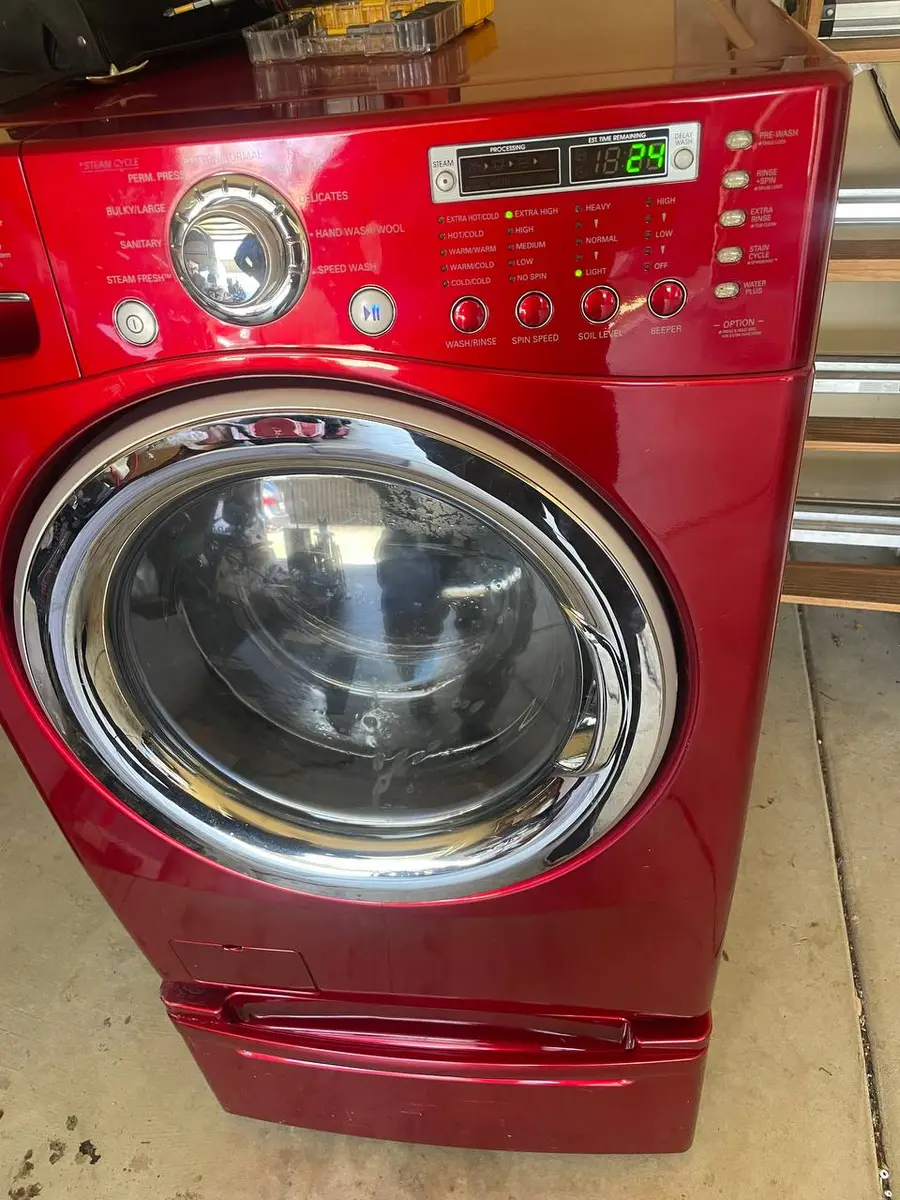
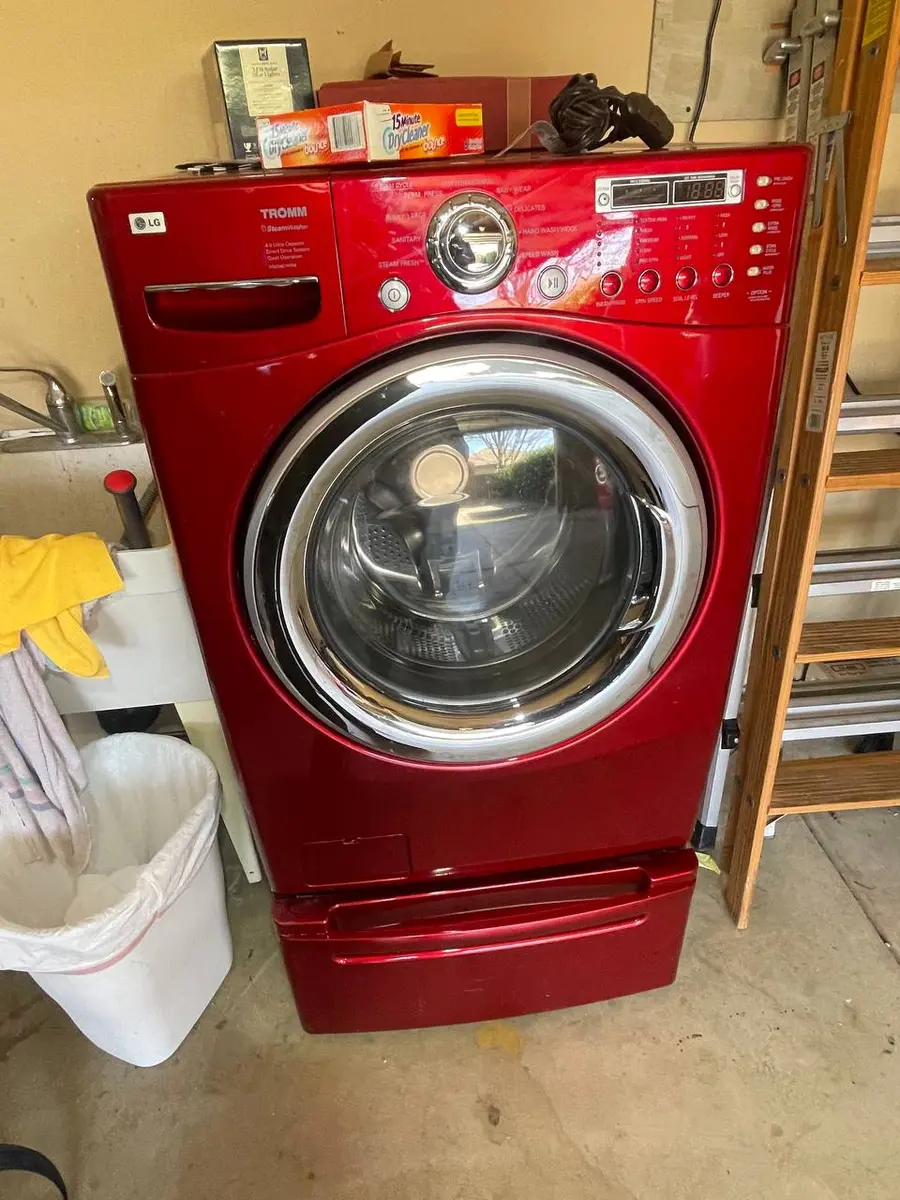
A 110-series uses a plastic drive coupling and a mechanical transmission; a 796-series has a brushless motor bolted straight to the tub with no belt or coupling at all. They share almost nothing, which is why one generic "[washer won't spin](/bay-area/services/washer-wont-spin)" checklist fails so many Kenmore owners.
Do You Have the Right Tools?
Bearing puller set ($120), drum spider wrench ($85), multimeter ($85), and diagnostic software. Our technician arrives with $3,000+ in professional tools — your diagnostic is free.
Licensed & Insured · 90-Day Warranty · Same-Day Service
Fault Map: Symptom to Cause#
| What you notice | Most likely cause | Platform | How often | Part |
|---|---|---|---|---|
| Motor hums, basket dead, white plastic bits underneath | Sheared motor coupling | 110 (Whirlpool) | ~28% | 285753A |
| Fills, agitates, drains — then skips spin entirely | Cracked lid switch | 110 (Whirlpool) | ~18% | 3949238 / 3949247 |
| Drum stutters, won't reach speed, code LE | Rotor position (hall) sensor | 796 (LG) | ~15% | 6501KW2002A |
| Drum turns slow, squeal on the spin ramp | Stretched drive belt | 417 (Electrolux) | ~12% | 134051003 |
| No spin at all, code dE, E10 or E41 | Door lock not confirming closed | 796 & 417 | ~10% | door lock assembly |
| Grinding on spin, basket barely moves, 15+ year unit | Transmission gearcase | 110 (Whirlpool) | ~8% | gearcase |
| Fills and drains but drum never moves, random codes | Inverter control board | 796 (LG) | ~5% | main PCB |
| Slow spin buildup, burning-rubber smell, load-sensitive | Worn clutch lining | 110 (VMW) | ~4% | 285785 |
Safety First#
- Kill the power. Unplug the machine or trip the breaker. On 110-series units the outlet often sits behind the cabinet — pull the washer forward before you reach for anything.
- Shut both water valves at the wall, hot and cold.
- On 796 (LG) front-loaders, wait three minutes after power-off so the door-lock solenoid releases before you open anything.
- If you bypass a 110 lid switch to watch it spin, do it for that one diagnostic test only. Never run the machine with a bypassed lid switch in normal use — it defeats the interlock that stops the basket when the lid opens.
Safety First — Know the Risks
High-voltage components and pressurized water lines create flood and shock risk. A single loose fitting can cause thousands in water damage. Our techs are licensed and insured — let them handle the risk.
Licensed & Insured · 90-Day Warranty · Same-Day Service
110 Series (Whirlpool): Coupling, Lid Switch, Clutch, Transmission#
The motor coupling is the signature Whirlpool-platform failure. It is a two-piece plastic fork with a rubber isolator between the motor shaft and the transmission input, and it is deliberately the weakest link — it shears under an overload to save the far more expensive motor and gearcase. When it breaks, the motor hums but nothing turns. Confirm it by releasing the two cabinet clips at the bottom, tilting the cabinet back, and looking for white plastic fragments between the motor and transmission. The Whirlpool part on 110 units built roughly 2001 to 2012 is 285753A; couplings normally last 8-12 years but chronic overloading kills them in 2-3.
The lid switch (part 3949238 or 3949247) has to close before the controller allows spin, so a cracked switch lets the washer fill, agitate and drain but never spin. Test it by running a spin cycle and pressing the plunger with a pen; if the motor engages, the switch is the fault. Newer 110 boards throw code F7E1 for a motor-circuit problem rather than a switch. Deeper in the machine, a worn clutch (part 285785 on VMW models) gives slow spin build-up and a burning-rubber smell, and a failed transmission on a 15-plus-year unit grinds or barely moves the basket — that last one is usually where a high-mileage machine crosses from "repair" into "replace."
796 Series (LG): Hall Sensor, Door Lock, Inverter#
LG-built Kenmores use a brushless direct-drive motor with no belt or coupling to fail. Instead, the rotor position (hall) sensor — LG part 6501KW2002A — tells the board where the rotor is and how fast it is turning. When it dies the drum stutters, refuses full spin, and often posts code LE. Enter the test mode (hold Spin Speed + Soil Level for three seconds on most 796 units) and read the tachometer: a 0 RPM reading while the drum is actually moving confirms the sensor. The door lock must report closed both mechanically and electrically before high-speed spin is allowed; when it fails you get code dE and no spin. If the machine fills and drains fine but the drum never moves at all and the panel throws scattered codes, suspect the inverter control board, whose motor-drive transistors are the part a summer power surge tends to take out.
The Real Cost of DIY
Average DIY attempt: $150-400 in tools you may use once, plus the risk of further damage. Our diagnostic visit costs $0 — we find the problem and give you an honest quote.
Licensed & Insured · 90-Day Warranty · Same-Day Service
417 Series (Electrolux): Belt and Door Lock#
Electrolux-built Kenmore front-loaders keep an old-fashioned belt and pulley. The poly-V drive belt (Frigidaire part 134051003) stretches after 5-7 years; the drum will turn slowly to wash but cannot reach the high extraction speed, and you hear a squeal as it tries to ramp up. Release the idler tension, roll the old belt off, route the new one onto the drum pulley first and then stretch it onto the motor pulley. The 417 door lock fails the same way the LG one does — no confirmed-closed signal, no spin — but shows code E10 or E41 instead of dE.
When It Is the Harder Stuff#
Three failures cross from bolt-on into "think first." A transmission gearcase on a 110 top-loader means pulling the tub assembly, and on a machine already 15-plus years old the labor rarely pencils out against a new washer. A burned inverter board on a 796 is a full board swap unless you are comfortable finding a single failed drive transistor and reworking it. A worn clutch (285785) on a VMW-platform 110 is doable but sits under the tub, so it is a half-day job. For all three, be honest about the machine's age before you order the part: a coupling on a five-year-old Kenmore is a no-brainer, while a gearcase on a fifteen-year-old one is often the moment to replace. If the basket is stiff or grinding when you turn it by hand with the power off, that is your bearing-or-transmission tell, and it changes the math.
Don't Void Your Warranty
Opening your appliance yourself may void the manufacturer warranty. Our repair comes with a 90-day guarantee, and we document everything for warranty compliance.
Licensed & Insured · 90-Day Warranty · Same-Day Service
Kenmore Parts, Sourced the Cheap Way#
The single biggest Kenmore frustration is parts pricing. A part sold under the Kenmore label runs 40-200% more than the identical OEM part under the manufacturer's own number, and since Sears wound down, many Kenmore-branded parts are backordered with no restock date. Beat it by cross-referencing:
- Read the first three digits of your model number to name the manufacturer.
- Search that maker's part-numbering system, not the Kenmore label.
- 110 units: look up Whirlpool, Roper, or Estate numbers.
- 796 units: look up LG numbers — frequently 60% cheaper than the Kenmore-badged equivalent.
- 417 units: look up Frigidaire or Electrolux numbers.
Diagnostic Flowchart#
- Name the platform from the first three digits of the model number.
- Does the motor hum during spin? Humming with a dead basket points at the coupling (110), the belt (417), or the hall sensor (796).
- Does the lid or door lock engage? If not, it is the lid switch (110) or the door lock (796 / 417).
- Is there a code? LE on a 796 is motor or sensor; F7E1 on a newer 110 is the motor circuit; E10 or E41 on a 417 is the door lock.
- Does the basket turn freely by hand? Stiff or grinding means a bearing or transmission problem, not an electrical one.
Is It Worth Your Time?
Washer problems have dozens of possible causes from bearings to control boards. Average DIY troubleshooting: 3-5 hours plus parts ordering delays. Our technician diagnoses the issue in about 30 minutes — same-day appointments available.
Licensed & Insured · 90-Day Warranty · Same-Day Service
Repair Walkthroughs#
Motor coupling (110):
- Unplug the washer and pull it out for rear access.
- Pop the two spring clips at the base and tilt the cabinet backward off the frame.
- Unplug the single motor connector.
- Release the two motor-mount clips with a flathead and slide the motor straight back off the coupling.
- Pick the shattered coupling halves off both the motor and transmission shafts.
- Press the new fork onto the transmission shaft (align the flat), add the rubber isolator, then the second fork onto the motor shaft.
- Slide the motor home, snap both clips, reconnect the plug, refit the cabinet, and run a spin to confirm.
Lid switch (110):
- Unplug the machine.
- Free the two clips under the front lip of the top panel with a putty knife and prop the top up.
- Find the switch on the underside of the top near the right-rear hinge and unplug its harness.
- Back out the two screws, drop the old switch in, reconnect the harness, and lower the top until it clicks.
Hall sensor (796):
- Unplug and pull the washer away from the wall.
- Remove the rear panel — six to eight perimeter Phillips screws.
- Back off the single center rotor bolt (it is reverse-thread: turn clockwise to loosen) and pull the rotor straight off the stator.
- Unplug the small sensor board on the stator, remove its two screws, and fit the new one.
- Refit the rotor (tighten counter-clockwise), close up, then run the calibration — Spin Speed + Soil Level for three seconds, then Start.
Drive belt (417):
- Unplug the washer and take off the rear panel.
- Press the idler pulley arm toward the motor to release tension and slip the old belt off both pulleys.
- Route the new belt onto the drum pulley first, then stretch it onto the motor pulley while holding the idler back.
- Turn the drum by hand to check the belt tracks true in the grooves, then reassemble and run a spin-only cycle.
Cost and Repair-or-Replace#
Most Kenmore no-spin repairs are worth doing, because the machine underneath is a solidly built Whirlpool, LG, or Electrolux — only the Sears branding and warranty went away, not the parts supply. A coupling, lid switch, belt, or door lock is an inexpensive part and a genuinely DIY-friendly job. The two that call for a hard look at the machine's age are a failed transmission or a burned inverter board on a unit already well past a decade old; on those, weigh the repair against a new washer. If you would rather have it diagnosed and fixed in one visit, you can schedule a repair and we'll decode the platform and bring the right OEM part.
The Risk of Getting It Wrong
A wrong diagnosis often turns a simple fix into a costly replacement. Without proper diagnostic tools, you might replace the wrong part — or cause additional damage. Our free diagnostic eliminates the guesswork.
Licensed & Insured · 90-Day Warranty · Same-Day Service
Keeping It Spinning#
- 110 units: stop overloading. The coupling is a sacrificial fuse; chronic overloading burns one every 2-3 years instead of 10-plus.
- 796 units: run the tub-clean cycle monthly so mold on the door boot never stops the door from sealing.
- 417 units: check belt tension yearly — a slipping belt overheats and fails early.
- Any platform: keep a note of your manufacturer cross-reference so you can source parts independently now that Sears no longer backs the brand.
Appliance Repair Technician · 11 years experience
Experienced technician with 11 years specializing in Frigidaire and Electrolux refrigerator and dryer repair with a focus on safety.