Kenmore Washer Not Draining — Troubleshooting Guide
A Kenmore washer full of standing water is one of the most urgent washer problems — you cannot open a front-loader door when water is inside, and leaving stagnant water breeds mold and odors within hours. The drainage system design differs significantly between Kenmore's manufacturer platforms, which means the diagnostic approach and pump access method depend on who built your machine.
Platform Identification (Critical for Pump Access)
The drain pump location and filter access method varies by manufacturer:
- 110.xxxxx (Whirlpool): Pump is at the bottom-rear, accessible by tipping the machine back or removing the rear panel. No user-accessible filter on most models.
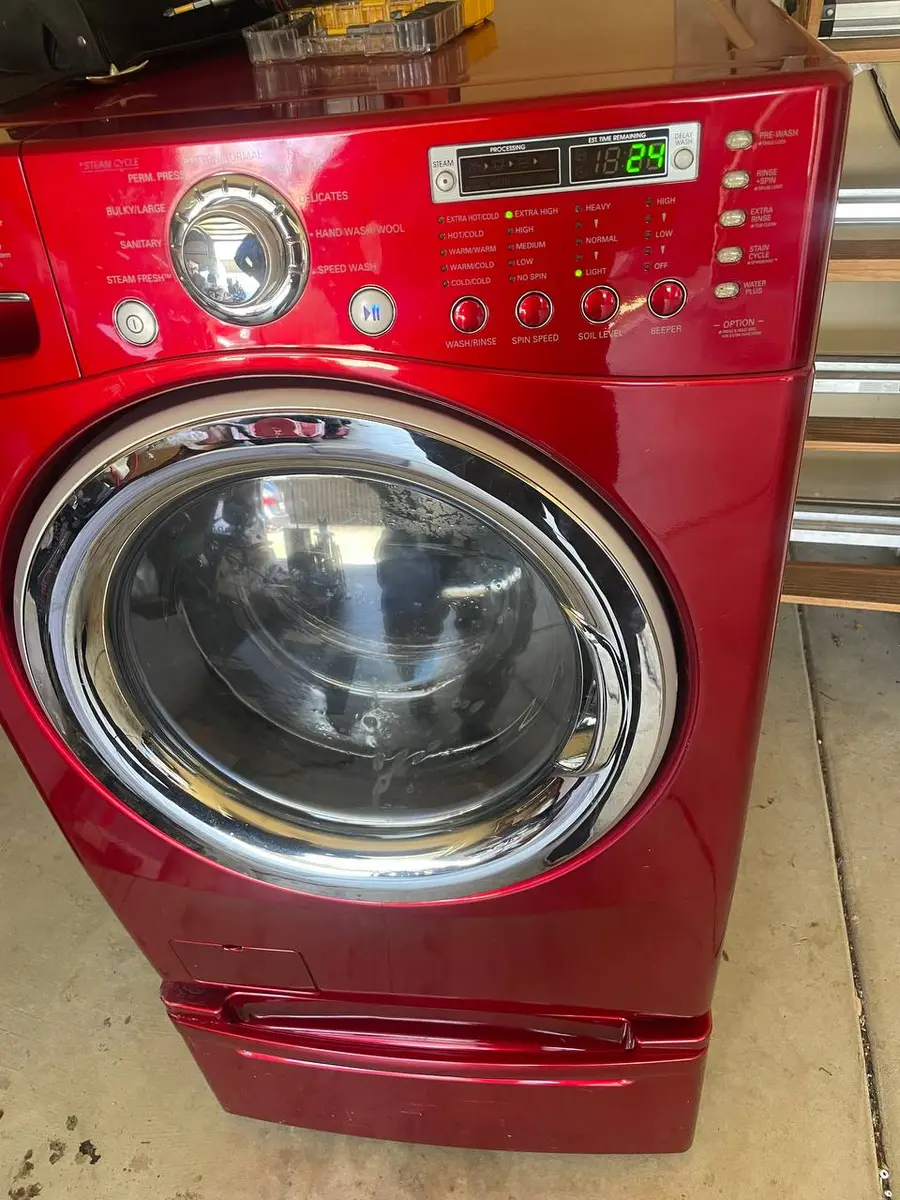
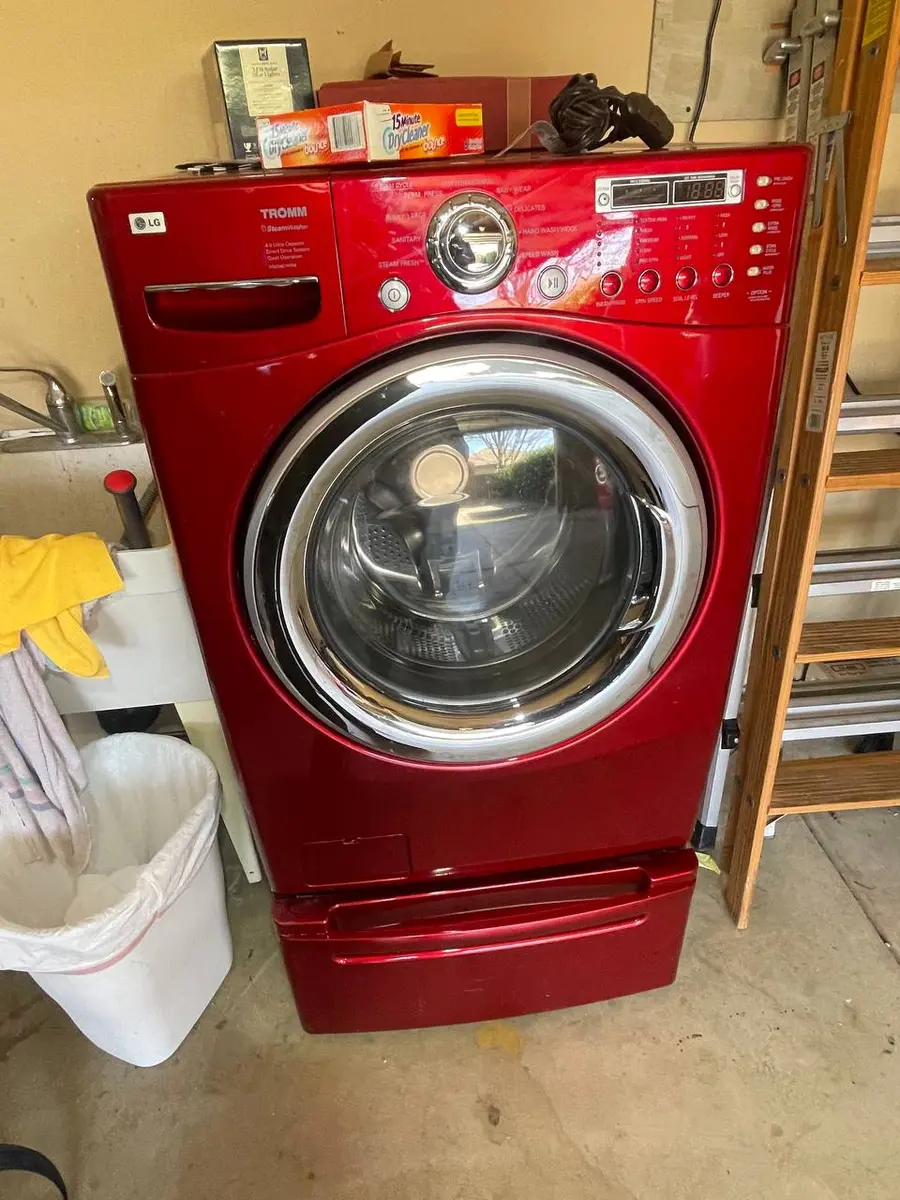
- 796.xxxxx (LG): Pump filter is user-accessible from a small door at the bottom-front of the machine. This is the easiest platform for drain troubleshooting.
- 417.xxxxx (Electrolux): Pump filter behind the lower kick panel at the front. Requires removing 2-3 screws.
Do You Have the Right Tools?
Bearing puller set ($120), drum spider wrench ($85), multimeter ($85), and diagnostic software. Our technician arrives with $15K+ in professional tools — your diagnostic is free.
Licensed & Insured · 90-Day Warranty · Same-Day Service
Safety First
- Unplug the washer before any drain work.
- Prepare for water release — when you access the pump or disconnect hoses, all the water in the tub will release. Have multiple towels and a shallow pan ready.
- 796-series front-loaders: The small drain access door at bottom-front has a pull-out hose for controlled draining into a pan. Use this before unscrewing the filter cap.
- 110-series top-loaders: You can often bail water manually from the top before working on the pump.
Most Common Causes (Ranked by Likelihood)
1. Clogged Drain Pump Filter/Impeller — All Platforms (35% of cases)
The most common no-drain cause across all Kenmore washer platforms is a foreign object blocking the pump impeller. Coins, hair pins, bra underwires, small socks, and accumulated lint/hair can lodge in the pump cavity and prevent the impeller from turning.
Platform-specific access:
796-series (LG platform) — easiest:
- Locate the small access door at the bottom-front of the machine.
- Open the door to reveal the drain filter cap and a small rubber drain hose.
- Pull the drain hose out and remove its plug over a shallow pan — this slowly drains the tub water in a controlled manner.
- Once drained, unscrew the filter cap counter-clockwise and pull it out.
- Remove any objects from the pump cavity and clean the filter screen.
- Reinstall finger-tight (do not overtighten).
110-series (Whirlpool platform) — moderate:
- Unplug and bail out as much water as possible from the top.
- Tilt the machine back against the wall (have someone hold it or use a wall prop).
- The pump is visible underneath — it is a small cylindrical motor mounted to the main drive motor (on direct-drive models) or as a standalone unit.
- Use pliers to release the hose clamp connecting the tub-to-pump hose. Have towels ready for remaining water.
- Inspect inside the pump inlet for obstructions.
- Check the impeller by reaching in or removing the pump for full inspection.
417-series (Electrolux platform):
- Remove the lower kick panel (2-3 screws at the bottom).
- Locate the pump filter access — it is a round cap on the front of the pump housing.
- Place a shallow pan and towels underneath.
- Slowly turn the cap counter-clockwise — water will begin flowing immediately.
- Remove the cap fully once water flow stops. Extract any debris.
DIY Difficulty: Easy (796) to Moderate (110) Parts Cost: $0 (clearing) or $25–$65 (pump replacement if impeller blades broken) Professional Repair Cost: $80–$180
2. Kinked or Blocked Drain Hose (20% of cases)
The drain hose connects from the pump to either a standpipe or laundry sink. It can kink when the washer is pushed back against the wall, or it can accumulate sludge internally that narrows the passage. On all Kenmore platforms, the drain hose exits at the rear of the machine.
Kenmore-specific issue: Some Kenmore washers (particularly 110-series from 2005-2012) came with a corrugated plastic drain hose that has internal ridges where sludge and lint accumulate far faster than smooth-bore hoses. Replacing with a smooth-interior drain hose solves chronic slow-drain issues.
DIY Difficulty: Easy Parts Cost: $10–$25 (replacement hose) Professional Repair Cost: $80–$140
Repair Steps:
- Pull the washer away from the wall.
- Remove the drain hose from the standpipe or sink.
- Lower the hose end into a bucket to drain residual water.
- Disconnect the hose from the pump outlet (spring clamp on 110-series; screw clamp on 796/417).
- Inspect inside the hose — blow through it to check for blockages.
- If sludge is present, flush with hot water. If corrugated, replace with a smooth-bore hose.
- Reinstall ensuring no kinks and the hose height at the standpipe entry is 30-36 inches (prevents siphoning).
3. Failed Drain Pump Motor — All Platforms (18% of cases)
The drain pump motor can fail electrically (no response when power is applied) or mechanically (motor hums but impeller does not turn — internal gear/coupling broken). On 110-series direct-drive models, the pump is belt-driven by the main motor in drain mode, so a "pump failure" can actually be a failed mode actuator or coupler.
How to confirm pump motor failure: With the washer unplugged, disconnect the pump motor wires and test continuity across the motor terminals with a multimeter. The motor should read 5-15 ohms. Open (OL) = motor winding is broken. Also check: can you turn the impeller freely by hand through the filter opening?
Platform-specific parts:
- 110-series (direct-drive): Pump is integral with motor drive — part W10130913
- 110-series (VMW/newer): Standalone pump — part W10276397
- 796-series: LG pump assembly 4681EA2001T
- 417-series: Frigidaire pump 137221600
DIY Difficulty: Moderate Parts Cost: $25–$70 Professional Repair Cost: $140–$260
4. Drain Hose Height Too Low (Siphon Effect) — All Platforms (10% of cases)
If the drain hose enters the standpipe below 30 inches in height, water can siphon out during fill, and conversely, the washer may not drain effectively against the column of water in the standpipe. Some homeowners inadvertently push the hose too far into the standpipe, which creates an airtight seal that prevents drainage (air lock).
Fix: Ensure the drain hose enters the standpipe at 30-36 inches height (per all Kenmore installation guides regardless of platform). The hose should extend only 6-8 inches into the standpipe, not be jammed in fully.
DIY Difficulty: Easy Parts Cost: $0 Professional Repair Cost: $80 (service call minimum)
5. Lid Switch / Door Lock Preventing Drain — 110 Series (8% of cases)
On some 110-series Kenmore top-loaders (particularly the VMW platform 2010+), the washer will not activate the drain pump unless the lid is locked. If the lid lock mechanism fails, the washer stops at the drain point and sits full of water with no error code. This is frustrating because the older direct-drive 110-series models drained regardless of lid position.
DIY Difficulty: Easy to Moderate Parts Cost: $30–$60 Professional Repair Cost: $120–$200
6. Blocked Standpipe or House Drain (5% of cases)
Sometimes the problem is not the washer at all — the household standpipe or drain line is blocked or slow. The washer pumps water out but the standpipe overflows or backs up, and the water either floods the floor or backs into the washer through the drain hose.
How to confirm: Disconnect the drain hose from the standpipe and let it drain into a bucket during a drain cycle. If the pump works fine and water flows freely, the blockage is in the house plumbing.
DIY Difficulty: Moderate (requires drain snake or plumber) Parts Cost: $0 (washer is fine) Professional Repair Cost: $150–$300 (plumber, not appliance repair)
7. Control Board Not Sending Pump Signal — 796 & 417 Series (3% of cases)
On electronic-control Kenmore front-loaders, a faulty main control board may not energize the drain pump relay. The pump motor is fine and the impeller is clear, but the pump never receives power. Test by checking for 120V at the pump connector during a drain cycle (requires live testing — recommend professional diagnosis).
DIY Difficulty: Advanced Parts Cost: $100–$300 (control board) Professional Repair Cost: $220–$450
8. Air Trap / Pressure Switch Issue — All Platforms (1% of cases)
The washer relies on a pressure switch to detect water level. If the air trap tube (a small hose from the tub bottom to the pressure switch) is clogged or disconnected, the control board does not know water is present and never signals the pump to drain. This is more common in older machines where the rubber air trap hose has hardened and cracked.
DIY Difficulty: Moderate Parts Cost: $10–$25 (hose replacement) Professional Repair Cost: $100–$180
Safety First — Know the Risks
High-voltage components and pressurized water lines create flood and shock risk. A single loose fitting can cause thousands in water damage. Our techs are licensed and insured — let them handle the risk.
Licensed & Insured · 90-Day Warranty · Same-Day Service
Emergency Water Removal
If you need to get water out of your Kenmore washer before repair:
Top-loaders (110-series): Bail manually with a cup or use a wet/dry vacuum.
Front-loaders (796-series): Use the emergency drain hose behind the access door at the bottom-front. Pull the rubber plug and drain into a pan (repeat until empty — pan holds less than tub volume).
Front-loaders (417-series): Same as 796 — kick panel access, slow-unscrew the filter cap to release water gradually.
Same-Day Appliance Repair
Fixed or It's Free
$89 → $0 Service Call & Diagnosis — offer ends May 25
DIY vs Professional Repair
| Issue | Platform | DIY? | Parts Cost | Professional Cost |
|---|---|---|---|---|
| Pump filter clog | 796 | Yes | $0 | $80–$120 |
| Pump filter clog | 110 | Moderate | $0 | $100–$180 |
| Drain hose kink/block | All | Yes | $0–$25 | $80–$140 |
| Failed pump motor | All | Moderate | $25–$70 | $140–$260 |
| Lid switch/door lock | 110/front | Easy–Moderate | $30–$60 | $120–$200 |
| Standpipe blockage | N/A | Moderate | $0 | $150–$300 |
The Real Cost of DIY
Average DIY attempt: $150-400 in tools you may use once, plus the risk of further damage. Our diagnostic visit costs $0 — we find the problem and give you an honest quote.
Licensed & Insured · 90-Day Warranty · Same-Day Service
Prevention Tips
- Check pockets before every load — coins are the #1 pump impeller destroyer.
- 796-series: Clean the front drain filter monthly. LG designed it for user access specifically because their pump design is filter-dependent.
- 110-series: Consider adding an inline lint trap on the drain hose. Since these models lack a user-accessible pump filter, lint accumulates in the pump over years.
- Use the correct amount of detergent — excess suds create sludge that coats the drain hose interior over time.
FAQ
Q: My Kenmore 796 front-loader has water inside and the door will not open — how do I get the water out?
Use the emergency drain at the bottom-front of the machine. Open the small access door (no tools needed), pull out the rubber drain hose, remove its plug, and drain into a pan. Once the water level drops below the door seal, the door will unlock.
Q: My Kenmore 110 washer hums during drain but does not pump — what is wrong?
The pump motor is running but the impeller is jammed. A coin or small object is lodged between the impeller blades. Access the pump from underneath and clear the obstruction.
Q: Why does my Kenmore washer drain fine on small loads but fail on large loads?
Likely a partially blocked drain hose or standpipe. Small loads produce less water volume that can pass through the restriction. Large loads overwhelm the restricted flow and the pump cannot empty the tub within the control board's timeout period.
Kenmore washer full of water and not draining? Our technicians carry replacement pumps for all Kenmore platforms and can clear obstructions on-site. Book same-day service →