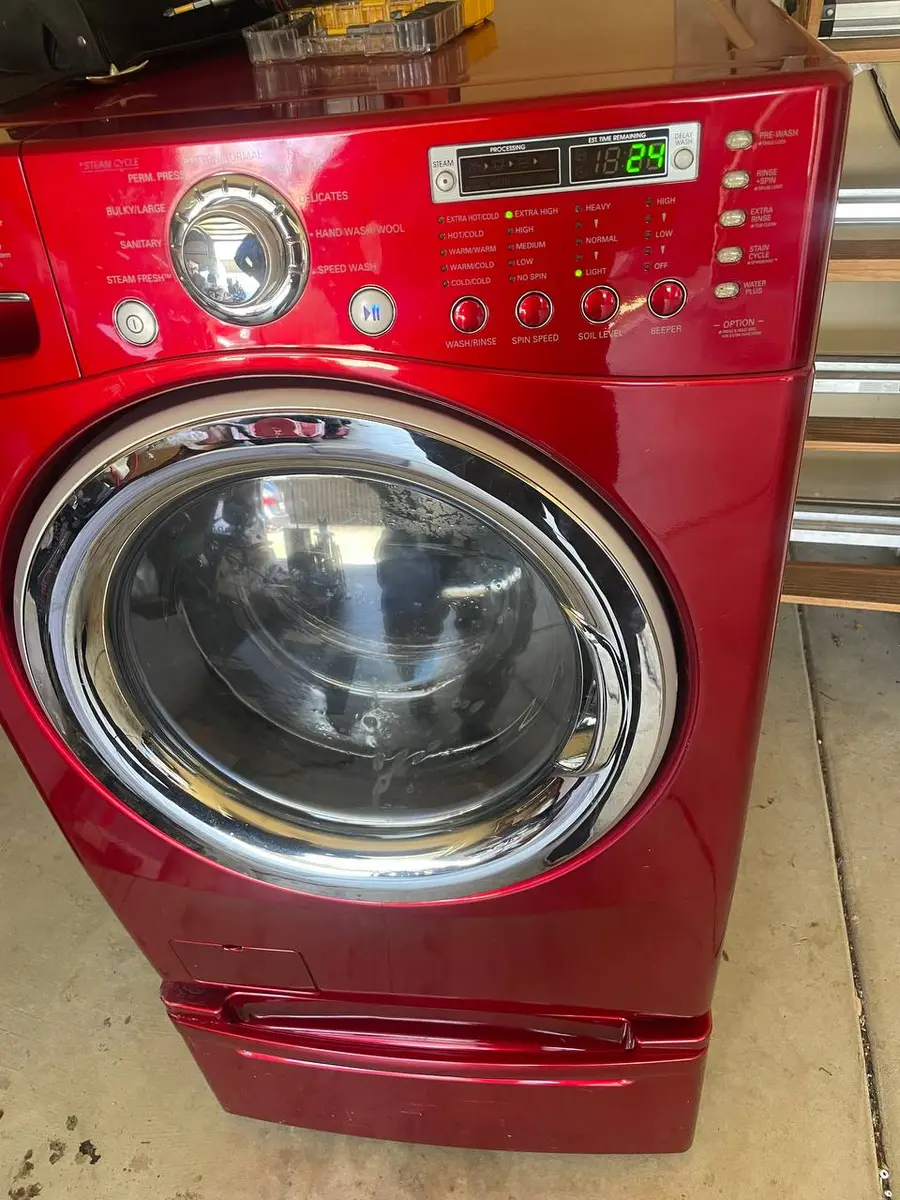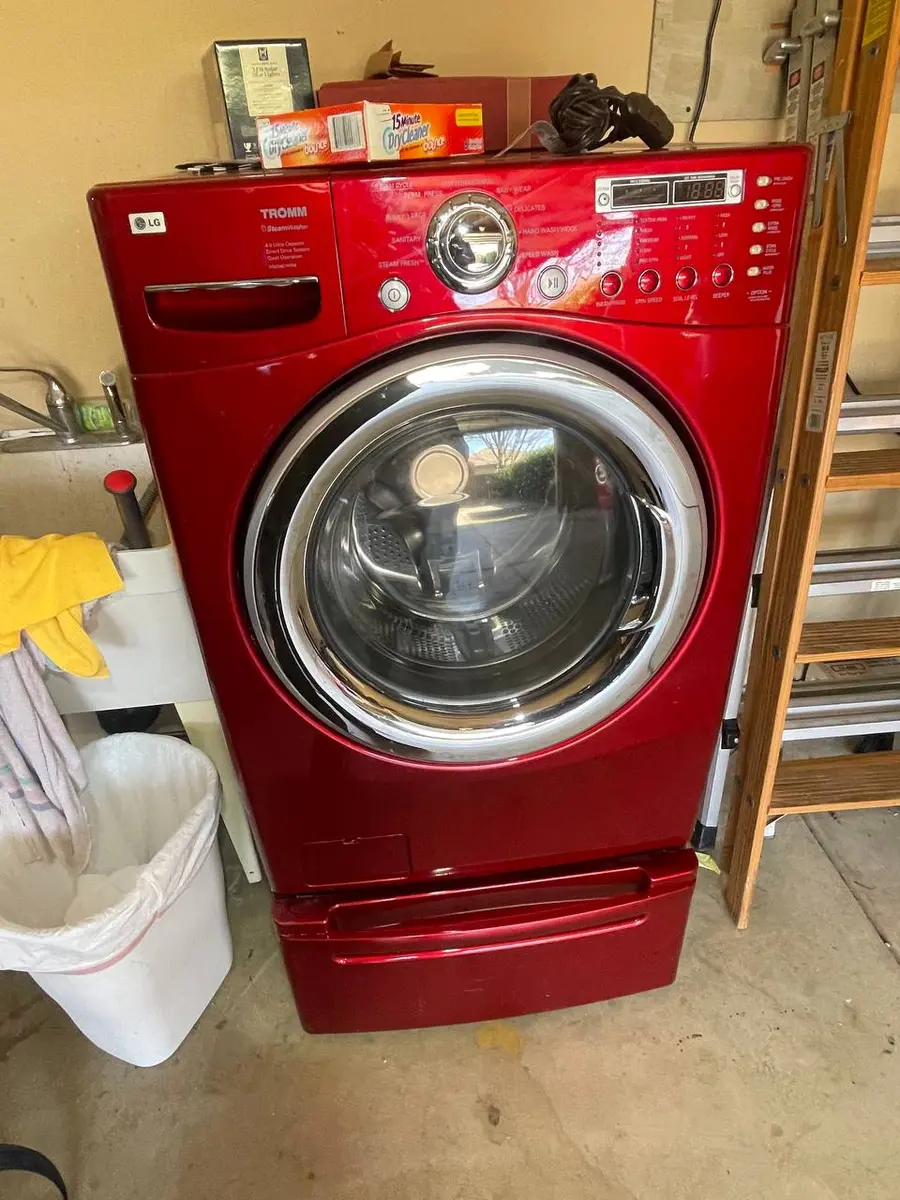
What is the Kenmore Washer F25 error?#
F25 on a Kenmore washer is a drive-motor tachometer fault: the little pickup coil that tells the board how fast the drum is turning has dropped out, so the motor kicks off then stalls or the spin surges unevenly. The machine is not dangerous, but it will not complete a spin. There is no owner reset for this one — it needs metering — so the first honest step is confirming the symptom and booking a technician.
F25 on a Kenmore Washer: likely causes and repair cost#
On a Kenmore Washer, the F25 code signals: drive motor tachometer error.
| Likely cause | Typical likelihood |
|---|---|
| Tachometer/hall sensor failure | Most common |
| Motor wiring fault | Common |
| Drive motor failure | Less common |
Typical professional repair: $200–$425 · Difficulty: professional only · usually a technician job
Symptoms that often accompany F25: The motor kicks off then stalls a second later; The drum lurches and spins unevenly; Spin speed surges and sags through the cycle
Technician diagnostic sequence for F25:
- Check tachometer coil on back of motor — measure resistance (typically 100-200 ohms)
- Inspect motor connector for burnt or corroded pins
- Spin drum by hand — resistance or grinding indicates bearing failure
- If tachometer tests good, the MCU is not reading the signal — replace MCU
Parts a technician may check or replace: drive motor with tachometer; motor control unit
Field note: On the Whirlpool-made 110-prefix Kenmore the tach is just a little pickup coil sitting behind the motor rotor that tells the board how fast the drum turns. It is a cheap, standalone part, so meter it and swap it on its own rather than buying the whole motor when the speed signal drops out.
Do You Have the Right Tools?
Bearing puller set ($120), drum spider wrench ($85), multimeter ($85), and diagnostic software. Our technician arrives with $3,000+ in professional tools — your diagnostic is free.
Licensed & Insured · 90-Day Warranty · Same-Day Service
How to troubleshoot the F25 error yourself#
Realistically there is little to do at home here, and I would rather set expectations than send you poking around a live motor. You can run one cycle to confirm the pattern — motor starting then stalling, or the drum spinning unevenly and surging — which helps the technician, and you can spin the drum by hand with the power off to feel for grinding that would point at a bad bearing instead.
Everything else is meter work. As the table above describes, a technician checks the tachometer coil on the back of the motor for the resistance it should read, inspects the motor connector for burnt or corroded pins, and confirms whether the control unit is simply not seeing the signal. The good news buried in the field note: the tach is a cheap, standalone pickup coil, so a good technician meters it and swaps it on its own rather than selling you a whole motor.
Is the Kenmore Washer F25 error worth fixing?#
F25 can be either cheap or costly depending on what actually failed, which is why diagnosis matters. The table above lists $200 to $425 for a professional repair, but that top figure assumes a drive motor or control unit; if it turns out to be just the tachometer coil, the part itself is inexpensive and the bill lands at the low end. On a sound washer I would fix it, insisting the tach be tested on its own first. On an older machine facing the full motor-plus-control cost, replacement starts to compete.
Safety First — Know the Risks
High-voltage components and pressurized water lines create flood and shock risk. A single loose fitting can cause thousands in water damage. Our techs are licensed and insured — let them handle the risk.
Licensed & Insured · 90-Day Warranty · Same-Day Service
Kenmore Washer F25: frequently asked questions#
What does the F25 error mean on a Kenmore washer?#
It is a drive-motor tachometer error: the sensor that reports drum speed to the control has failed, so the motor stalls or the spin runs uneven.
Is it safe to keep using a Kenmore washer showing F25?#
It is safe but not functional — the washer cannot hold a steady spin, so loads come out soaking. There is no hazard in leaving it until repaired.
Can I clear the F25 error myself, or do I need a technician?#
There is no owner reset. Confirming the stall pattern helps, but diagnosis needs live metering of the tachometer and motor, which is a technician's job.
How much does it cost to repair F25 on a Kenmore washer?#
The table above lists $200 to $425 for a professional repair, though a fault limited to the cheap tachometer coil lands near the low end.
Which parts usually fail when a washer throws F25?#
The tachometer or hall sensor on the motor is the most common failure, followed by motor wiring and, less often, the drive motor itself.
Is a Kenmore washer with F25 worth repairing?#
Yes if it is the standalone tachometer, which is cheap. If it needs the full motor and control unit at the top of the range, weigh that against a newer machine.
Why does a failed tachometer trigger F25?#
The board sets drum speed using feedback from the tachometer coil. When that signal drops out, the control cannot confirm the motor's speed and shuts down with F25.
Lead Appliance Repair Technician · 12 years experience
Experienced technician with 12 years specializing in washing machine and dryer repairs across all major brands.