Kenmore Washer Error Code dL: Your Model Number Changes Everything
First Step: Identify Who Actually Made Your Washer
Your Kenmore washer refuses to start and displays dL — a door lock error. But before you order a single part or watch a YouTube video, you need to answer one question: who manufactured your specific unit?
Kenmore never built appliances. Sears licensed the name and contracted manufacturing to major brands. The first three digits of your model number reveal the actual maker:
- 110.xxxxx — Built by Whirlpool (vast majority of Kenmore washers)
- 417.xxxxx — Built by Frigidaire/Electrolux
- 796.xxxxx — Built by LG (Kenmore Elite front-loaders)
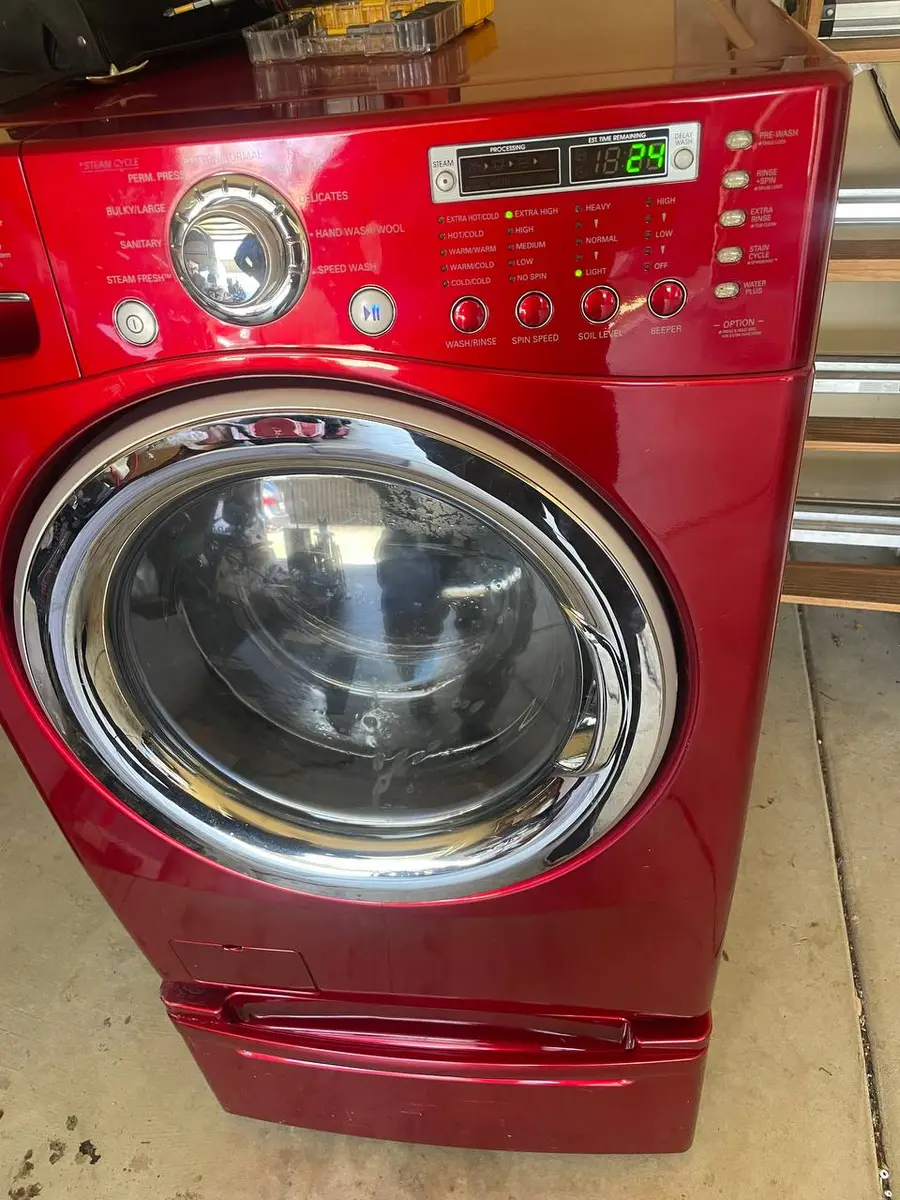
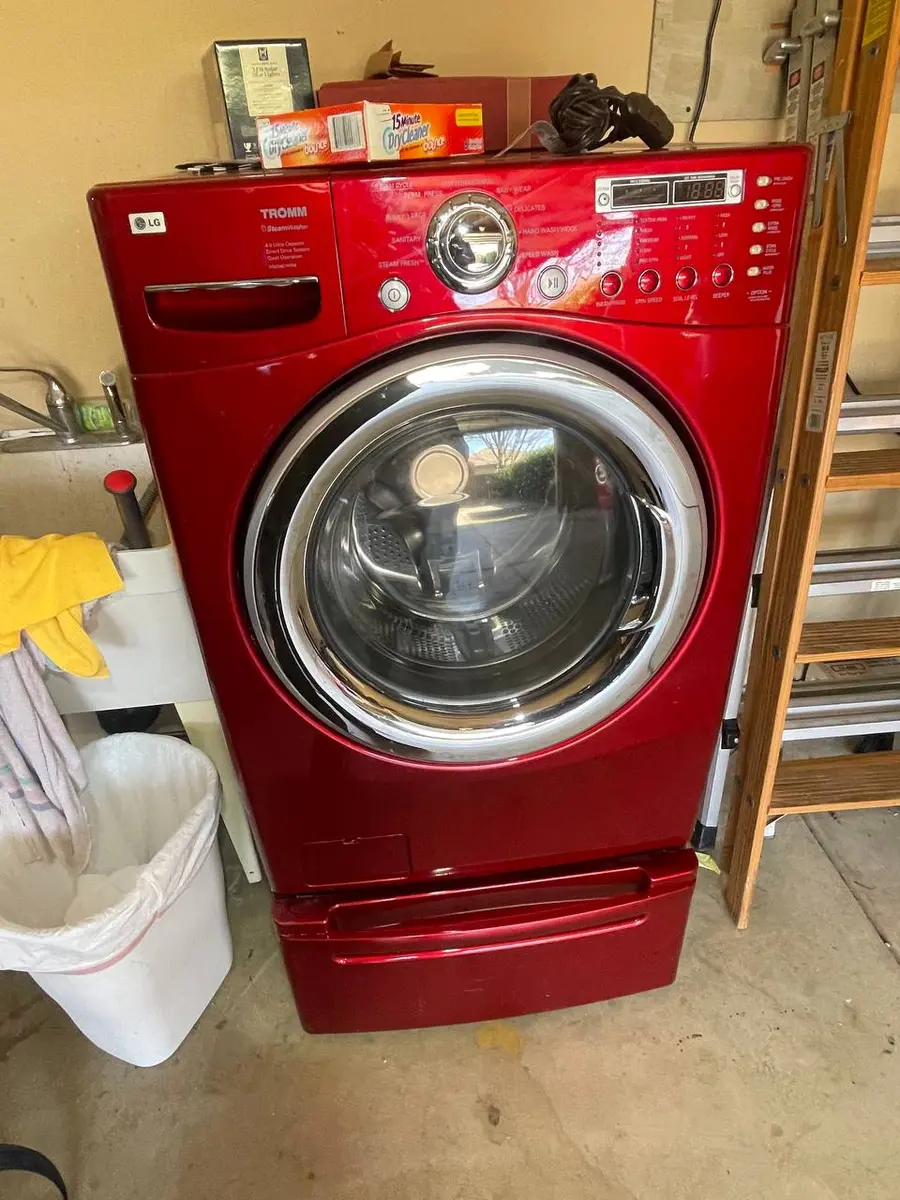
This matters enormously for a dL code because each manufacturer uses completely different door lock assemblies, different wiring configurations, and different diagnostic approaches. A door lock for a Whirlpool-built 110-series will not physically fit an LG-built 796-series, even though both say "Kenmore" on the front panel.
Find your model number on the sticker inside the door opening, under the lid, or on the back panel. Write it down — you will need it for parts ordering.
Do You Have the Right Tools?
Bearing puller set ($120), drum spider wrench ($85), multimeter ($85), and diagnostic software. Our technician arrives with $15K+ in professional tools — your diagnostic is free.
Licensed & Insured · 90-Day Warranty · Same-Day Service
What dL Actually Means (OEM-Specific Diagnosis)
On Whirlpool-Built Models (110.xxxxx)
The central control unit (CCU) sends a 120VAC signal to the door lock solenoid. After energizing the lock, the CCU expects a feedback signal from the lock's internal switch confirming engagement within 4-6 seconds. The dL code posts when that confirmation never arrives — either the lock mechanism physically failed to engage, the feedback circuit is broken, or the CCU itself has a faulty triac driving the lock.
The Whirlpool door lock assembly (part W10838613 or equivalent) contains both a solenoid actuator and a set of switch contacts. The solenoid pulls a metal hook into the door strike, and when fully seated, a secondary switch closes to tell the board "locked successfully."
On LG-Built Models (796.xxxxx)
LG uses a wax-motor lock mechanism rather than a solenoid. A PTC heater melts wax that expands and pushes a metal plunger into the locked position. This is slower (takes 8-12 seconds) but more reliable long-term. The dL equivalent on LG platforms indicates the lock position sensor did not register engagement after the heating cycle completed. Common failure: the wax motor loses its charge after 5-7 years and no longer generates enough expansion force.
On Frigidaire-Built Models (417.xxxxx)
Frigidaire uses a bi-metal strip that bends when heated, pushing a locking tab into position. The dL code triggers when the board does not receive the lock confirmation signal within its timeout window. These locks tend to fail from corrosion on the bi-metal contacts rather than mechanical wear.
Diagnosing the Root Cause
Check 1: Physical Obstruction (All Manufacturers)
Open the door fully and examine the door strike — the metal or plastic hook on the door that inserts into the lock assembly on the frame. Look for:
- Clothing fibers wrapped around the strike
- Detergent residue buildup preventing full insertion
- A warped or cracked strike that no longer aligns with the lock receiver
- Foreign objects (coins, buttons) lodged in the lock cavity
Clean the strike and cavity with a damp cloth. Close the door firmly and listen for the lock click. If you hear the mechanism attempt to engage but fail, the lock assembly itself has likely failed mechanically.
Check 2: Door Alignment
Over time, especially on front-load models, the door hinge can sag from the weight of the glass porthole. This shifts the strike position relative to the lock receiver. With the door closed, check if there is uniform gap around the entire door seal. If the gap is wider at the bottom than the top, the hinge has dropped and the strike is no longer entering the lock at the correct angle.
On Whirlpool-built models, the hinge has two mounting bolts that can be loosened and shimmed. On LG-built models, the hinge is typically non-adjustable and must be replaced if sagged.
Check 3: Lock Assembly Testing (Whirlpool 110.xxxxx)
Unplug the washer. Remove the front lower panel (two screws at bottom, pull forward). The door lock is mounted to the front panel frame near the door opening, accessible from inside. Disconnect the wire harness plug from the lock assembly.
Using your multimeter on the ohms setting, test across the solenoid terminals (usually the two outer pins on the connector). You should read 300-600 ohms. An open reading (OL) means the solenoid coil has burned out — replace the lock assembly. A reading under 100 ohms indicates a shorted coil — also replace.
Next, test the switch contacts (usually center pins). With the lock in the unlocked position, you should read open (OL) across the NO contacts. Manually push the lock lever into the locked position with a screwdriver — the switch should close (near zero ohms). If the switch does not change state, the mechanical linkage inside the lock is broken.
Check 4: Wiring and Board (All Manufacturers)
If the lock assembly tests good, the problem is upstream. Inspect the wire harness from the lock to the main board for pinched or chafed spots — the harness routes past the tub and vibration can wear through insulation over years. Check the connector at the board end for corrosion or burn marks on the pins. A corroded connector creates enough resistance to drop the feedback signal below the detection threshold.
If wiring is intact and the lock tests good, the board's lock driver circuit has failed. On Whirlpool boards, the triac that switches 120V to the lock solenoid can fail open (lock never gets power) or the feedback input circuit can develop a solder crack from vibration.
Safety First — Know the Risks
High-voltage components and pressurized water lines create flood and shock risk. A single loose fitting can cause thousands in water damage. Our techs are licensed and insured — let them handle the risk.
Licensed & Insured · 90-Day Warranty · Same-Day Service
Repair Cost Analysis
| Scenario | Parts Cost | DIY Time |
|---|---|---|
| Obstruction/alignment fix | $0 | 10 minutes |
| Door lock assembly replacement | $45-$85 | 30-45 minutes |
| Wire harness repair/connector cleaning | $0-$15 | 20-30 minutes |
| Main control board replacement | $150-$280 | 45-60 minutes |
Professional repair (single visit including diagnosis and parts): $150-$350 depending on root cause.
Making the Repair vs. Replace Decision
A dL code on a washer under 8 years old is almost always worth repairing. The lock assembly itself costs $45-$85 and takes under an hour to replace. Even a board replacement at $200-$280 is justified if the rest of the machine is sound — a comparable new washer runs $700-$1,200.
On machines over 12 years old, consider whether the tub bearings are also showing wear (grinding noise during spin). If so, the bearing job costs $300-$500 and the combined repair exceeds the replacement threshold.
The Real Cost of DIY
Average DIY attempt: $150-400 in tools you may use once, plus the risk of further damage. Our diagnostic visit costs $0 — we find the problem and give you an honest quote.
Licensed & Insured · 90-Day Warranty · Same-Day Service
Ordering the Correct Replacement Part
Because Kenmore is a multi-manufacturer brand, you must order parts by your specific model number — not by the error code alone. The door lock for a 110.20022012 is completely different from the lock for a 796.41583411, despite both being "Kenmore washers with a dL code."
Cross-reference your model at the OEM's parts site:
- 110-series: search Whirlpool parts by model number
- 796-series: search LG parts by model number
- 417-series: search Frigidaire parts by model number
Same-Day Appliance Repair
Fixed or It's Free
$89 → $0 Service Call & Diagnosis — offer ends May 25
Prevention
Door lock longevity depends largely on how firmly and how often the door is closed. Avoid slamming the door — the repeated impact shock accelerates wear on the locking mechanism's internal springs and catches. Wipe detergent residue from the door strike monthly. On front-loaders, leave the door ajar between loads to prevent moisture buildup in the lock cavity.
Don't Void Your Warranty
Opening your appliance yourself may void the manufacturer warranty. Our repair comes with a 90-day guarantee, and we document everything for warranty compliance.
Licensed & Insured · 90-Day Warranty · Same-Day Service
Important Note About Kenmore Parts Ordering
Because Kenmore is a multi-manufacturer brand (not a maker itself), parts must be ordered by the actual manufacturer's part number — not by searching "Kenmore washer parts." Your model number prefix identifies the real manufacturer:
For washers: the most common Kenmore washer manufacturer is Whirlpool (prefix 110.xxxxx for washers/dryers, 665.xxxxx for dishwashers, 790.xxxxx for ovens). Parts websites like PartSelect and RepairClinic accept your full Kenmore model number and automatically cross-reference to the correct OEM part number. Always verify the part number matches before ordering — similar-looking parts from different manufacturers are not interchangeable even though both machines say "Kenmore" on the exterior.
The Sears Parts Direct website (now Partstown) also stocks these parts but typically at a higher price point than ordering the OEM part directly from an appliance parts wholesaler. Shopping by the OEM part number rather than the Kenmore part number often saves 20-40% on identical components.
Extending Your Kenmore Washer's Lifespan
Regular maintenance prevents many error codes from developing in the first place. For your Kenmore washer, the most impactful maintenance items are:
Monthly: Run a clean cycle (dedicated Clean Washer cycle or hottest cycle with no clothes and a washer cleaner tablet). This dissolves detergent residue and mineral deposits that accumulate in the wash system, drain path, and sensor areas. Residue buildup causes false sensor readings, slow drainage, and reduced cleaning effectiveness.
Every 3-6 months: Clean the inlet screens where supply hoses connect. Hard water areas should clean every 3 months; soft water areas every 6. Also clean the drain pump filter if your model has an accessible one.
Annually: Inspect supply hoses for bulging, cracking, or discoloration. Rubber hoses should be replaced every 5 years regardless of appearance — internal deterioration is invisible until the hose bursts. Upgrade to stainless steel braided hoses for burst protection.
Always: Use the correct amount of HE detergent (if applicable). Check pockets before every load. Do not overload the drum past 3/4 capacity. Leave the door ajar between loads to prevent mold and mildew in the gasket and tub.
Kenmore washer locked out with a dL code? Our technicians stock door lock assemblies for all major Kenmore platforms — Whirlpool, LG, and Frigidaire builds. Most repairs completed in one visit. Book your repair.