How to Troubleshoot a Frigidaire Dual-Ring Radiant Element Not Expanding
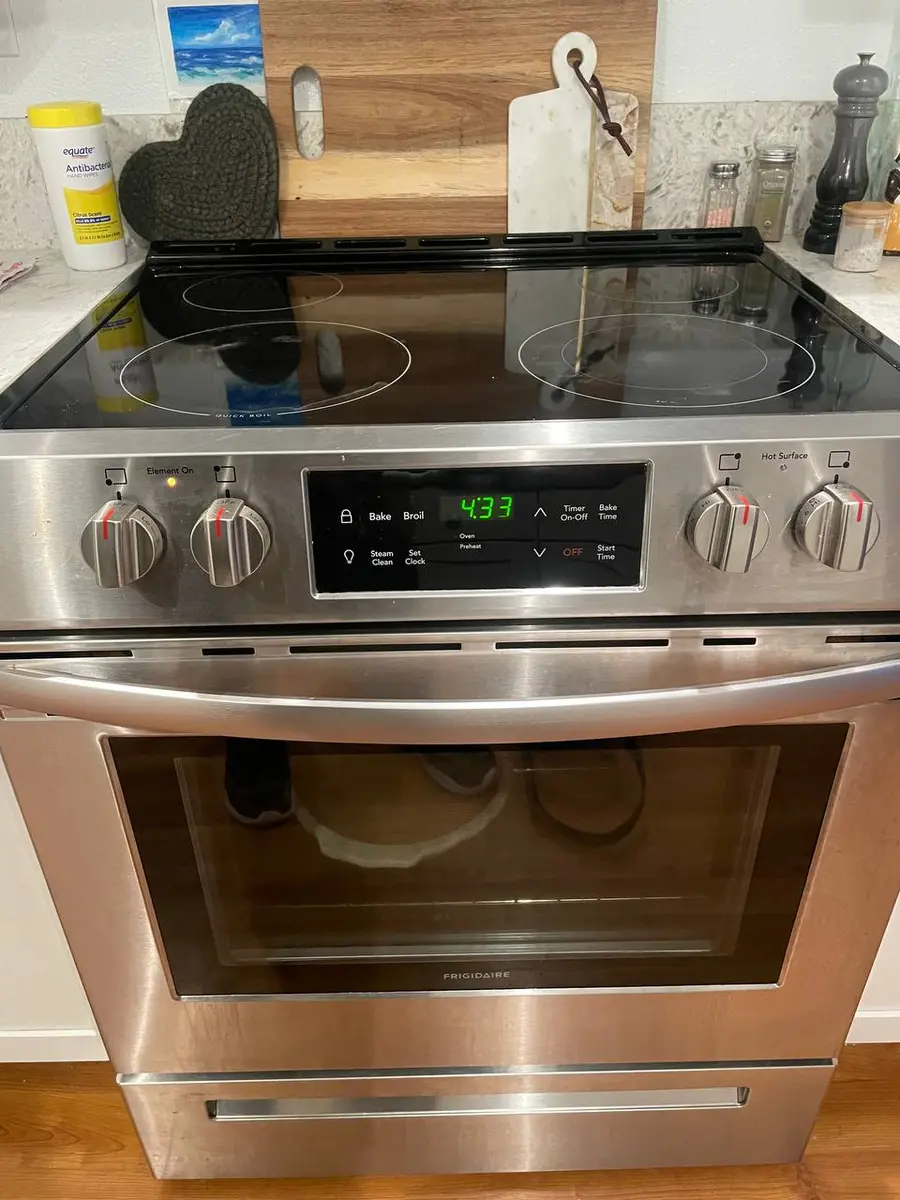
Frigidaire Gallery and Professional smooth-top ranges feature dual-ring (expandable) radiant elements that offer two heating zones: a smaller inner ring for small pots and a full-size outer ring that activates when you need a larger heating area. When the expansion feature stops working, the inner ring heats normally but the outer ring remains cold even when the control is set to the expanded/large position. This is a common issue on Gallery smooth-top ranges and is almost always caused by a failed expansion relay on the control board, a broken outer ring element, or a failed expansion switch.
The dual-ring element uses separate circuits for the inner and outer rings. The inner ring operates through the standard infinite switch or electronic control. The outer ring has an additional relay or switch that energizes it only when the user selects the expanded mode (typically by pressing an EXPAND button or turning a separate switch).
Before You Start
- Tools needed: Phillips #2 screwdriver, Torx T15 (Gallery panels), multimeter, flashlight, needle-nose pliers
- Parts needed: Depends on diagnosis (expansion switch/relay $20-$40, outer ring element $50-$90, control board $150-$250)
- Time required: 30-60 minutes for diagnosis
- Difficulty: Intermediate
- Safety warning: Turn off the 240V circuit breaker. Verify power is dead at the range. Dual-ring elements have 3-4 terminals carrying 240V in various configurations. The glass cooktop must be lifted carefully — it is fragile and heavy (15-25 lbs). Do not flex or twist it.
Do You Have the Right Tools?
Multimeter ($85), vacuum pump ($250), diagnostic software, and specialized hand tools. Our technician arrives with $15K+ in professional tools — your diagnostic is free.
Licensed & Insured · 90-Day Warranty · Same-Day Service
Step-by-Step Instructions
Step 1: Confirm the Symptom
Turn on the affected burner to HIGH. On Gallery models, press the EXPAND or SIZE button to activate the outer ring. Verify that the inner ring glows red through the glass but the outer ring area remains dark. If BOTH rings are dead, refer to the single-element troubleshooting guide instead. This guide specifically addresses inner-ring-works but outer-ring-does-not scenarios.
Step 2: Understand the Dual-Ring Circuit
The dual-ring element has separate electrical paths:
Inner ring: Infinite switch (or board relay) → Inner ring element terminals
Outer ring: Expansion switch/relay → Outer ring element terminals
The expansion control varies by model:
- Knob models: A separate small switch on the control panel (mechanical toggle)
- Touch-control Gallery: The main control board energizes an expansion relay when the EXPAND button is pressed
- Electronic with knob: The infinite switch has additional contacts for the expansion ring
Step 3: Lift the Glass Cooktop
Turn off the breaker. Remove rear mounting screws (typically 2-4 Phillips at rear edge). Release front clips if present. Carefully lift the glass cooktop from the front and prop securely. Locate the dual-ring element beneath the glass — it will have 3 or 4 wire connections at its ceramic terminal block instead of the 2 connections on a single-ring element.
Step 4: Test the Outer Ring Element
Disconnect the outer ring wires at the ceramic terminal block. The inner ring typically uses terminals 1 and 2; the outer ring uses terminals 3 and 4 (or terminal 2 and 3 on 3-terminal configurations). Refer to the wiring diagram typically affixed to the underside of the cooktop or inside the control panel housing.
Test the outer ring with your multimeter set to resistance:
- Expected reading: 15-30 ohms (varies by wattage)
- Infinite/OL: Outer ring has burned through — replace the entire dual-ring element assembly
- Very low (<5 ohms): Outer ring is shorted — replace element
- Within range: Outer ring element is good — problem is in the expansion circuit
Step 5: Test the Expansion Switch/Relay
If the outer ring element tests good, the expansion control circuit is not delivering power to it.
For mechanical expansion switches: Locate the small toggle switch on the control panel. Test continuity through the switch when toggled to the ON/EXPAND position. Should read closed (near zero ohms). If open in both positions, the switch has failed.
For electronic/touch-control (Gallery): The expansion relay is on the main control board. You can test by:
- Restoring power (CAREFUL — live 240V)
- Setting the burner to HIGH and pressing EXPAND
- Listening for the relay click on the control board
- If no click: control board relay has failed
- If click is heard: measure voltage at the outer ring connector block. Should read 240V when expanded. No voltage despite relay clicking = wiring break between board and element
Step 6: Test Wiring Between Relay and Element
If the relay clicks but no voltage reaches the outer ring, there is a break in the wiring path. With power OFF, use continuity mode on your multimeter to trace the wire from the control board's expansion relay output terminal to the outer ring connector block. Check each connector along the path for corrosion or loose fit. Heat damage to wiring under the cooktop is possible from spill-through or element radiant heat.
Step 7: Replace the Failed Component
Based on your diagnosis:
- Failed outer ring element: Remove the element tray mounting screws (2-4), disconnect all wire connections, remove the entire dual-ring element assembly. Install new element in reverse order. Both inner and outer rings come as one assembly unit — you cannot replace just the outer ring separately.
- Failed expansion switch: Remove switch from control panel, install new switch, reconnect wires in original configuration.
- Failed control board relay: Replace the entire main control board. On Gallery models, this is behind the glass touch panel (accessible after removing the top rear panel and disconnecting the ribbon cable to the touch membrane).
Dual-Ring Element Configuration
| Configuration | Terminals | Inner | Outer |
|---|---|---|---|
| 3-terminal | T1, T2, T3 | T1 + T2 (inner only) | T2 + T3 (added to inner) |
| 4-terminal | T1, T2, T3, T4 | T1 + T2 (independent) | T3 + T4 (independent) |
The 3-terminal configuration uses a common connection (T2) shared between inner and outer. The 4-terminal configuration has fully independent circuits. This difference matters for testing — know which configuration your element uses before testing resistance across terminals.
Safety First — Know the Risks
Appliances involve high voltage (120-240V), pressurized water, gas lines, and chemical refrigerants. Over 400 DIY repair injuries are reported yearly. Our techs are licensed and insured — let them handle the risk.
Licensed & Insured · 90-Day Warranty · Same-Day Service
Troubleshooting Post-Repair
- Outer ring now works but inner ring doesn't: During reassembly, the inner ring wires were disconnected or reconnected to wrong terminals. Recheck all connections against the wiring diagram
- Both rings work but the element glows unevenly: Normal for new elements during first 2-3 uses. If persistent, the element may be warped or not sitting flat in its mounting tray
- Expansion works intermittently: A relay that works sometimes and sometimes doesn't is a failing relay (contact bounce). Replace the control board before it fails completely
- EXPAND indicator light works but outer ring doesn't heat: Confirms the control electronics see the command, but the relay output or wiring is the problem. Focus diagnosis on the relay output and downstream wiring
When to Call a Professional
Contact a professional if:
- You are not comfortable with live 240V testing (Step 5 requires measuring voltage with power on)
- The control board needs replacement and you are not experienced with electronics disassembly
- The glass cooktop is cracked and needs simultaneous replacement
- Multiple dual-ring elements have expansion failures (systemic control board issue)
- The wiring diagram is not accessible and you cannot determine which terminals are inner vs outer
Same-Day Appliance Repair
Fixed or It's Free
$89 → $0 Service Call & Diagnosis — offer ends May 25
The Real Cost of DIY
Average DIY attempt: $150-400 in tools you may use once, plus the risk of further damage. Our diagnostic visit costs $0 — we find the problem and give you an honest quote.
Licensed & Insured · 90-Day Warranty · Same-Day Service
Cost Comparison: DIY vs Professional
| DIY | Professional | |
|---|---|---|
| Parts | $20-$250 (switch vs board) | Same |
| Labor | $0 | $150-$300 |
| Time | 30-60min | 45-60min |
| Risk | Moderate (240V, fragile glass) | Warranty included |
Need Professional Help?
Don't Void Your Warranty
Opening your appliance yourself may void the manufacturer warranty. Our repair comes with a 90-day guarantee, and we document everything for warranty compliance.
Licensed & Insured · 90-Day Warranty · Same-Day Service
FAQ
Q: Why does only the inner ring of my Frigidaire cooktop element heat up? A: The dual-ring element uses separate circuits for inner and outer rings. If only the inner heats, either the outer ring has burned out, the expansion switch/relay has failed, or the wiring between them is broken. The inner ring working proves the main circuit is fine.
Q: Can I replace just the outer ring of a dual-ring element? A: No. Dual-ring elements are manufactured as a single assembly unit. Both the inner and outer rings come together as one replaceable part. You must replace the entire element assembly.
Q: How do I activate the outer ring on my Frigidaire Gallery range? A: On touch-control Gallery models, turn the burner on, then press the EXPAND or SIZE button on the glass touch panel. On knob-controlled models with expansion, there is typically a separate small toggle switch near the burner knob or a push-in feature on the knob itself.
Q: Is the dual-ring element more expensive to replace than a single-ring? A: Yes, typically $50-$90 for a dual-ring vs $40-$60 for a single-ring. The additional cost reflects the more complex construction with two independent heating circuits in one assembly.
Need a certified technician? Book same-day repair →