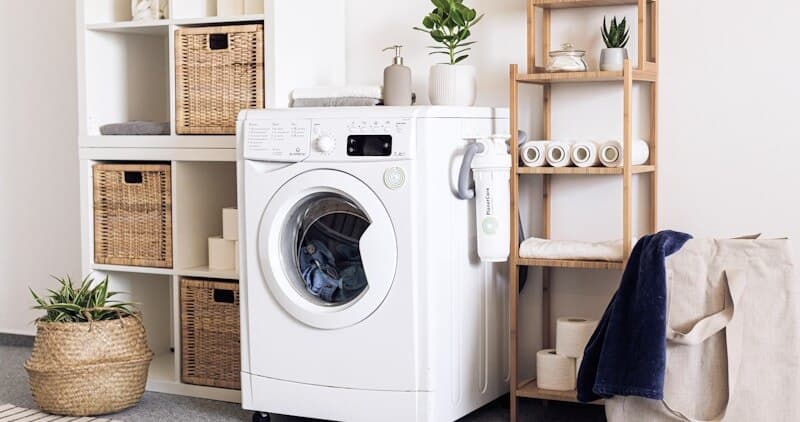
How to Troubleshoot a Bosch Washing Machine with Excessive Vibration
Excessive vibration in a Bosch front-load washer during spin has specific causes that can be systematically diagnosed: shipping bolts still installed, worn shock absorbers, broken suspension springs, unlevel machine, unbalanced load, or internal foreign object. This guide covers each in order of likelihood.
Before You Start
- Tools needed: Spirit level, Torx T20 screwdriver (top panel), 13mm wrench (shipping bolts), flashlight
- Parts needed: Depends on diagnosis — shock absorbers BSH 00742719 if worn
- Time required: 20-40 minutes for diagnosis
- Difficulty: Beginner
- Safety warning: Disconnect power before any internal inspection. Do not attempt to stop a spinning drum by hand. Wait for the machine to fully stop before opening.
Do You Have the Right Tools?
Multimeter ($85), vacuum pump ($250), diagnostic software, and specialized hand tools. Our technician arrives with $15K+ in professional tools — your diagnostic is free.
Licensed & Insured · 90-Day Warranty · Same-Day Service
Step-by-Step Instructions
Step 1: Check for Shipping Bolts (Most Common After a Move)
If vibration started after the machine was moved or delivered, the shipping transport bolts may still be installed. Check the rear panel for 3-4 protruding bolts with plastic spacers. These must be REMOVED before operating — they lock the tub rigid to the frame, transferring all drum vibration directly to the cabinet.
Remove with a 13mm wrench. Store them for future moves. Insert the plastic plugs (from accessories bag) into the empty holes.
Step 2: Level the Machine
Place a spirit level on the top panel. Check left-right AND front-back. Even 5mm off-level causes the drum to spin off-axis, creating vibration. Adjust front leveling feet (counterclockwise to extend). Rear feet are typically self-adjusting (tip machine forward 2 inches, set back down). Lock front feet with the lock nut.
Push each top corner — the machine should not rock in any direction. If it rocks, one foot is not making contact.
Step 3: Test Shock Absorbers (Push Test)
Open the door. Push down firmly on the drum with both hands. Release. Count the bounces:
- 1 bounce then settle = shocks are good
- 2-3 bounces = shocks are weakening (replace soon)
- 4+ bounces or no return to center = shocks are failed (BSH 00742719, replace immediately)
Step 4: Inspect Suspension Springs
Remove the top panel (2 Torx T20 at rear, slide back). Look at the springs connecting the tub rim to the cabinet frame (2 or 4 springs). Check for: broken springs (two dangling pieces), stretched springs (visibly longer than others), or detached spring hooks. Replace as a set.
Step 5: Check for Foreign Objects
Spin the drum slowly by hand. Listen for clicking, clunking, or scraping. A coin, underwire, or small object can get trapped between the drum and outer tub, creating rhythmic banging during spin. If you hear something, you may be able to extract it through the door seal opening, or access from the heating element hole (from the front with panel removed).
Step 6: Check Load Balance
If vibration occurs only with certain loads: the machine is out of balance. Redistribute clothes evenly in the drum. Avoid washing a single heavy item (like a comforter) alone — add towels to balance. Bosch machines have automatic balance detection and will abort spin if too unbalanced, but marginal imbalance can cause vibration without triggering the safety abort.
Diagnosis Summary
| Symptom | Likely Cause | Fix |
|---|---|---|
| Violent vibration after recent move | Shipping bolts installed | Remove bolts |
| Machine rocks during spin | Not level | Re-level feet |
| Progressive worsening over months | Worn shock absorbers | Replace pair |
| Sudden onset + visible broken spring | Suspension spring failure | Replace spring set |
| Rhythmic banging (1x per revolution) | Foreign object in tub gap | Extract object |
| Vibration only with certain loads | Load imbalance | Redistribute clothes |
Safety First — Know the Risks
Appliances involve high voltage (120-240V), pressurized water, gas lines, and chemical refrigerants. Over 400 DIY repair injuries are reported yearly. Our techs are licensed and insured — let them handle the risk.
Licensed & Insured · 90-Day Warranty · Same-Day Service
Cost Comparison: DIY vs Professional
| DIY | Professional | |
|---|---|---|
| Shipping bolt removal | $0 | $80-$120 service call |
| Re-leveling | $0 | $80-$120 |
| Shock absorbers | $50-$70 | $220-$350 |
| Spring replacement | $20-$50 | $150-$250 |
Same-Day Appliance Repair
Fixed or It's Free
$89 → $0 Service Call & Diagnosis — offer ends May 25
Need Professional Help?
The Real Cost of DIY
Average DIY attempt: $150-400 in tools you may use once, plus the risk of further damage. Our diagnostic visit costs $0 — we find the problem and give you an honest quote.
Licensed & Insured · 90-Day Warranty · Same-Day Service
FAQ
Q: Is some vibration normal on Bosch washers? A: Minor vibration during final spin (1200-1600 RPM) is normal. The cabinet may hum slightly. But the machine should NOT walk across the floor, bang against walls, or produce rhythmic thumping.
Q: Can vibration damage the machine if I ignore it? A: Yes — chronic vibration accelerates bearing wear, can crack the tub mounting spider, loosen concrete counterweights, and damage floor/wall surfaces. Address vibration promptly.
Q: My floor bounces — does that cause vibration? A: Flexible flooring (wooden subfloor, upper-story apartments) amplifies any vibration. An anti-vibration mat or platform under the machine helps. Also ensure the washer is perfectly level on the flexible surface.
Q: Why does Bosch vibrate more than my old top-loader? A: Front-load washers spin at 1200-1600 RPM vs 600-800 RPM for top-loaders. Higher speed = more centrifugal force = greater vibration potential. This is normal but must be managed with proper leveling and maintained dampers.
Need a certified technician? Book same-day repair →
