How to Replace Frigidaire Washer Pressure Switch
A Frigidaire washer that overfills (E35) or will not fill (E11) usually has a bad water-level pressure switch — or, more often, a kinked or disconnected air tube feeding it. Check the tube first, then blow-test the switch, and swap it in 20-30 minutes. Difficulty: beginner to intermediate.
Two error codes, one part#
The pressure switch senses tub water level through a thin air tube: as water rises, the air pressure climbs and the switch trips at calibrated points. When it or its tube fails, a Frigidaire washer either overfills — the E35 code, and a genuine flood hazard — or underfills and will not fill, the E11 code. Owners often blame the inlet valve, but the pressure switch and its hose are the cheaper, more common cause.
Tools and safety#
- Tools: Phillips #2 screwdriver, needle-nose pliers for the hose clamp, a multimeter (optional)
- Time: 20-30 minutes · Difficulty: beginner to intermediate
- Safety: unplug the washer; if E35 overfilled, also shut the water valves so it cannot flood while you work.
Do You Have the Right Tools?
Bearing puller set ($120), drum spider wrench ($85), multimeter ($85), and diagnostic software. Our technician arrives with $3,000+ in professional tools — your diagnostic is free.
Licensed & Insured · 90-Day Warranty · Same-Day Service
Step-by-step#
1. Reach the switch#
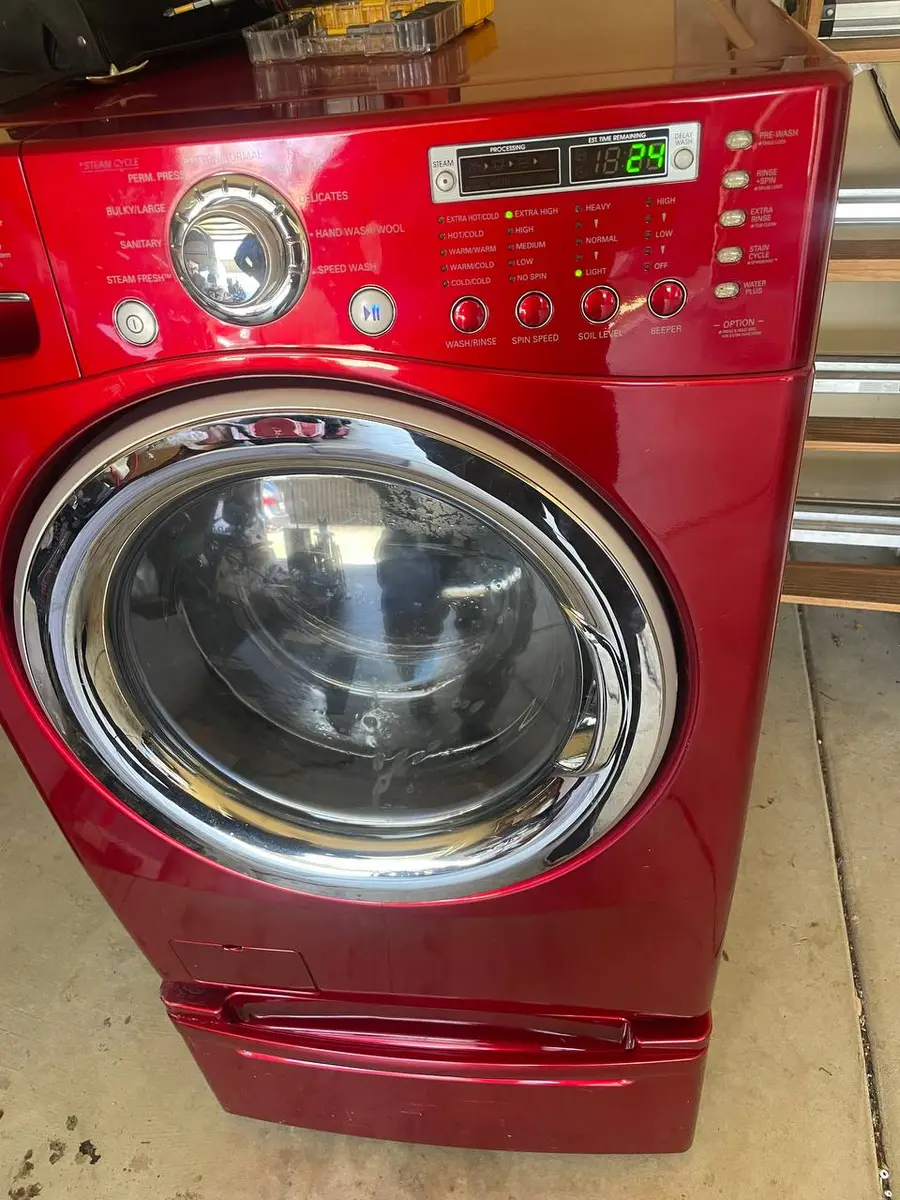
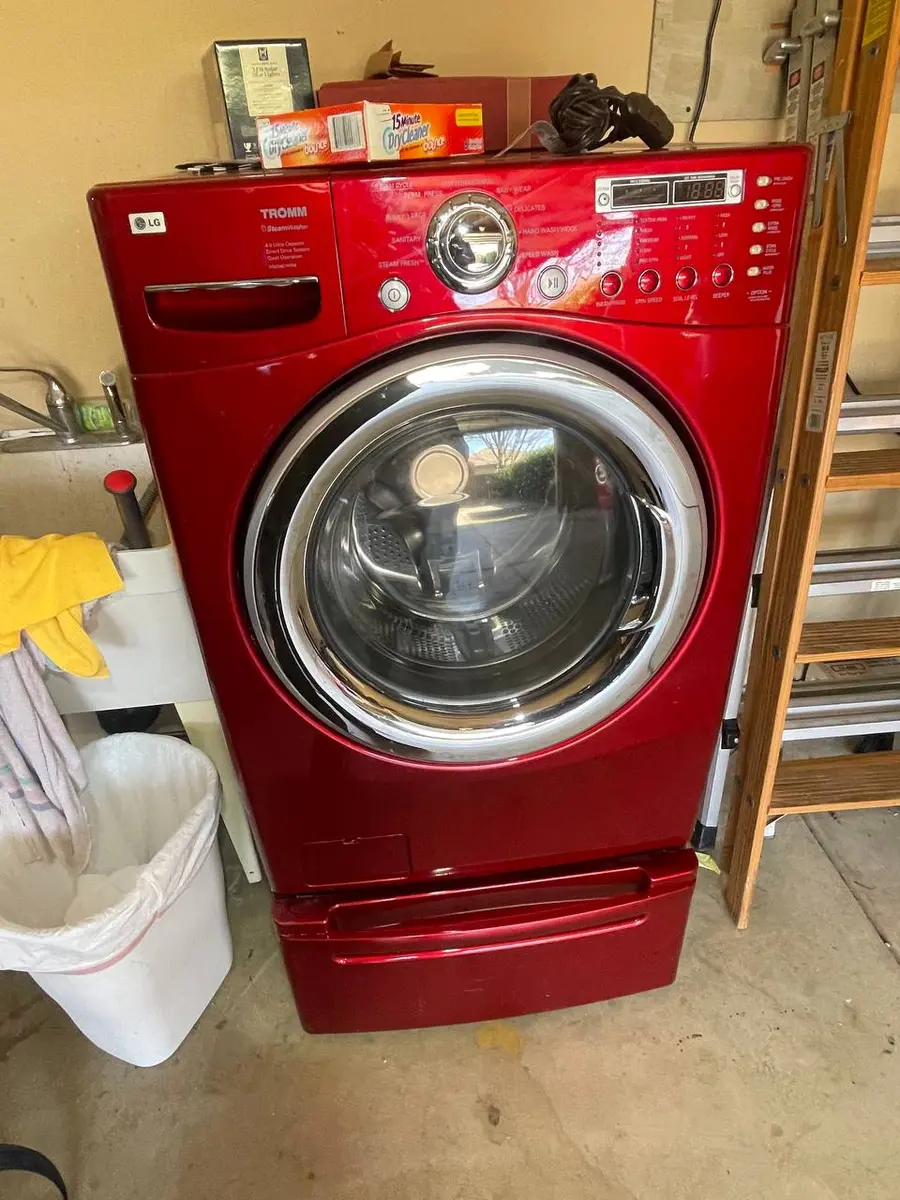
On a front-load EFLS, take off the top panel (three Phillips screws at the rear, slide back, lift) — the switch is a round device about two inches across on the right side wall or by the control-board box. On a top-load FFTW, pop the console end caps, pull its screws, and rotate the console back to reach the switch inside it or on the rear panel. Either way, a thin plastic tube runs from the switch down to the outer tub.
2. Inspect the air tube first#
This is the number-one cause of E35 and costs nothing. Run the tube its full length looking for kinks, then for cracks or holes, and confirm it is firmly on both the switch port and the tub fitting. Blow through it — air should pass freely with no clog.
3. Blow-test the switch#
Pull the tube off the switch port and set a multimeter to continuity on the switch's normally-open terminals. Blow gently into the port (or use a small syringe): you should hear a distinct click and see the meter flip, and there are usually two click points — one for normal level, one for overfill. No clicks, or clicks at a feather-light or very hard breath, means it is miscalibrated and needs replacing.
4. Remove the old switch#
Unplug the wire harness (press the tab, pull straight), pull the air tube off the barb (or release its clamp), and remove the mounting screw or snap clip. The switch comes free.
5. Install the new switch#
Mount it in the same spot, press the air tube firmly onto the port so it is airtight, and click the harness back on. Verify the tube runs from switch to tub with no kink or low loop that could trap water and throw off the reading.
6. Test the repair#
With the water back on, run a fill cycle — it should fill to level and stop, no overflow, no underfill. On an FFTW with MaxFill, test both the normal fill and MaxFill levels, since the switch has to answer both calibrations.
Troubleshooting#
- E35 stays after the swap: the inlet valve may be stuck open — shut the water and test it; also confirm the new switch's tube is airtight.
- E11 stays: confirm the water is on and the fill-hose screens are not scaled up, and check you got the right part number for your model's calibration.
- Level varies between cycles: a hairline crack in the tube that leaks under higher pressure — replace the tube with the switch.
- Overfills on hot but not cold (or the reverse): that is one inlet-valve solenoid stuck, not the pressure switch.
Safety First — Know the Risks
High-voltage components and pressurized water lines create flood and shock risk. A single loose fitting can cause thousands in water damage. Our techs are licensed and insured — let them handle the risk.
Licensed & Insured · 90-Day Warranty · Same-Day Service
When to call a professional#
Call a tech if E35 already overflowed (check the floor and subfloor for water damage first), if the switch tests good and the tube is clear but fill errors continue (a board fill-circuit fault), or if a stacked gas dryer above the washer may have taken on water at its gas connections.
Lead Appliance Repair Technician · 12 years experience
Experienced technician with 12 years specializing in washing machine and dryer repairs across all major brands.