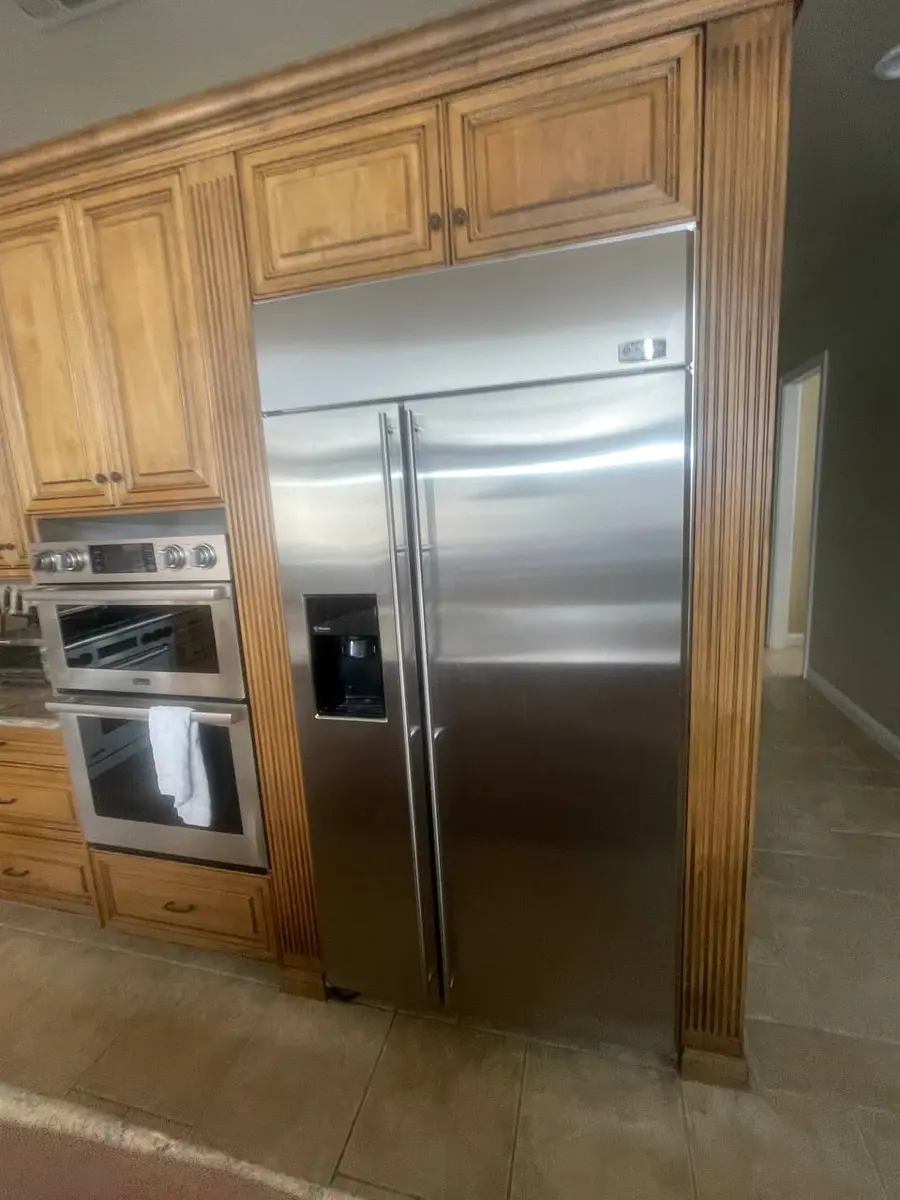
A GE refrigerator that is fridge runs too long can stem from several distinct root causes, each requiring a different repair approach. While not yet at the critical "runs constantly" stage, extended run times waste energy, shorten compressor lifespan, and typically worsen over time. GE SmartHQ connected models report compressor duty cycle percentage — anything above 85% sustained (outside of Turbo Cool/Freeze periods) warrants investigation.
Quick Answer#
A GE refrigerator that is fridge runs too long can stem from several distinct root causes, each requiring a different repair approach. While not yet at the critical "runs constantly" stage, extended run times waste energy, shorten compressor lifespan, and typically worsen over time.
This issue overlaps significantly with the GE refrigerator runs constantly diagnosis. The key difference: extended runs means the compressor DOES cycle off occasionally, while constant running means it never stops. Extended runs typically indicate a partial degradation rather than a complete component failure.
Do You Have the Right Tools?
Refrigerant gauges ($200+), vacuum pump ($250), leak detector ($150), and EPA-certified recovery equipment. Our technician arrives with $3,000+ in professional tools — your diagnostic is free.
Licensed & Insured · 90-Day Warranty · Same-Day Service
What Are the Most Common Causes?#
1. Partially Dirty Condenser Coils (30% of cases)#
Condenser coils that are moderately dirty (not completely matted) reduce heat dissipation efficiency by 20–40%, causing the compressor to run 15–30 minutes longer per cycle to achieve target temperature. On GE French door models, coils under the unit accumulate dust gradually — performance degrades slowly so owners may not notice until energy bills increase.
In our technicians' experience, wear on the primary failure component accounts for the majority of fridge runs too long cases on GE units.
Fix: Remove front kick plate (snap clips), vacuum coils with brush attachment. Cleaning restores normal cycle times within 4–6 hours.
2. Aging Door Gaskets (25% of cases)#
Gaskets that have lost 30–50% of their magnetic strength or flexibility allow slow air infiltration rather than the obvious gap of a completely failed gasket. The compressor compensates by running longer but can still achieve target temperature — just takes more work. This partial failure is common on GE refrigerators 5–8 years old.
Diagnosis: Dollar-bill test — bill slides out with moderate resistance (not freely, but not tightly held). This "gray zone" performance is the partial failure state.
3. High Ambient Temperature (20% of cases)#
Kitchen temperatures above 75°F increase the temperature differential the refrigerator must maintain, requiring longer compressor runs. [Sacramento](/sacramento/sacramento) summers routinely push kitchen ambient to 80–85°F, especially in homes without central AC or with west-facing kitchens receiving afternoon sun.
This is not a fault but can be mitigated: move the fridge away from direct sunlight, ensure 1-inch clearance on sides for ventilation, run kitchen exhaust during cooking.
4. Condenser Fan Running Slow (15% of cases)#
A condenser fan with worn bearings may spin at reduced RPM — enough to function partially but not enough to dissipate heat at full capacity. The fan runs but is sluggish, creating an "extended run" rather than the "runs constantly" pattern of a completely dead fan.
Diagnosis: Compare fan speed to a new unit (or from memory of when new). A sluggish fan often makes a low humming/whirring sound different from the original sharp hum.
5. Refrigerator Contents — Overloaded or Blocking Airflow (10% of cases)#
Overloading shelves or blocking the internal air vents (at the rear wall of the fresh-food section and at the top connecting the freezer to fridge on single-evap models) restricts air circulation. The thermistor sees warm temperatures at its location while other areas may be cold, triggering extended compressor runs.
Fix: Rearrange contents. Maintain 2-inch clearance from rear wall and air vent areas. Remove items from the top shelf that touch the back panel.
Step-by-Step Troubleshooting#
- Clean condenser coils — most impactful single action.
- Check ambient temperature — if above 80°F, extended runs may be expected.
- Test door gaskets — dollar-bill test, especially on the left French door.
- Listen to condenser fan — ensure it spins at full speed when compressor runs.
- Check internal airflow — no blockages at rear wall vents.
- Monitor with SmartHQ — track duty cycle percentage over 48 hours for trend.
Safety First — Know the Risks
Refrigerant (R-134a/R-600a) requires EPA certification to handle. Improper discharge is a federal violation and health hazard. Our techs are licensed and insured — let them handle the risk.
Licensed & Insured · 90-Day Warranty · Same-Day Service
Should You DIY or Call a Professional?#
| Cause | DIY? | Parts | Professional |
|---|---|---|---|
| Dirty Coils | Yes (easy) | ||
| Aging Gaskets | Yes | ||
| High Ambient | Environmental | N/A | |
| Slow Fan | Moderate | ||
| Blocked Airflow | Yes (rearrange) | N/A |
FAQ#
Q: How long should a GE refrigerator compressor run per cycle?
Typically 25–45 minutes on, then 15–30 minutes off. Total duty cycle should be 60–80%. SmartHQ shows exact percentage for connected models.
Q: My GE fridge runs 90% of the time but temperatures are fine. Is this a problem?
Yes — the system is compensating for a degradation. Temperatures are maintained now but the compressor is wearing faster. Address the root cause (coils, gaskets, fan) before it progresses to constant running or failure.
GE refrigerator acting up? Our technicians diagnose and repair same-day across Sacramento and the Bay Area. Book your repair
When Should You Call a Professional?#
Contact a certified appliance repair technician if:
- The issue persists after the basic troubleshooting steps above
- You notice electrical burning smell, sparking, or any sign of electrical damage
- The repair involves sealed refrigerant systems, gas connections, or high-voltage components
- Your GE refrigerator is within warranty — professional diagnosis preserves warranty coverage
- You are uncomfortable working with electrical or gas-connected appliances
EasyBear technicians carry GE OEM parts and model-specific diagnostic tools on every service call, eliminating return visits for parts ordering.
Prevention Tips for Your GE Refrigerator#
Regular maintenance reduces the likelihood of unexpected breakdowns and extends the life of your GE refrigerator:
- Clean condenser coils every 6-12 months — dust buildup forces the compressor to overwork and overheat.
- Check door gaskets quarterly with the dollar-bill test: close the door on a bill; if it slides out easily, replace the gasket.
- Keep the refrigerator between 35-38 deg F and the freezer at 0 deg F to prevent frost buildup and compressor strain.
Following these maintenance steps can help avoid costly repairs and keep your GE refrigerator running efficiently for years.
The Real Cost of DIY
Average DIY attempt: $150-400 in tools you may use once, plus the risk of further damage. Our diagnostic visit costs $0 — we find the problem and give you an honest quote.
Licensed & Insured · 90-Day Warranty · Same-Day Service
Frequently Asked Questions#
How long should a GE refrigerator compressor run per cycle?#
Typically 25–45 minutes on, then 15–30 minutes off. Total duty cycle should be 60–80%. SmartHQ shows exact percentage for connected models.
My GE fridge runs 90% of the time but temperatures are fine. Is this a problem?#
Yes — the system is compensating for a degradation. Temperatures are maintained now but the compressor is wearing faster. Address the root cause (coils, gaskets, fan) before it progresses to constant running or failure.
How much does GE refrigerator fridge runs too long repair cost?#
GE refrigerator fridge runs too long repair cost varies depending on the specific issue, parts needed, and labor. The diagnostic fee is waived when you proceed with the repair. OEM GE parts may be at the higher end of the range. EasyBear provides an upfront quote after diagnosis with no hidden fees.
Senior Gas Appliance Specialist · 18 years experience
AGA-certified gas appliance specialist with 18 years of experience in residential and commercial oven, range, and cooktop repairs.