GE Refrigerator Runs Constantly — Troubleshooting Guide
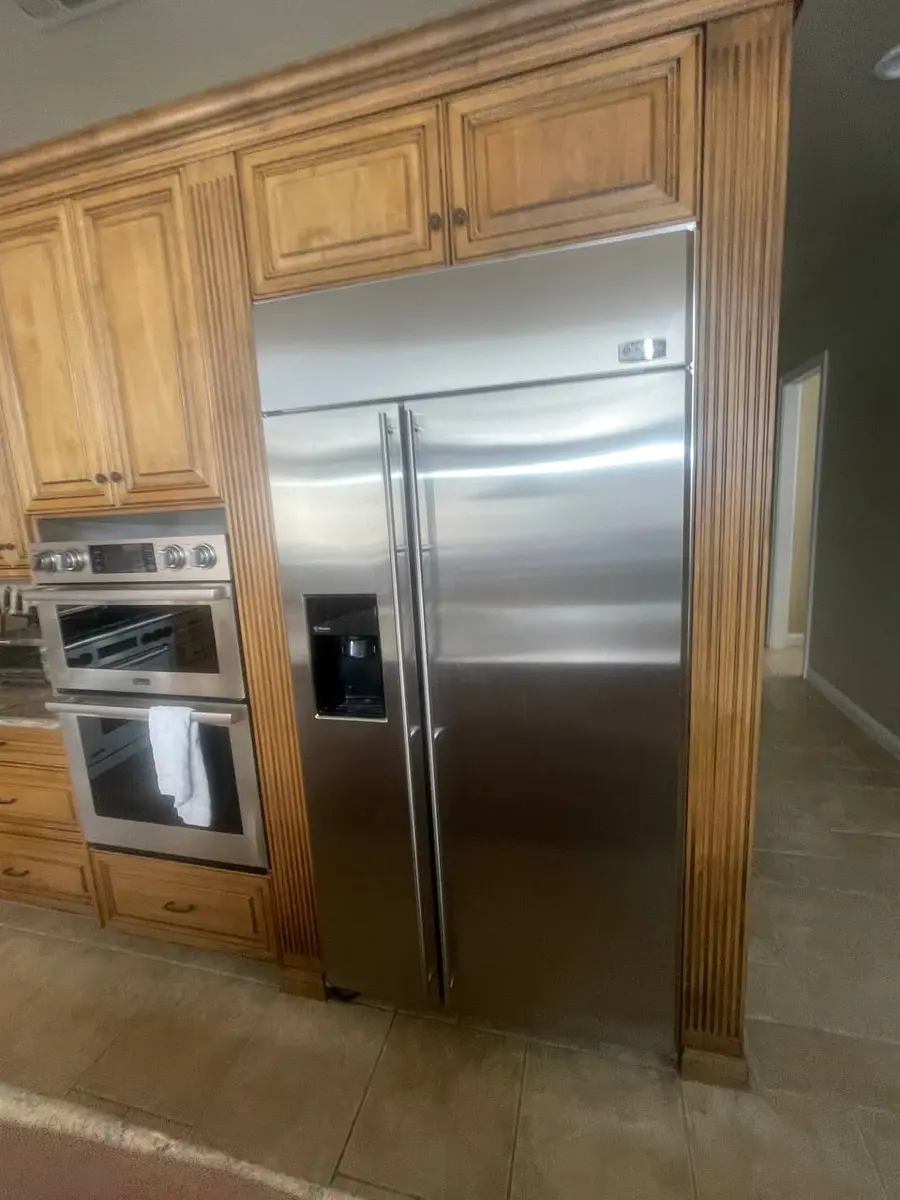
A GE refrigerator compressor normally runs 60–80% of the time, cycling off for 20–30 minutes between runs to equalize temperatures. When the compressor runs without stopping, it signals that the cooling system cannot reach the target temperature set on the control panel. On GE French door models (GFE, GNE, GYE series), the SmartHQ app graphs compressor run percentage — anything above 90% sustained indicates a problem that will lead to premature compressor failure and high electricity bills if not addressed.
GE's TwinChill dual-evaporator models are particularly informative here: if the fresh-food compressor circuit runs constantly but the freezer side cycles normally, you can isolate the problem to the fresh-food cooling loop specifically.
When Constant Running Is Normal
Several situations cause legitimate extended compressor runs on GE refrigerators:
- First 24 hours after installation or after a power outage — the unit needs to pull down temperature from ambient.
- Turbo Cool or Turbo Freeze active — these features force the compressor to run continuously until the compartment reaches its boosted target (typically 4–8 hours).
- Ambient temperature above 90°F — common in Sacramento garages during summer. GE refrigerators are not rated for ambient temps above 110°F, and operation above 90°F significantly increases run time.
- Large food load just added — warm groceries require extended cooling.
If none of these apply and the compressor has been running continuously for 24+ hours, troubleshoot below.
Do You Have the Right Tools?
Refrigerant gauges ($200+), vacuum pump ($250), leak detector ($150), and EPA-certified recovery equipment. Our technician arrives with $15K+ in professional tools — your diagnostic is free.
Licensed & Insured · 90-Day Warranty · Same-Day Service
GE Diagnostic Mode
Enter service mode (Freezer Temp + Fridge Temp held 8 seconds) and check:
- Test 1: Verifies all fans and compressor activate. If one fan is dead, the compressor compensates by running longer.
- Temperature readout: In diagnostic mode, the display shows actual thermistor temperatures. Compare against set points — a 10°F+ gap between actual and set temperature confirms the system cannot keep up.
Most Common Causes
1. Dirty Condenser Coils (30% of cases)
GE French door models place the condenser coils underneath the unit (accessible by removing the front kick plate). When these coils accumulate dust, pet hair, and kitchen grease, they cannot dissipate heat efficiently. The compressor runs longer and longer trying to achieve target temperature, eventually running nonstop.
In Sacramento homes with multiple pets, condenser coils can become completely matted in 3–4 months. GE recommends cleaning every 6–12 months, but pet-owning households should do it quarterly.
Diagnosis:
- Remove the lower front grille (two snap clips on French door models).
- Shine a flashlight onto the coils — if you cannot see through them, they need cleaning.
- Use a refrigerator coil brush (long flexible brush) and vacuum with crevice attachment.
After cleaning: The compressor should begin cycling normally within 2–4 hours as the system reaches equilibrium.
DIY Difficulty: Easy Parts Cost: $0 (cleaning only) — $15 for coil brush Professional Repair Cost: $80–$130 (as part of maintenance visit)
2. Failed Condenser Fan Motor (22% of cases)
Even with clean coils, the condenser fan must actively pull air across them. A dead condenser fan means zero airflow across the coils regardless of cleanliness. The compressor overheats and runs continuously, eventually tripping the thermal overload (at which point the fridge stops cooling entirely).
On GE French door models, the condenser fan is at the bottom-rear of the unit. On older GE side-by-sides (GSS series), it is on the rear panel near the compressor.
Diagnosis:
- Pull the fridge away from the wall. Remove rear lower access panel.
- With fridge plugged in and compressor running, the condenser fan should be spinning. If it is stationary while the compressor hums, the fan motor has failed.
- Feel the compressor housing — if hot to the touch (normal is warm, not painful), the fan has likely been dead for a while.
GE Part Numbers: WR60X10350 (side-by-side), WR60X26866 (French door).
DIY Difficulty: Moderate Parts Cost: $35–$80 Professional Repair Cost: $130–$260
3. Door Gasket Air Leak (18% of cases)
A compromised door seal allows warm, humid ambient air to continuously infiltrate the compartment. The system detects elevated temperature and runs the compressor to compensate. This is especially problematic during Sacramento summers when kitchen ambient temperatures reach 80–85°F and the temperature differential across a leaking gasket is significant.
GE French door models are vulnerable to gasket failure on the left (non-hinge) door, which relies solely on magnetic pull. Door-in-door models on the GE Profile line have an additional gasket on the convenience door that wears faster due to frequent use.
Diagnosis:
- Dollar-bill test at 8+ points around each door.
- Look for condensation (sweating) on the exterior door surface near the gasket — indicates warm moist air entering.
- On SmartHQ, check if compartment temperature fluctuates (rises when door is supposedly closed).
GE Part Numbers: WR24X10231 (French door left), WR24X10232 (right).
DIY Difficulty: Easy Parts Cost: $40–$110 Professional Repair Cost: $120–$260
4. Evaporator Frost Blockage (15% of cases)
When the defrost system fails (heater, thermostat, or drain), frost accumulates on the evaporator coils and progressively blocks airflow. The compressor runs constantly because cold air cannot circulate through the blocked coils efficiently. This cause often overlaps with visible frost inside the freezer.
Diagnosis:
- Open the freezer — excessive frost on the rear wall or floor indicates a defrost issue.
- Remove the evaporator rear panel (6–10 Phillips screws). A healthy evaporator has thin frost coverage. A problem evaporator is encased in a thick ice block.
- Run diagnostic Test 6 to verify defrost heater operation.
DIY Difficulty: Moderate (requires manual defrost + heater diagnosis) Parts Cost: $40–$90 Professional Repair Cost: $180–$350
5. Low Refrigerant Charge (10% of cases)
A refrigerant leak anywhere in the sealed system (evaporator, condenser, compressor, or connecting tubing) reduces the system's cooling capacity. The compressor runs continuously trying to maintain temperature with insufficient refrigerant. Signs: the fridge barely keeps temperature, the compressor runs hot, and you may hear gurgling sounds in the evaporator area.
GE refrigerators use R-134a or R-600a refrigerant depending on model year (2020+ models transitioned to R-600a). Refrigerant repairs require EPA Section 608 certification.
Diagnosis:
- Feel the suction line (larger copper tube going into the compressor) — should be cold/sweating. If room temperature, charge is low.
- This is NOT a DIY repair — requires certified technician with recovery equipment.
- GE sealed system warranty covers this for 5 years from purchase.
DIY Difficulty: Not DIY Parts Cost: N/A (leak repair + recharge) Professional Repair Cost: $300–$700
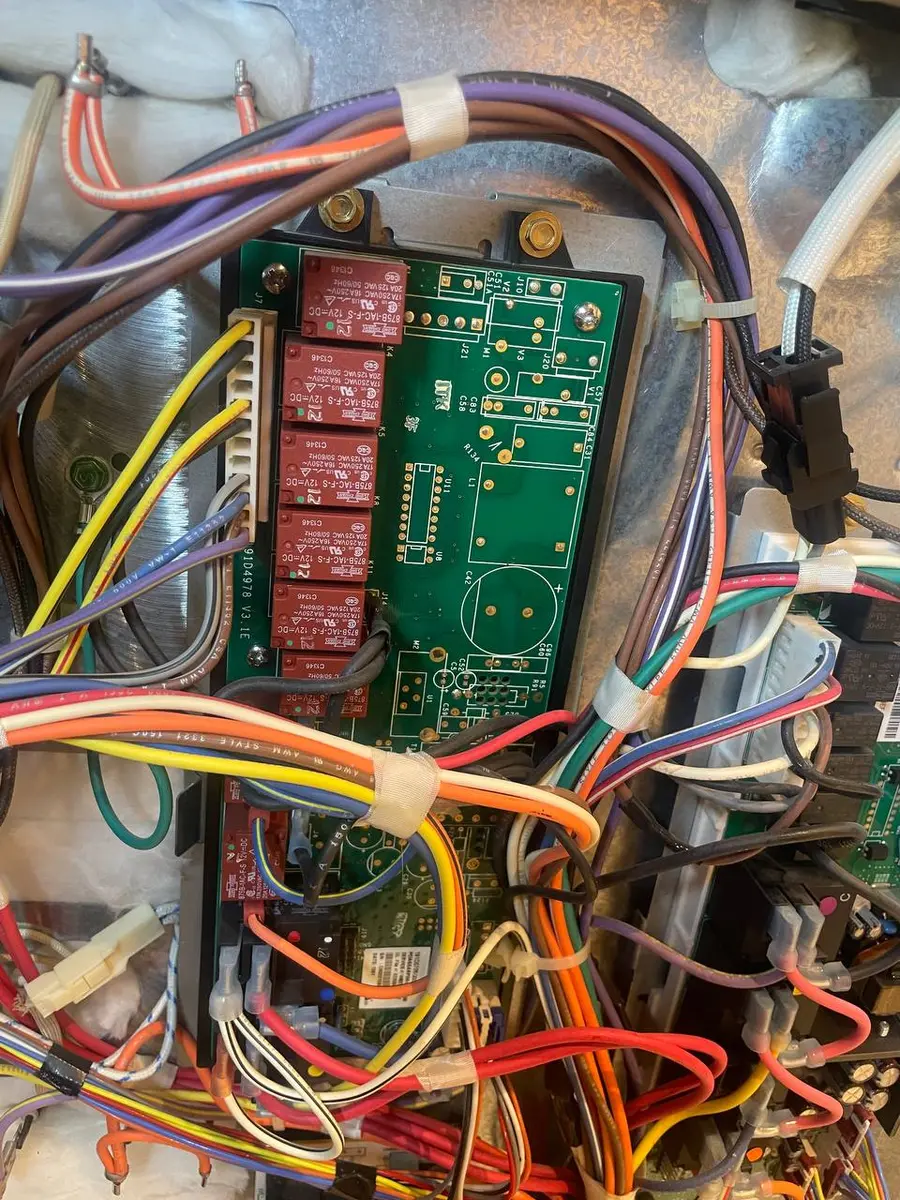
6. Temperature Control Board Malfunction (5% of cases)
The main control board manages compressor cycling based on thermistor readings. A failed board can keep the compressor relay energized continuously regardless of temperature. This is rare but occurs after power surges (common in older Sacramento electrical grids during summer peak demand).
Diagnosis:
- Check actual compartment temperature with an independent thermometer. If the fridge is already at or below the set temperature but the compressor still runs, the board is not receiving/processing the thermistor signal.
- Check thermistor resistance (varies by GE model — reference the service data sheet behind the kick plate).
- If thermistor is good but compressor won't cycle off, the board relay is stuck closed.
GE Part Numbers: WR55X10942 (GFE/GNE main board), WR55X11072 (GYE Profile).
DIY Difficulty: Hard Parts Cost: $120–$280 Professional Repair Cost: $250–$450
Safety First — Know the Risks
Refrigerant (R-134a/R-600a) requires EPA certification to handle. Improper discharge is a federal violation and health hazard. Our techs are licensed and insured — let them handle the risk.
Licensed & Insured · 90-Day Warranty · Same-Day Service
Step-by-Step Troubleshooting
- Deactivate Turbo Cool/Turbo Freeze — press and hold for 3 seconds. Wait 4 hours to see if cycling returns.
- Check ambient temperature — if the fridge is in a hot garage, this may be normal operation.
- Clean condenser coils — the single most effective maintenance action.
- Verify condenser fan — listen/look at the rear while compressor runs.
- Inspect door gaskets — dollar-bill test all doors.
- Look for frost — excessive frost on evaporator or inside freezer.
- Check SmartHQ — compressor run percentage and temperature trends.
Same-Day Appliance Repair
Fixed or It's Free
$89 → $0 Service Call & Diagnosis — offer ends May 25
DIY Fix vs Professional Repair
| Cause | DIY? | Parts | Professional |
|---|---|---|---|
| Dirty Coils | Yes (easy) | $0–$15 | $80–$130 |
| Condenser Fan | Yes (moderate) | $35–$80 | $130–$260 |
| Door Gasket | Yes (easy) | $40–$110 | $120–$260 |
| Evaporator Frost | Moderate | $40–$90 | $180–$350 |
| Low Refrigerant | No | N/A | $300–$700 |
| Control Board | No | $120–$280 | $250–$450 |
The Real Cost of DIY
Average DIY attempt: $150-400 in tools you may use once, plus the risk of further damage. Our diagnostic visit costs $0 — we find the problem and give you an honest quote.
Licensed & Insured · 90-Day Warranty · Same-Day Service
Prevention
- Clean coils every 3–6 months (quarterly if you have pets or dusty environment).
- Replace the FreshFlow air filter — a clogged air filter restricts circulation and increases compressor load.
- Keep the fridge away from heat sources — ovens, dishwashers, and direct sunlight increase ambient load.
- Do not set temperature colder than necessary — GE recommends 37°F fresh-food, 0°F freezer.
- Install a surge protector — protects the control board from power grid fluctuations.
FAQ
Q: How do I know if my GE refrigerator compressor is running too much?
Place your hand on the compressor housing (rear bottom). If it is hot to the touch (painful) rather than simply warm, and the fridge has been running for hours without cycling off, there is a problem. SmartHQ shows exact run percentage.
Q: Will a constantly running GE refrigerator increase my electricity bill?
Yes. A GE French door refrigerator in normal operation uses approximately $50–$70/year in electricity. Constant running can double or triple this, and the compressor will fail prematurely (expected life drops from 12–15 years to 5–7 years).
Q: My GE refrigerator runs constantly in my Sacramento garage during summer. Is it broken?
Possibly not — garage temperatures above 90°F push the compressor to near-continuous operation. Consider a garage-ready kit or moving the unit to a conditioned space. If ambient is below 85°F and it still runs constantly, troubleshoot normally.
Compressor running nonstop? Our technicians carry condenser fans, gaskets, and diagnostic tools for GE refrigerators. Schedule a repair →