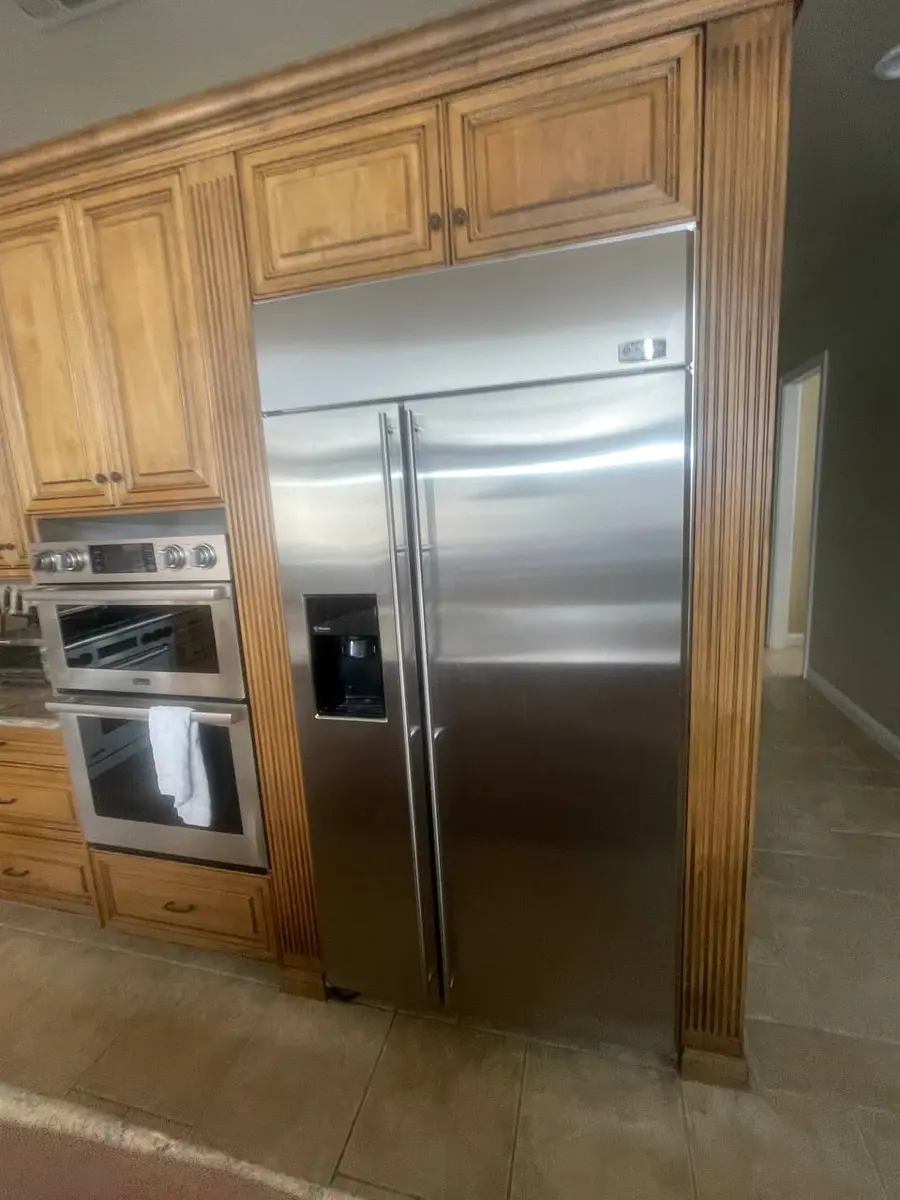
Fisher & Paykel — the New Zealand premium brand now owned by Haier — builds refrigerators with a unique engineering philosophy focused on variable temperature zones and smart airflow. Their ActiveSmart technology continuously monitors compartment temperatures and adjusts compressor speed, fan operation, and defrost cycles in real-time. The Column series takes this further with fully integrated refrigerator and freezer columns designed for custom kitchen installations.
When something goes wrong, Fisher & Paykel refrigerators display error codes that guide diagnosis. This guide covers every F&P refrigerator error code with real troubleshooting steps for the ActiveSmart, French Door, Quad Door, and Column series.
How Fisher & Paykel Error Codes Work#
F&P refrigerators use a single main control board with multiple sensor inputs. The ActiveSmart system continuously calculates the optimal operating parameters based on usage patterns, ambient temperature, and compartment loads. Error codes appear on the temperature display panel — usually flashing numbers or letter-number combinations.
On newer models with the SmartConnect feature, error codes are also sent to the Fisher & Paykel app on your phone, often before you notice a problem at the fridge itself.
Basic reset procedure:
- Unplug the refrigerator from the outlet for 5 minutes.
- Plug back in. The display will flash briefly during initialization.
- Wait 24 hours for temperatures to stabilize before judging if the issue is resolved.
- If the code returns, check specific troubleshooting below.
Note: Unlike other appliances, refrigerator errors should not be treated as urgent unless you hear unusual noises or see water leaking. Food remains safe for 4 hours (fridge) or 24–48 hours (freezer) if doors remain closed.
Do You Have the Right Tools?
Refrigerant gauges ($200+), vacuum pump ($250), leak detector ($150), and EPA-certified recovery equipment. Our technician arrives with $3,000+ in professional tools — your diagnostic is free.
Licensed & Insured · 90-Day Warranty · Same-Day Service
E1 — Door Ajar / Door Switch Error#
The refrigerator detects that a door or drawer has been open too long or the door switch is malfunctioning.
Common causes:
- Door not fully closed (food items or containers preventing seal)
- Worn or torn door gasket not creating proper seal
- Door switch failure (magnetic reed switch or mechanical microswitch)
- Door hinge sagging from weight of items stored in door bins
- Ice buildup on freezer door preventing full closure
How to fix:
- Check for obstruction: Open each door/drawer and verify nothing is preventing full closure. Check that containers in door bins are not too tall. On French Door models, verify the center divider (mullion heater) is not displaced.
- Inspect gaskets: Run a dollar bill test — close the door on a dollar bill, then try to pull it out. If it slides out easily, the gasket is not sealing. Clean gaskets with warm soapy water. Replace if torn, hardened, or deformed.
- Test door switch: The magnetic reed switch activates the interior light and signals door position to the control board. Use a magnet near the switch location to simulate door closed — if the error clears, the switch is working but the door is not closing fully. If the error persists with the magnet, the switch has failed.
- Check hinges: On French Door models, loaded door bins add weight. Over time, the lower hinge can bend slightly, preventing the upper gasket from sealing. Tighten or shim the hinge.
Part cost: Door gasket varies by part (varies by model and door). Door switch varies by part. Hinge kit varies by part. Professional repair varies by part total.
E3 — Defrost System Error#
The automatic defrost cycle has failed. Ice accumulates on the evaporator coils, reducing cooling efficiency.
Common causes:
- Defrost heater failure (burnout)
- Defrost thermostat (bi-metal) failure — does not close the heater circuit
- Defrost timer or control board defrost relay failure
- Evaporator fan blocked by ice (secondary symptom)
- Drain tube frozen or blocked (ice backs up onto evaporator)
How to fix:
- Manual defrost test: Unplug the refrigerator for 12–24 hours with doors open. If it cools normally after plugging back in but the error returns in 1–2 weeks, the defrost system is definitely at fault.
- Check defrost heater: Access the evaporator (behind the rear panel inside the freezer compartment). The defrost heater wraps around or sits below the evaporator coils. Test continuity — should be 20–40 ohms. Open circuit = replace.
- Test defrost thermostat: The bi-metal thermostat should close (show continuity) when cold (below 32F) and open when warm. Test at room temperature — it should be open. Put it in the freezer for 10 minutes — it should close.
- Inspect drain tube: The condensate drain below the evaporator frequently freezes in Fisher & Paykel units. Pour warm water down the drain tube to clear ice. Install a drain tube heater clip if available for your model.
Part cost: Defrost heater varies by part. Defrost thermostat varies by part. Drain tube heater varies by part. Professional repair varies by part total.
Fisher & Paykel specific: ActiveSmart models use adaptive defrost — the system calculates defrost frequency based on door openings and humidity. If the control board's defrost algorithm fails, defrost may never initiate even though the heater and thermostat work fine.
Safety First — Know the Risks
Refrigerant (R-134a/R-600a) requires EPA certification to handle. Improper discharge is a federal violation and health hazard. Our techs are licensed and insured — let them handle the risk.
Licensed & Insured · 90-Day Warranty · Same-Day Service
E5 — Motor / Fan Error#
The evaporator fan or condenser fan is not operating at expected speed or has failed entirely.
Common causes:
- Evaporator fan motor failure
- Fan blade obstructed by ice buildup (from failed defrost)
- Condenser fan clogged with dust and pet hair
- Fan motor wiring fault
- Control board fan relay failure
How to fix:
- Identify which fan: F&P refrigerators have 2–3 fans: evaporator fan (inside, circulates cold air), condenser fan (bottom rear, cools compressor), and on some models an additional fresh-food circulation fan.
- Evaporator fan: Open the freezer. You should feel cold air blowing from vents. No airflow + running compressor = fan failure or ice obstruction. Remove the rear freezer panel to access the fan. Check for ice around the blade. If clear, test motor (should be 40–150 ohms across windings).
- Condenser fan: Access from the rear bottom. This fan cools the compressor and condenser coils. If covered in dust/hair, it may stall. Clean thoroughly with a vacuum and brush.
- ActiveSmart variable-speed fans: Newer models use variable-speed fans controlled by PWM signal from the board. Fan may run at low speed but not ramp up under load — sounds normal at idle but fridge warms during heavy use.
Part cost: Evaporator fan motor varies by part. Condenser fan motor varies by part. Fan blade varies by part. Professional repair varies by part total.
E6 — Compressor Error#
The compressor is not starting, not reaching required speed, or drawing abnormal current. This is the most serious and expensive potential failure.
Common causes:
- Compressor start relay failure (the most common cause)
- Compressor overload protector tripping (from overheating)
- Compressor motor winding failure (aged compressor)
- Dirty condenser coils causing compressor overheating
- Low refrigerant (sealed system leak)
- Inverter board failure (variable-speed compressor models)
How to fix:
- Clean condenser coils first: Dirty coils cause compressor overheating, which trips the overload protector. Pull the fridge from the wall, remove the rear bottom panel, and vacuum/brush the condenser coils thoroughly. This resolves roughly 30% of E6 codes.
- Check start relay: The start relay is a small component plugged onto the compressor. It clicks once during compressor start. A clicking-then-silence pattern (compressor tries to start, fails, waits, tries again) = failed start relay. Cost varies by model and region. On inverter models, the inverter board replaces the relay function.
- Test overload protector: The overload protector is a thermal device that cuts power if the compressor overheats. If it has tripped, allow 2 hours of cooling, then test for continuity. Repeated tripping = underlying problem (dirty coils, failed fan, refrigerant issue).
- Inverter board (variable-speed models): ActiveSmart uses variable-speed compressors. The inverter board controls speed. Failure modes include no start, erratic speed, or error codes. Board replacement varies by model and region.
- Sealed system (last resort): If the compressor runs but does not cool, and the condenser is clean and fan running, the system may be low on refrigerant. This requires an EPA-certified technician.
Part cost: Start relay varies by part. Overload protector varies by part. Inverter board varies by part. Compressor replacement varies by part. Professional repair varies by part depending on cause.
The Real Cost of DIY
Average DIY attempt: $150-400 in tools you may use once, plus the risk of further damage. Our diagnostic visit costs $0 — we find the problem and give you an honest quote.
Licensed & Insured · 90-Day Warranty · Same-Day Service
E8 — Solenoid Valve Error#
The refrigerant flow control solenoid valve is not operating correctly. This valve directs refrigerant between the freezer and fresh-food evaporators.
Common causes:
- Solenoid valve coil failure
- Valve mechanically stuck (from debris or corrosion)
- Wiring fault to the valve
- Control board output failure
How to fix:
- Understand the valve's role: In dual-evaporator F&P models, the solenoid valve switches refrigerant flow between compartments based on which needs cooling. A stuck valve means one compartment gets all the cooling while the other warms up.
- Symptom diagnosis: Freezer cold but fridge warm = valve stuck in freezer position. Fridge cold but freezer warm = valve stuck in fridge position. Both warm = valve closed/compressor issue.
- Test valve coil: Locate the solenoid valve (typically near the compressor area). Measure coil resistance — typically 200–500 ohms. Open circuit = failed coil.
- Check board output: With a multimeter on the valve connector, verify the control board sends voltage during the expected switching cycle. No voltage = board output failure.
Part cost: Solenoid valve varies by part. Professional repair varies by part total. Note: Valve replacement requires brazing (torch work on sealed system) and may require refrigerant recharge.
EC — Communication / Control Error#
Internal communication failure between the main board and display/interface board or sensor modules.
Common causes:
- Ribbon cable loose or damaged between boards
- Display board failure
- Main control board communication circuit failure
- Power fluctuation causing desynchronization
- Sensor wiring short or open creating bus noise
How to fix:
- Power cycle: Unplug for 5 minutes. Communication errors are often transient — caused by voltage spikes or EMI.
- Check ribbon cables: If accessible, reseat the ribbon cable between the main board and display board. Look for signs of connector corrosion or cable damage.
- Test with exclusion: Disconnect one sensor at a time and power on. If EC clears when a specific sensor is disconnected, that sensor's wiring is creating noise on the communication bus.
- Board replacement: If EC persists after cable reseating, either the main board or display board has a communication circuit failure. Professional diagnosis required.
Part cost: Display board varies by part. Main control board varies by part. Professional repair varies by part total.
Don't Void Your Warranty
Opening your appliance yourself may void the manufacturer warranty. Our repair comes with a 90-day guarantee, and we document everything for warranty compliance.
Licensed & Insured · 90-Day Warranty · Same-Day Service
U1 — Water Supply / Ice Maker Error#
The ice maker or water dispenser is not receiving adequate water supply.
Common causes:
- Water supply valve behind fridge closed or partially closed
- Frozen water line (common in winter or if fridge temp set too cold)
- Water inlet valve failure (solenoid does not open)
- Clogged water filter (overdue for replacement)
- Low household water pressure (below 20 PSI at the valve)
How to fix:
- Check supply valve: Verify the water shutoff valve behind or under the refrigerator is fully open.
- Replace water filter: If the filter has not been changed in 6+ months, it may be flow-restricted. Replace and test. F&P recommends filter replacement every 6 months.
- Thaw frozen line: If no water flows but the supply valve is open, the line inside the fridge door or the connection to the ice maker may be frozen. Use a hair dryer on low heat to gently thaw (never use a heat gun — plastic lines melt). Verify freezer is not set below -4F.
- Test inlet valve: The water inlet valve is at the bottom rear. It should click open when the ice maker calls for water or the dispenser is pressed. No click = failed solenoid. Test coil for continuity.
- Check water pressure: F&P requires minimum 20 PSI at the inlet valve. Low pressure = small/thin ice cubes or no production.
Part cost: Water inlet valve varies by part. Water filter varies by part. Professional repair varies by part total.
Additional Codes Quick Reference#
- E2 — Freezer temperature sensor error. Test sensor resistance (~5k ohms at room temp).
- E4 — Fresh food temperature sensor error. Same test as E2 for the fridge compartment sensor.
- E7 — Ambient temperature sensor error. Verify sensor near the control board area.
- E9 — Ice maker motor/mechanism error. Check ice tray motor and harvest mechanism.
- dF — Demo/display mode active. Press and hold specific button combo to exit (varies by model — typically temp up + down simultaneously for 5 seconds).
Is It Worth Your Time?
Diagnosing a cooling issue requires testing the compressor, start relay, thermostat, condenser fan, and defrost system — 4-6 hours of DIY research and testing. Our technician diagnoses the issue in about 30 minutes — same-day appointments available.
Licensed & Insured · 90-Day Warranty · Same-Day Service
Fisher & Paykel Diagnostic Mode#
- SmartConnect App: On connected models, the F&P app shows real-time temperatures, error history, and maintenance reminders.
- Service diagnostic: Press and hold the alarm button (or specific button combo per model) for 5+ seconds until the display enters diagnostic mode showing sensor readings and component status.
- LED blink codes: Older models without digital display communicate errors through LED blink patterns on the control board. Count the blinks — each pattern corresponds to a specific error.
Frequently Asked Questions#
Q: How do I reset my Fisher & Paykel refrigerator after an error code? A: Unplug for 5 minutes, plug back in. Allow 24 hours for temperatures to stabilize. If the code returns, the underlying issue needs repair — F&P codes do not clear permanently without fixing the root cause.
Q: Why is my Fisher & Paykel fridge warm but the freezer works fine? A: Most commonly: (1) evaporator fan failure (E5) — cold air is not being circulated to the fridge compartment, (2) damper or solenoid valve issue (E8) — refrigerant not flowing to the fridge evaporator, or (3) defrost failure (E3) — ice on the evaporator blocking airflow to fridge vents.
Q: What is ActiveSmart technology and does it affect repairs? A: ActiveSmart uses sensors and algorithms to optimize temperature and energy use in real-time. It affects repairs because the system adapts around failing components — you may not notice a problem until it is advanced. Regular professional inspection catches issues early.
Q: How long do Fisher & Paykel refrigerators last? A: F&P designs for 10–15 years. The compressor and sealed system typically last the longest. Electronics (boards, sensors) and mechanical parts (fans, defrost heaters) are the most common repairs in years 5–12.
Q: Is it worth repairing an older Fisher & Paykel refrigerator? A: For units under 10 years, almost always yes — most repairs cost varies by model and region vs varies by model and region for replacement. For units over 12 years with compressor issues, evaluate total condition before investing in sealed system work.
The Risk of Getting It Wrong
A wrong diagnosis often turns a simple fix into a costly replacement. Without proper diagnostic tools, you might replace the wrong part — or cause additional damage. Our free diagnostic eliminates the guesswork.
Licensed & Insured · 90-Day Warranty · Same-Day Service
When to Call a Professional#
- E6 (compressor) with no cooling — Sealed system work requires EPA certification.
- E8 (solenoid valve) — Brazing and refrigerant work required.
- EC persistent after reset — Board-level diagnosis requires technical equipment.
- Multiple codes simultaneously — Indicates a more complex failure requiring systematic diagnosis.
- Refrigerant leak (oily residue near compressor) — Environmental and safety concern.
Fisher & Paykel builds premium refrigerators that reward proper maintenance with 15+ years of reliable operation. Board and sensor repairs are economical compared to replacement costs.
Fisher & Paykel refrigerator showing an error code? EasyBear's technicians are experienced with F&P's ActiveSmart and Column series refrigerators. We offer free diagnostic visits — our tech checks all systems, reads error history, and provides a clear repair estimate. Every repair backed by our 90-day warranty. Schedule your free diagnosis today.
Lead Appliance Repair Technician · 12 years experience
Experienced technician with 12 years specializing in washing machine and dryer repairs across all major brands.